Living conditions

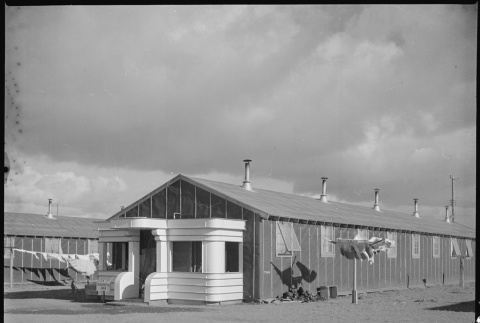
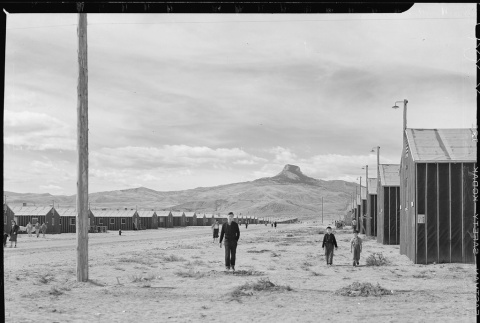
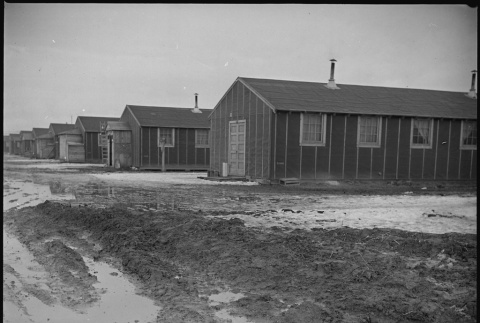
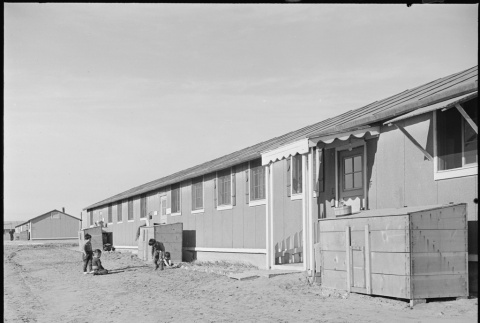
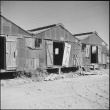
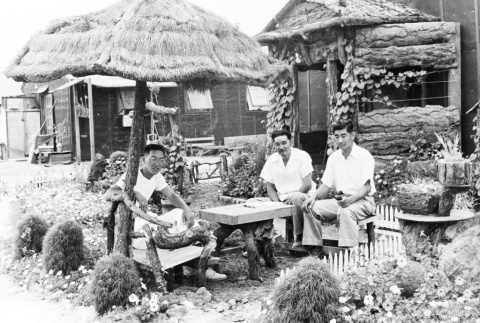
All of the camps were constructed according to the War Department's specifications, which included barbed-wire fences, guard towers, and armed guards around the perimeter. The camps were organized in "blocks" consisting of twelve to fourteen barracks, a mess hall, communal showers and toilets, laundry facilities, and a recreation hall. Each barracks was divided into four or six rooms with each room housing one family, no matter how large, and there was no running water. The furnishings that Japanese Americans found on their arrival were canvas cots, a potbellied stove, and a single bare light bulb. The thin walls offered little protection from the harsh weather, which ranged from 110 degrees in the summer to 25 degrees below zero on winter nights. The flimsy construction allowed no privacy and made normal family life difficult. Camp inmates improved their own living conditions by creating interior walls and partitions, constructing furniture from scrap lumber, and planting gardens.

World War II (283)
Concentration camps (2384)
Living conditions (1897)

Related articles from the Densho Encyclopedia :
Arts and crafts in camp, Community analysts, Manzanar Children's Village
Facilities
Format
Genre
Usage
Use <Ctrl> or (⌘) keys to select multiple terms
1897 items
Japanese Americans in front of remodeled barrack (ddr-densho-37-51)
img Japanese Americans in front of remodeled barrack (ddr-densho-37-51)
Japanese Americans tried to make camp life more tolerable in many creative ways, such as renovating their barracks.
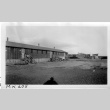
Remodeled barracks exterior (ddr-densho-37-78)
img Remodeled barracks exterior (ddr-densho-37-78)
Original WRA caption: A view showing the artistic way in which the evacuees decorate the exterior of the barracks to make them more homelike.
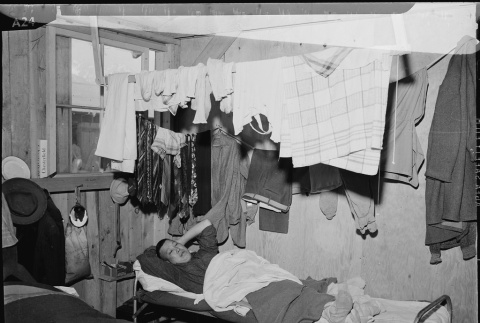
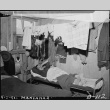
Japanese American resting in a barrack (ddr-densho-37-412)
img Japanese American resting in a barrack (ddr-densho-37-412)
Original WRA caption: Manzanar Relocation Center, Manzanar, California. An evacuee resting on his cot after moving his belongins into this bare barracks room. An army cot and mattress are the only things furnished by the government. All personal belongings were brought by the evacuees.
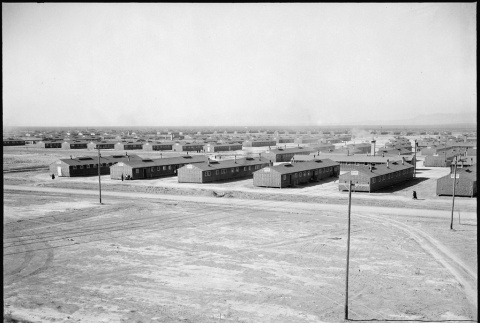
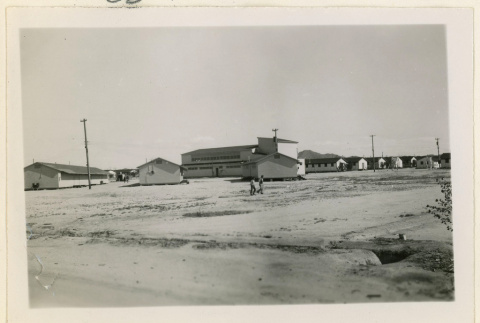
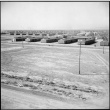
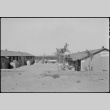
Topaz concentration camp, Utah (ddr-densho-37-833)
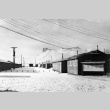
img Topaz concentration camp, Utah (ddr-densho-37-833)
Original WRA caption: Topaz, Utah. A typical barracks group with a section of the Topaz Relocation Center.
Flooded conditions (ddr-densho-37-690)
img Flooded conditions (ddr-densho-37-690)
Original WRA caption: Flooded area east of Block 3.
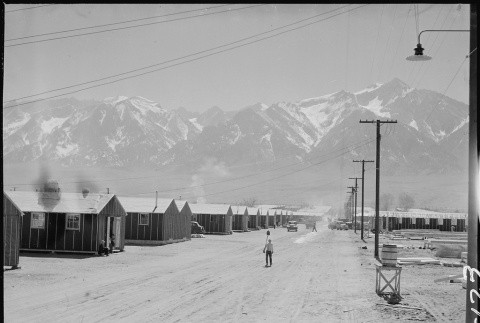
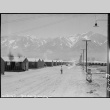
Camp street (ddr-densho-37-810)
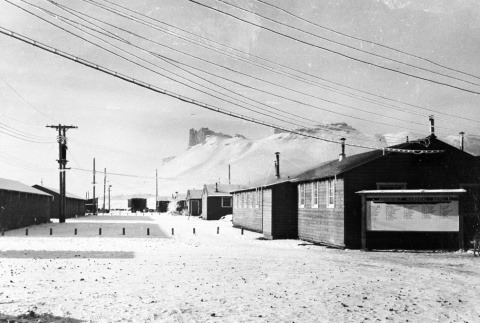
img Camp street (ddr-densho-37-810)
Original WRA caption: Manzanar Relocation Center, Manzanar, California. Street scene and view of quarters for evacuees of Japanese ancestry at Manzanar reception center. High Sierras in background.
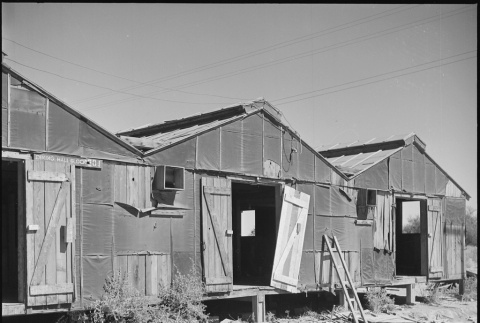
Vacant barracks (ddr-densho-37-827)
img Vacant barracks (ddr-densho-37-827)
Original WRA caption: Poston, Arizona. Some of the "blocks" which were vacated earlier, are already dropping to pieces as shown here. The barracks were of cheap construction, rough lumber, and tar paper and few people thought that they would be occupied for three years. Units II and III of the Colorado River Relocation center, Poston, Arizona, …
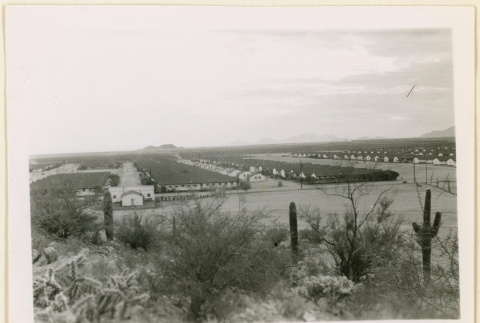
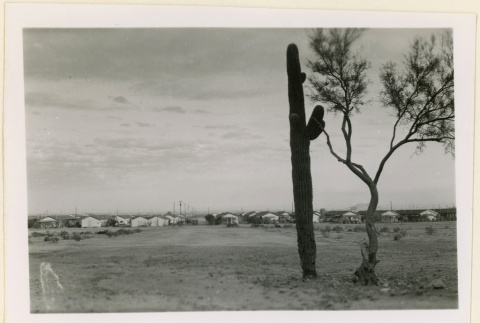
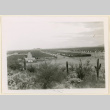
Cacti surround Camp Butte (ddr-densho-37-1278)
img Cacti surround Camp Butte (ddr-densho-37-1278)
Included annotation: 210-CB-A-307, Butte Camp Views, Sept 1943 Oct 1943.
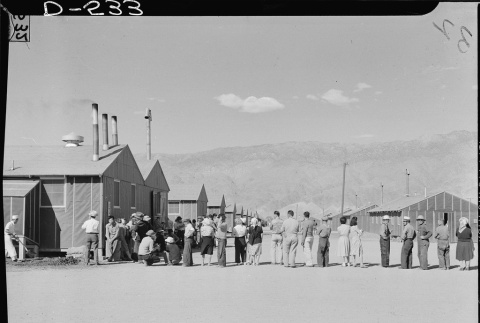
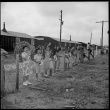
Japanese Americans waiting in line for mess hall (ddr-densho-37-812)
img Japanese Americans waiting in line for mess hall (ddr-densho-37-812)
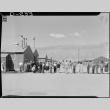
Original WRA caption: Manzanar Relocation Center, Manzanar, California. Ready to pass into dining room at Manzanar, a War Relocation Authority center for evacuees of Japanese ancestry.
Cody, Wyoming (ddr-densho-37-795)
img Cody, Wyoming (ddr-densho-37-795)
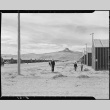
Original WRA caption: Heart Mountain Relocation Center, Heart Mountain, Wyoming. "Symbolic Heart Mountain towers at the end of "F" Street, the main thoroughfare of the Heart Mountain Relocation Center."
View between barracks (ddr-densho-37-782)
img View between barracks (ddr-densho-37-782)
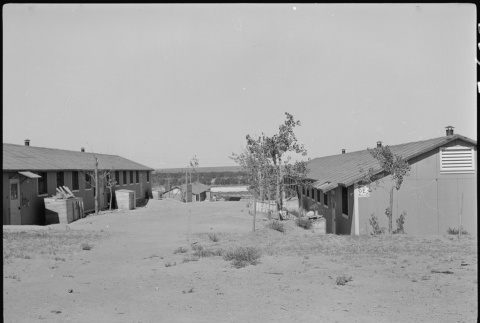
Original WRA caption: Granada Relocation Center, Amache, Colorado. Evacuee barracks showing gardens and trees.
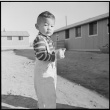
Japanese American walking in the rain (ddr-densho-37-617)
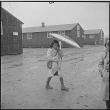
img Japanese American walking in the rain (ddr-densho-37-617)
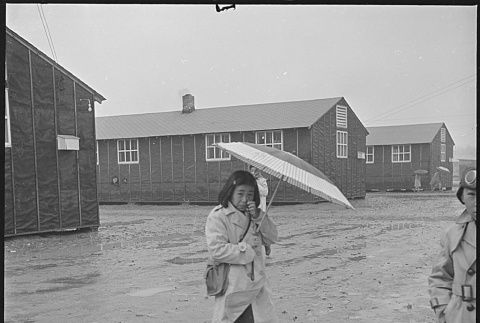
Original WRA caption: Jerome Relocation Center, Denson, Arkansas. The Arkansas rainy season, and this young resident of the Jerome Center dons rubber boots and carries a parasol. The (buckshot) mud makes the tirp to and from school a little dificult.
View between barracks (ddr-densho-37-715)
img View between barracks (ddr-densho-37-715)
Original WRA caption: Looking down the barracks from 34 to 44.
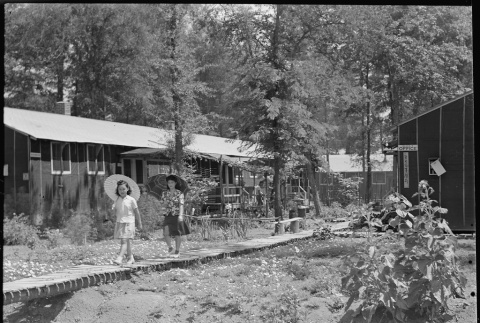
Camp landscaping (ddr-densho-37-532)
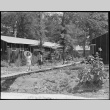
img Camp landscaping (ddr-densho-37-532)
Original WRA caption: Rohwer Relocation Center, McGehee, Arkansas. In contrast to most of the relocation center sites, many of the blocks in the Rohwer Center are shaded by trees. The residents have done much to make their tar paper barracks more livable by the planting of flowers and vegetable gardens and the building of rustic walks …
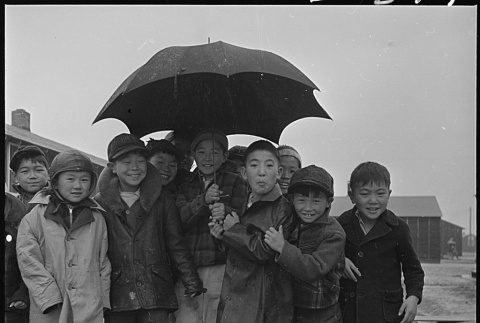
Japanese American children in the rain (ddr-densho-37-628)
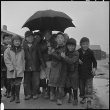
img Japanese American children in the rain (ddr-densho-37-628)
Original WRA caption: Jerome Relocation Center, Denson, Arkansas. One umbrella wasn't enough for these lads of Japanese ancestry, who formerly lived in west coast areas. The rainy season, in Arkansas, makes the relocation center one vast guagmire.
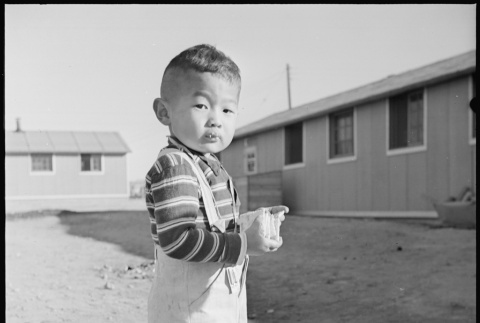
Child standing between barracks (ddr-densho-37-777)
img Child standing between barracks (ddr-densho-37-777)
Original WRA caption: Granada Relocation Center, Amache, Colorado. It is a long time between meals at the mess hall for a hungry man, so the cracker box at the Kobayashi barracks gets a frequent raiding.
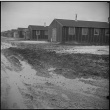
Muddy conditions (ddr-densho-37-349)
img Muddy conditions (ddr-densho-37-349)
Original WRA caption: Tule Lake Relocation Center, Newell, California. Thaws turn the streets and firebreaks into seas of mud, and makes difficult motor transportation through the center.
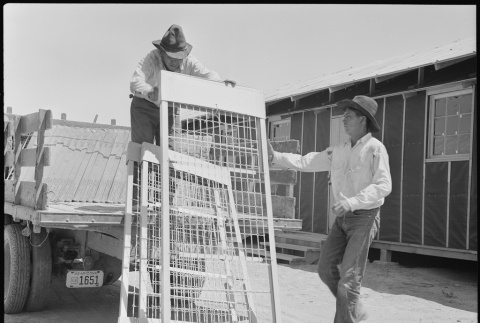
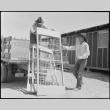
Unloading beds (ddr-densho-37-474)
img Unloading beds (ddr-densho-37-474)
Original WRA caption: Poston, Arizona. Apache Indians assist in the unloading of beds for evacuees of Japanese ancestry at this War Relocation Authority center which is located on the Colorado River Indian Reservation.
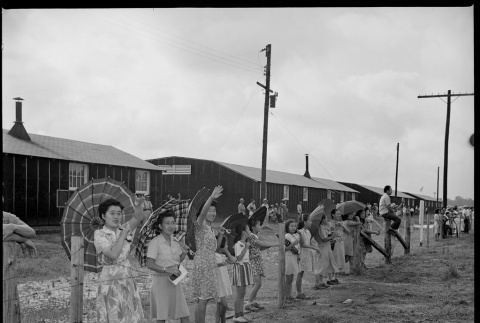
Japanese Americans behind a fence (ddr-densho-37-799)
img Japanese Americans behind a fence (ddr-densho-37-799)
Original WRA caption: Closing of the Jerome Relocation Center, Denson, Arkansas. Evacuees still remaining in the Jerome Center wave to their friends on the train from behind the wire fence surrounding the camp. On subsequent departures they were allowed to pass through the gate and say their goodbyes at close range.
Canal auditorium (ddr-densho-37-1051)
img Canal auditorium (ddr-densho-37-1051)
Included annotation: 210-CB-H-402, Canal Auditorium.
Modified barracks (ddr-densho-37-774)
img Modified barracks (ddr-densho-37-774)
Original WRA caption: Granada Relocation Center, Amache, Colorado. A typical barracks building resident of the first apartment has constructed, with scrap lumber, a storm porch and added a touch with mock shutters at the windows.
Japanese sandals (ddr-densho-37-816)
img Japanese sandals (ddr-densho-37-816)
Original WRA caption: Manzanar Relocation Center, Manzanar, California. Close-up of geta, stilt-like sandals, which are especially useful in dust. These are made by evacuee craftsmen in this War Relocation Authority center.
API