Immigration and citizenship

Japanese immigrants began arriving in the United States at the end of the nineteenth century when workers were recruited to meet the growing need for low-wage laborers in the Territory of Hawaii and on the West Coast. Commodore Perry had opened Japan to American commerce and trade relations in 1853, but anti-Asian sentiment resulted in the Gentlemen's Agreement of 1907, which halted the immigration of workers from Japan. In 1910, the Japanese population was about 80,000 in Hawaii and 72,000 on the continental United States. Japanese women continued to enter the country until the 1924 Immigration Act cut off immigration from Japan to the United States. Most of the early Japanese immigrants, the Issei (first generation), came as contract agricultural laborers, although many others were students and merchants. While Japanese immigrants were prohibited by discriminatory laws from becoming naturalized citizens of the United States, their American-born children (nisei) held U.S. citizenship.

Immigration and citizenship (488)

Related articles from the Densho Encyclopedia :
Immigration, Japanese associations
Facilities
Format
Genre
Usage

Use <Ctrl> or (⌘) keys to select multiple terms

488 items
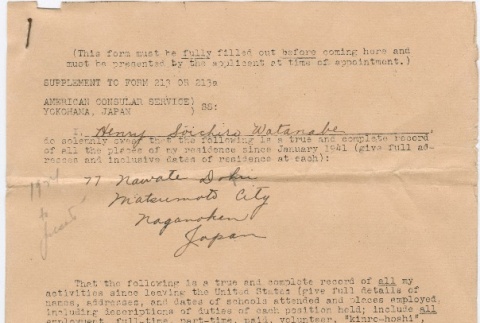
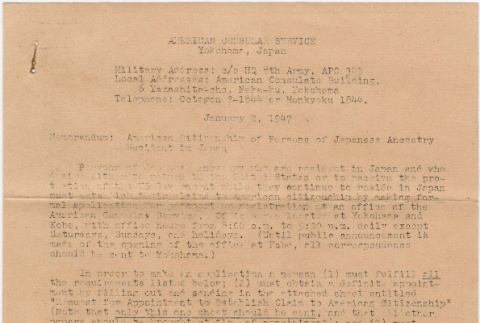
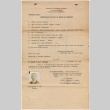
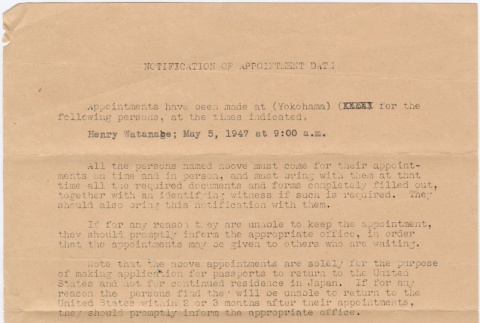
Notification of appointment date (ddr-densho-278-9)
doc Notification of appointment date (ddr-densho-278-9)
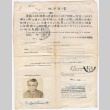
Appointment notice for Henry Watanabe to return to the United States from Japan.
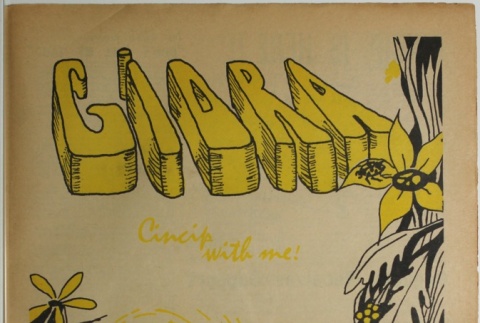
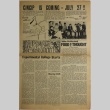
Gidra, Vol. I, No. 5 (August 1969) (ddr-densho-297-5)
doc Gidra, Vol. I, No. 5 (August 1969) (ddr-densho-297-5)
Selected article titles: "CINCIP Is Here!!" (p. 1), "The Burden of Life" (p. 1), "Hey, Look Me Over" (p. 5), "The Chinese in Los Angeles" (p. 6), "The Korean Americans" (p. 8), "The Filipino Immigrant" (p. 9).
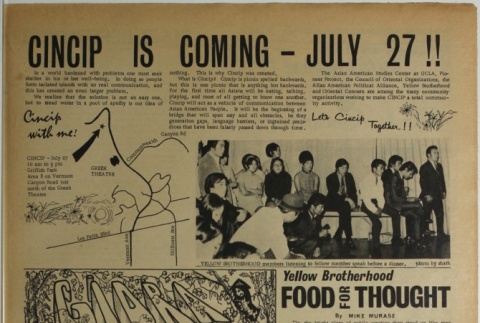
Gidra, Vol. I, No. 4 (July 1969) (ddr-densho-297-4)
doc Gidra, Vol. I, No. 4 (July 1969) (ddr-densho-297-4)
Selected article titles: "Experimental College Starts" (p. 1), "Yellow Brotherhood Food for Thought" (p. 1), "Blind Reflections?" (p. 2), "The Misunderstanding in Chinatown" (p. 4).
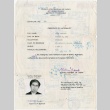
Certificate of Nationality (ddr-densho-308-9)
doc Certificate of Nationality (ddr-densho-308-9)
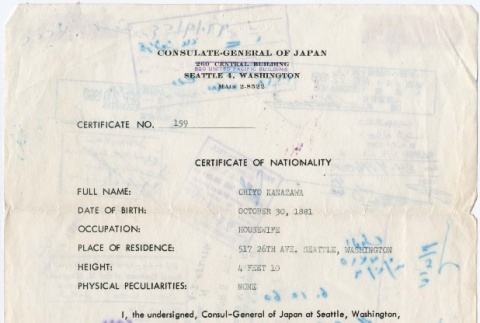
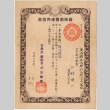
Chiyoko Kanazawa's certificate of nationality. Kanazawa's daughter, Mae (Kanazawa) Hara recalled that her mother immigrated to Seattle, Washington in 1912. She was a gifted sewer and flower arranger. Even near the end of her life when she came to live with Hara, she would spend the mornings arranging flowers cut from the garden.
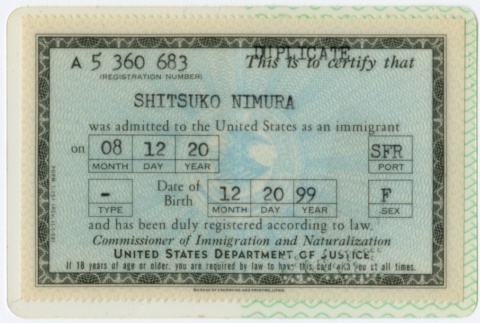
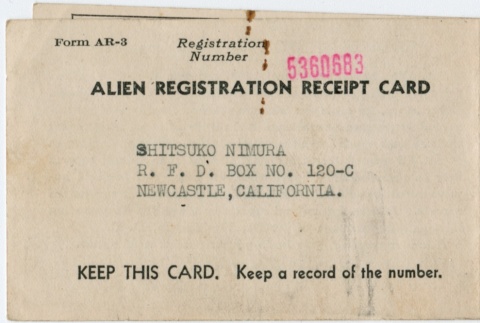
Green Card (ddr-densho-325-53)
doc Green Card (ddr-densho-325-53)
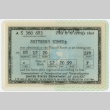
The Green Card for Shitsuko Nimura, Hisa Nimura Horiuchi's mother.
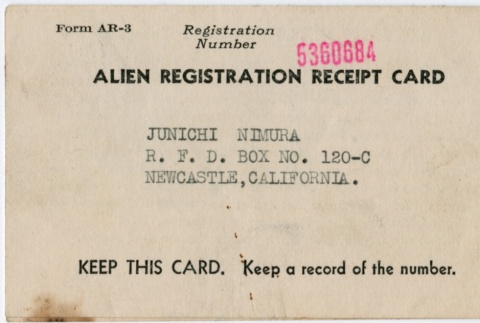
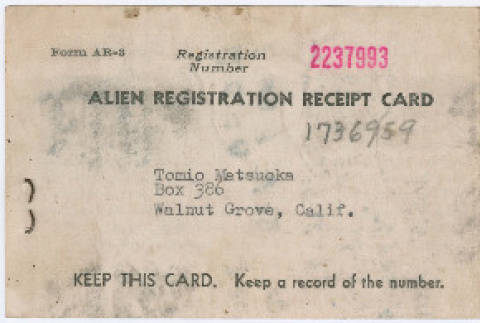
Alien Registration Receipt Card (ddr-densho-325-51)
doc Alien Registration Receipt Card (ddr-densho-325-51)
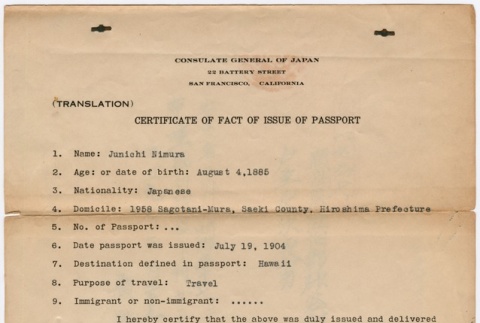
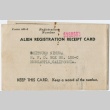
The Alien Registration Receipt Card for Junichi Nimura, Hisa Nimura Horiuchi's father.
Alien Registration Receipt Card (ddr-densho-325-52)
doc Alien Registration Receipt Card (ddr-densho-325-52)
Alien Registration Receipt Card for Shitsuko Nimura, Hisa Nimura Horiuchi's mother.
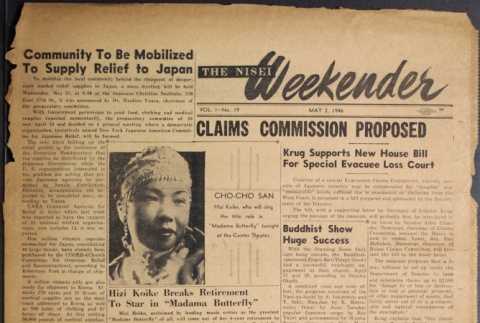
The Nisei Weekender, Vol. 1, No. 19 (May 2, 1946) (ddr-densho-358-3)
doc The Nisei Weekender, Vol. 1, No. 19 (May 2, 1946) (ddr-densho-358-3)
Selected article titles: "Claims Commission Proposed" (p.1, 4), "Community to Be Mobilized to Supply Relief to Japan" (p.1), "Kuroki to Represent JACL Veterans in Protest Against Discriminatory Acts" (p.1), "Nisei March in First May 1 Parade in 5 Years" (p.3).
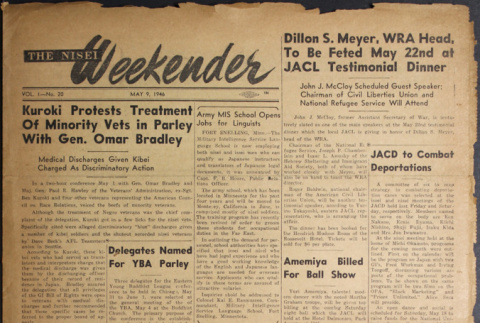
The Nisei Weekender, Vol. 1, No. 20 (May 9, 1946) (ddr-densho-358-4)
doc The Nisei Weekender, Vol. 1, No. 20 (May 9, 1946) (ddr-densho-358-4)
Selected article titles: "Kuroki Protests Treatment of Minority Vets in Parley with Gen. Omar Bradley" (p.1, 4), "Amemiya Billed for Ball Show" (p.1), "Hasty Deportation: 2 Days Given to Prepare" (p.1), "Greater N.Y. Group Seeks Coordination of Agencies Against Alien Deportation" (p.1), "Home Is the Soldier" (p.2).
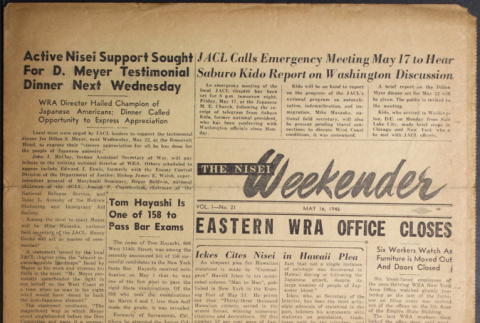
The Nisei Weekender, Vol. 1, No. 21 (May 16, 1946) (ddr-densho-358-5)
doc The Nisei Weekender, Vol. 1, No. 21 (May 16, 1946) (ddr-densho-358-5)
Selected article titles: "Active Nisei Support Sought for D. Meyer [sic] Testimonial Dinner Next Wednesday" (p.1, "Eastern WRA Office Closes" (p.1), "Deportation to Be Studied at Meet" (p.1), "Nisei Locks Horns with Congressman on Federal Raise" (p.4).
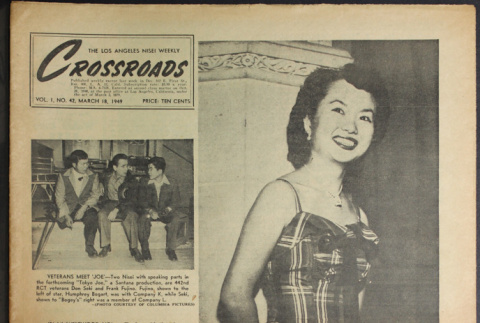
Crossroads, Vol. 1, No. 42 (March 18, 1949) (ddr-densho-358-16)
doc Crossroads, Vol. 1, No. 42 (March 18, 1949) (ddr-densho-358-16)
Selected article titles: "Negroes, Chinese Oppose ENI" (p.1), "Evacuation Claims Questions, Answers" (p.2), "Toyo San: Saga of Senbei to Smart Photography" (p.3), "Mr. Watanabe Builds His Dream House" (p.11).
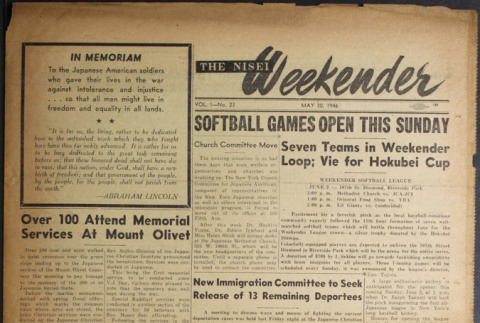
The Nisei Weekender, Vol. 1, No. 23 (May 30, 1946) (ddr-densho-358-6)
doc The Nisei Weekender, Vol. 1, No. 23 (May 30, 1946) (ddr-densho-358-6)
Selected article titles: "New Immigration Committee to Seek Release of 13 Remaining Deportees" (p.1, 3), "Federal Fund for Evacuee Aid Will End on June 30th" (p.1, 3), "See Here, Sgt. Kuroki: It's Bad to Generalize About Unions" (p.2), "You Ate Today, But: Millions Still Starve" (p.3).
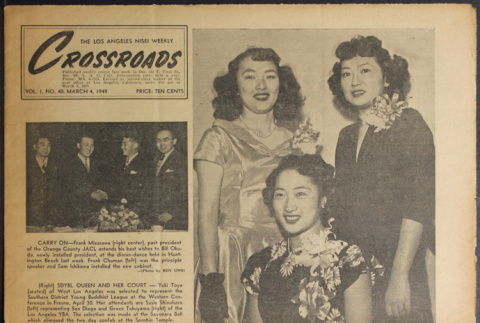
Crossroads, Vol. 1, No. 40 (March 4, 1949) (ddr-densho-358-14)
doc Crossroads, Vol. 1, No. 40 (March 4, 1949) (ddr-densho-358-14)
Selected article titles: "House Pass Naturalization Bill" (p.1), "Bill Proposed Allowing Interned Aliens to Claim Property Loss" (p.1), "Raw Silk, Oysters Shipped from Japan" (p.2), "Nisei Strandees' Case Set for Trial March 6, May 10" (p.3).
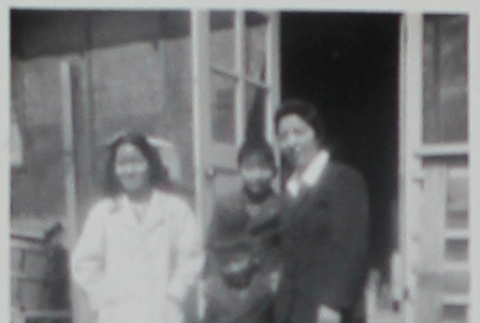
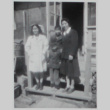
Topaz Camp (ddr-densho-357-763)
img Topaz Camp (ddr-densho-357-763)
Two unnamed women stand on their front steps with two children between them in the camp in Topaz, Utah.
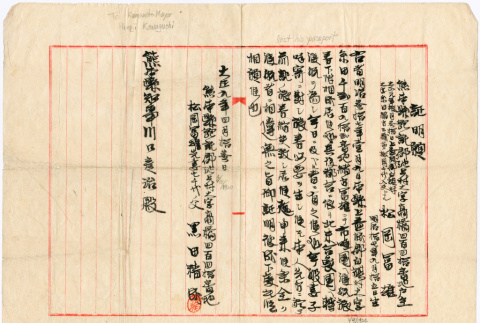
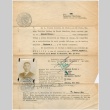
Letter to the mayor of Kumamoto about a lost passport (ddr-densho-390-26)
doc Letter to the mayor of Kumamoto about a lost passport (ddr-densho-390-26)
A letter to Aikoji Kawaguchi, Mayor of Kumamoto, about a lost passport.
API