
Loni Ding Oral History and Film Research Collection ddr-densho-1007
1870 items














1870 items
av
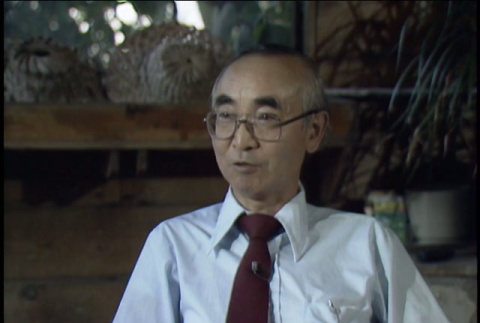
Interview with Arthur (Art) Morimitsu, part 6 of 6; interview with Harry Akune, part 1 of (ddr-densho-1007-1754)
Morimitsu discusses learning about the draft resisters after the war and his sympathy for draft resisters. Interview with Harry Akune starts at 3:58; Akune discusses his service with the 503rd Parachute Regimental Combat Team in the Philippines, the story of a jump gone wrong, his service on Corregidor Island, how he often served alone (versus most …
av
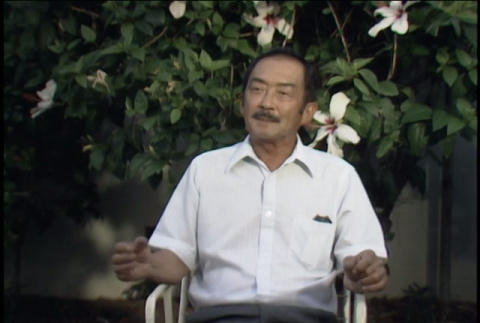
Interview with Harry Akune, part 2 of 3 (ddr-densho-1007-1755)
Akune tells the story of a jump on Corregidor Island. He tells the same story in another interview in this collection: objects ddr-densho-1007-1600 through ddr-densho-1007-1603. Akune also talks about an argument he had with a captain. Loni Ding can be heard asking questions behind the camera. Original title: 64B, II VFW #7, VFW - LA, Harry …
av
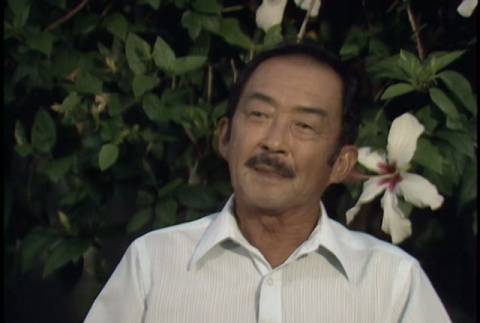
Interview with Harry Akune, part 3 of 3 (ddr-densho-1007-1756)
Akune discusses volunteering for the military from camp and advice he got from his old schoolteacher after volunteering. Loni Ding can be heard asking questions behind the camera. Original title: 65B, II VFW #8, Roll 9, Harry Akune, 2-15-87, VFW-LA

av
Roger Daniels interviewed by Kent Hori, part 2 of 4 (ddr-densho-1007-1757)
Daniels discusses the reaction to Pearl Harbor, anti-Japanese sentiment and hysteria, the decision to incarcerate, reactions to EO 9066, James Omura's testimony against internment (and reads a letter Omura wrote), the treatment of German and Italian Americans during the war, the process of evacuation, and resistance to evacuation. Part 1 of this interview is not in …

av
Roger Daniels interviewed by Kent Hori, part 3 of 4 (ddr-densho-1007-1758)
Daniels discusses what may have happened if the Japanese American community resisted evacuation en masse, how Japanese Americans were placed under 4C (enemy alien, undraftable) status and the military's eventual interest in Japanese Americans (particularly Kibei) for intelligence work, the importance of the 100th Battalion and the 442nd Regimental Combat Team, the loyalty questionnaire, the persecution …

av
Roger Daniels interviewed by Kent Hori, part 4 of 4; interview with John Kaneko, part 1 of 3 (ddr-densho-1007-1759)
Daniels discusses the early successes of the Japanese army, the political justifications for relocation, why German and Italian Americans were not vilified in the same way, and the lack of support for Japanese Americans politically, culturally, and legally. Includes audio from reaction shots of Daniels and Hori, as well as recordings of Hori asking standalone questions. …

av
Interview with John Kaneko, part 2 of 3 (ddr-densho-1007-1760)
Kaneko discusses arriving at Tule Lake, his first impressions of camp, his difficulty meeting people in camp, draft registration/the loyalty questionnaire and the conflict it caused, his father encouraging him to register for the draft, his refusal to register, his arrest and interrogation, and being sent to a CCC camp and forced to work. Interview starts …

av
Interview with John Kaneko, part 3 of 3 (ddr-densho-1007-1761)
Kaneko discusses the reasons some Japanese Americans joined the military and his father's decision to bury or burn all their family's Japanese possessions. Audio only. Loni Ding can be heard asking questions. Seems to be the fourth part of the interview started in ddr-densho-1007-1759, but the third portion is missing. Original title: 407, John Kaneko IV, …

av
Interview with Hoichi "Bob" Kubo (ddr-densho-1007-1762)
Kubo discusses serving with the MIS in the Pacific, Japanese values, his thoughts on war, the death of one of his close friends during the war, his time in Okinawa, the danger of being mistaken for a Japanese soldier, and the threat of poisonous gas from both sides. Interview starts at 0:15. Audio only. Loni Ding …

av
Chaplain Hiro Higuchi interviewed by Eric Saul, part 1 of 2 (ddr-densho-1007-1763)
Higuchi discusses his relationship with the soldiers of the 442nd, the effect the war had on soldiers, retiring from the army, assisting a woman who had been raped (partially retold by Saul), and going into battle. Saul declares the interview over at 11:20, but the tape continues (may be out of order). This interview was not …

av
Chaplain Hiro Higuchi interviewed by Eric Saul, part 2 of 2 (ddr-densho-1007-1764)
Higuchi discusses fighting the German army, the religious beliefs of the 100th and 442nd, preventing marriages between Japanese nationals and American soldiers, why he decided to become a chaplain, and his interpretation of Christ and God. This interview was not conducted specifically for Loni Ding's work, rather for a book the Presidio was putting together. Original …

av
Goro Sumida interviewed by Eric Saul, part 1 of 2 (ddr-densho-1007-1765)
Sumida discusses serving in the 100th Battalion, only having Christian priests during the war, his service in Brouay, his family, what a dead body smells like, the impact of wartime casualties, his relationship with his Caucasian officers, Hawaiian terms used during the war, how he wants the 100th to be remembered, Partial transcript available through 6:39 …

av
Goro Sumida interviewed by Eric Saul, part 2 of 2 (ddr-densho-1007-1766)
Sumida discusses his family, visiting his family at Rohwer, his impressions of camp, his time in basic training, war stories from Germany, the awards he received after the war, and whether he considers himself lucky. This interview was not conducted specifically for Loni Ding's work, rather for a book the Presidio was putting together. Partial transcript …

av
Masuda School tape audio (ddr-densho-1007-1767)
Intended to be paired with video, but the video is not in this collection. From 6:27 to 8:15 a school administrator discusses Kazuo Masuda. Rest of tape is audio from filming reaction shots and a man reading letters written by Kazuo Masuda while serving in Italy. Loni Ding can be heard directing in the background. Original …

av
Interview with Henry (Hank) Gosho, part 1 of 3 (ddr-densho-1007-1768)
Gosho discusses returning to Seattle from Japan before the war, his brothers being conscripted into the Japanese army, Pearl Harbor, his father's arrest by the FBI, assuming the Nisei wouldn't be evacuated, being relocated to Puyallup/Camp Harmony, realizing that he was a prisoner, his time at Minidoka, deciding early on to join the military, and the …

av
Interview with Henry (Hank) Gosho, part 2 of 3 (ddr-densho-1007-1769)
Gosho discusses being recruited for Merrill's Marauders, serving in Burma, his first battle against Japanese troops, capturing a Japanese field hospital, and the difficulty of convincing Japanese soldiers to surrender. Interview starts at 1:13. Loni Ding can be heard asking questions. Original title: 22, Hank Gosho interview, 4-7-83

av
Interview with Henry (Hank) Gosho, part 3 of 3; synthesizer performance (ddr-densho-1007-1770)
Gosho discusses why he and his brothers were sent to Japan as children. Interview starts at 0:49. Loni Ding can be heard asking questions. Starting at 3:55, a song plays on synthesizer, presumably performed by Gosho. Original title: 23, Hank Gosho interview, 4-7-83
av
Interview with Clarence Matsumura, part 3 of 5 (ddr-densho-1007-1771)
Continued from ddr.densho.org/ddr-densho-1007-1609/. Matsumura discusses the impact of growing up in a small town in Wyoming (particularly the lack of discrimination), the discrimination he faced in Heart Mountain, the movie theaters he ran at Heart Mountain, the extracurricular programs he helped run in camp, going to school, volunteering for the military from school, his time …
av
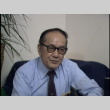
Interview with Clarence Matsumura, part 4 of 5 (ddr-densho-1007-1772)
Matsumura discusses stumbling across Dachau near the end of the war, finding and rehabilitating concentration camp survivors in Waakirchen, pursuing the German military towards Berchtesgaden and then Berlin, Germany surrendering, the end of the war, and leaving the military. Interview starts at 0:50. Loni Ding can be heard asking questions in the background. Original title: II …
av
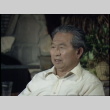
Interview with Clarence Matsumura, part 5 of 5 (ddr-densho-1007-1773)
Matsumura discusses being discharged from the military, moving to Minneapolis, working for Lew Bonn Company, attending the University of Minnesota, being ordered to report for duty in 1949, his difficulty talking about Dachau, his thoughts on war and America's role in international politics, the importance of fighting for what is right, his efforts against discrimination at …
av
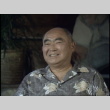
Interview with Don Oka, Steve Yagi, and Shigeo Ito, part 5 of 8 (ddr-densho-1007-1774)
Continued from ddr.densho.org/ddr-densho-1007-1620/. Oka is on the left, Yagi in the center, and Ito on the right. Ito discusses the deaths of two Nisei on his team and the fear of being mistaken for a Japanese soldier. Oka discusses being interviewed for military intelligence at Camp Carson in Colorado, being treated differently than Caucasian soldiers, …
av
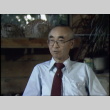
Interview with Don Oka, Steve Yagi, and Shigeo Ito, part 7 of 8 (ddr-densho-1007-1775)
Continued from ddr.densho.org/ddr-densho-1007-1621/. Oka is on the left, Yagi in the center, and Ito on the right. Yagi discusses his family (some of whom were near Hiroshima at the time of the bomb) and their situation after the war, being discharged from the military, joining and working for the post office, and wanting to switch …
av
Interview with Don Oka, Steve Yagi, and Shigeo Ito, part 8 of 8; interview with Nobuo Yamashita, part 1 of 5 (ddr-densho-1007-1776)
Oka is on the left, Yagi in the center, and Ito on the right. Oka discusses his recovery from tuberculosis, entering and winning a cartoon contest, going to art school after recovery, starting to work in advertising, returning to cartooning after retirement, and serving in JICPOA, and working with white officers. Yagi discusses working in the …
av
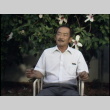
Interview with Nobuo Yamashita, part 2 of 5 (ddr-densho-1007-1777)
Yamashita discusses serving with Minoru (Min) Hara, his family's business ventures (farming and produce), being deployed to the 6th Infantry Division in New Guinea, how he kept himself busy while serving, the story of a boy who was shot in a friendly fire incident, his issues with his officers, not getting furlough, and the death of …
av
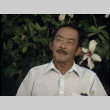
Interview with Nobuo Yamashita, part 3 of 5 (ddr-densho-1007-1778)
Yamashita discusses why his parents didn't want him to go to college, joining his family's produce business, meeting his wife in Manzanar, his service in the Philippines, interrogating prisoners of war, seeing American prisoners who came out of Santo Tomas, the selfishness of weathy Japanese people in Korea, and not getting any promotions or furlough in …