
Loni Ding Oral History and Film Research Collection ddr-densho-1007
1870 items
1870 items
av
Interview with Nobuo Yamashita, part 4 of 5 (ddr-densho-1007-1779)
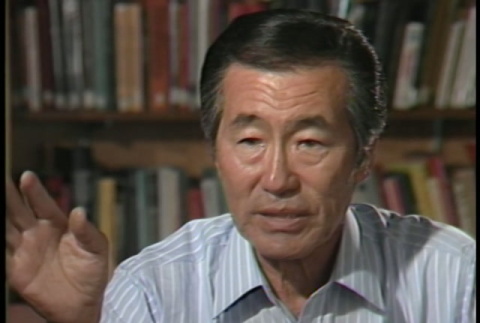
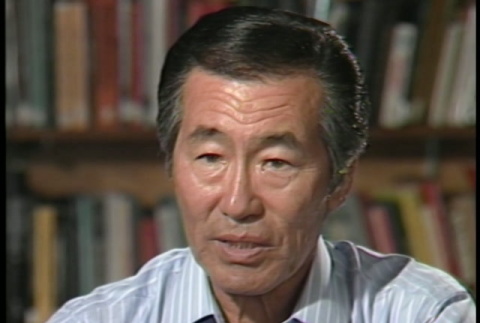
Yamashita discusses helping prisoners of war avoid execution, the execution of General Yamashita, how he dealt with the more difficult parts of service, the difference between the Japanese soldiers he fought in New Guinea and the Philippines, why he didn't want to serve in Japan during the occupation, staying in contact with his family in Manzanar …
av
Interview with Nobuo Yamashita, part 5 of 5 (ddr-densho-1007-1780)
Nobuo briefly discusses his encounter with a geisha. Interview ends at 2:25; rest of tape is b-roll of a list of soldiers in Company B and photos/immigration documents presumably from the Yamashita family. Original title: II LA #58, 7-26-85, Yamashita V
av
Interview with Shiro Tokuno, part 1 of 4 (ddr-densho-1007-1781)
Tokuno discusses his time in occupied Japan, giving out sandwiches on Christmas, a commanding officer of his during occupation who wanted all shops removed from Ginza and the difficulty some officers had understanding cultural and economic issues. Loni Ding can be heard asking questions behind the camera. Original title: II SAC #1, 9-6-85, Shiro T.. Interview …
av
Interview with Shiro Tokuno, part 2 of 4 (ddr-densho-1007-1782)
Tokuno discusses food distribution and hunger issues in post-war Japan, working on rice collection in Saga Prefecture, the story of a Japanese veteran who was nearly sent back home on his way to a hospital, and how the Nisei were viewed by Japanese nationals. Loni Ding can be heard asking quetsions behind the camera. Original title: …
av
Interview with Shiro Tokuno, part 3 of 4 (ddr-densho-1007-1783)
Tokuno discusses the role of Nisei in the occupation, the attitudes Japanese nationals and American officers had toward Nisei, his service managing agricultural/forestry/fisheries/mining in occupied Japan, the policies he helped implement, moving to Sacramento and farming after the war, deciding to go into military intelligence, his mother's thoughts on him joining the military, and working with …
av
Interview with Shiro Tokuno, part 4 of 4 (ddr-densho-1007-1784)
Tokuno discusses his work in the land reform program in occupied Japan, his lifelong interest in Japanese agriculture, his relationship with Mr. Matsumoto (a high-ranking Japanese official working in agriculture), California's water distribution system, and what the US could learn from Japanese agriculture. Loni Ding can be heard asking questions behind the camera. Original title: II …
av
Conversation between John Burden and Shig Kihara, part 3 of 3 (ddr-densho-1007-1785)
Conversation continued from ddr.densho.org/ddr-densho-1007-1654/. Burden and Kihara discuss Burden and his wife predicting that Japan would fight the US before Pearl Harbor, the story of Admiral Chester Nimitz, and the founding of the Military Intelligence Service Language School. Around 6 minutes, tape shifts to b-roll shots of the two walking around and their surroundings. Video …
av
Eric Saul gives John Burden and Shig Kihara a tour of the Presidio Army Museum (ddr-densho-1007-1786)
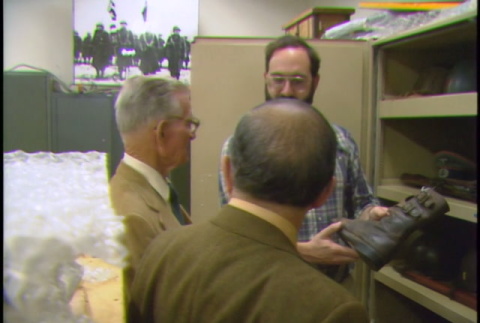
Burden and Kihara tour the Presidio Army Museum in San Francisco, guided by Eric Saul. Burden discusses weapons he brought back from the war and the equipment he used while serving. Original title: II B/K #4, Nisei Soldier Part 2, 12/18/85
av
Conversation between Eric Saul and John Burden; Shig Kihara on Caucasian officers and Nisei soldiers (ddr-densho-1007-1787)
Saul and Burden discuss Burden's knowledge of Japanese and Burden's relationship with Japanese people in Japan and on Maui. Kihara discusses why the Pentagon wanted Caucasian officers leading Nisei in Japan, the relationships between Caucasian officers and Nisei soldiers (with examples), and a few stories about Judge Eugene Wright. Original title: II B/K #5, Burden/Kihara tape …
av
Interview with John Burden and Shig Kihara, part 1 of 4 (ddr-densho-1007-1788)
Burden discusses the diaries collected from Japanese soldiers, translating the souvenirs American soldiers collected, Nisei soldiers attempting to get Japanese citizens and soldiers to surrender, and speaking to Japanese prisoners of war. Kihara discusses the efforts of Nisei on Saipan/Iwo Jima/Okinawa to rescue Japanese citizens and soldiers. Loni Ding can be heard asking questions behind the …
av
Interview with John Burden and Shig Kihara, part 2 of 4 (ddr-densho-1007-1789)
Burden discusses an operation attempting to get Japanese soldiers in a cave to surrender, translating captured documents, how his superiors reacted to translated information, serving in Fiji, the attitudes of Nisei whose parents were interned, his time serving with a soldier named Miyazaki, and some close calls he and his soldiers had. Loni Ding can be …
av
Interview with John Burden and Shig Kihara, part 3 of 4 (ddr-densho-1007-1790)
Burden discusses his experiences working with Nisei and Japanese soldiers, the Japanese taught to the US Marines, the cultural overlaps between Nisei and Japanese nationals, the importance of military intelligence and the Nisei, how he kept his soldiers safe, and taking Atabrine (mepacrine) while serving. Eric Saul and Loni Ding can be heard asking questions behind …
av
Interview with John Burden and Shig Kihara, part 4 of 4 (ddr-densho-1007-1791)
Burden discusses avoiding being sent to the Battle of New Georgia after the Guadalcanal campaign, bringing souvenirs back to Camp Savage, and the difficulties of serving in the jungle. Eric Saul and Loni Ding can be heard asking questions behind the camera. Original title: II B/K #9, Burden/Kihara tape I, 12/15/85
av
Interview with Frank Emi, part 1 of 6 (ddr-densho-1007-1792)
Emi discusses resisting the draft, the difference between Nisei and Caucasians, Issei attitudes toward the draft, the attitudes of draft resisters, Heart Mountain as a "model" relocation camp, being arrested in camp by the FBI, awaiting trial in jail in Cheyenne and Laramie (in WY), his family's thoughts on him resisting the draft, and a fellow …
av
Interview with Frank Emi, part 2 of 6 (ddr-densho-1007-1793)
Emi discusses being imprisoned in Leavenworth, the sentences of the members of the Fair Play Committee, the Issei who financially assisted to the Committee, the Committee's legal battles, how people often agree with draft resistance with hindsight, the various opinions of Nisei veterans on draft resistance, and the sort of student he was in high school. …
av
Interview with Frank Emi, part 3 of 6 (ddr-densho-1007-1794)
Emi discusses the racial discrimination he experienced as a child, not speaking up for himself in high school, the impact of racism on Nisei, the lessons he learned from his parents, the Fair Play Committee's case in the 10th Circuit Court of Appeals in Denver, and the charges levied against the Committee. Interview starts at 0:31. …
av
Interview with Frank Emi, part 4 of 6 (ddr-densho-1007-1795)
Emi discusses the importance of the Fair Play Committee winning their case, the lasting impact of his imprisonment, the loyalty questionnaire, the beginning of the draft resistance movement, why the story of the draft resisters doesn't get as much attention as it deserves, and why the JACL and Japanese American newspapers did not support draft resistance. …
av
Interview with Frank Emi, part 5 of 6 (ddr-densho-1007-1796)
Emi discusses community organizations and publications that shunned the draft resisters, the statement by the Fair Play Committee that triggered their arrest, what his children know of his time in camp, and why some Nisei and Issei don't discuss what happened during the war. Emi also reads a letter from George Ishikawa leading up to the …
av
Hollywood Judo Dojo footage, part 2 of 3 (ddr-densho-1007-1797)
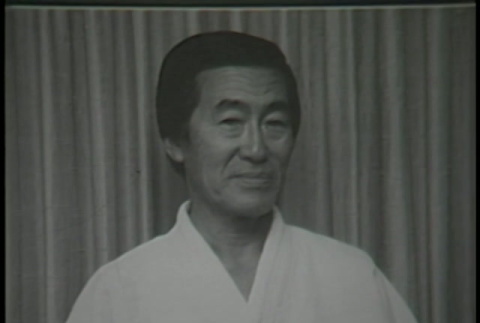
Continued from ddr.densho.org/ddr-densho-1007-1745/Gary (last name unknown), a student at the Hollywood Judo Dojo, discusses learning from Frank Emi and how the Hollywood dojo learns from others worldwide. From 6:27 to end, footage of Gary and Emi warming up and sparring. Loni Ding can be heard behind the camera. Original title: II RES/PRO #8, Frank Emi …
av
Hollywood Judo Dojo footage, part 3 of 3; interview with Paul Minerich, Tim Nomiyama, Masao Kataoka, and Kenjiro Hayakawa, part 1 of 8 (ddr-densho-1007-1798)
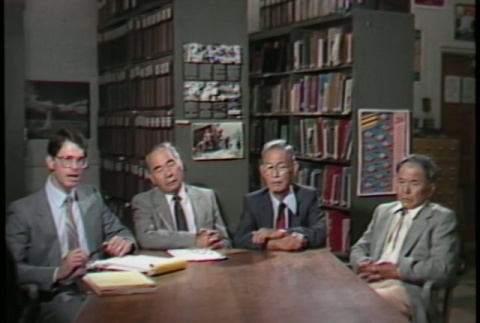
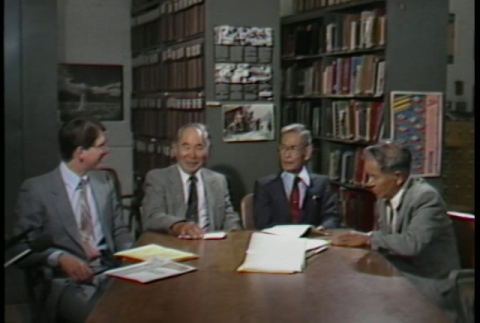
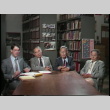
From start of tape until 3:00, footage of Frank Emi and Gary (last name unknown) sparring at the Hollywood Judo Dojo. Interview with (from left to right) Paul Minerich, Tim Nomiyama, Masao Kataoka and Kenjiro Hayakawa starts at 3:08. Nomiyama, Kataoka and Hayakawa were part of the "DB Boys", Nisei soldiers who were court-martialed for disobeying …
av
Interview with Paul Minerich, Tim Nomiyama, Masao Kataoka, and Kenjiro Hayakawa, part 2 of 8 (ddr-densho-1007-1799)
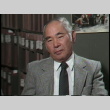
From left to right: Minerich, Nomiyama, Kataoka, Hayakawa. Minerich discusses the urgency of the DB Boys case. Nomiyama and Kataoka discuss whether they thought their court martials would ever be reversed. Kataoka discusses growing up in LA, meeting Edmund Zane in high school, how the two became friends, how Zane picked up the legal case of …
av
Interview with Paul Minerich, Tim Nomiyama, Masao Kataoka, and Kenjiro Hayakawa, part 3 of 8 (ddr-densho-1007-1800)
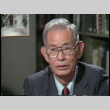
From left to right: Minerich, Nomiyama, Kataoka, Hayakawa. Kataoka discusses being a soldier when evacuation started, the interment of his wife, and the relationship between Kibei and Nisei soldiers. Kataoka and Nomiyama discuss how they met. Nomiyama discusses when he decided to refuse to serve, being called a traitor when he left Japan, returning to the …
av
Interview with Paul Minerich, Tim Nomiyama, Masao Kataoka, and Kenjiro Hayakawa, part 4 of 8 (ddr-densho-1007-1801)
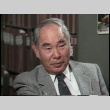
From left to right: Minerich, Nomiyama, Kataoka, Hayakawa. Nomiyama discusses waiting for an opportunity to take part in the war effort, joining company C at FortMcClellan in Alabama, wanting to be court martialed to have an opportunity to speak his mind, why he didn't want to serve in the Pacific, what he thought the war was …
av
Interview with Paul Minerich, Tim Nomiyama, Masao Kataoka, and Kenjiro Hayakawa, part 5 of 8 (ddr-densho-1007-1802)
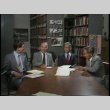
From left to right: Minerich, Nomiyama, Kataoka, Hayakawa. Kataoka and Hayakawa discuss why they refused to serve. Kataoka discusses why he had little faith that justice would be done and the change in attitudes towards Japanese Americans since the war. Nomiyama discusses why he refused to fight. Interview starts at 0:27. Loni Ding can be heard …
av
Interview with Paul Minerich, Tim Nomiyama, Masao Kataoka, and Kenjiro Hayakawa, part 6 of 8 (ddr-densho-1007-1803)
From left to right: Minerich, Nomiyama, Kataoka, Hayakawa. Hayakawa discusses confronting his commanding officer and why he chose not to serve. Nomiyama discusses how some of his friends didn't understand why he refused to serve, and telling his children about his experiences. Kataoka discusses telling his family about his experiences during the war. Interview starts at …