
Loni Ding Oral History and Film Research Collection ddr-densho-1007
1870 items
1870 items
av
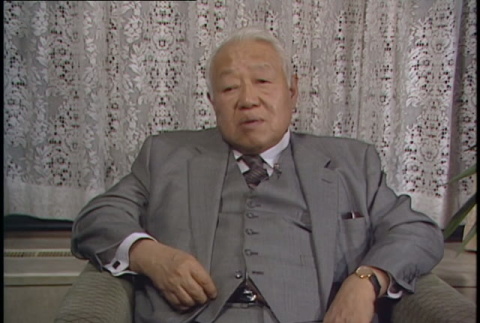
Interview with Barry Saiki, part 3 of 5 (ddr-densho-1007-1704)
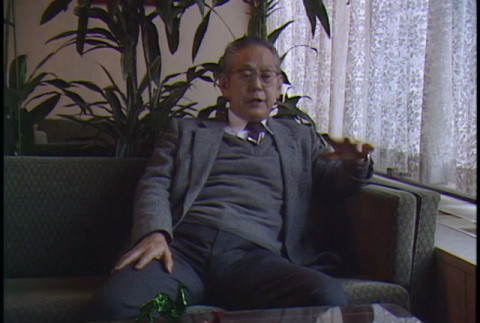
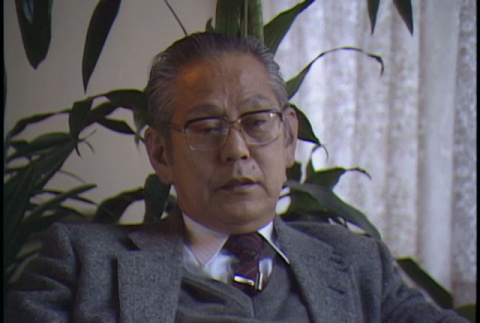
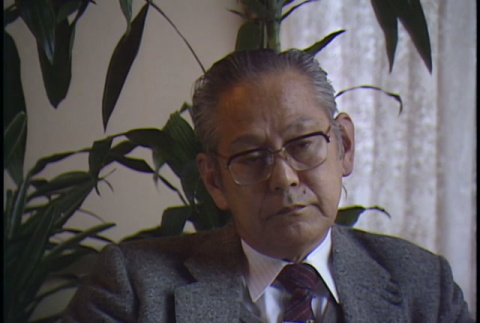
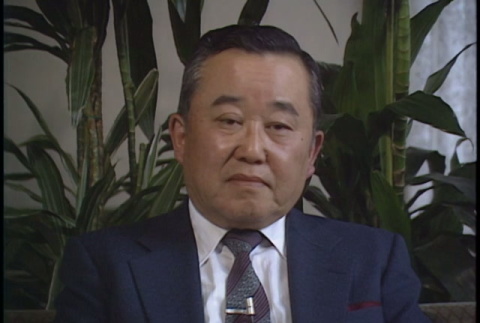
Saiki discusses being relocated to the Rohwer camp, working as editor for the Rohwer Outpost newspaper, the social stigma around his Caucasian friends visiting in camp, his friend Elizabeth Homberger (sp?) and the work she did for the Nisei during the war, the reactions to military recruiters at Rohwer, and his reasons for not volunteering for …
av
Interview with Barry Saiki, part 4 of 5 (ddr-densho-1007-1705)
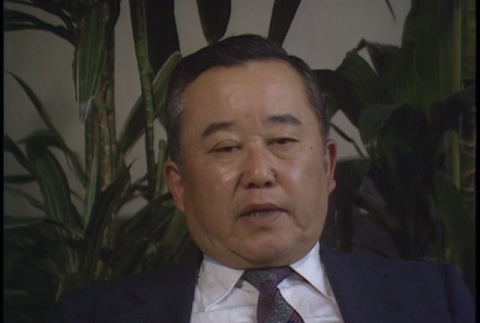
Saiki discusses the loyalty questionnaire given to Nisei in camp, visiting his father in New Mexico, being drafted, being recruited for intelligence work, moving to Japan in 1967, his work in international business, and the formation of the Military Intelligence Service Language School Association and other such organizations. Loni Ding can be heard asking questions behind …
av
Interview with Barry Saiki, part 5 of 5 (ddr-densho-1007-1706)
Saiki discusses what he wants Sansei and Americans in general to know about internment and the importance of being "bicultural". Loni Ding can be heard asking questions behind the camera. Original title: 219, II JA #45, Barry Saiki, Sun. Feb. 2
av
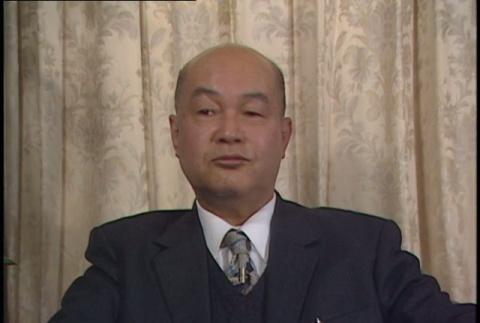
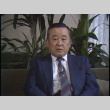
Interview with Shigeo Yamada, part 1 of 3 (ddr-densho-1007-1707)
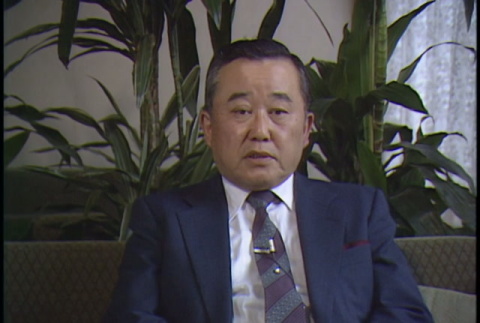
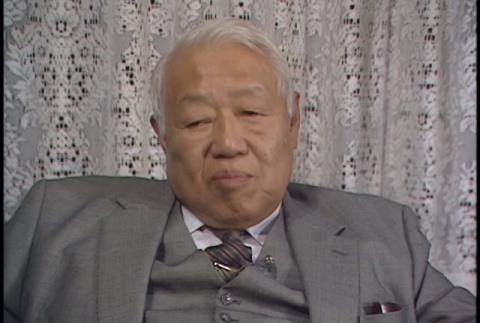
Yamada discusses attending Keio University, being drafted into the Japanese navy, serving on the cruiser Yahagi, a "suicide mission" to occupied Okinawa, and learning Japanese in America as a child. Loni Ding can be heard asking questions behind the camera. Original title: II JA #46, Shigeo Yamada, Sun. Feb. 2. Interview continues at ddr.densho.org/ddr-densho-1007-1708/
av
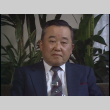
Interview with Shigeo Yamada, part 2 of 3 (ddr-densho-1007-1708)
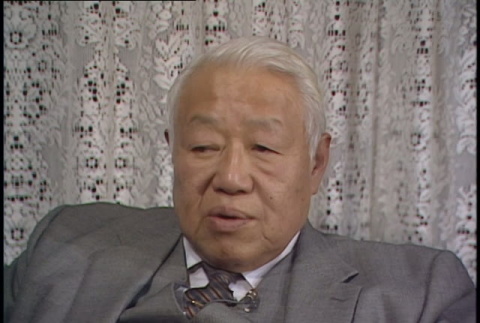
Yamada discusses growing up on farms in Hansen and Jerome, ID, his parents' views on education, his first impressions of Japan, the sinking of the cruiser he served on in the Japanese navy and being rescued. Loni Ding can be heard asking questions behind the camera. Original title: II JA #47, Shigeo Yamada, Sun. Feb. 2. …
av
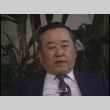
Interview with Shigeo Yamada, part 3 of 3 (ddr-densho-1007-1709)
Yamada discusses the military service of his brothers (for the Japanese army) and the state of Japan after the war/post-reconstruction. Loni Ding can be heard asking questions behind the camera. Original title: II JA #48, Shigeo Yamada, Sun. Feb. 2
av
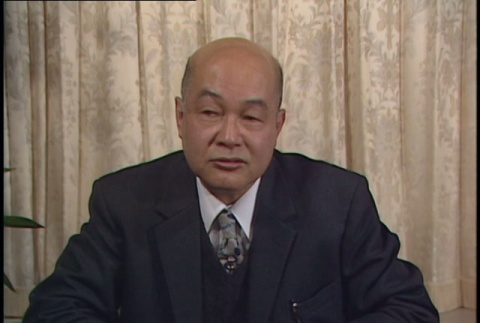
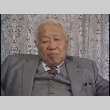
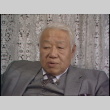
Interview with Masaru Ogawa, part 1 of 3 (ddr-densho-1007-1710)
Ogawa discusses growing up in Hollywood, spending a year in Japan as a child, his experiences with discrimination in high school, attending Japanese classes, being denied from universities for being Japanese, working in Tokyo when the war started, and convincing his parents to move back to Japan in 1941. Loni Ding can be heard asking questions …
av
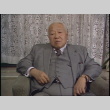
Interview with Masaru Ogawa, part 2 of 3 (ddr-densho-1007-1711)
Ogawa discusses his time in the Philippines in 1944 with the Japanese army. Loni Ding can be heard asking questions behind the camera. Original title: II JA #50, Masaru Ogawa, Sun. Feb. 2. Interview continues at ddr.densho.org/ddr-densho-1007-1712/
av
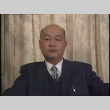
Interview with Masaru Ogawa, part 3 of 3 (ddr-densho-1007-1712)
Ogawa discusses being the last person to surrender from his interpreter school, working with American soldiers in Japan after the war, trusting an American soldier to take his personal belongings back to Tokyo, and his thoughts on post-war Japan. Loni Ding can be heard asking questions behind the camera. Original title: II JA #51, Masaru Ogawa, …
av
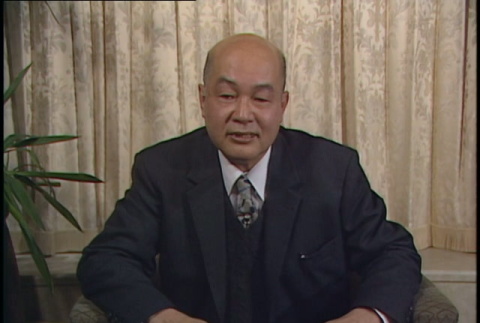
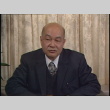
Interview with Hugh Nozawa, part 1 of 3 (ddr-densho-1007-1713)
Nozawa discusses being born in Santa Monica, attending high school in Japan, being drafted, being court-martialed for refusing to complete training, recently getting honorable discharge, the discrimination he and other Nisei faced in the army, and President Roosevelt's visit to Fort Riley. Loni Ding can be heard asking questions behind the camera. Original title: 220, II …
av
Interview with Hugh Nozawa, part 2 of 3 (ddr-densho-1007-1714)
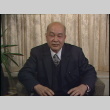
Nozawa discusses the mistreatment of the Nisei during Roosevelt's visit to Fort Riley, a complaint he wrote to John J. McCloy afterwards, being punished for writing the letter without permission, the differences between Kibei and US-educated Nisei, growing up in Japan, being drafted while in Santa Monica, and being court martialed. Loni Ding can be heard …
av
Interview with Hugh Nozawa, part 3 of 3 (ddr-densho-1007-1715)
Nozawa discusses being court-martialed for refusing to serve in the military while the internment camps were operating, the long fight for honorable discharge after the fact, and his reasons for trying to hard to reverse the dishonorable discharge given to Nisei who refused to serve. Original title: 222, II JA #54, Hugh Nozawa, Sun. Feb. 2
av
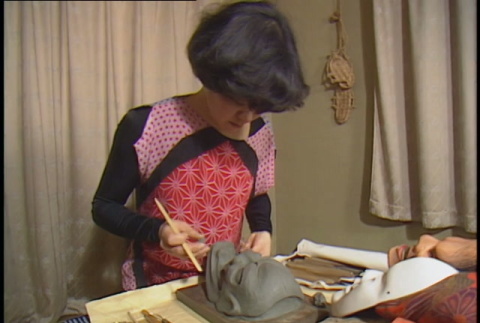
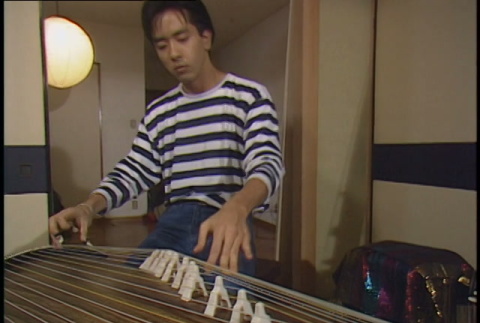
Koto performance, part 2 of 2; Noh mask making (ddr-densho-1007-1716)
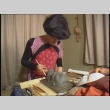
The koto player is Brian Yamakoshi. The woman making masks is Chizuko, last name unknown. Loni Ding can be heard directing in the background. First portion of koto performance at ddr.densho.org/ddr-densho-1007-1724/. Original title: 223, II JA #55, Brian Yamakoshi, Fri. Feb. 7, Last of Yamakoshi, Endo mask making
av
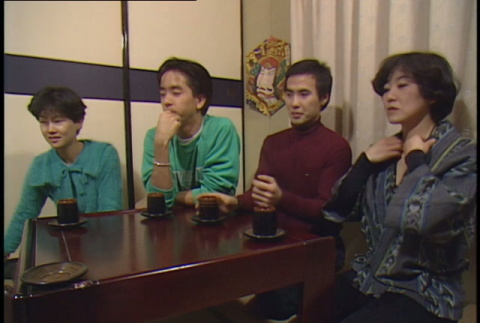
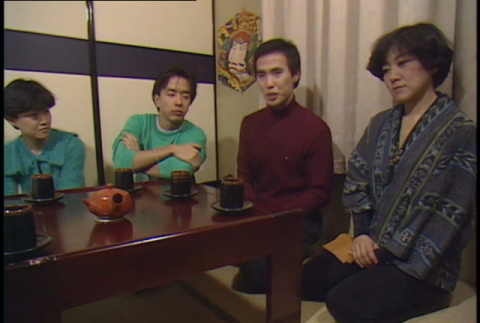
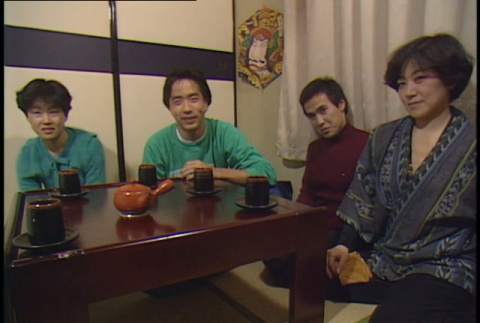
Interview with Akiko, Brian Yamakoshi, Kenny and Chizuko, part 1 of 4 (ddr-densho-1007-1717)
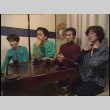
In order of left to right: Akiko, Brian Yamakoshi, Kenny, and Chizuko. Aside from Brian, last names unknown; Kenny and Chizuko are married. This tape focuses mainly on Chizuko, who discusses her relationship with her grandfather, her reasons for coming to Japan, and making Noh masks. Loni Ding can be heard asking questions behind the camera. …
av
Interview with Akiko, Brian Yamakoshi, Kenny and Chizuko, part 2 of 4 (ddr-densho-1007-1718)
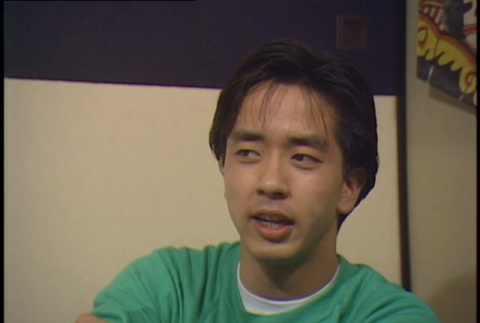
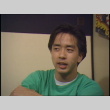
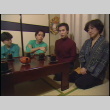
Brian Yamakoshi discusses his reasons for playing koto, his feelings on the art form, and his approach to the instrument. Kenny discusses his experience playing taiko, his first time hearing Japanese drums, his time on an indigenous American reservation, growing up in La Habra, CA, and how time spent at a pueblo encouraged him to learn …
av
Interview with Akiko, Brian Yamakoshi, Kenny and Chizuko, part 3 of 4 (ddr-densho-1007-1719)
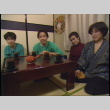
Akiko, a Japanese national, discusses her time in the US, meeting a Nisei couple from Watsonville, CA, being a minority in the US, the differences between Japanese Americans and Japanese nationals, and racial discrimination in the US. Original title: 226, II JA #58, Brian Yamakoshi, Fri. Feb. 7. Interview continues at ddr.densho.org/ddr-densho-1007-1720/
av
Interview with Akiko, Brian Yamakoshi, Kenny and Chizuko, part 4 of 4 (ddr-densho-1007-1720)
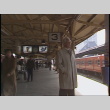
Akiko and Brian Yamakoshi discuss the differences between Japanese Americans and Japanese nationals. Chizuko discusses the unique opportunity afforded to Sansei to pursue Japanese arts and culture. Interview ends around 10:30; rest of tape is reaction shots. Original title: 227, II JA #59, Brian Yamakoshi, Fri. Feb. 7
av
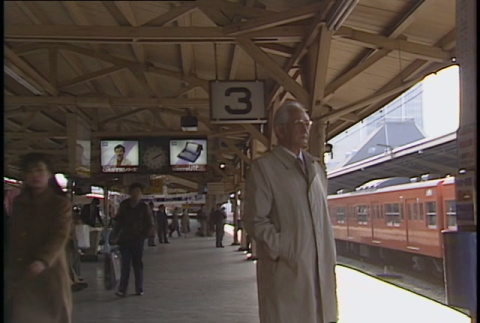
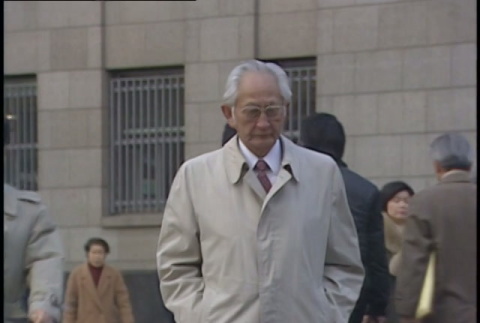
Exterior footage at Tokyo Station, part 1 (ddr-densho-1007-1721)
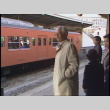
Footage of Harry Fukuhara walking around outside Tokyo Station. Loni Ding can be heard directing. Original title: 228, II JA #60, Tokyo Station, Fri, Feb. 7. Footage continues at ddr.densho.org/ddr-densho-1007-1722/
av
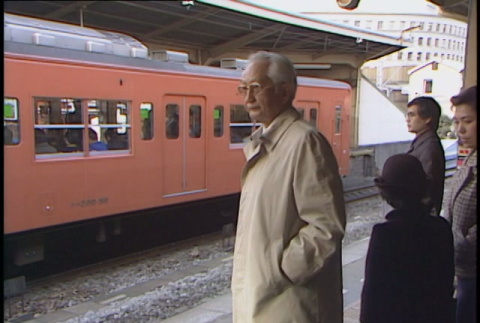
Exterior footage at Tokyo Station, part 2 (ddr-densho-1007-1722)
Footage of Harry Fukuhara walking around and taking a train from Tokyo Station. Also includes b-roll of views from the train and the surrounding area. Loni Ding can be heard directing. Original title: 229, II JA #61, Tokyo Station, Fri. Feb. 7
av
Exterior footage in Tokyo; taiko performance, part 1 of 2 (ddr-densho-1007-1723)
Footage of Harry Fukuhara walking around Tokyo. Footage of taiko setup and performance starts at 1:35. Performers are Kenny and Chizuko, married couple, last names unknown - interviewed in objects ddr-densho-1007-1717 to 1720. Original title: 230, II JA #62, Tokyo Station, taiko, Fri. Feb. 7. Taiko performance continues at ddr.densho.org/ddr-densho-1007-1724/
av
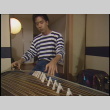
Taiko performance, part 2 of 2; exterior Tokyo footage; Brian Yamakoshi koto setup and performance, part 1 of 2 (ddr-densho-1007-1724)
Kenny and Chizuko (last names unknown) are the taiko performers. Exterior footage filmed from a car at night. Taiko tuning and performance starts at 4:45 and runs through end of tape. Original title: 231, II JA #63, 3D taiko (end only), Koto Performance (Yamakoshi), Feb. 7, 1986. Koto performance continues at ddr.densho.org/ddr-densho-1007-1716/
av
B-roll and interview with Ray Aka, part 1 of 2 (ddr-densho-1007-1725)
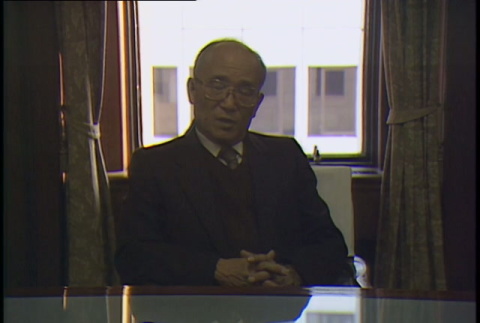
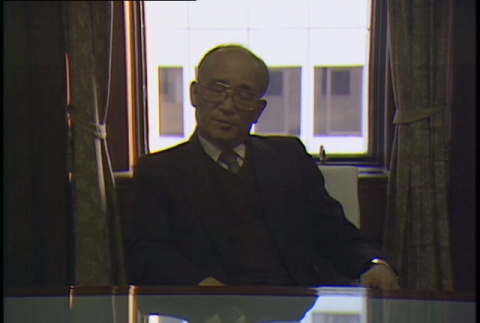
Footage of Ray Aka walking around the Dai Ichi building in Tokyo, the former headquarters of the US military during occupation. Aka discusses the work he did in the building, General MacArthur's occupation policies, and the impact of the occupation. Loni Ding can be heard asking questions behind the camera. Original title: 232, II JA #64, …
av
Interview with Ray Aka, part 1 of 2; b-roll interior and exterior Dai Ichi building, Japanese constitution (ddr-densho-1007-1726)
Aka discusses coming to the Dai Ichi building to do interpretation work. Interview ends at 4:01. Rest of tape is b-roll: interior of Dai Ichi building, draft of Japanese constitution, Aka outside Dai Ichi building. Video starts at 0:25. Loni Ding can be heard asking questions behind the camera. Original title: 233, II JA #65, Daiichi …
av
Ueno Park b-roll, part 1 of (ddr-densho-1007-1727)
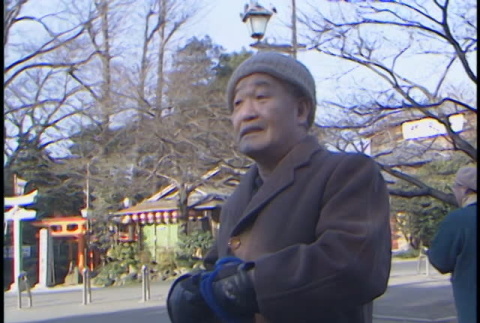
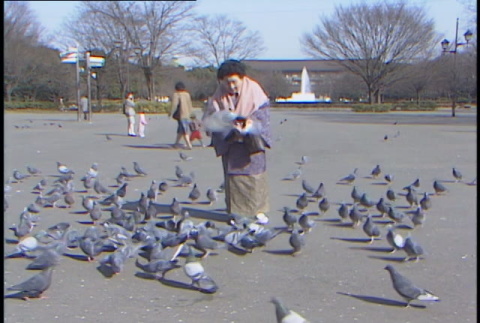
Footage filmed at Ueno Park in Tokyo. Original title: 234, II JA #66, Ueno Park, Mon. Feb. 3. B-roll continues at ddr.densho.org/ddr-densho-1007-1728/
av
Ueno Park b-roll, part 2 of (ddr-densho-1007-1728)
Footage filmed at Ueno Park in Tokyo. Original title: 235, II JA #67, Ueno Park, Mon. Feb. 3