
Loni Ding Oral History and Film Research Collection ddr-densho-1007
1870 items
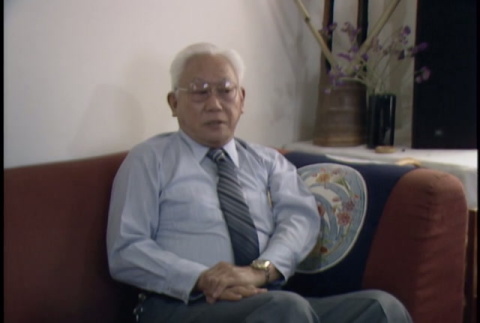
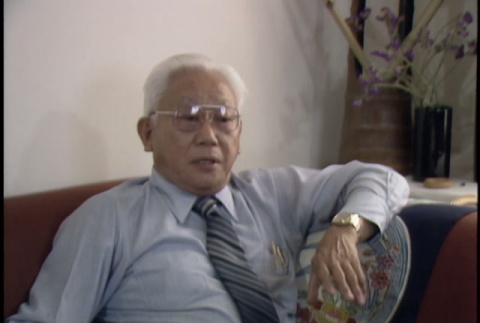
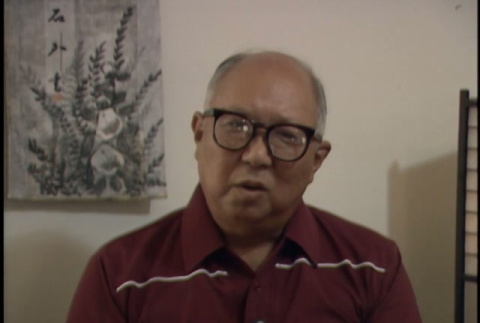
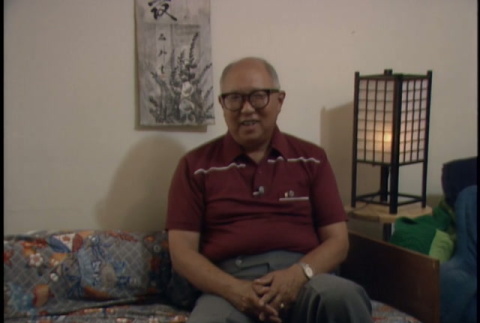
1870 items
av
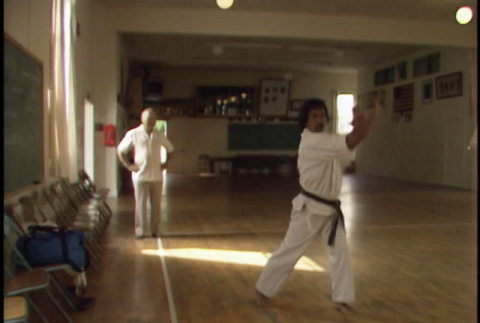
Kanegai home b-roll; karate demonstration (ddr-densho-1007-1579)
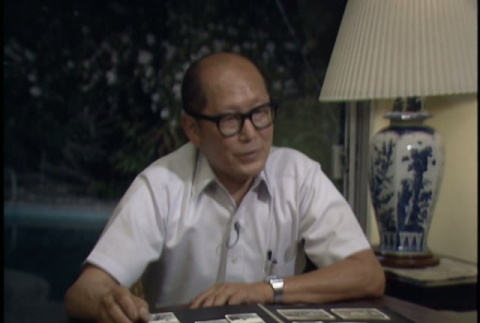
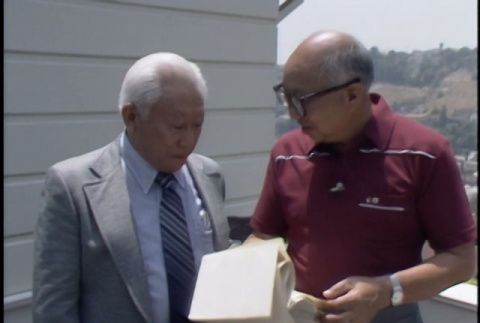
Bruce Kanegai with his son and his father, George, poolside; Bruce demonstrating karate and discussing the practice with his father at Sawtelle Judo Dojo. Video starts at 0:28. Original title: 76, II LA #6, 7-23-85, Kanegai - I, Family poolside, Bruce Demo at Dojo, West L.A.
av
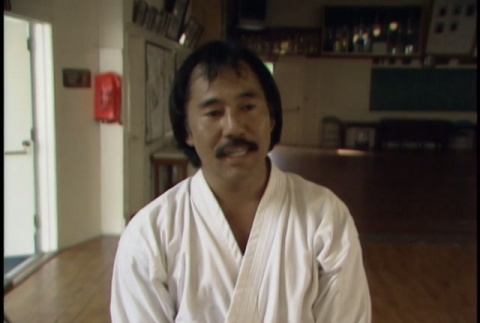
Interview with Bruce Kanegai and b-roll (ddr-densho-1007-1580)
Kanegai discusses teaching high school in Simi Valley, working on a yearbook, the hardships his parents faced, and anti-Japanese discrimination. Video starts at 0:29. Loni Ding can be heard asking questions behind the camera. First interview ends at 7:52, second interview starts at 9:18 and ends at 15:45. Rest of tape is b-roll of dojo and …
av
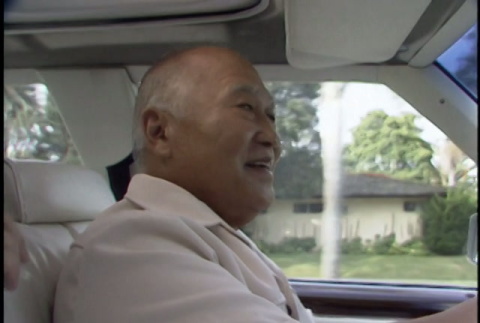
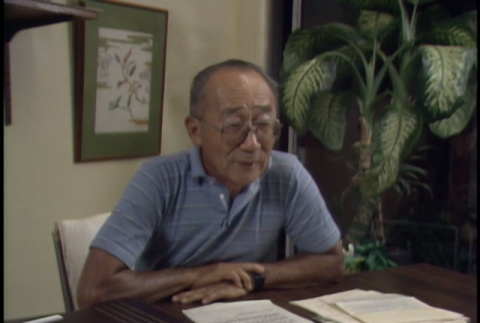
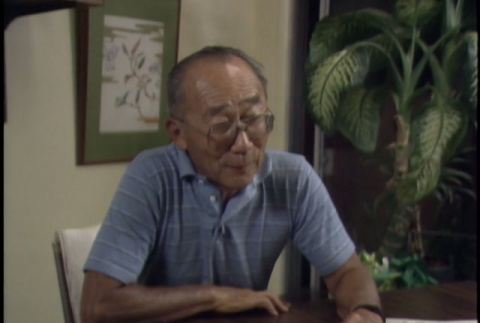
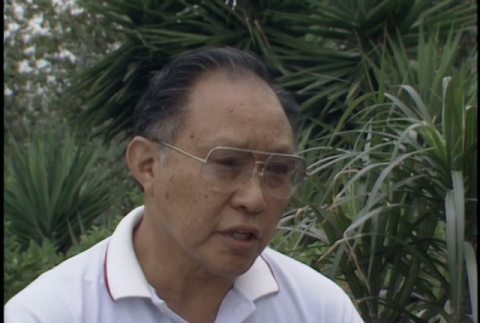
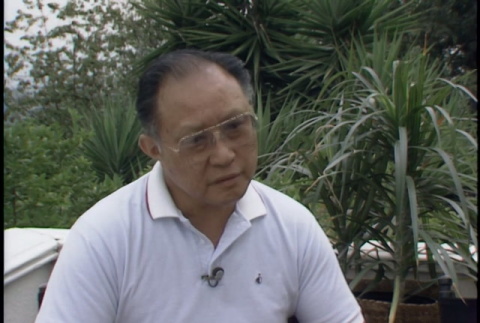
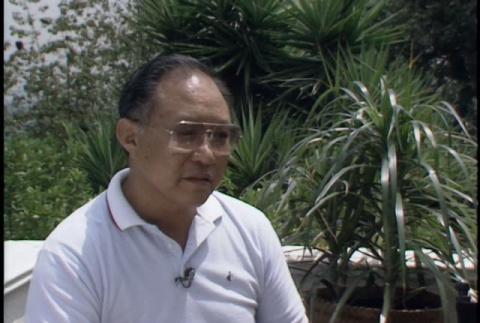
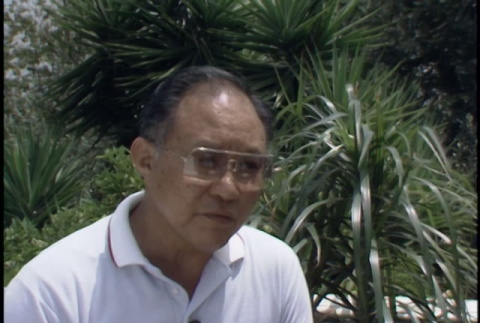
Interview with George Kanegai (ddr-densho-1007-1581)
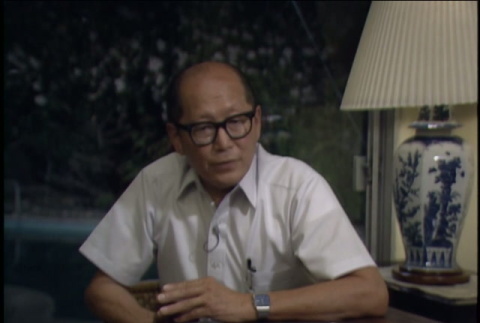
Kanegai discusses his time at the MISLS, serving overseas in Australia with ATIS, and the sinking of two Japanese submarines in Dutch Harbor. Video starts at 0:29. Loni Ding can be heard asking questions behind the camera. Significant wind noise. Original title: II LA #8, Kanegai III Car Interview, wind problem, 7-23-85
av
Kanegai family dinner and Moose (John) Fujikawa interview, part 1 of 4 (ddr-densho-1007-1582)
Footage of the Kanegai family eating in their backyard. Unscripted. The younger mustached man is Bruce Kanegai; the older man to his right is his father George. Video starts at 0:29. Interview with Fujikawa starts at 10:44. Fujikawa talks about his childhood in LA, his decision not to go to college, his reaction to Pearl Harbor, …
av
Interview with Moose (John) Fujikawa, part 2 of 4 (ddr-densho-1007-1583)
Fujikawa discusses working on a sugar beet farm during internment, his decision to volunteer for the army, his relationship with his parents, his service with ATIS in Australia and with the Australian army in the Pacific. Video starts at 0:26. Loni Ding can be heard asking questions behind the camera. Original title: II LA #10, Fujikawa …
av
Interview with Moose (John) Fujikawa, part 3 of 4 (ddr-densho-1007-1584)
Fujikawa discusses the Japanese surrender, post-war Japan, returning from the war, and meeting his son upon return. Video starts at 0:29. Loni Ding can be heard asking questions behind the camera. Original title: II LA #11, Fujikawa III, 7-23-85. Interview continues at ddr.densho.org/ddr-densho-1007-1585/
av
Interview with Moose (John) Fujikawa, part 4 of 4; interview with Yosh Nakayama, part 1 of 4 (ddr-densho-1007-1585)
Fujikawa discusses what his children know of the war and the birth of his children. Nakayama discusses how he learned how to speak Japanese and tells the story of an instructor of his who did not understand why a Nisei would not speak fluent Japanese. Video starts at 0:36. Loni Ding can be heard asking questions …
av
Interview with Yosh Nakayama, part 2 of 4 (ddr-densho-1007-1586)
Nakayama discusses his time in Japanese language school, speaking only Japanese at home, an instructor of his who did not understand why a Nisei student did not speak fluent Japanese, his father's arrest by the FBI, his family's evacuation from LA and internment in Manzanar, and his family's return to LA after the war. Video starts …
av
Interview with Yosh Nakayama, part 3 of 4 (ddr-densho-1007-1587)
Nakayama discusses his time searching for downed planes with the Graves Registration team in occupied Japan. Video starts at 0:26. Loni Ding can be heard asking questions behind the camera. Original title: II LA #14, Y. Nakayama III, 7-23-85. Interview continues at ddr.densho.org/ddr-densho-1007-1588/
av
Interview with Yosh Nakayama, part 4 of 4 (ddr-densho-1007-1588)
Nakayama discusses his experiences with Japanese locals, his worst memories of camp, his difficulty finding a job after the war, his work translating letters in Japan, his time learning judo in camp and in Japan, and his thoughts on why judo is important for Japanese-American youth. Video starts at 0:29. Loni Ding can be heard asking …
av
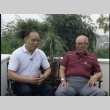
Interview with Harry and Ken Akune, part 1 of 6 (ddr-densho-1007-1589)
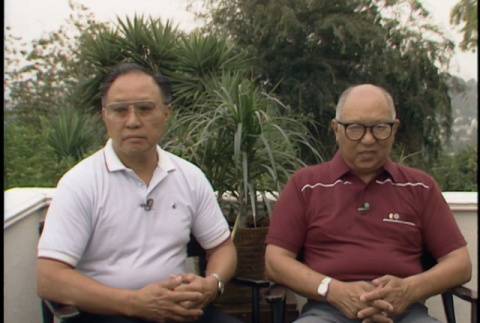
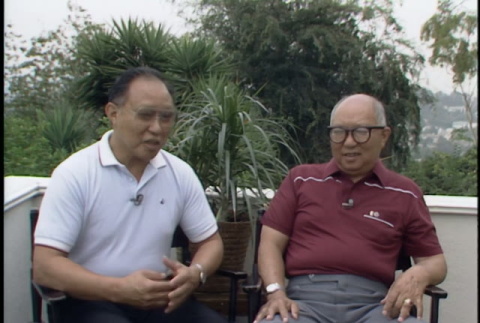
Ken is on the left, Harry on the right. The two discuss growing up together in Turlock, CA, the years they spent in Japan as children, their father's relationship with the Caucasian community in Turlock, and the racial discrimination they faced in Turlock. Video starts at 0:28. Loni Ding can be heard asking questions behind the …
av
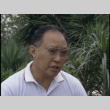
Interview with Harry and Ken Akune, part 2 of 6 (ddr-densho-1007-1590)
Ken is on the left, Harry on the right. The two discuss growing up as Nisei, anti-Japanese sentiment in the US, their relationship with their mother, the difference between Japanese nationals and Japanese Americans, Pearl Harbor, their time in internment at Merced and Amache, and their decision to volunteer for the military. Video starts at 0:28. …
av
Interview with Harry and Ken Akune, part 3 of 6 (ddr-densho-1007-1591)
Ken Akune discusses his time at Amache, his decision to join the military from camp, his time at Camp Savage, his basic training with the 442nd, community objection to his volunteering, and his time in the China-Burma-India theater. Video starts at 0:27. Loni Ding can be heard asking questions behind the camera. Original title: 77, II …

av
Interview with Harry and Ken Akune, part 4 of 6 (ddr-densho-1007-1592)
This tape exclusively features Ken Akune, who discusses the risk of capture by Japanese forces, his impressions of Merrill's Marauders and the 442nd, his connections to the Office of War Information, and the relationship between Japanese prisoners of war and the men he served with. Video starts at 0:30. Loni Ding can be heard asking questions …
av
Interview with Harry and Ken Akune, part 5 of 6 (ddr-densho-1007-1593)
This tape exclusively features Ken Akune, who discusses a confrontation he had with a racist sergeant, the propaganda he helped create in China/Burma/India, and the relationship between US soldiers and Japanese prisoners of war. Video starts at 0:29. Loni Ding can be heard asking questions behind the camera. Original title: 79, II LA #20, 7-24-85, Ken …
av
Interview with Harry and Ken Akune, part 6 of 6; b-roll and balcony meeting (ddr-densho-1007-1594)
This tape exclusively features Ken Akune, who discusses radio propaganda he made with the Office of War Information, an argument he had with an executive officer, and his feelings on redress. Video starts at 0:24, interview with Ken ends at 11:33. B-roll of patio from 11:34-13:28; rest of tape is a meeting between Harry Akune and …
av
Harry Akune and Jim Ariyasu on balcony (ddr-densho-1007-1595)
Harry Akune and Jim Ariyasu talking to each other about their service. Video starts at 0:26. Original title: 81, II LA #22, 7-24-85, Bakery meeting, Harry Akune & Jim Ariyasu
av
Interview with Jim Ariyasu, part 1 of 5 (ddr-densho-1007-1596)
Ariyasu discusses going to school to become a commissioned officer, his dreams of becoming a surgeon, his mother's health issues during his childhood, and the Japanese language testing he did upon joining the military. Loni Ding can be heard asking questions behind the camera. Original title: 82, II LA #23, 7-24-85, Jim Ariyasu Interview II. Interview …
av
Interview with Jim Ariyasu, part 2 of 5 (ddr-densho-1007-1597)
Ariyasu discusses his deployment, having to sell a camera of his, the secrecy required of him while serving, the censorship of letters he sent back home, and military language school. Video starts at 0:23. Loni Ding can be heard asking questions behind the camera. Original title: II LA #24, 7-24-85, Jim Ariyasu Interview III. Interview continues …
av
Interview with Jim Ariyasu, part 3 of 5 (ddr-densho-1007-1598)
Ariyasu discusses military language school, his medical issues after the service, his life before the military, an argument he had with his peers over whether their section leader was qualified, and his service in New Caledonia. Video starts at 0:24. Loni Ding can be heard asking questions behind the camera. Original title: 84, II LA #25, …
av
Interview with Jim Ariyasu, part 4 of 5 (ddr-densho-1007-1599)
Ariyasu discusses his service in New Caledonia, Fiji, the Solomon Islands, and the Philippines, receiving a Bronze Star medal, and the difficulty of receiving an actual rank in the military. Loni Ding can be heard asking questions behind the camera. Original title: 85, II LA #26, 7-24-85, Ariyasu Interview V. Interview continues at ddr.densho.org/ddr-densho-1007-1600/
av
Interview with Jim Ariyasu, part 5 of 5; interview with Harry Akune, part 1 of 4 (ddr-densho-1007-1600)
Ariyasu discusses saving a peer from a court martial, his real estate work, and racial solidarity. At 15:10, interview with Ariyasu ends and interview with Harry Akune begins. Akune discusses his time at Merced and Amache, volunteering for the army from camp, and his community's reaction to his decision to volunteer. Loni Ding can be heard …
av
Interview with Harry Akune, part 2 of 4 (ddr-densho-1007-1601)
Akune discusses his decision to volunteer, his brothers in the Japanese army, his reaction to Pearl Harbor, the Japanese occupation in Manchuria, his time in language school, his family after the war, meeting his wife, his time in Chicago, and his translation work in the army in Brisbane. Video starts at 0:30. Loni Ding can be …
av
Interview with Harry Akune, part 3 of 4 (ddr-densho-1007-1602)
Akune discusses his service on Corregidor Island and Mindoro Island, and a combat jump he performed. Video starts at 0:28. Loni Ding can be heard asking questions behind the camera. Original title: 88, II LA #29, 7-24-85, Harry Akune Interview III. Interview continues at ddr.densho.org/ddr-densho-1007-1603/
av
Interview with Harry Akune, part 4 of 4; balcony conversation (ddr-densho-1007-1603)
Akune discusses a combat jump he performed on Corregidor Island, his time with the 503rd Infantry Regiment, receiving a parachutist badge, and returning from the war. Video starts at 0:30, interview ends at 17:31. Loni Ding can be heard asking questions behind the camera. Rest of tape is footage of Harry and Ken Akune, George Kanegai, …