Military Intelligence Service

The first Japanese Americans to serve in the military during World War II were linguists involved in the Military Intelligence Service Language School (MISLS). The MISLS was charged with training soldiers in the Japanese language for intelligence purposes. Japanese Americans served as both instructors and students at the school, which opened on November 1, 1941. The Language School began recruiting instructors and later students directly from concentration camps as early as July 1942. MISLS graduates were assigned in small teams to units fighting in the Pacific and to intelligence centers throughout the Allied command. They translated captured documents, interrogated prisoners of war, wrote propaganda, encouraged Japanese soldiers and civilians to surrender, and monitored radio broadcasts. After the war, they acted as interpreters at the war crime trials and for the occupation government in Japan.

World War II (277)
Military service (4131)
Military Intelligence Service (1387)

Related articles from the Densho Encyclopedia :
John Aiso, Fort Snelling, Masaji Marumoto, Jack Matsuoka, Military Intelligence Service, Military Intelligence Service Language School, Walter Tsukamoto, Karl Yoneda
Facilities
Format
Genre
Usage

Use <Ctrl> or (⌘) keys to select multiple terms

1387 items
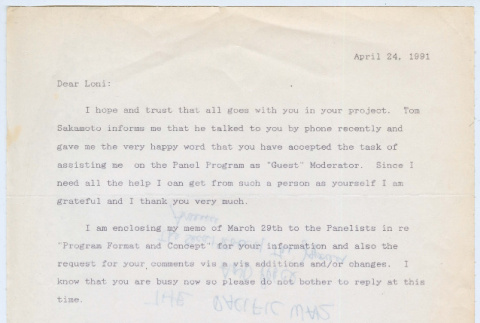
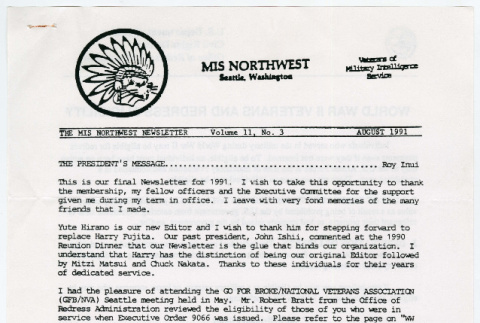
Letter from Tom Sakamoto to Loni Ding (ddr-densho-1007-1447)
doc Letter from Tom Sakamoto to Loni Ding (ddr-densho-1007-1447)
Thank-you letter to Ding after her participation in the 50th MIS Anniversary reunion.
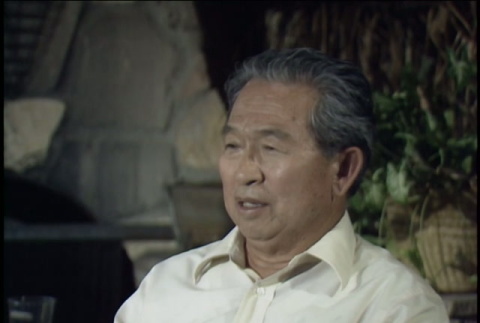
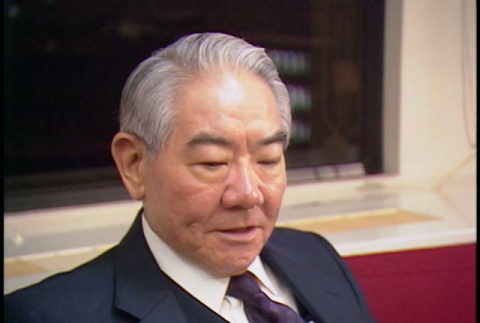
Interview with George Nakamura, part 2 of 5 (ddr-densho-1007-1681)
av Interview with George Nakamura, part 2 of 5 (ddr-densho-1007-1681)
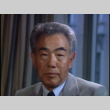
Nakamura discusses his deployment to Asia, his service in Chongqing, interrogating Japanese prisoners of war, and translating captured documents. Loni Ding can be heard asking questions in the background. Original title: 197, II JA #15, George Nakamura, Fri. Jan 31. Interview continues at ddr.densho.org/ddr-densho-1007-1682/
Conversation between John Burden and  Shig Kihara, part 2 of 3 (ddr-densho-1007-1654)
av Conversation between John Burden and Shig Kihara, part 2 of 3 (ddr-densho-1007-1654)
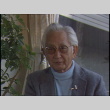
Burden and Kihara discuss their service in the Pacific theater, Kihara's time in Japan after college, Kihara's time teaching at the Military Language Service Language School, and Kihara's father's thoughts on his joining the military. Original title: 139, II B/K #2, Burden/Kihara, Cressey Field, 12/15/85, needs color correction. Conversation continues at ddr.densho.org/ddr-densho-1007-1785/
Monroe Sweetland and Shig Kihara walking and talking about the Defense Language Institute Foreign Language Center; exterior shots of the Center (ddr-densho-1007-1662)
av Monroe Sweetland and Shig Kihara walking and talking about the Defense Language Institute Foreign Language Center; exterior shots of the Center (ddr-densho-1007-1662)
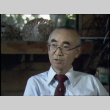
Exterior shots of Sweetland and Kihara walking into Hachiya Hall; stills of signage outside; Kihara and Sweetland walking together and discussing the Defense Language Institute Foreign Language Center. Video starts at 0:29. Original title: 146, II MON #14, 9-9-85, DF Walk, Shig & Monroe
Interview with Yukio Kawamoto, part 5 of 8 (ddr-densho-1007-1549)
av Interview with Yukio Kawamoto, part 5 of 8 (ddr-densho-1007-1549)
Kawamoto discusses the letters he wrote to his parents during his service, visiting them in camp (Topaz), and getting his dog tags marked as Buddhist. Also talks about post-war occupation of Japan with ATIS. Video starts at 0:57. Loni Ding can be heard asking questions behind the camera. Original title: 50, II NY #33, Kawamoto. Interview …
Interview with Arthur (Art) Morimitsu, part 5 of 6 (ddr-densho-1007-1753)
av Interview with Arthur (Art) Morimitsu, part 5 of 6 (ddr-densho-1007-1753)
Morimitsu discusses his relationship with Caucasian American soldiers, stories from his service, and his thoughts on draft resisters. Video starts at 0:25. Loni Ding can be heard asking questions behind the camera. Original title: 62B, II VFW #5, VFW - LA, Art Morimitsu, Feb. 15, 1987. Interview continues at ddr.densho.org/ddr-densho-1007-1754/
Interview with Bill Dizer, part 1 of 3 (ddr-densho-1007-1676)
av Interview with Bill Dizer, part 1 of 3 (ddr-densho-1007-1676)
Dizer, who lives in Japan, discusses how he started to learn Japanese at the University of Michigan, his thoughts on evacuation and his deployment in Japan. Interview starts at 6:15. Loni Ding can be heard asking questions behind the camera. Original title: 193, II JA #10, Bill Dizer, Fri., Jan. 31. Interview continues at ddr.densho.org/ddr-densho-1007-1677/
Interview with Harry Fukuhara, part 1 of 5 (ddr-densho-1007-1697)
av Interview with Harry Fukuhara, part 1 of 5 (ddr-densho-1007-1697)
Fukuhara discusses his service in the Pacific theater, working with ATIS, and his first landing. Loni Ding can be heard asking questions behind the camera. Last few seconds are an accidental recording from the Kiyofumi Kojima interview. Original title: 212, II JA #36, Harry Fukuhara, Sun. Feb. 2. Interview continues at ddr.densho.org/ddr-densho-1007-1698/
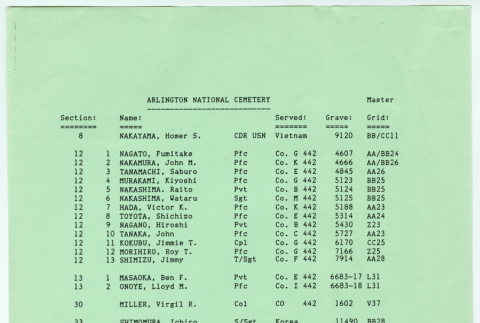
Hawaii Buddaheads, Relocation Camp Kotonks N' Associates (ddr-densho-1007-943)
doc Hawaii Buddaheads, Relocation Camp Kotonks N' Associates (ddr-densho-1007-943)
Collection of stories from the 1942 class of Camp Savage, including Spark Matsunaga, John Aiso and many others. Full list of graduates on page 2.
Interview with Harry Fukuhara, part 2 of 5 (ddr-densho-1007-1698)
av Interview with Harry Fukuhara, part 2 of 5 (ddr-densho-1007-1698)
Fukuhara discusses his service in the Pacific, being mistaken for a Japanese soldier, interviewing a gravely wounded prisoner of war, and POWs he interviewed just before their death. Loni Ding can be heard asking questions behind the camera. Original title: 213, II JA #37, Harry Fukuhara, Sun. Feb. 2. Interview continues at ddr.densho.org/ddr-densho-1007-1699/
Interview with Harry Fukuhara, part 6 of 6 (ddr-densho-1007-1637)
av Interview with Harry Fukuhara, part 6 of 6 (ddr-densho-1007-1637)
Fukuhara discusses the reasons why some Nisei did not join the military, why he volunteered, his feelings on incarceration, and discrimination he faced in the US. Loni Ding can be heard asking questions behind the camera. Video ends at 20:00. Original title: 123, II SJ #29, 8-17-85, Harry's House SJ
Interview with Jim Ariyasu, part 4 of 5 (ddr-densho-1007-1599)
av Interview with Jim Ariyasu, part 4 of 5 (ddr-densho-1007-1599)
Ariyasu discusses his service in New Caledonia, Fiji, the Solomon Islands, and the Philippines, receiving a Bronze Star medal, and the difficulty of receiving an actual rank in the military. Loni Ding can be heard asking questions behind the camera. Original title: 85, II LA #26, 7-24-85, Ariyasu Interview V. Interview continues at ddr.densho.org/ddr-densho-1007-1600/
Interview with Harry Akune, part 4 of 4; balcony conversation (ddr-densho-1007-1603)
av Interview with Harry Akune, part 4 of 4; balcony conversation (ddr-densho-1007-1603)
Akune discusses a combat jump he performed on Corregidor Island, his time with the 503rd Infantry Regiment, receiving a parachutist badge, and returning from the war. Video starts at 0:30, interview ends at 17:31. Loni Ding can be heard asking questions behind the camera. Rest of tape is footage of Harry and Ken Akune, George Kanegai, …
Interview with Manny Goldberg, part 4 of 6 (ddr-densho-1007-1565)
av Interview with Manny Goldberg, part 4 of 6 (ddr-densho-1007-1565)
Goldberg discusses the United States' engagement on Iwo Jima, army distrust of Nisei personnel, trying to capture Tadamichi Kuribayashi, and working with prisoners of war on Iwo Jima. Video starts at 0:52. Loni Ding can be heard asking questions behind the camera. Original title: 62, II NY #49, 6-85, Goldberg. Interview continues at ddr.densho.org/ddr-densho-1007-1566/
Interview with Harry Fukuhara, part 4 of 6 (ddr-densho-1007-1635)
av Interview with Harry Fukuhara, part 4 of 6 (ddr-densho-1007-1635)
Fukuhara discusses the danger of being mistaken for a Japanese soldier and his experiences interrogating Japanese prisoners of war. Video starts at 0:49. Loni Ding can be heard asking questions behind the camera. Original title: 120, II SJ #26, 8-17-85, Fukuhara, Harry's house, 8/17/18, reel #26. Interview continues at ddr.densho.org/ddr-densho-1007-1636/
Interview with Manny Goldberg, part 3 of 6 (ddr-densho-1007-1564)
av Interview with Manny Goldberg, part 3 of 6 (ddr-densho-1007-1564)
Goldberg discusses his service in Saipan and Iwo Jima, particularly extracting Japanese soldiers from caves. Video starts at 0:52. Loni Ding can be heard asking questions behind the camera. Original title: II NY, #48, 6-85, Goldberg. Interview continues at ddr.densho.org/ddr-densho-1007-1565/
Interview with Don Oka, Steve Yagi, and Shigeo Ito, part 3 of 8 (ddr-densho-1007-1619)
av Interview with Don Oka, Steve Yagi, and Shigeo Ito, part 3 of 8 (ddr-densho-1007-1619)
Oka on the left, Yagi in the center, and Ito on the right. The three discuss their service in the Pacific theater, their military training in the Midwest, JICPOA, and their encounters with high-ranking officers. Video starts at 0:23. Loni Ding can be heard asking questions behind the camera. Original title: II LA #49, 7-26-85, Oka, …
Interview with Harry Akune, part 2 of 4 (ddr-densho-1007-1601)
av Interview with Harry Akune, part 2 of 4 (ddr-densho-1007-1601)
Akune discusses his decision to volunteer, his brothers in the Japanese army, his reaction to Pearl Harbor, the Japanese occupation in Manchuria, his time in language school, his family after the war, meeting his wife, his time in Chicago, and his translation work in the army in Brisbane. Video starts at 0:30. Loni Ding can be …
API