
Work and jobs
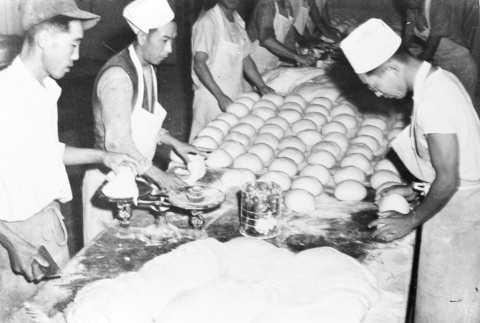
Both Issei and Nisei took jobs within the camps, at wages set not to exceed soldiers' pay: $12 per month for unskilled labor, $16 for skilled labor, and $19 for professional employees. WRA staff was paid much more for the same jobs. Though public opinion mandated such low pay, dissatisfied Japanese Americans objected to losing their right to make a decent living. They had to use their sparse income for necessities, such as warm clothing and shoes.
World War II
(283)
Concentration camps
(2384)
Work and jobs
(1550)
Related articles from the
Densho Encyclopedia :
Amache Silk Screen Shop
1550 items
1550 items
img
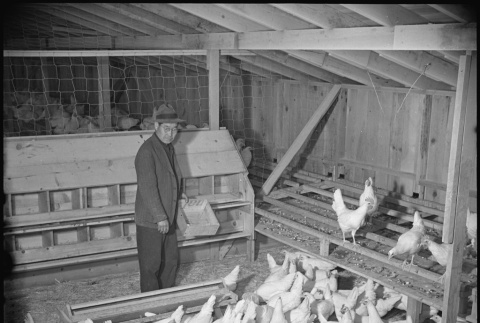
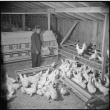
Poultry farm (ddr-densho-37-180)
Original WRA caption: M. Nakamura, poultry caretaker, and former farmer of Sacramento, California, feeds four months old chickens. It is anticipated, that the chickens grown here, will furnish the residents of the project with all the eggs and chicken meat which will be consumed. These chickens were raised from baby chicks.
img
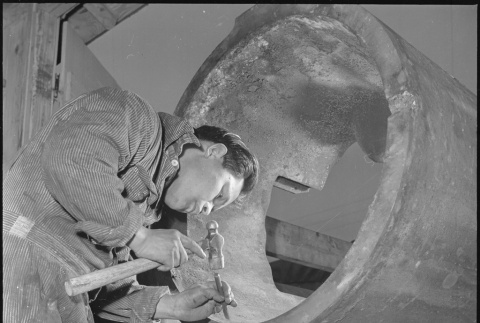
Japanese American plumber (ddr-densho-37-540)
Original WRA caption: Rohwer Relocation Center, McGehee, Arkansas. Morio Higashi, a former California plumber, marks out a steel casting for welding. The maintenance of center plumbing, electrical and water supply facilities are carried on by qualified workers selected from center residents, former west coast persons of Japanese ancestry.
img
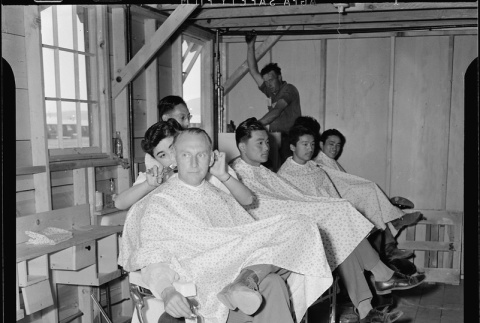
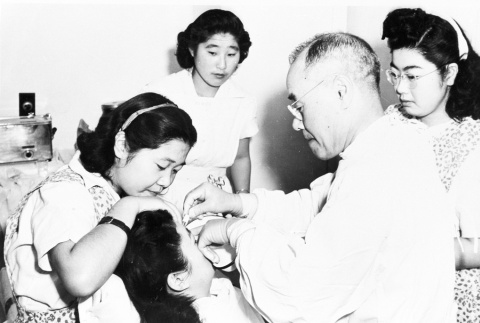
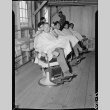
Barber shop (ddr-densho-37-384)
Original WRA caption: Tule Lake Relocation Center, Newell, California. Motimer Cooke, Supervisor of Community Enterprises, enjoys the first hair-cut given in the barber shop at this War Relocation Authority center. Frances Imura, evacuee from Sacramento is the barber.
img
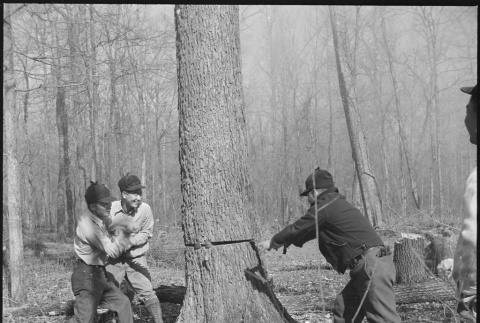
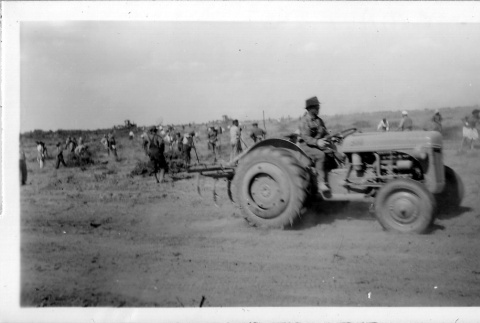
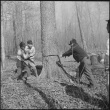
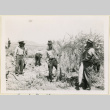
Japanese Americans clearing land (ddr-densho-37-832)
Original WRA caption: Rohwer Relocation Center, McGehee, Arkansas. Farm workers felling a big Arkansas Red Oak, in the process of clearing reclaimed Arkansas Iand for agricultural purposes. Workers, for this and other center farm activities, are recruited from residents, former west coast persons of Japanese ancestry.
img
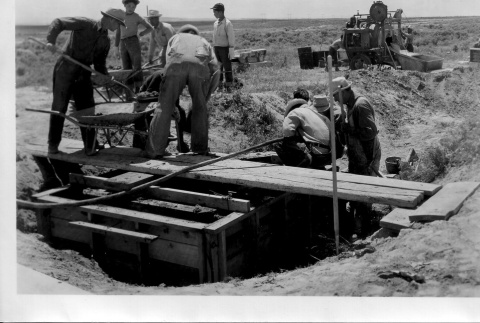
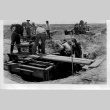
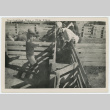
Camp irrigation workers (ddr-densho-37-729)
Original WRA caption: Establishing irrigation controls, land reclamation.
img
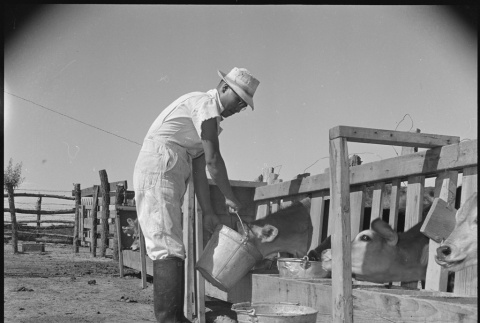
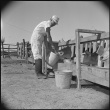
Japanese American feeding dairy calves (ddr-densho-37-602)
Original WRA caption: Gila River Relocation Center, Rivers, Arizona. Y.T. Sakoda, former vegetable worker from Guadalupe, California, is now enrolled in the dairy school, here. He is shown feeding calves.
img
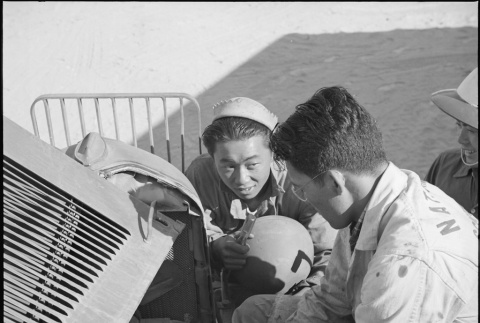
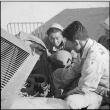
Japanese American mechanics (ddr-densho-37-570)
Original WRA caption: Topaz, Utah. Keeping well warm motor equipment running is a problem confronting these two Nisei volunteer mechanics, at the Topaz Relocation Center.
img
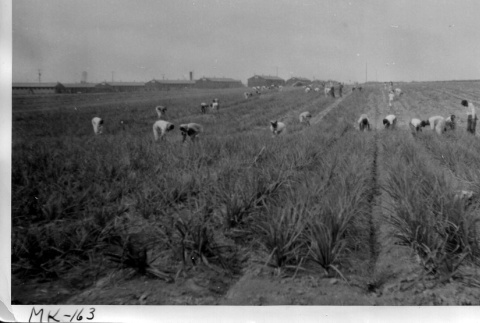
Japanese Americans harvesting onions (ddr-densho-37-714)
Original WRA caption: High school boys and girls pull onions on the project farm during harvest vacation.
img
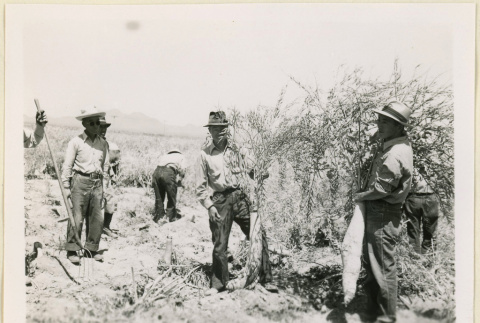
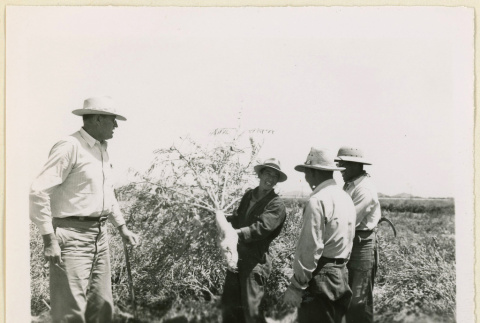
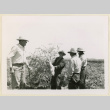
Man holds a daikon radish (ddr-densho-37-1392)
Included annotation: F-504, Daikon Seed Ranch (Harvesting).
img
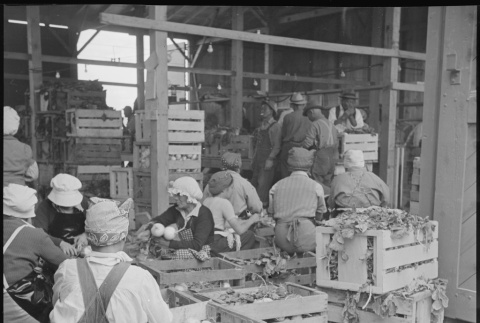
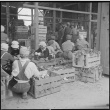
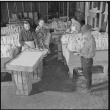
Japanese Americans sorting turnips (ddr-densho-37-315)
Original WRA caption: Tule Lake Relocation Center, Newell, California. Evacuee workers in the packing shed, sorting and packing turnips which have been grown on the farm near this relocation center.
img
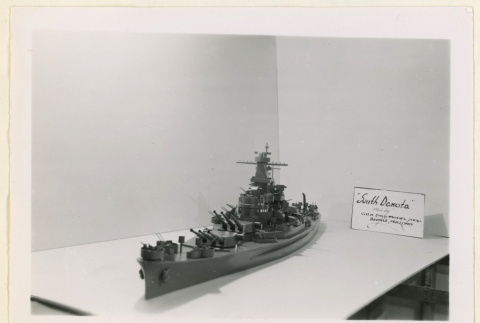
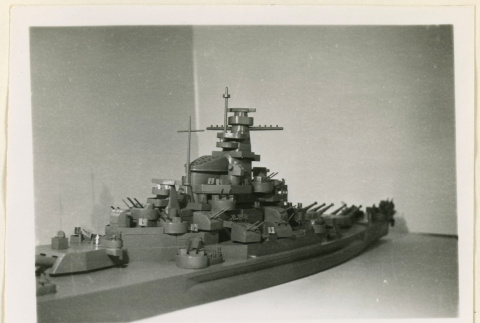
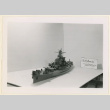
Port side view of South Dakota ship model (ddr-densho-37-1365)
Included annotation: X-303, completed South Dakota, Port side view.
img
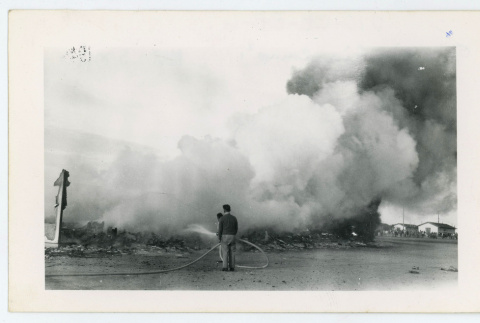
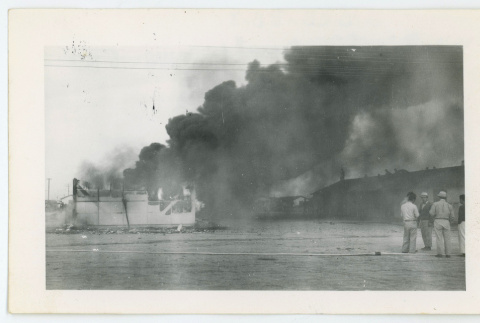
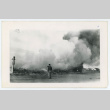
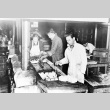
Firefighters at Gila River (ddr-densho-37-2142)
Written on back: Gila River Fire - Camp #1, Mar-5 1944.
img
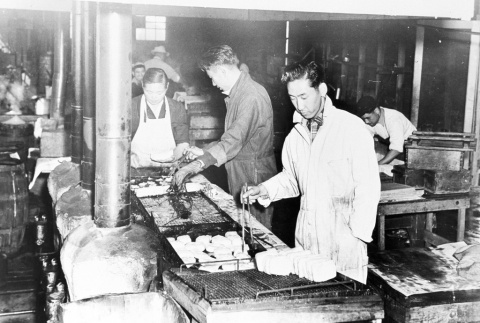
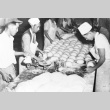
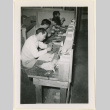
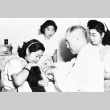
Japanese Americans making tofu (ddr-densho-37-157)
Original WRA caption: This product called "Age" is made from the bean curd. This is shown in the picture. The curd is fried in deep soy-bean fat until browned. This factory is operated by the Co-op.
img
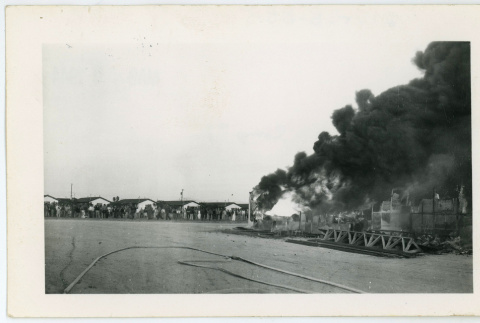
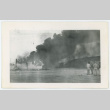
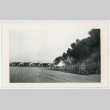
Gila River building on fire (ddr-densho-37-2140)
Written on back: Gila River Fire - Camp #1, Mar-5 1944. Included annotation: 210-CB-BB, Fire at Gila River camp.
img
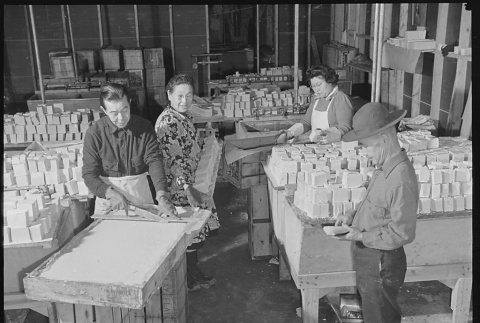
Camp soap factory (ddr-densho-37-610)
Original WRA caption: Jerome Relocation Center, Denson, Arkansas. At the Jerome Relocation Center, where some 8,000 west coast residents of Japanese ancestry now reside, Mr. K. Oyama, former California cosmetics manufacturer, set up a soap factory in a corner of a school block laundry, rendering the waste meat fats from the center kitchens. This factory has …
img
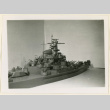
South Dakota ship model stern (ddr-densho-37-1368)
Included annotation: X-306, completed South Dakota, View From Stern.