Work and jobs
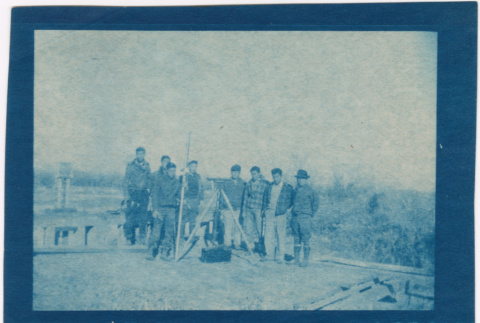
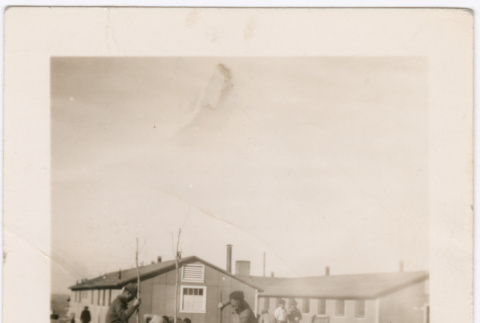
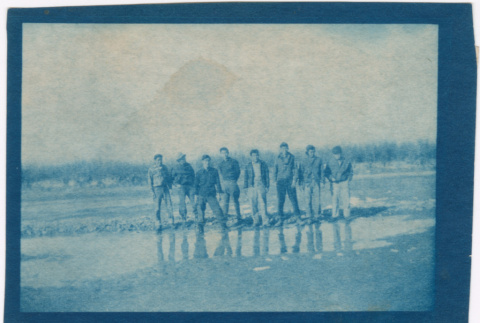
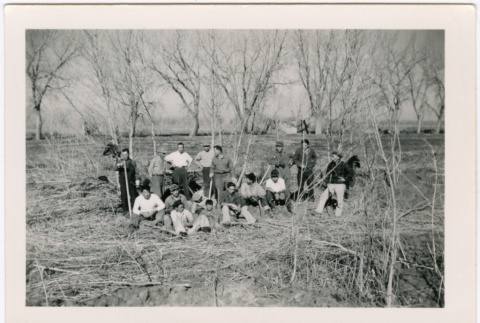
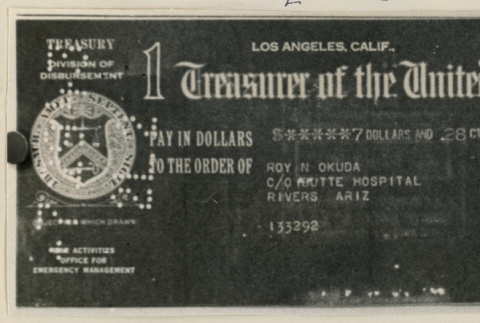
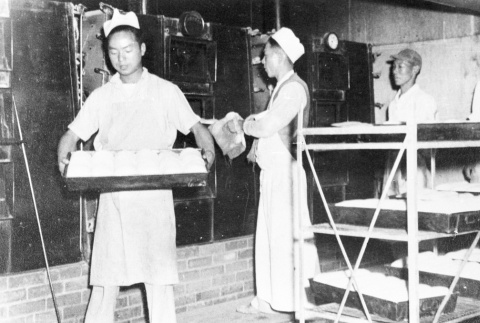
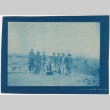
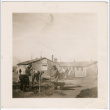
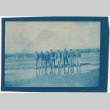
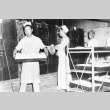
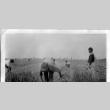
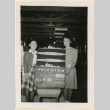
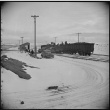
Both Issei and Nisei took jobs within the camps, at wages set not to exceed soldiers' pay: $12 per month for unskilled labor, $16 for skilled labor, and $19 for professional employees. WRA staff was paid much more for the same jobs. Though public opinion mandated such low pay, dissatisfied Japanese Americans objected to losing their right to make a decent living. They had to use their sparse income for necessities, such as warm clothing and shoes.
World War II
(283)
Concentration camps
(2384)
Work and jobs
(1550)
Related articles from the
Densho Encyclopedia :
Amache Silk Screen Shop
1550 items
1550 items
doc
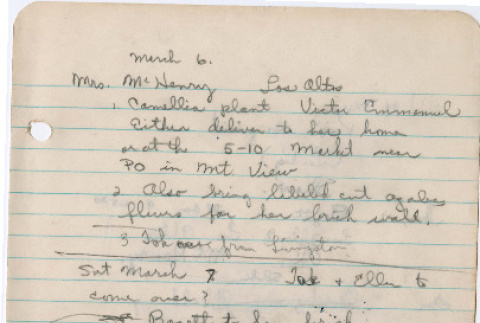
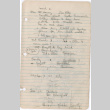
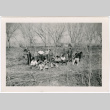
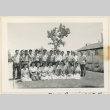
Kaneji Domoto Diary, 1942 (ddr-densho-329-950)
Kaneji's diary from March 6, 1942 - October 7, 1942, spanning the Domoto family's time from being at home in California to about a month after arrival at Amache. Early pages of the diary resemble a notebook loosely structured by date and containing a mixture of daily activities, accounting, notes from work at the nursery, and, …
img
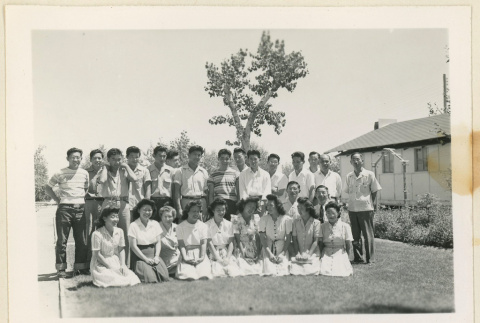
News Courier staff at Gila River (ddr-densho-37-1545)
Included annotation: G-608, News Courier staff.
img
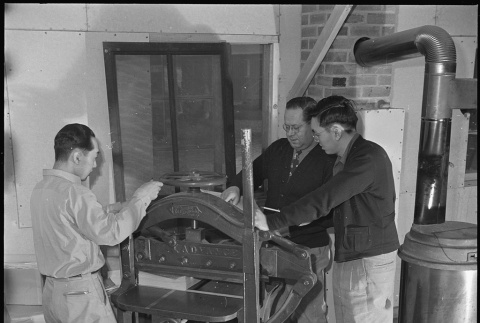
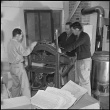
Japanese Americans working on camp newspaper (ddr-densho-37-459)
Original WRA caption: Heart Mountain Relocation Center, Heart Mountain, Wyoming. Trimming the assembled Sentinels is George Tokoshige, while Reports Officer Vaughn Mechau and Sentianl Editor, Bill Hosokawa check for the hundredth time for possible makeup or printing errors.
img
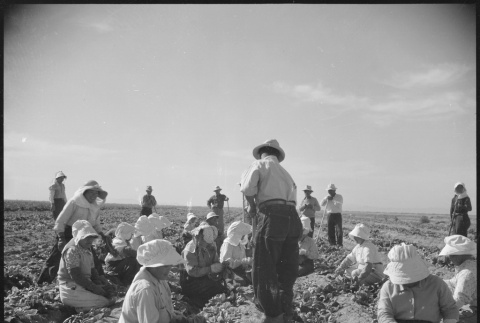
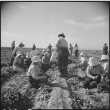
Japanese Americans harvesting spinach (ddr-densho-37-599)
Original WRA caption: Gila River Relocation Center, Rivers, Arizona. Evacuee farmers harvesting spinach at this relocation center.
img
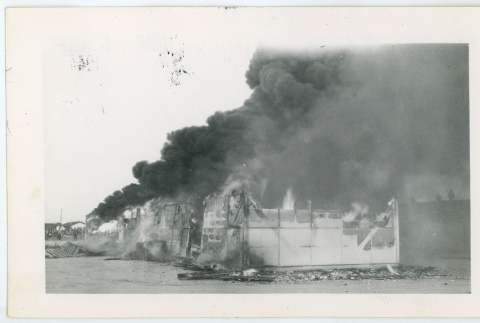
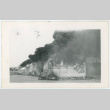
Building engulfed in smoke (ddr-densho-37-2145)
Written on back: Gila River Fire - Camp #1, Mar-5 1944.
img
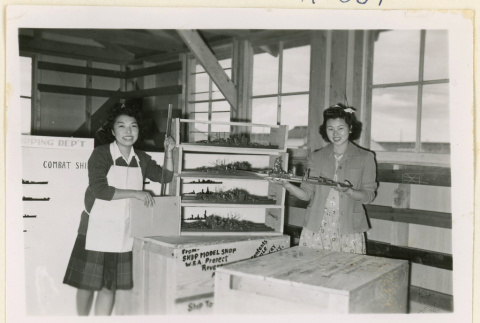
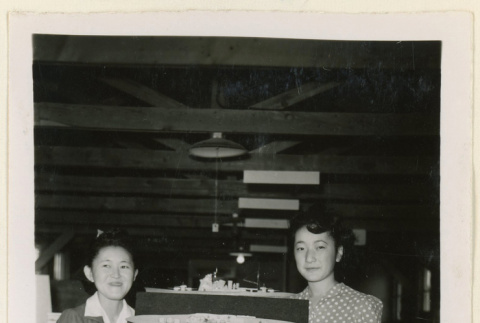
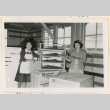
Women pose with ship models at a shipping department (ddr-densho-37-1259)
Included annotation: A-301, Ship Model Shop, Shipping Dept.
img
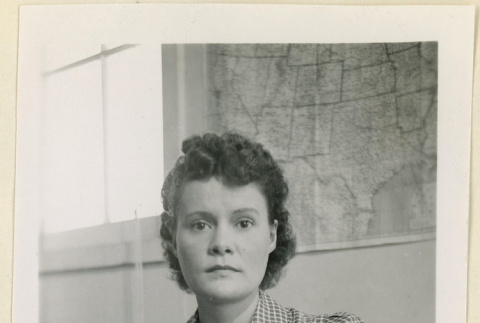
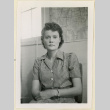
Miss Ost portrait (ddr-densho-37-1378)
Included annotation: C-506, Miss Ost, Director's Ex Sec., Identification.
img
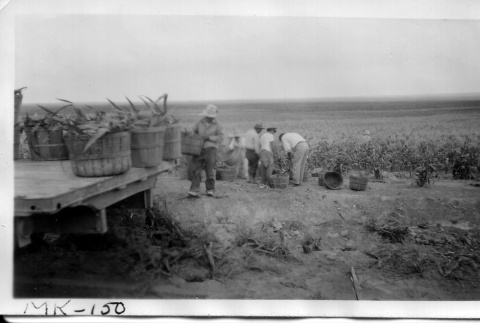
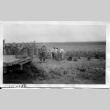
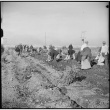
Japanese Americans harvesting corn (ddr-densho-37-708)
Original WRA caption: Harvesting the first corn crop at the Minidoka Relocation Center from fields which were covered with sagebrush last spring.
img
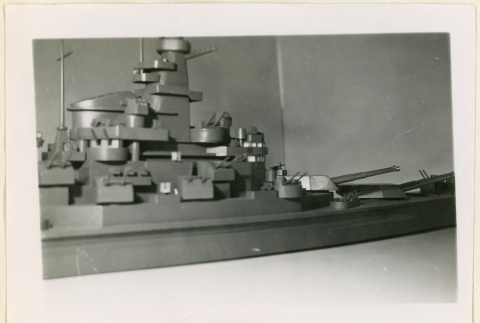
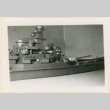
South Dakota ship model bridge (ddr-densho-37-1369)
Included annotation: X-307, completed South Dakota, Gun position and Bridge.
img
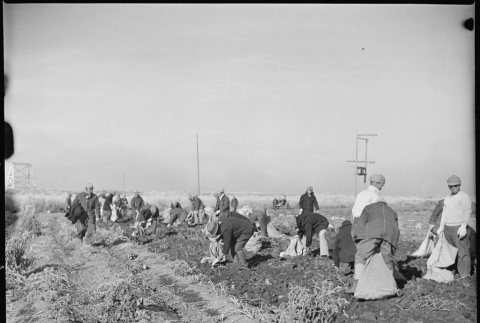
Japanese Americans harvesting potatoes (ddr-densho-37-88)
Original WRA caption: Tule Lake Relocation Center, Newell, California. Evacuee farmers at this relocation center filling sacks with newly dug potatoes.
img
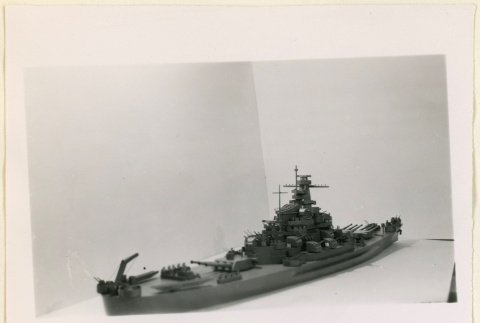
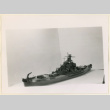
South Dakota ship model (ddr-densho-37-1367)
Included annotation: X-305, completed South Dakota, View From Stern.
img
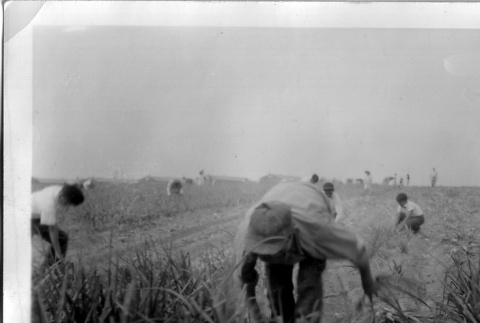
Japanese Americans working in a field (ddr-densho-37-709)
Original WRA caption: Junior High School boys and girls of Hunt pull onions on the project farm during harvest vacation.
img
Assembly part for model ships (ddr-densho-37-1206)
Included annotation: O-204, Ship Model Shop, Assembly Parts.
img
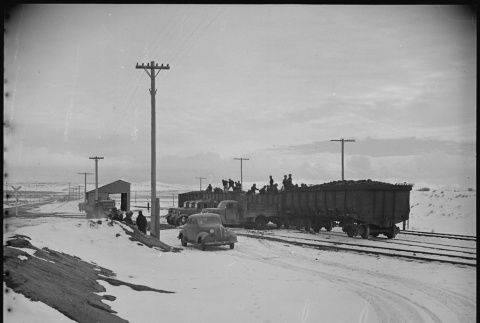
Japanese Americans unloading coal (ddr-densho-37-348)
Original WRA caption: Tule Lake Relocation Center, Newell, California. Evacuee workers unload coal at Staley Junction, which is the rail head for this center. This coal is used by the residents during the extreamely [sic] cold winters which northern California offers.
img
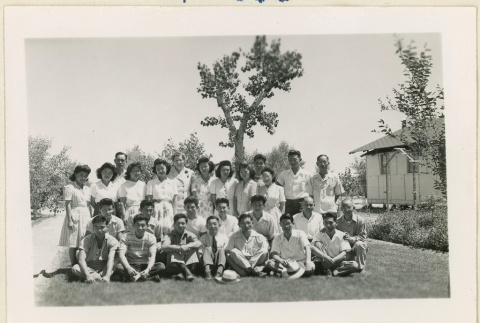
News Courier staff poses for a photo (ddr-densho-37-1544)
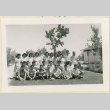
Included annotation: G-606, News Courier staff, 6/22/44.
img
Fire crew (ddr-densho-37-693)
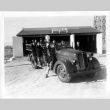
Original WRA caption: The fire crew of station #1 swings into action.