
Work and jobs
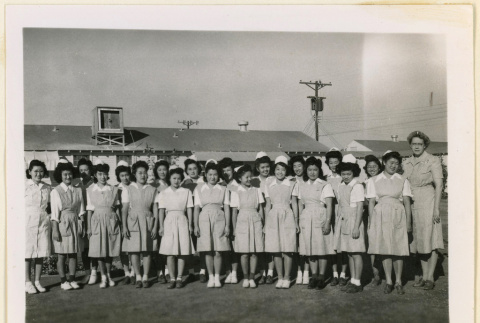
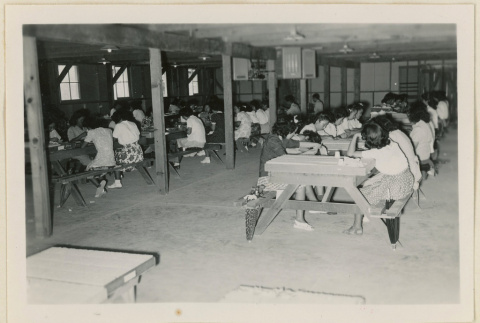
Both Issei and Nisei took jobs within the camps, at wages set not to exceed soldiers' pay: $12 per month for unskilled labor, $16 for skilled labor, and $19 for professional employees. WRA staff was paid much more for the same jobs. Though public opinion mandated such low pay, dissatisfied Japanese Americans objected to losing their right to make a decent living. They had to use their sparse income for necessities, such as warm clothing and shoes.
World War II
(283)
Concentration camps
(2384)
Work and jobs
(1550)
Related articles from the
Densho Encyclopedia :
Amache Silk Screen Shop
1550 items
1550 items
img
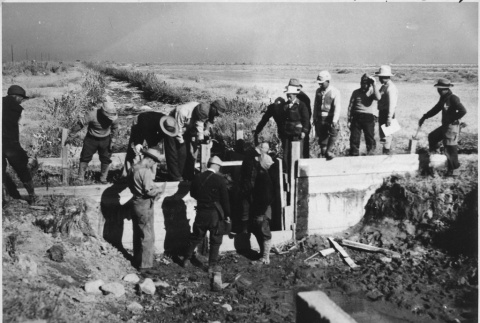
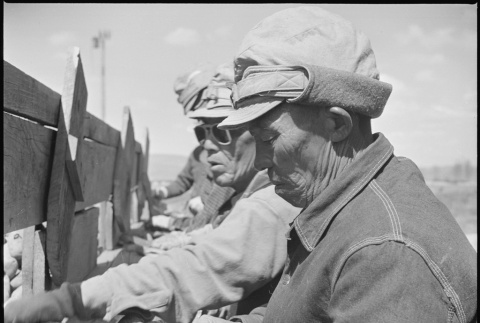
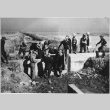
Construction of an irrigation gate (ddr-densho-37-566)
Original WRA caption: Topaz, Utah. Vocational training class in farm construction gets some real action at the Topaz Relocation Center. Picture shows them getting practical class work in construction of irrigation gate.
img
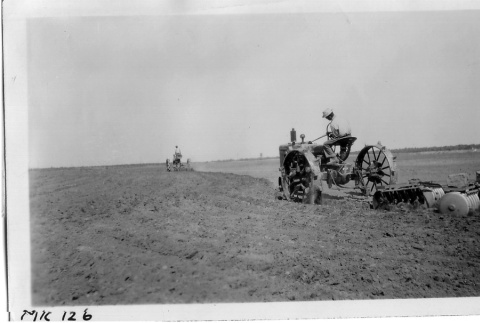
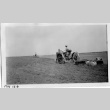
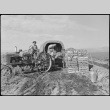
Japanese Americans plowing a field (ddr-densho-37-704)
Original WRA caption: A tractor drawn disk breaks up soil of a new farm field from the sagebrush adjacent to the Minidoka Relocation Center.
img
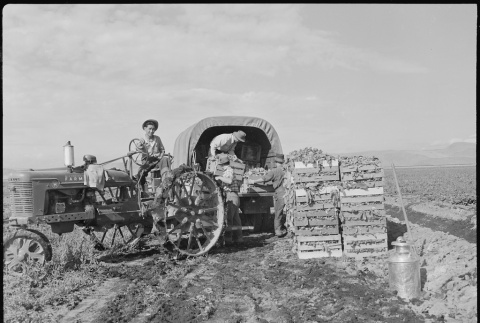
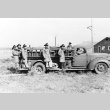
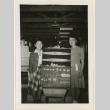
Japanese Americans harvesting spinach (ddr-densho-37-316)
Original WRA caption: Trucking crated spinach from the fields to the packing shed. All vegetables which are not needed here are washed, iced and crated and sent to other relocation centers.
img
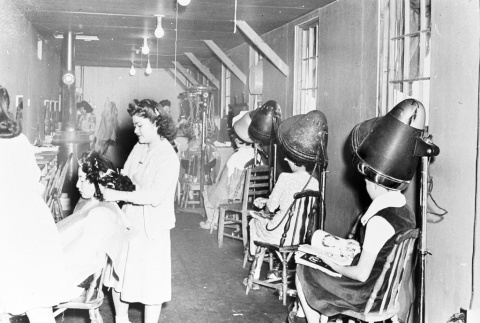
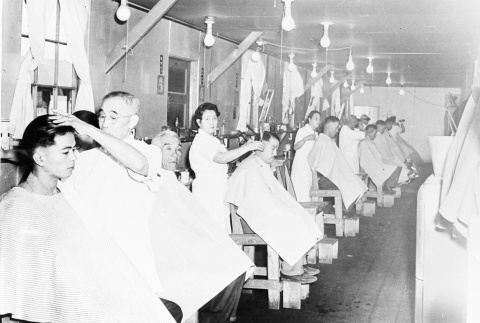
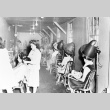
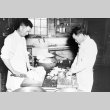
Hair salon (ddr-densho-37-149)
Original WRA caption: This beauty parlour is operated by the Tule Lake Co-operative Enterprise, Inc. Patrons are charged a nominal fee.
img
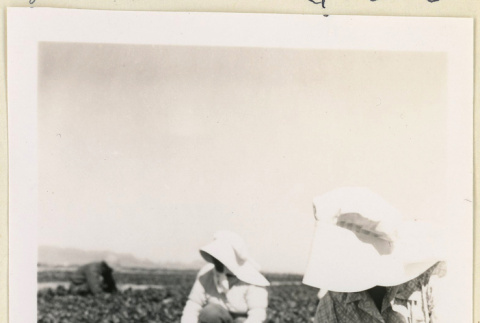
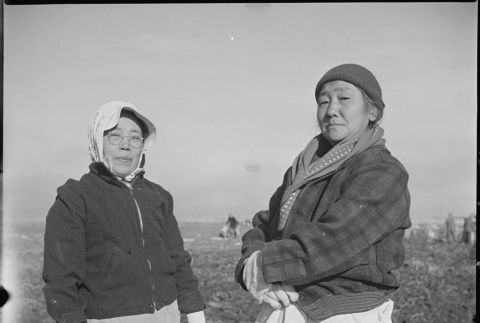
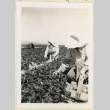
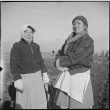
Two Japanese American farmers (ddr-densho-37-85)
Original WRA caption: Two women of Japanese ancestry pause from their potatoe harvesting to pose for this picture.
img
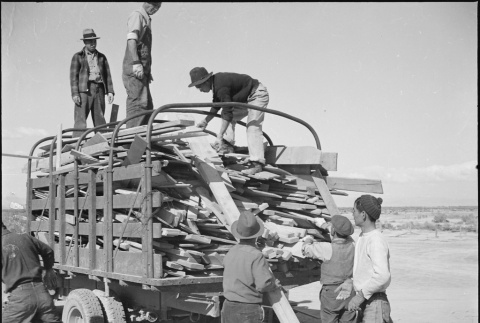
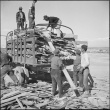
Japanese American workers loading scrap lumber (ddr-densho-37-555)
Original WRA caption: Topaz, Utah. A group of volunteer workers at the Topaz Relocation Center gathering a truck load of scrap lumber from the contractor's scrap pile.
img
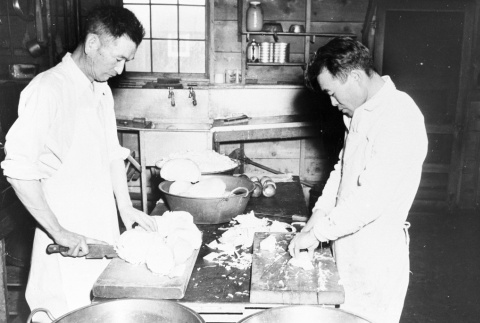
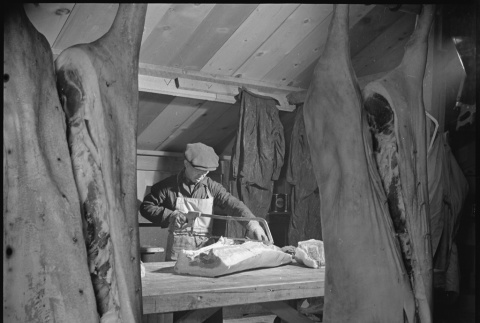
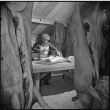
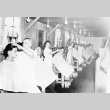
Butcher house (ddr-densho-37-347)
Original WRA caption: A view in the slaughter house and butcher shop. Hogs, which are grown in the evacuee run hog farm, are slaughtered here, for consumption by the residents of the center.
img
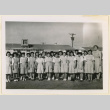
Japanese Americans cutting seed potatoes (ddr-densho-37-353)
Original WRA caption: Seed potato cutting at the cutting sheds of the Tule Lake Relocation Center farm. 7,500 sacks of potatoes will be cut by 48 workers in 2-1/2 weeks. This will be enough seeds to plant the 600 acres.
img
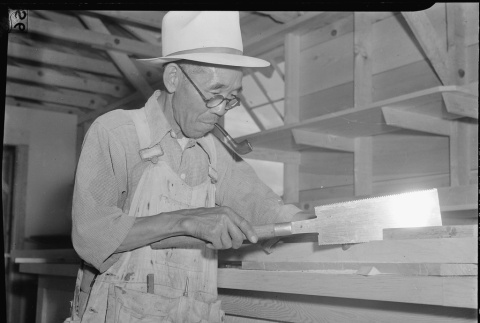
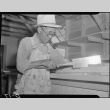
Japanese American carpenter (ddr-densho-37-383)
Original WRA caption: Tule Lake Relocation Center, Newell, California. Cabinet worker's saw is expertly used by Jime Kabayashi, 62, on the interior construction of general store Number 2 at this War Relocation Authority center for evacuees of Japanese descent. Jime, prior to evacuation, had resided in Sacramento for 24 years and has been a carpenter for …
img
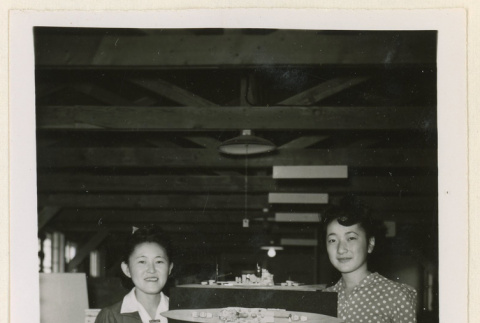
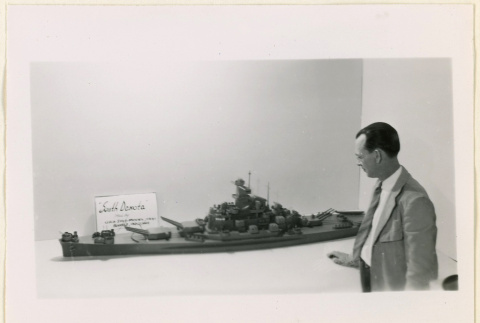
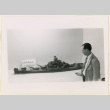
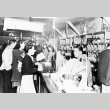
Mr. Hoyt Martin with a ship model (ddr-densho-37-1370)
Included annotation: X-308, completed South Dakota, South Dakota and Mr. Hoyt Martin, Supervisor.
img
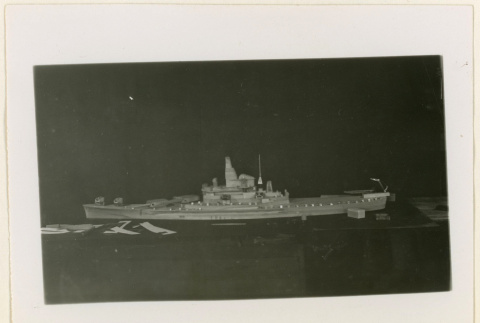
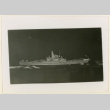
Side view of a battleship model (ddr-densho-37-1349)
Included annotation: S-304, Battleship full side view, 2 same exposure made.
img
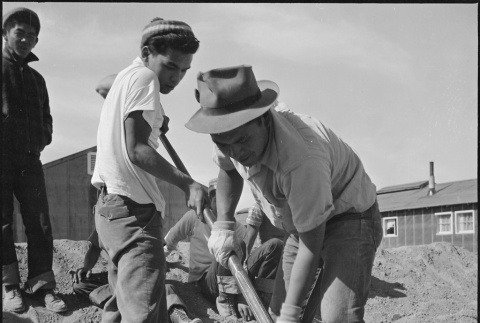
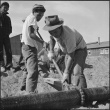
Japanese Americans working on camp water mains (ddr-densho-37-556)
Original WRA caption: Topaz, Utah. Young volunteer workers, residents at the Topaz Relocation Center, completing the water mains.
img
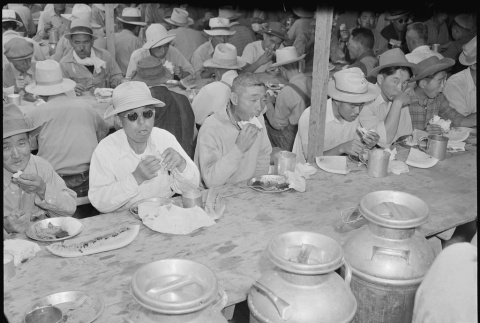
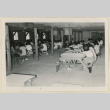
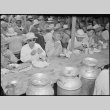
Japanese American farmers eating lunch (ddr-densho-37-363)
Original WRA caption: A view in the lunch shed at the farm. Trucks from the kitchens bring hot lunches to the workers.
img
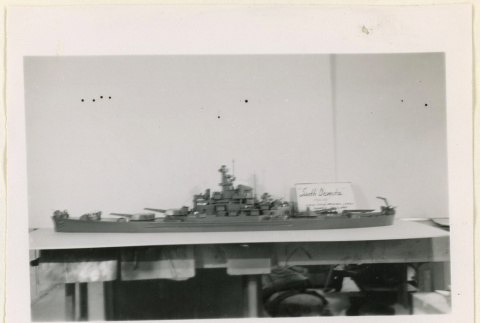
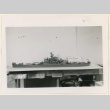
View of South Dakota ship model (ddr-densho-37-1364)
Included annotation: X-302, completed South Dakota, Full Side View.
img
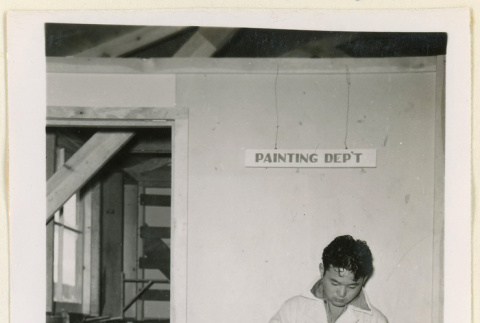
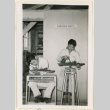
Painting department at the ship model shop (ddr-densho-37-1260)
Included annotation: A-302, Ship Model Shop, Painting Dept..