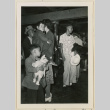
Concentration camps

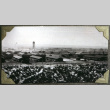
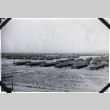
The War Relocation Authority (WRA) oversaw construction of ten concentration camps in sparsely populated and isolated areas. Between June and October 1942, Japanese Americans were transferred from the "assembly centers" to the larger camps. Housing approximately 120,000 people, the camps were designed to be self-contained communities, complete with hospitals, post offices, schools, warehouses, and residential areas. The WRA attempted to establish normalcy by setting up newspapers, a degree of self-government, sports leagues, and social events. But confinement, monotony, and harsh conditions exacerbated tensions between pro- and anti-camp administration residents and between the disempowered Issei and their U.S.-born Nisei children. At several centers, conflicts erupted into violence and at the Manzanar concentration camp the unrest resulted in fatal shootings. The WRA gradually granted work and school leave to those they considered "loyal." The last camp closed in March 1946.

World War II (283)
Concentration camps (2078)

Related articles from the Densho Encyclopedia :
Concentration Camps, U.S.A. (book), Gila River, Heart Mountain, Jerome, Manzanar, Minidoka, Poston (Colorado River), Psychological effects of camp, Rohwer, Sites of incarceration, Topaz, Tule Lake
Facilities
Format
Genre
Usage

Use <Ctrl> or (⌘) keys to select multiple terms

2078 items
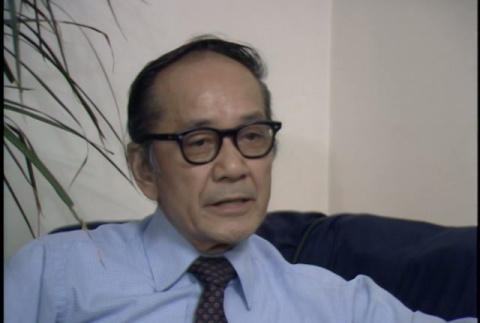
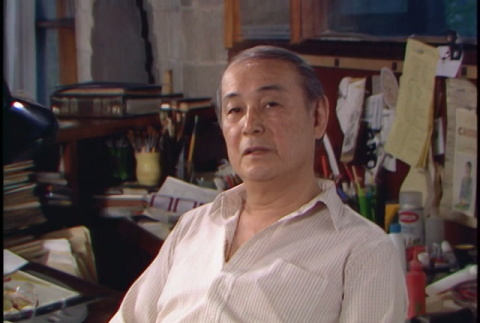
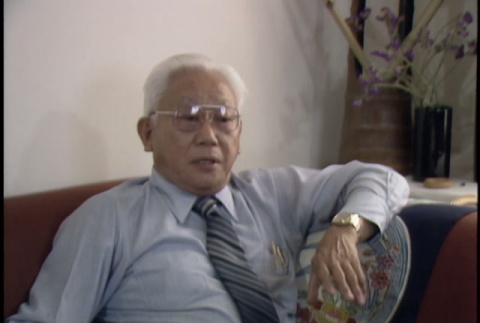
Interview with Arthur (Art) Morimitsu, part 2 of 6 (ddr-densho-1007-1750)
av Interview with Arthur (Art) Morimitsu, part 2 of 6 (ddr-densho-1007-1750)
Morimitsu discusses his father's reaction to him volunteering for the military, support from Jewish community members, leaving Tule Lake for Fort Douglas, his education at Camp Savage, and his time in the Military Intelligence Service. Video starts at 0:18. Loni Ding can be heard asking questions in the background. Original title: 59B, II VFW #2, VFW …
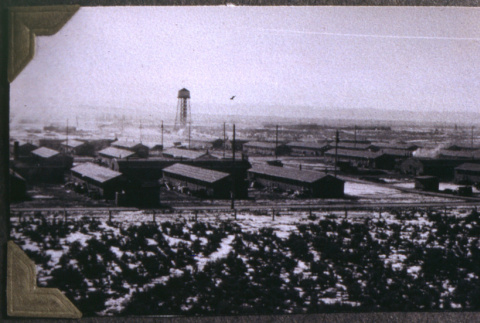
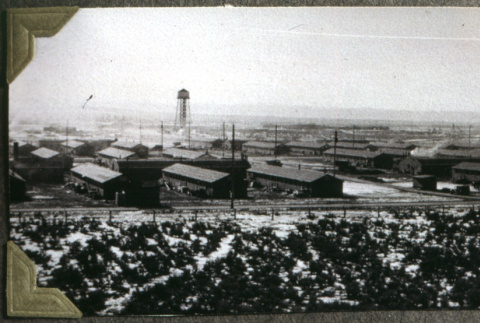
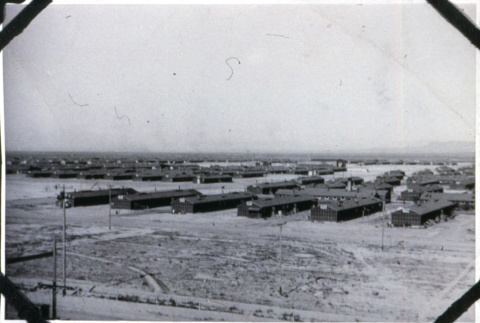
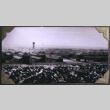
Row of buildings (ddr-densho-1007-659)
img Row of buildings (ddr-densho-1007-659)
Slide, created in September 1984. Image date unknown. Likely taken at Minidoka.
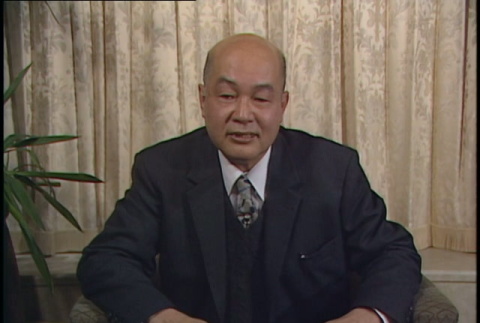
Interview with Yukio Kawamoto, part 5 of 8 (ddr-densho-1007-1549)
av Interview with Yukio Kawamoto, part 5 of 8 (ddr-densho-1007-1549)
Kawamoto discusses the letters he wrote to his parents during his service, visiting them in camp (Topaz), and getting his dog tags marked as Buddhist. Also talks about post-war occupation of Japan with ATIS. Video starts at 0:57. Loni Ding can be heard asking questions behind the camera. Original title: 50, II NY #33, Kawamoto. Interview …
Interview with Sho Nomura, part 2 of 6 (ddr-densho-1007-1611)
av Interview with Sho Nomura, part 2 of 6 (ddr-densho-1007-1611)
Nomura discusses his family's internment at Gila River, volunteering and testing for the MIS language school, and the difficulty his family faced in camp after he volunteered. Video starts at 0:22. Loni Ding can be heard asking questions behind the camera. Original title: 94, II LA #41, 7-25-85, Sho Nomura Interview II. Interview continues at ddr.densho.org/ddr-densho-1007-1612/
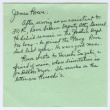
Minidoka handwriting (ddr-densho-1007-697)
img Minidoka handwriting (ddr-densho-1007-697)
Slide, created in September 1984. Case reads "T. Matsui"
Filling bucket (ddr-densho-1007-662)
img Filling bucket (ddr-densho-1007-662)
Slide, created in September 1984. Image date unknown.
Interview with Clarence Matsumura, part 2 of 5 (ddr-densho-1007-1609)
av Interview with Clarence Matsumura, part 2 of 5 (ddr-densho-1007-1609)
Matsumura discusses growing up in Wyoming, his mother's cooking, moving to Los Angeles in 1936, getting his radio license, Pearl Harbor, evacuation to Pomona and Heart Mountain, his attempts to join the Navy, Air Force, Coast Guard and Marines, being drafted, his basic training in Fort Hood, TX, his deployment in Europe, and the Hollywood store …
Interview with George Nakamura, part 5 of 5 (ddr-densho-1007-1684)
av Interview with George Nakamura, part 5 of 5 (ddr-densho-1007-1684)
Nakamura discusses helping his son write a paper on internment, the importance of the Pacific Citizen newspaper for his children, and racial discrimination in the US. At 10:45, George and Loni Ding look and talk through several of his old papers and letters. Loni Ding can be heard asking questions in the background.Original title: II JA …
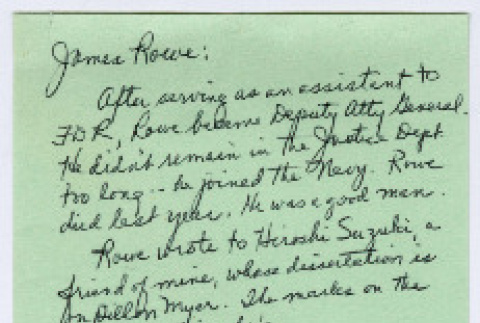
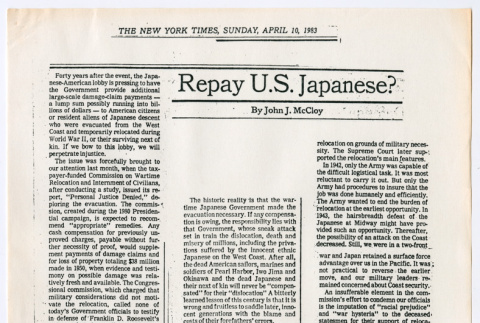
Correspondence of John J. McCloy and Frederick Bernays Wiener (ddr-densho-1007-1865)
doc Correspondence of John J. McCloy and Frederick Bernays Wiener (ddr-densho-1007-1865)
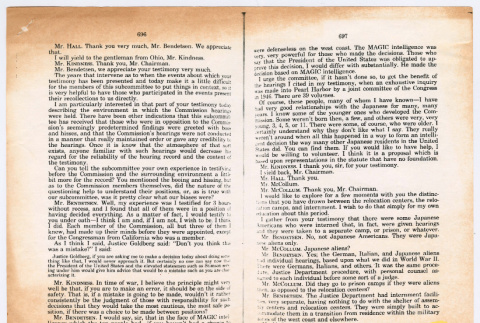
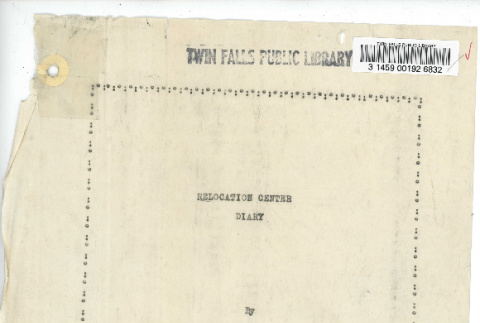
This is a collection of letters from 1984 by John J. McCloy and Frederick Bernays Wiener. Throughout the correspondence McCloy and Wiener defend the argument that the mass removal of Japanese Americans was a necessary national security act and criticize the work of the Commission on Wartime Relocation and Internment of Civilians. To learn more about …
Interview with Clarence Matsumura, part 3 of 5 (ddr-densho-1007-1771)
av Interview with Clarence Matsumura, part 3 of 5 (ddr-densho-1007-1771)
Continued from ddr.densho.org/ddr-densho-1007-1609/. Matsumura discusses the impact of growing up in a small town in Wyoming (particularly the lack of discrimination), the discrimination he faced in Heart Mountain, the movie theaters he ran at Heart Mountain, the extracurricular programs he helped run in camp, going to school, volunteering for the military from school, his time …
Concentration camp (ddr-densho-1007-680)
img Concentration camp (ddr-densho-1007-680)
Slide, created in September 1984. Image date unknown. Case reads "T. Matsui"
Speech: Lessons from the Past (ddr-densho-1007-1826)
doc Speech: Lessons from the Past (ddr-densho-1007-1826)
Speech by Cedrick Shimo at the Florin Area Reunion on October 8, 1988 in Buena Park, California discussing the impact of incarceration in Japanese American communities and calls for support for redress. Object also contains an article from the Los Angeles Japanese Daily News on September 3, 1988 titled Bert Nakano Delivers Speech on Redress.
Interview with Chris Ishii, part 3 of 7 (ddr-densho-1007-1557)
av Interview with Chris Ishii, part 3 of 7 (ddr-densho-1007-1557)
Ishii discusses his parents (who immigrated from Shikoku), their internment in Rohwer, his father's death in camp, and his difficulty communicating with his parents. Video starts at 0:53. Loni Ding can be heard asking questions behind the camera. Original title: 56, II NY #41, 6-85, Ishii. Interview continues at ddr.densho.org/ddr-densho-1007-1558/
Interview with Jim Ariyasu, part 5 of 5; interview with Harry Akune, part 1 of 4 (ddr-densho-1007-1600)
av Interview with Jim Ariyasu, part 5 of 5; interview with Harry Akune, part 1 of 4 (ddr-densho-1007-1600)
Ariyasu discusses saving a peer from a court martial, his real estate work, and racial solidarity. At 15:10, interview with Ariyasu ends and interview with Harry Akune begins. Akune discusses his time at Merced and Amache, volunteering for the army from camp, and his community's reaction to his decision to volunteer. Loni Ding can be heard …
Yukio Kawamoto b-roll part 2 of 2 (ddr-densho-1007-1554)
av Yukio Kawamoto b-roll part 2 of 2 (ddr-densho-1007-1554)
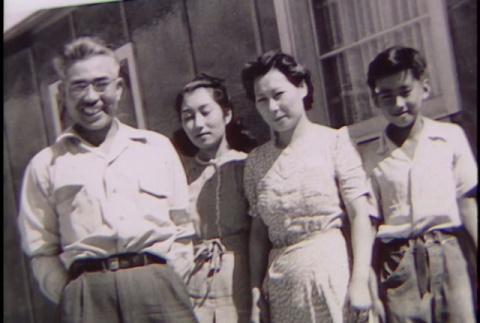
B-roll of various wartime pictures, including Kawamoto's parents in camp. Also includes Kawamoto's dog tags from his service. No sound, video starts at 0:49. Original title: 54, II NY #38, 6-85, Yukio's photos, dog tag, etc.
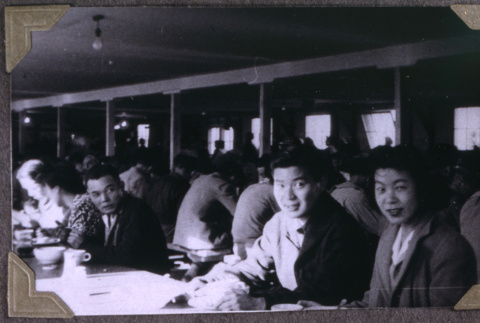
Camp mess hall (ddr-densho-1007-685)
img Camp mess hall (ddr-densho-1007-685)
Slide, created in September 1984. Image date unknown.
Interview with John Kaneko, part 2 of 3 (ddr-densho-1007-1760)
av Interview with John Kaneko, part 2 of 3 (ddr-densho-1007-1760)
Kaneko discusses arriving at Tule Lake, his first impressions of camp, his difficulty meeting people in camp, draft registration/the loyalty questionnaire and the conflict it caused, his father encouraging him to register for the draft, his refusal to register, his arrest and interrogation, and being sent to a CCC camp and forced to work. Interview starts …
Kanegai family dinner and Moose (John) Fujikawa interview, part 1 of 4 (ddr-densho-1007-1582)
av Kanegai family dinner and Moose (John) Fujikawa interview, part 1 of 4 (ddr-densho-1007-1582)
Footage of the Kanegai family eating in their backyard. Unscripted. The younger mustached man is Bruce Kanegai; the older man to his right is his father George. Video starts at 0:29. Interview with Fujikawa starts at 10:44. Fujikawa talks about his childhood in LA, his decision not to go to college, his reaction to Pearl Harbor, …
Densho (ddr-densho-1024-123)
av Densho (ddr-densho-1024-123)
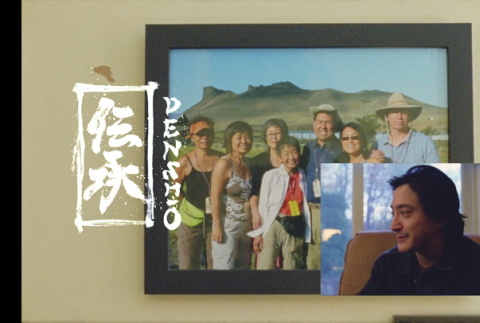
Electronic artist Shigeto explores his family’s history and the lasting effects of WWII internment, weaving together personal reflections, archival footage, and music. Through conversations with his mother and grandmother, he uncovers how their shared past and cultural heritage have shaped his identity, resilience, and artistry.
CAS group (ddr-densho-37-936)
img CAS group (ddr-densho-37-936)
Included annotation: O-7, CAS Group. See also ddr-densho-37-939.
Marching band in an Armistice Day parade (ddr-densho-37-1172)
img Marching band in an Armistice Day parade (ddr-densho-37-1172)
Included annotation: G-202, Armistice Day [now called Veteran's Day] Parade, Butte Community.
API