Concentration camps

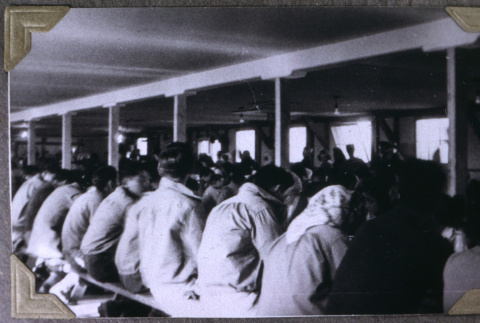
The War Relocation Authority (WRA) oversaw construction of ten concentration camps in sparsely populated and isolated areas. Between June and October 1942, Japanese Americans were transferred from the "assembly centers" to the larger camps. Housing approximately 120,000 people, the camps were designed to be self-contained communities, complete with hospitals, post offices, schools, warehouses, and residential areas. The WRA attempted to establish normalcy by setting up newspapers, a degree of self-government, sports leagues, and social events. But confinement, monotony, and harsh conditions exacerbated tensions between pro- and anti-camp administration residents and between the disempowered Issei and their U.S.-born Nisei children. At several centers, conflicts erupted into violence and at the Manzanar concentration camp the unrest resulted in fatal shootings. The WRA gradually granted work and school leave to those they considered "loyal." The last camp closed in March 1946.

World War II (283)
Concentration camps (2078)

Related articles from the Densho Encyclopedia :
Concentration Camps, U.S.A. (book), Gila River, Heart Mountain, Jerome, Manzanar, Minidoka, Poston (Colorado River), Psychological effects of camp, Rohwer, Sites of incarceration, Topaz, Tule Lake
Facilities
Format
Genre
Usage

Use <Ctrl> or (⌘) keys to select multiple terms

2078 items
We the People (ddr-densho-1024-121)
av We the People (ddr-densho-1024-121)
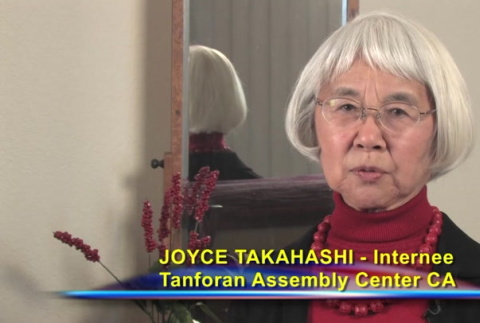
In cooperation with the California Museum, the seven part series (which here appears as one video) was designed as an educational tool for the purpose of teaching what had happened to Japanese Americans during WWII. The series includes interviews with those who had been in the camps as children, along with historical research, photos and summary. …
Letter from Koby to Kim Fujii (ddr-densho-433-9)
doc Letter from Koby to Kim Fujii (ddr-densho-433-9)
Koby, who refers to himself "the jerk" and "Joe College," writes to Kim Fujii about complaints he has about a woman he calls "the ship," his recreational activities, a recent date he went on, and his draft status.
Letter from Hank to Keizie Fujii (ddr-densho-433-20)
doc Letter from Hank to Keizie Fujii (ddr-densho-433-20)
Hank writes to Keizie (Kimiko) Fujii about the people they know who have died during the war, people leaving the concentration camp, and his educational aspirations. He also asks if she's seen Hattie Kawahara's essay, " I am an American," in Mademoiselle's college issue.
Fujii family at Topaz (ddr-densho-433-1246)
img Fujii family at Topaz (ddr-densho-433-1246)
From left to right: Kenji, Rutaro, Katsu, Hanako, Kimiko. Duplicate photocopy at ddr-densho-433-1274.
Letter from Kanui to Kimi Fujii (ddr-densho-433-18)
doc Letter from Kanui to Kimi Fujii (ddr-densho-433-18)
Kanui writes to Kimi Fujii about bad advice Lorraine has given her, updates on her work at the bindery, and more.
Letter from Hank to Keizie Fujii (ddr-densho-433-29)
doc Letter from Hank to Keizie Fujii (ddr-densho-433-29)
Hank writes to Keizie (Kimiko) Fujii with updates on his grades and friends.
Letter from Koby to Kim Fujii (ddr-densho-433-3)
doc Letter from Koby to Kim Fujii (ddr-densho-433-3)
Koby, who refers to himself as "that jerk" and "Joe College," writes to Kim Fujii about work, college, and women.
Gem of Songs (ddr-densho-433-277)
doc Gem of Songs (ddr-densho-433-277)
A collection of songs compiled and published by the Butte Young Buddhist Association at the Gila River concentration camp.
Fujii family at Topaz (ddr-densho-433-1274)
img Fujii family at Topaz (ddr-densho-433-1274)
From left to right: Kenji, Rutaro, Katsu, Hanako, Kimiko. Duplicate photocopy of ddr-densho-433-1246.
Interview with Nobuo Yamashita, part 4 of 5 (ddr-densho-1007-1779)
av Interview with Nobuo Yamashita, part 4 of 5 (ddr-densho-1007-1779)
Yamashita discusses helping prisoners of war avoid execution, the execution of General Yamashita, how he dealt with the more difficult parts of service, the difference between the Japanese soldiers he fought in New Guinea and the Philippines, why he didn't want to serve in Japan during the occupation, staying in contact with his family in Manzanar …
Interview with Sho Nomura, part 3 of 6 (ddr-densho-1007-1612)
av Interview with Sho Nomura, part 3 of 6 (ddr-densho-1007-1612)
Nomura discusses his father's reaction to him volunteering for the army from Gila River, visiting his parents in camp on furlough before his deployment, his service in China with the U.S. Observer Group (also known as the Dixie Mission), Video starts at 0:23. Loni Ding can be heard asking questions behind the camera. Original title: 95, …
Interview with Don Oka, Steve Yagi, and Shigeo Ito, part 8 of 8; interview with Nobuo Yamashita, part 1 of 5 (ddr-densho-1007-1776)
av Interview with Don Oka, Steve Yagi, and Shigeo Ito, part 8 of 8; interview with Nobuo Yamashita, part 1 of 5 (ddr-densho-1007-1776)
Oka is on the left, Yagi in the center, and Ito on the right. Oka discusses his recovery from tuberculosis, entering and winning a cartoon contest, going to art school after recovery, starting to work in advertising, returning to cartooning after retirement, and serving in JICPOA, and working with white officers. Yagi discusses working in the …
Interview with Don Oka, Steve Yagi, and Shigeo Ito, part 4 of 8 (ddr-densho-1007-1620)
av Interview with Don Oka, Steve Yagi, and Shigeo Ito, part 4 of 8 (ddr-densho-1007-1620)
Oka on the left, Yagi in the center, and Ito on the right. The three discuss their service in the Pacific. Ito and Yagi talk about their families' internment in Poston. Video starts at 0:25. Loni Ding can be heard asking questions behind the camera. Original title: II LA #50, 7-26-85, Oka, Yagi, Ito IV. Interview …
Interview with Chris Ishii, part 2 of 7 (ddr-densho-1007-1556)
av Interview with Chris Ishii, part 2 of 7 (ddr-densho-1007-1556)
Ishii discusses his internment in the Amache camp, volunteering for the military, and his childhood as a Nisei. Video starts at 0:57. Loni Ding can be heard asking questions behind the camera. Original title: 55, II NY #40, 6-85, Ishii. Interview continues at ddr.densho.org/ddr-densho-1007-1557/
Children with flag (ddr-densho-1007-661)
img Children with flag (ddr-densho-1007-661)
Slide, created in September 1984. Image date unknown.
Interview with Clarence Matsumura, part 4 of 5 (ddr-densho-1007-1772)
av Interview with Clarence Matsumura, part 4 of 5 (ddr-densho-1007-1772)
Matsumura discusses stumbling across Dachau near the end of the war, finding and rehabilitating concentration camp survivors in Waakirchen, pursuing the German military towards Berchtesgaden and then Berlin, Germany surrendering, the end of the war, and leaving the military. Interview starts at 0:50. Loni Ding can be heard asking questions in the background. Original title: II …
Interview with Harry Fukuhara, part 6 of 6 (ddr-densho-1007-1637)
av Interview with Harry Fukuhara, part 6 of 6 (ddr-densho-1007-1637)
Fukuhara discusses the reasons why some Nisei did not join the military, why he volunteered, his feelings on incarceration, and discrimination he faced in the US. Loni Ding can be heard asking questions behind the camera. Video ends at 20:00. Original title: 123, II SJ #29, 8-17-85, Harry's House SJ
Interview with Gary and Grace Itano, part 2 of 6 (ddr-densho-1007-1806)
av Interview with Gary and Grace Itano, part 2 of 6 (ddr-densho-1007-1806)
Grace discusses working with her husband-to-be before the war, her husband asking for a divorce (knowing that he would be imprisoned for refusing to serve), her husband Henry's reasons for refusing to serve, her husband's family preventing him from going to college, trying and failing to live outside of camp in Arizona, evacuation and closing her …
Interview with Yosh Nakayama, part 4 of 4 (ddr-densho-1007-1588)
av Interview with Yosh Nakayama, part 4 of 4 (ddr-densho-1007-1588)
Nakayama discusses his experiences with Japanese locals, his worst memories of camp, his difficulty finding a job after the war, his work translating letters in Japan, his time learning judo in camp and in Japan, and his thoughts on why judo is important for Japanese-American youth. Video starts at 0:29. Loni Ding can be heard asking …
Interview with George Nakamura, part 1 of 5 (ddr-densho-1007-1679)
av Interview with George Nakamura, part 1 of 5 (ddr-densho-1007-1679)
Nakamura discusses moving to Japan in 1955, growing up in Arroyo Grande, CA, evacuation, his time at Tulare and Gila River, volunteering for the military from camp, and camp attitudes toward volunteering. Loni Ding can be heard asking questions behind the camera. Original title: II JA #13, George Nakamura, Fri. Jan. 31. Interview continues at ddr.densho.org/ddr-densho-1007-1680/
API