Concentration camps

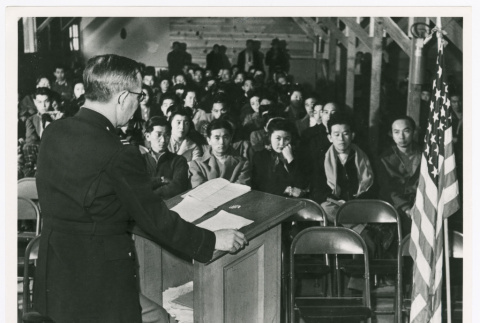
The War Relocation Authority (WRA) oversaw construction of ten concentration camps in sparsely populated and isolated areas. Between June and October 1942, Japanese Americans were transferred from the "assembly centers" to the larger camps. Housing approximately 120,000 people, the camps were designed to be self-contained communities, complete with hospitals, post offices, schools, warehouses, and residential areas. The WRA attempted to establish normalcy by setting up newspapers, a degree of self-government, sports leagues, and social events. But confinement, monotony, and harsh conditions exacerbated tensions between pro- and anti-camp administration residents and between the disempowered Issei and their U.S.-born Nisei children. At several centers, conflicts erupted into violence and at the Manzanar concentration camp the unrest resulted in fatal shootings. The WRA gradually granted work and school leave to those they considered "loyal." The last camp closed in March 1946.

World War II (283)
Concentration camps (2078)

Related articles from the Densho Encyclopedia :
Concentration Camps, U.S.A. (book), Gila River, Heart Mountain, Jerome, Manzanar, Minidoka, Poston (Colorado River), Psychological effects of camp, Rohwer, Sites of incarceration, Topaz, Tule Lake
Facilities
Format
Genre
Usage

Use <Ctrl> or (⌘) keys to select multiple terms

2078 items
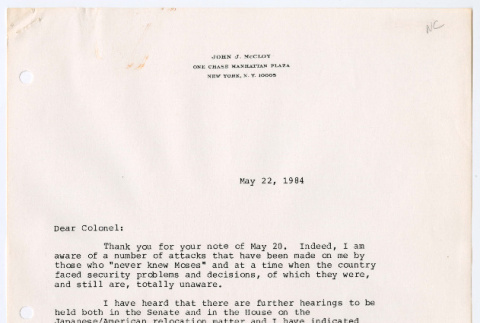
Correspondence of John J. McCloy and Frederick Bernays Wiener (ddr-densho-1007-1865)
doc Correspondence of John J. McCloy and Frederick Bernays Wiener (ddr-densho-1007-1865)
This is a collection of letters from 1984 by John J. McCloy and Frederick Bernays Wiener. Throughout the correspondence McCloy and Wiener defend the argument that the mass removal of Japanese Americans was a necessary national security act and criticize the work of the Commission on Wartime Relocation and Internment of Civilians. To learn more about …
Speech: Lessons from the Past (ddr-densho-1007-1826)
doc Speech: Lessons from the Past (ddr-densho-1007-1826)
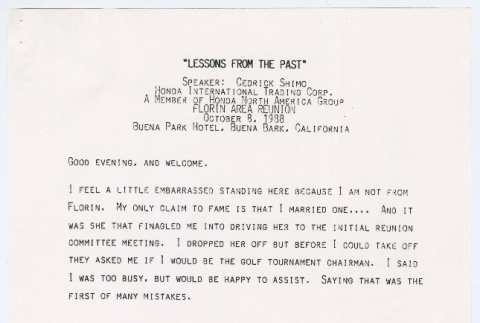
Speech by Cedrick Shimo at the Florin Area Reunion on October 8, 1988 in Buena Park, California discussing the impact of incarceration in Japanese American communities and calls for support for redress. Object also contains an article from the Los Angeles Japanese Daily News on September 3, 1988 titled Bert Nakano Delivers Speech on Redress.
Goro Sumida interviewed by Eric Saul, part 2 of 2 (ddr-densho-1007-1766)
av Goro Sumida interviewed by Eric Saul, part 2 of 2 (ddr-densho-1007-1766)
Sumida discusses his family, visiting his family at Rohwer, his impressions of camp, his time in basic training, war stories from Germany, the awards he received after the war, and whether he considers himself lucky. This interview was not conducted specifically for Loni Ding's work, rather for a book the Presidio was putting together. Partial transcript …
Testimony of Conscience (ddr-densho-1007-1855)
doc Testimony of Conscience (ddr-densho-1007-1855)
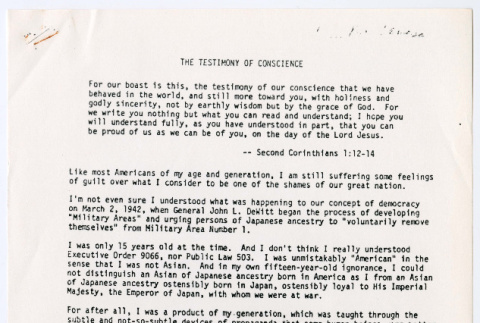
This document is a transcript of a sermon given by Charles Z. Smith at the Blaine Memorial United Methodist Church in Seattle, Washington on July 28, 1974. Smith was not of Japanese descent nor incarcerated during World War II in a concentration camp, but during his law career he advocated for immigrant rights and opposed Executive …
Kanegai family dinner and Moose (John) Fujikawa interview, part 1 of 4 (ddr-densho-1007-1582)
av Kanegai family dinner and Moose (John) Fujikawa interview, part 1 of 4 (ddr-densho-1007-1582)
Footage of the Kanegai family eating in their backyard. Unscripted. The younger mustached man is Bruce Kanegai; the older man to his right is his father George. Video starts at 0:29. Interview with Fujikawa starts at 10:44. Fujikawa talks about his childhood in LA, his decision not to go to college, his reaction to Pearl Harbor, …
Interview with Paul Minerich, Tim Nomiyama, Masao Kataoka, and Kenjiro Hayakawa, part 8 of 8; interview with Gary and Grace Itano, part 1 of 6 (ddr-densho-1007-1805)
av Interview with Paul Minerich, Tim Nomiyama, Masao Kataoka, and Kenjiro Hayakawa, part 8 of 8; interview with Gary and Grace Itano, part 1 of 6 (ddr-densho-1007-1805)
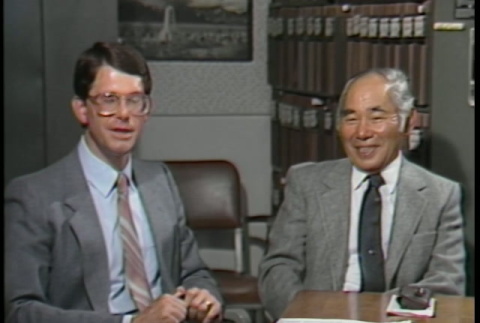
From left to right: Minerich, Nomiyama, Kataoka, Hayakawa. Kataoka discusses his hopes for the future, his feelings on Abraham Lincoln, and sneaking a letter from Hugh Nozawa to President Roosevelt out of camp. Minerich discusses the hearings that had taken place shortly before this interview at the Pentagon. Nomiyama discusses how he felt after the hearings …
Interview with Chris and Ada Ishii (ddr-densho-1007-1569)
av Interview with Chris and Ada Ishii (ddr-densho-1007-1569)
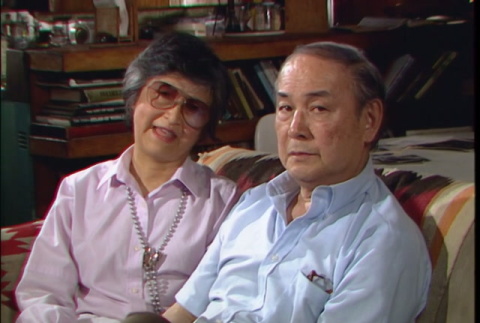
The Ishiis discuss the difficulty of getting married and moving to the US (Ada is from China), Chris' time in camp, Ada meeting Chris' mother, and the first time the two met. Video starts at 0:52. Loni Ding can be heard asking questions behind the camera. Original title: 66, II NY #53, Chris & Ada Verite …
Interview with John Fujii, part 2 of 2 (ddr-densho-1007-1692)
av Interview with John Fujii, part 2 of 2 (ddr-densho-1007-1692)
Fujii discusses being suspected as a Japanese spy while working for a newspaper, serving Japan and being interned in India during the war, his sympathy for Japan during the war, his brother's service in the US army, and his brother's attitude toward Japan. Video starts at 0:25. Loni Ding can be heard asking questions in the …
Interview with Moose (John) Fujikawa, part 2 of 4 (ddr-densho-1007-1583)
av Interview with Moose (John) Fujikawa, part 2 of 4 (ddr-densho-1007-1583)
Fujikawa discusses working on a sugar beet farm during internment, his decision to volunteer for the army, his relationship with his parents, his service with ATIS in Australia and with the Australian army in the Pacific. Video starts at 0:26. Loni Ding can be heard asking questions behind the camera. Original title: II LA #10, Fujikawa …
Interview with William Kochiyama, part 1 of 3 (ddr-densho-1007-1522)
av Interview with William Kochiyama, part 1 of 3 (ddr-densho-1007-1522)
Kochiyama discusses his experiences with internment at Topaz, military service and political activism. Original title: 27, II NY #6, 6-5-85. Interview continues at ddr.densho.org/ddr-densho-1007-1523/
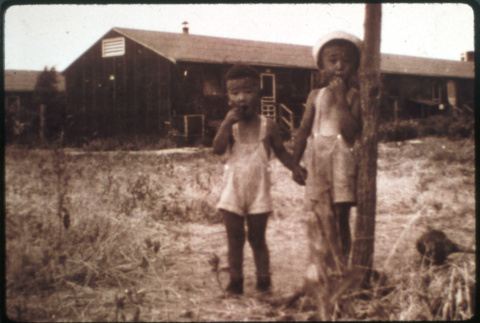
Two kids outside (ddr-densho-1007-660)
img Two kids outside (ddr-densho-1007-660)
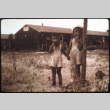
Slide, created in September 1984. Image date unknown. Likely taken at Minidoka.
Interview with a woman of the Watsonville Issei Singers, part 1 of 2 (ddr-densho-1007-1660)
av Interview with a woman of the Watsonville Issei Singers, part 1 of 2 (ddr-densho-1007-1660)
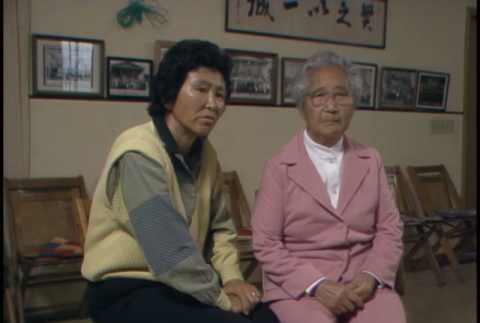
An Issei woman (not named) discusses incarceration, the future she imagined for her children, her feelings on her sons joining the military, and her feelings towards the US after the war. An interpreter translates her answers into English. Loni Ding can be heard asking questions in the background. Original title: II MON #12, 9-9-85, #12 Issei …
Correspondence of John J. McCloy and Angus Macbeth (ddr-densho-1007-1864)
doc Correspondence of John J. McCloy and Angus Macbeth (ddr-densho-1007-1864)
This collection of McCloy's correspondence relates to the Commission on Wartime Relocation and Internment of Civilians, as well as debates over Japanese American incarceration and redress. The material dates between 1943-1944 and 1975-1982. To learn more about McCloy, who is criticized for his role in the forced removal of Japanese Americans during World War II, see …
Interview with John Fujii, part 1 of 2 (ddr-densho-1007-1691)
av Interview with John Fujii, part 1 of 2 (ddr-densho-1007-1691)
Fujii, who was born and lives in Japan, discusses growing up in Livingston, CA, realizing he was Japanese as a child, going to college at Pomona, segregation in the schools he attended as a child, and his family's internment during the war. Loni Ding can be heard asking questions in the background. Original title: 202, II …
Interview with Harry and Ken Akune, part 3 of 6 (ddr-densho-1007-1591)
av Interview with Harry and Ken Akune, part 3 of 6 (ddr-densho-1007-1591)
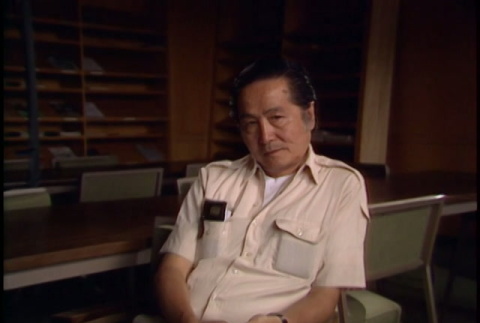
Ken Akune discusses his time at Amache, his decision to join the military from camp, his time at Camp Savage, his basic training with the 442nd, community objection to his volunteering, and his time in the China-Burma-India theater. Video starts at 0:27. Loni Ding can be heard asking questions behind the camera. Original title: 77, II …
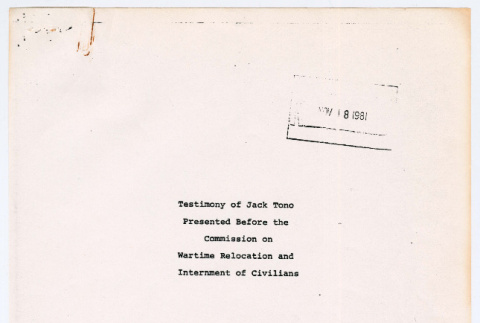
Testimony of Jack Tono (ddr-densho-1007-1820)
doc Testimony of Jack Tono (ddr-densho-1007-1820)
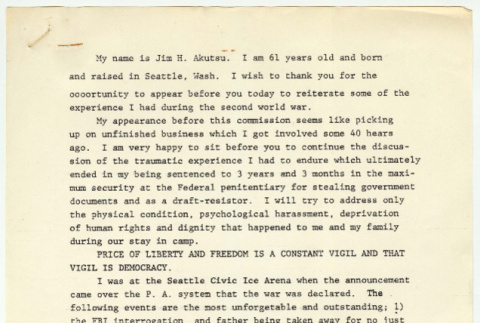
Jack Kiyoto Tono's statement to the Commission on Wartime Relocation and Internment of Civilians in New York City, New York on November 23, 1981. Tono describes his experience as a Japanese American draft resister and argues his support for redress.
Interview with Kazuko Iijima, part 4 of 4 (ddr-densho-1007-1534)
av Interview with Kazuko Iijima, part 4 of 4 (ddr-densho-1007-1534)
Iijima discusses joining her husband at Camp Shelby in Mississippi, witnessing discrimination against others, the Nisei experience in camp, and the importance of talking about the past. Video starts at 0:53. Loni Ding can be heard asking questions behind the camera. Original title: 39, II NY #18, 6-85, Kazuko Iijima
Interview with Arthur (Art) Morimitsu, part 1 of 6 (ddr-densho-1007-1749)
av Interview with Arthur (Art) Morimitsu, part 1 of 6 (ddr-densho-1007-1749)
Morimitsu discusses evacuation, his family's internment at Tule Lake, anti-Japanese sentiment after Pearl Harbor, being recruited by the military, and camp attitudes towards recruitment. Loni Ding can be heard asking questions in the background. Original title: 58B, II VFW #1, VFW - Art Morimitsu, Feb. 15, 1987. Interview continues at ddr.densho.org/ddr-densho-1007-1750/
Interview with Barry Saiki, part 2 of 5 (ddr-densho-1007-1703)
av Interview with Barry Saiki, part 2 of 5 (ddr-densho-1007-1703)
Saiki discusses his mother's reaction to his father's arrest and imprisonment, his time at Stockton Assembly Center, the attitudes of incarcerees at Stockton, the difficulty Nisei faced trying to find jobs at the time, and being relocated to the Rohwer camp. Loni Ding can be heard asking questions behind the camera. Original title: II JA #42, …
Testimony of Kiku Hori Funabiki (ddr-densho-1007-1843)
doc Testimony of Kiku Hori Funabiki (ddr-densho-1007-1843)
Kiku Funabiki's testimony and related supplemental material describing her family's incarceration at Heart Mountain, Wyoming and its lasting impact.
Interview with Hideko Seo, part 1 of 4 (ddr-densho-1007-1535)
av Interview with Hideko Seo, part 1 of 4 (ddr-densho-1007-1535)
Seo discusses her experiences growing up in Portland, moving to Chicago during evacuation, her brother Jimmy's service/camp visits, and her family's time in Minidoka. Also mentions her brother's death during the war. Video starts at 0:52. Loni Ding can be heard asking questions behind the camera. Original title: II NY #19, 6-85, Hideko Seo. Interview continues …
API