Feeling sympathy for one of the victims in the court-martial incident
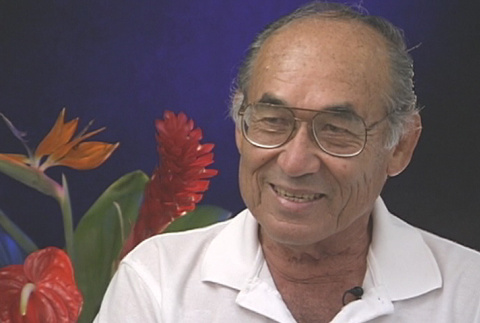
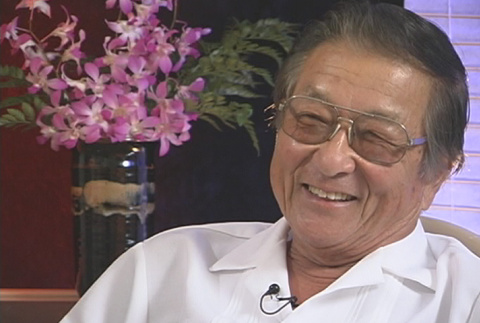
This interview was conducted at the 1998 Americans of Japanese Ancestry Veterans National Convention, held in Honolulu, Hawaii. Because of the full conference schedule, interviews conducted at the reunion were generally shorter in length than the typical Densho interview and concentrated on a single topic. …
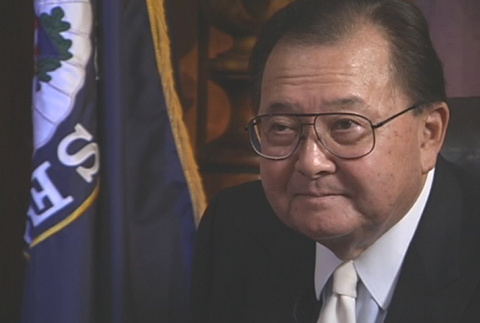
This interview was conducted at the senator's office in Honolulu, Hawaii, as part of a series of interviews with veterans attending the 1998 Americans of Japanese Ancestry Veterans National Convention held in Honolulu, Hawaii. Because of the full conference schedule, the interviews were generally shorter in length than the typical Densho interview and concentrated …
This interview was conducted at the senator's office in Honolulu, Hawaii, as part of a series of interviews with veterans attending the 1998 Americans of Japanese Ancestry Veterans National Convention held in Honolulu, Hawaii. Because of the full conference schedule, the interviews were generally shorter in length than the typical Densho interview and …
Finding a very serious breach of military regulations in the case of Shiro Kashino's wartime court-martial
This interview was conducted at the 1998 Americans of Japanese Ancestry Veterans National Convention, held in Honolulu, Hawaii. Given the full conference schedule, interviews conducted at the reunion were shorter in length than typical Densho interviews and concentrated on a …
The first appeal, only a partial victory in trying to overturn Shiro Kashino's wartime court-martial
This interview was conducted at the 1998 Americans of Japanese Ancestry Veterans National Convention, held in Honolulu, Hawaii. Given the full conference schedule, interviews conducted at the reunion were shorter in length than typical Densho interviews and concentrated on a single …
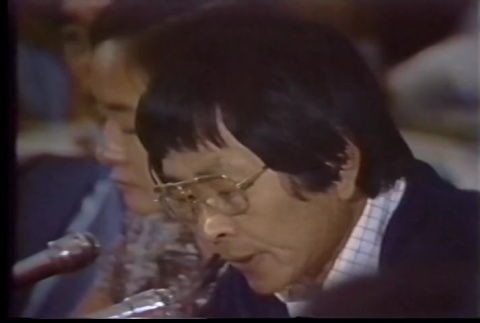
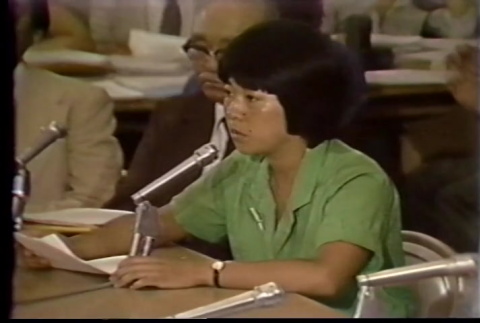
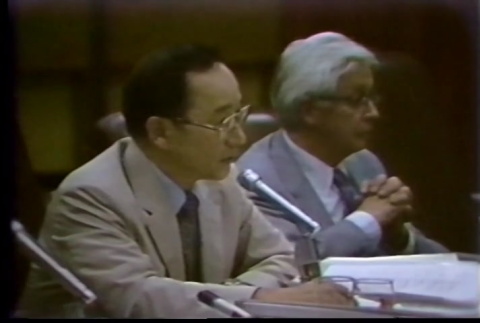
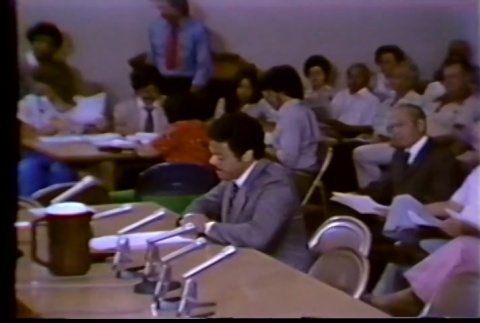
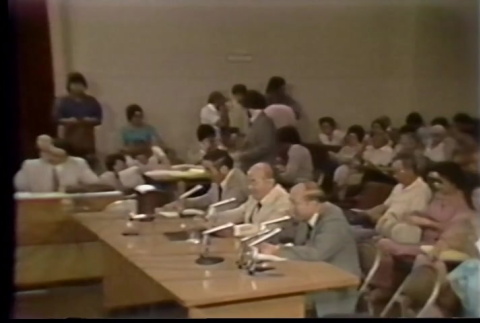
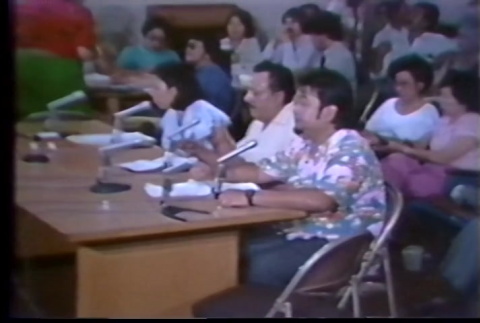
Testifiers continue to speak out on the economic loss and psychological impact of Japanese internment during World War II. Recollections of post-camp resettlement also demonstrate the discrimination and prejudice experienced by many Japanese Americans.
Introduction by June Hibino of Nikkei Progressives and NCRR.
Part 3 Testifiers:
Rei Osaki,
Peter K. Ota,
John J. Saito,
Linda Morimoto, …
Mental health professionals provide insight into the detrimental effects of camp trauma and the impact on psychological and physical health. Japanese Americans speak out on the extreme racial prejudice and discrimination experienced in post-camp life.
Introduction by Karen Umemoto, Executive Director of the UCLA Asian American Studies Center, and Michael Nishimura, member of Nikkei Progressives.
Part …
As the Commission on Wartime Relocation and Internment of Civilians (CWRIC) Los Angeles hearings resume, Issei testifiers speak out on the injustice shown towards people of Japanese ancestry during World War II. Testifiers from the San Diego Redress and Reparations Committee also speak out on behalf of their experiences and their families.
Introduction by Jan Tokumaru, …
Testifiers continue to speak out on economic and property loss as a result of forced relocation and internment. Japanese Americans share their experiences of search, seizure, and mistreatment during their time spent in internment camps.
Introduction by Alison Kochiyama, Executive Director of the Gardena Valley Japanese Cultural Institute.
Part 6 Testifiers:
Kiyoshi Sonoda,
Larry Boss,
Mary …
As the final day of the CWRIC hearings conclude, testifiers continue to speak out on the impact of EO 9066 on Japanese American communities and unite in their demand for monetary redress. The testimonies recall business property loss, resettlement difficulties, and racial prejudice.
Introduction by Richard Katsuda, educator and co-chair of NCRR.
Part 5 Testifiers:
Akemi …
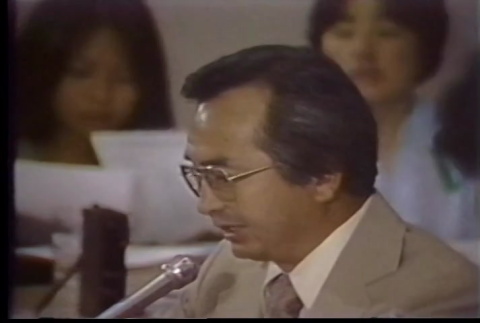
Nisei (second-generation Japanese Americans) veterans speak out about the injustice shown to Japanese Americans during World War II and in solidarity demand redress. A confrontation occurs between testifier Jim Kawaminami and author Lillian Baker, who denied that Japanese Americans were incarcerated during World War II.
Introduction by Roy Nakano, Director of UCLA Asian American Studies Center. …
Testifiers continue to show bravery in speaking out on the impact of Japanese internment during World War II. These stories show the economic loss, psychological trauma, and impact on education for many interned Japanese.
Introduction by Jen Noji of Nikkei Progressives and Alan Nishio, Former Co-Chair of NCRR Los Angeles
Part 2 Testifiers:
Jack Fujimoto,
Y. …
As the Commission on Wartime Relocation and Internment of Civilians (CWRIC) Los Angeles hearings proceed, testimonies of financial losses and psychological trauma drive the movement for Redress and Reparations forward. The testifiers show solidarity in their support for interned people of Japanese ancestry.
Introduction by Mark Masaoka and Miyako Noguchi of Nikkei Progressives.
Part 5 Testifiers: …
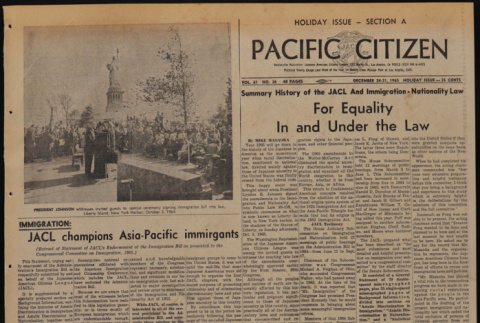
Selected article titles: "For Equality In and Under the Law" (p.A1, A3), "Immigration: Abolish Quota System over Five-Year Period" (p.A5-A6), "Japanese Resent Stigma of 1924 Exclusion Act" (p.A8, A10), "Dr. Steve Abe: Psychologist Compares Nisei-Sansei Teenage Relationship" (p.B3-B5, B23), "The Enemy at Guadlcanal" (p.B6, B10, B18), "The Road through the Pasture"(p.B20).
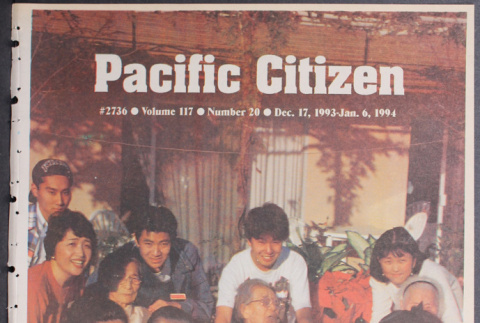
The holiday issue included advertisements …
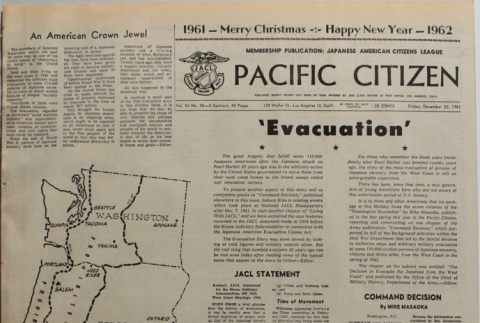
Special holiday issue organized into sections A 1-24, B 1-16, and C 1-4. Selected article titles: "'Evacuation' JACL Statement and Command Decision" (pp. A-1, A-3-A-7), "Nisei Actors Come of Age" (p. A-8), "Chronology of War Relocation Authority Activities" (pp. A-22-A-23), and "JACL vs. Lechner" (pp. B-15-B-16).
The holiday issue included advertisements bought by JACL members and …
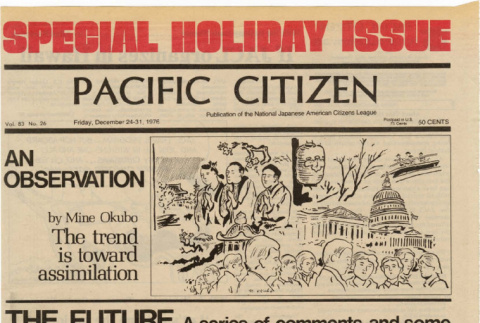
Special holiday issue. Selected article titles: "PC Headlines in 1986" (p. 3), "The Trend Is Toward Assimilation" (p. 4), "Five Critical Political-Social Issues for Nisei and Their Future Well-Being in U.S. Assessed" (pp. 5, 68), "Evacuation Remembered, but Use of Nihongo Fading Away" (pp. 85-87), and "Tule Lake's Steel Cross Rededicated by 1976 Pilgrim" (pp. 101, …
Select article titles: "No wand then...with Bill Hosokawa" (p. A8); "Our man, Sam" (p. A18); "Volunteer leadership for changing times..." (p. A20); "'The Joy Luck Club'" (p. B4); "Exhibit honors the Japanese Pioneers of Oregon" (p. B7); "Takao Ozawa: A Japanese national fights discrimination in Hawaii during the early 1900s" (p. B8).
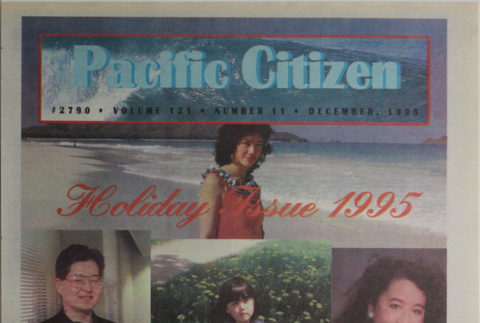
The holiday issue included …
Holiday issue organized into sections A 1-36, B 1-56, and A 37-64. Selected article titles: "Who Were the Japanese Americans?" (pp. A15-A16), "'Ethnicity: Please Check One'" (p. A18), "MIS: The Untold Stories" (pp. A34-A35, A37, A39, A41-A42), and "A Bill of Rights for Asserting a Multiracial Identity" (pp. B6-B7).
The holiday issue included advertisements bought by …
Block print holiday card (made with block shown in object ddr-densho-493-3, designed by Tomio.) Front is addressed "Dear Maki, May + Doug .... Sincerely, Tomio" and design features the word "Greetings" in the sky above three buildings, a tower, and a fence—a scene possibly inspired by camp. Text of message reads: "Dear Maki, Thanks a million …
Nisei male. Born October 15, 1931, in Kapaa, Kauai, Hawaii. Moved to San Jose, California, from Hawaii in 1936. Grew up in San Jose's Japantown before the onset of World War II. Removed to Santa Anita Assembly Center, California, and Heart Mountain concentration camp, Wyoming. Returned with family to San Jose, after the war, and helped …
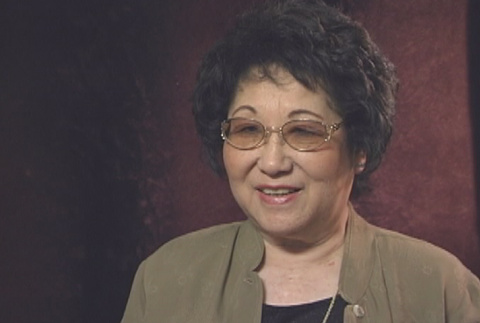
Nisei female. Born January 14, 1927, in Wapato, Washington, where family operated a truck farm. Following the bombing of Pearl Harbor, removed to North Portland Assembly Center and Heart Mountain concentration camp, Wyoming. Family left camp in 1945 for Spokane, Washington. Worked as a domestic on Spokane's South Hill before becoming a licensed beautician. Married husband …
Nisei male. Born July 27, 1919, in Stockton, California. Emeritus professor of anatomy at Harvard Medical School. During World War II, was second lieutenant, 522nd Field Artillery Battalion of the 442nd Regimental Combat Team. In his interview, he discusses his memories of serving in the 442nd and some of the more psychological aspects of combat.
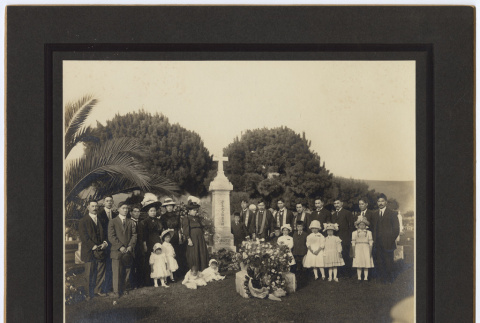
Photograph of Domoto family at the family grave site. Teru Domoto visible standing to the left of the large grave stone. Donor note attached to duplicate photo (Duplicate: https://ddr.densho.org/ddr-densho-356-4) suggests the funeral is presumably for Teru and Kanetero Domoto's youngest daughter Masako Domoto who died in 1918. However, based on the fashion and ages of the …
Written on verso: Left to Right, Class Picture, John Muir School, Sixth Grade, Oct. 27, 1933, Front Row - Eva Mitchell, Catherine Martinez, Lillian Ramarez, Nellie Martin, Rosie Baroza, Frank DeRose, Elmer Goulart, Joe Rubio, Thomas Henderson, Manuel Souza, Second Row - Lorraine Dias, Antoinette Fernandez, Betty Zacarias, Wilda Mann, Jean Brown, Manuel Silva, Joe Gomez, …
Written on verso: Left to Right, Class Picture, John Muir School, Sixth Grade, Oct. 27, 1933, Front Row - Eva Mitchell, Catherine Martinez, Lillian Ramarez, Nellie Martin, Rosie Baroza, Frank DeRose, Elmer Goulart, Joe Rubio, Thomas Henderson, Manuel Souza, Second Row - Lorraine Dias, Antoinette Fernandez, Betty Zacarias, Wilda Mann, Jean Brown, Manuel Silva, Joe Gomez, …

![Holiday card from Tomio Itabashi to Maki, May [Mae] and Doug Yamada (ddr-densho-493-21)](https://ddr.densho.org/media/cache/10/de/10de5383ec3d68f5f9bee2fd4480dea5.jpg)



![Holiday card from Tomio Itabashi to Maki, May [Mae] and Doug Yamada (ddr-densho-493-21)](https://ddr.densho.org/media/cache/2a/f9/2af96fa6f32bfb054cc39e7264c33418.jpg)