
Gordon Hirabayashi
Gordon Hirabayashi, a 24-year-old senior at the University of Washington, arrived at the FBI office in Seattle on May 16, 1942, the date that he had been ordered to register for exclusion. He handed the FBI agent a four-page statement that explained why he refused to register. Hirabayashi was raised as a Quaker and trained as a pacifist, and his reasons for refusal stemmed from his religious convictions and pacifism. Hirabayashi was arrested and his case became an important test of the constitutionality of exclusion. In 1986, Hirabayashi's case was reopened and his convictions surrounding the incarceration were vacated by the Ninth Circuit Court of Appeals, arguing in part that, "racial bias was the cornerstone of the internment orders."
World War II
(283)
Resistance and dissidence
(97)
Supreme Court cases
(16)
Gordon Hirabayashi
(112)
Related articles from the
Densho Encyclopedia :
Hirabayashi v. United States,
Gordon Hirabayashi
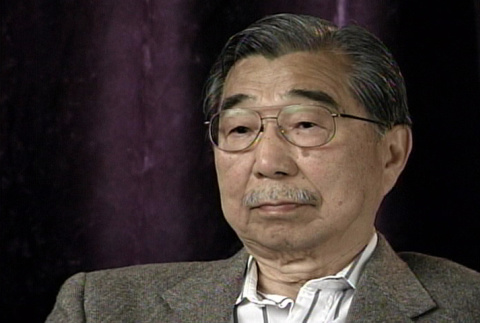
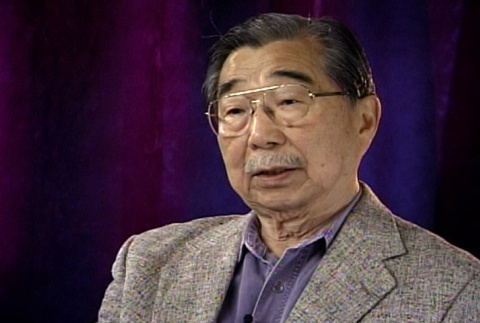
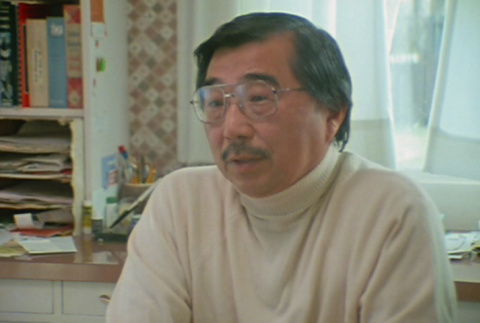
This interview is audio-only. It contains raw footage used by Steven Okazaki in his 1985 film Unfinished Business.
This material is based upon work assisted by a grant from the Department of the Interior, National Park Service. Any opinions, finding, and conclusions or recommendations expressed in …
This interview is audio-only. It contains raw footage used by Steven Okazaki in his 1985 film Unfinished Business.
This material is based upon work assisted by a grant from the Department of the Interior, National Park Service. Any opinions, finding, and conclusions or recommendations expressed …
This interview is audio-only. It contains raw footage used by Steven Okazaki in his 1985 film Unfinished Business.
This material is based upon work assisted by a grant from the Department of the Interior, National Park Service. Any opinions, finding, and …
This interview is audio-only. It contains raw footage used by Steven Okazaki in his 1985 film Unfinished Business.
This material is based upon work assisted by a grant from the Department of the Interior, National Park Service. Any opinions, finding, and conclusions or recommendations expressed in this …
This interview is audio-only. It contains raw footage used by Steven Okazaki in his 1985 film Unfinished Business.
This material is based upon work assisted by a grant from the Department of the Interior, National Park Service. Any opinions, finding, and conclusions or recommendations expressed …