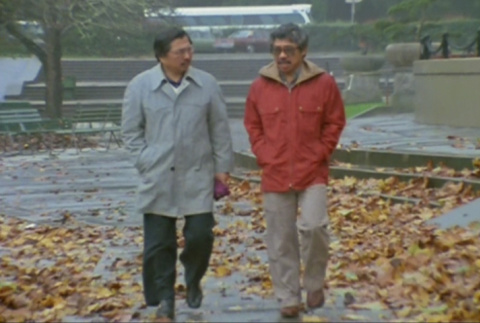
Gordon Hirabayashi

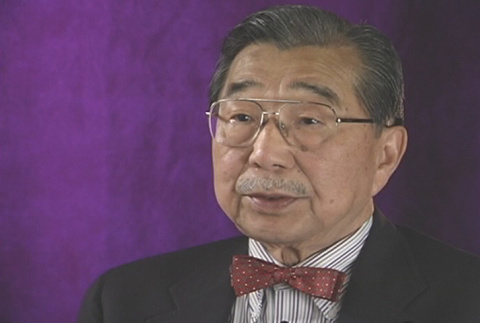
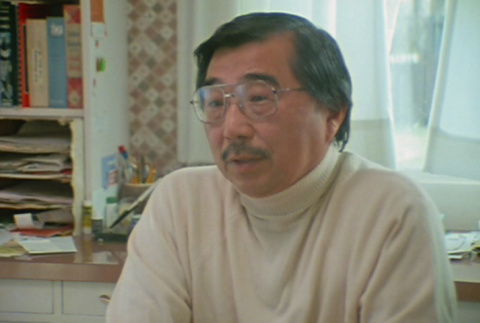
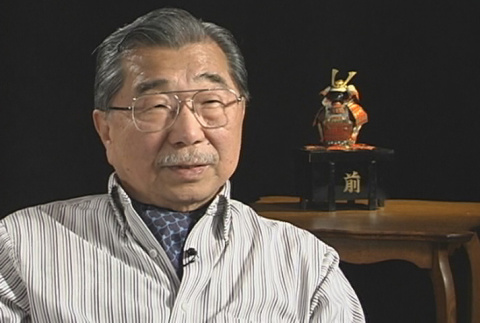
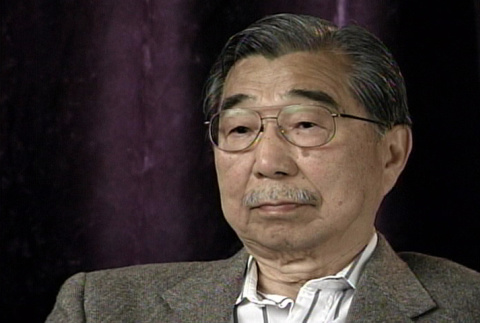
Gordon Hirabayashi, a 24-year-old senior at the University of Washington, arrived at the FBI office in Seattle on May 16, 1942, the date that he had been ordered to register for exclusion. He handed the FBI agent a four-page statement that explained why he refused to register. Hirabayashi was raised as a Quaker and trained as a pacifist, and his reasons for refusal stemmed from his religious convictions and pacifism. Hirabayashi was arrested and his case became an important test of the constitutionality of exclusion. In 1986, Hirabayashi's case was reopened and his convictions surrounding the incarceration were vacated by the Ninth Circuit Court of Appeals, arguing in part that, "racial bias was the cornerstone of the internment orders."

World War II (283)
Resistance and dissidence (97)
Supreme Court cases (16)
Gordon Hirabayashi (112)

Related articles from the Densho Encyclopedia :
Hirabayashi v. United States, Gordon Hirabayashi
Facilities
Format
Genre
Usage

Use <Ctrl> or (⌘) keys to select multiple terms

112 items
Gordon Hirabayashi - Jim Hirabayashi Interview Segment 4 (ddr-densho-1012-9-4)
vh Gordon Hirabayashi - Jim Hirabayashi Interview Segment 4 (ddr-densho-1012-9-4)
Gordon Hirabayashi's decision to reopen his case (audio only)

This interview is audio-only. It contains raw footage used by Steven Okazaki in his 1985 film Unfinished Business.

This material is based upon work assisted by a grant from the Department of the Interior, National Park Service. Any opinions, finding, and conclusions or recommendations expressed in …

Gordon Hirabayashi - Jim Hirabayashi Interview Segment 6 (ddr-densho-1012-9-6)
vh Gordon Hirabayashi - Jim Hirabayashi Interview Segment 6 (ddr-densho-1012-9-6)
Support of parents in Gordon's initial case (audio only)

This interview is audio-only. It contains raw footage used by Steven Okazaki in his 1985 film Unfinished Business.

This material is based upon work assisted by a grant from the Department of the Interior, National Park Service. Any opinions, finding, and conclusions or recommendations expressed in …

Gordon Hirabayashi - Jim Hirabayashi Interview Segment 3 (ddr-densho-1012-9-3)
vh Gordon Hirabayashi - Jim Hirabayashi Interview Segment 3 (ddr-densho-1012-9-3)
The lessons of Gordon Hirabayashi's case (audio only)

This interview is audio-only. It contains raw footage used by Steven Okazaki in his 1985 film Unfinished Business.

This material is based upon work assisted by a grant from the Department of the Interior, National Park Service. Any opinions, finding, and conclusions or recommendations expressed in this …

Gordon Hirabayashi - Jim Hirabayashi Interview Segment 1 (ddr-densho-1012-9-1)
vh Gordon Hirabayashi - Jim Hirabayashi Interview Segment 1 (ddr-densho-1012-9-1)
Thoughts on being seen as a culture hero (audio only)

This interview is audio-only. It contains raw footage used by Steven Okazaki in his 1985 film Unfinished Business.

This material is based upon work assisted by a grant from the Department of the Interior, National Park Service. Any opinions, finding, and conclusions or recommendations expressed …
Jim Hirabayashi - Rick Shiomi Interview Segment 4 (ddr-densho-1012-12-4)
vh Jim Hirabayashi - Rick Shiomi Interview Segment 4 (ddr-densho-1012-12-4)
Gordon Hirabayashi's incredible wartime story (audio only)

This interview is audio-only. It contains raw footage used by Steven Okazaki in his 1985 film Unfinished Business.

This material is based upon work assisted by a grant from the Department of the Interior, National Park Service. Any opinions, finding, and conclusions or recommendations expressed in this material …

Jim Hirabayashi - Rick Shiomi Interview Segment 2 (ddr-densho-1012-12-2)
vh Jim Hirabayashi - Rick Shiomi Interview Segment 2 (ddr-densho-1012-12-2)
Remembering Gordon Hirabayashi's decision to resist the curfew (audio only)

This interview is audio-only. It contains raw footage used by Steven Okazaki in his 1985 film Unfinished Business.

This material is based upon work assisted by a grant from the Department of the Interior, National Park Service. Any opinions, finding, and conclusions or recommendations expressed …
Peter Irons Interview Segment 5 (ddr-densho-1012-16-5)
vh Peter Irons Interview Segment 5 (ddr-densho-1012-16-5)
Gordon Hirabayashi's written statement challenging evacuation (audio only)

This interview is audio-only. It contains raw footage used by Steven Okazaki in his 1985 film Unfinished Business.

This material is based upon work assisted by a grant from the Department of the Interior, National Park Service. Any opinions, finding, and conclusions or recommendations expressed in this …
Jim Hirabayashi Interview Segment 11 (ddr-densho-1002-5-11)
vh Jim Hirabayashi Interview Segment 11 (ddr-densho-1002-5-11)
Description of brother Gordon Hirabayashi's wartime stand and trial

This interview was conducted by sisters Emiko and Chizuko Omori for their 1999 documentary, Rabbit in the Moon, about the Japanese American resisters of conscience in the World War II incarceration camps. As a result, the interviews in this collection are typically not life histories, instead …
Henry Miyatake Interview II Segment 9 (ddr-densho-1000-54-9)
vh Henry Miyatake Interview II Segment 9 (ddr-densho-1000-54-9)
Trying to start a collection for Gordon Hirabayashi, encountering resistance
Gordon Hirabayashi Interview III Segment 5 (ddr-densho-1000-19-5)
vh Gordon Hirabayashi Interview III Segment 5 (ddr-densho-1000-19-5)
Prosecutor subpoenas parents as witnesses, holds them in the King County jail
Gordon Hirabayashi Interview III Segment 3 (ddr-densho-1000-19-3)
vh Gordon Hirabayashi Interview III Segment 3 (ddr-densho-1000-19-3)
Visiting with civil rights activist Bayard Ruston and advocating on behalf of fellow inmates as "tank mayor"
Gordon Hirabayashi Interview III Segment 4 (ddr-densho-1000-19-4)
vh Gordon Hirabayashi Interview III Segment 4 (ddr-densho-1000-19-4)
Refusing release on bail: either jail or the concentration camps, freedom not an option
Gordon Hirabayashi Interview III Segment 8 (ddr-densho-1000-19-8)
vh Gordon Hirabayashi Interview III Segment 8 (ddr-densho-1000-19-8)
Translating father's testimony for the court, the verdict, and sentencing: "All this discussion about the Constitution... That's irrelevant."
Gordon Hirabayashi Interview III Segment 7 (ddr-densho-1000-19-7)
vh Gordon Hirabayashi Interview III Segment 7 (ddr-densho-1000-19-7)
Life behind bars: role as "tank mayor" and influence on fellow prisoners
Gordon Hirabayashi Interview Segment 5 (ddr-densho-1012-2-5)
vh Gordon Hirabayashi Interview Segment 5 (ddr-densho-1012-2-5)
Making the decision to defy the curfew (audio only)

This interview is audio-only. It contains raw footage used by Steven Okazaki in his 1985 film Unfinished Business.

This material is based upon work assisted by a grant from the Department of the Interior, National Park Service. Any opinions, finding, and conclusions or recommendations expressed in …
Gordon Hirabayashi Interview II Segment 17 (ddr-densho-1000-18-17)
vh Gordon Hirabayashi Interview II Segment 17 (ddr-densho-1000-18-17)
Handing oneself over to the FBI, and trying to accommodate a colonel's need to report "100% evacuated"
Gordon Hirabayashi Interview II Segment 16 (ddr-densho-1000-18-16)
vh Gordon Hirabayashi Interview II Segment 16 (ddr-densho-1000-18-16)
Defying the May '42 exclusion order, the last Japanese American in Seattle
Gordon Hirabayashi Interview II Segment 18 (ddr-densho-1000-18-18)
vh Gordon Hirabayashi Interview II Segment 18 (ddr-densho-1000-18-18)
Pinning hopes on the Supreme Court: "[T]heir main existence is to uphold the Constitution ... How in the world can they uphold [the convictions] against me?"
Gordon Hirabayashi Interview V Segment 18 (ddr-densho-1000-115-18)
vh Gordon Hirabayashi Interview V Segment 18 (ddr-densho-1000-115-18)
Ninth Circuit Court of Appeals vacates the conviction, but does not overturn the Supreme Court ruling
API