Draft resistance

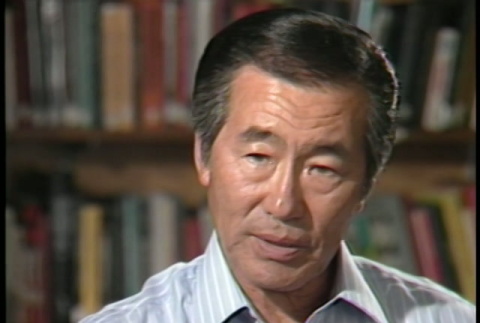
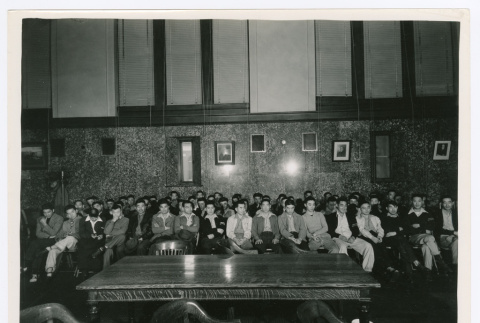
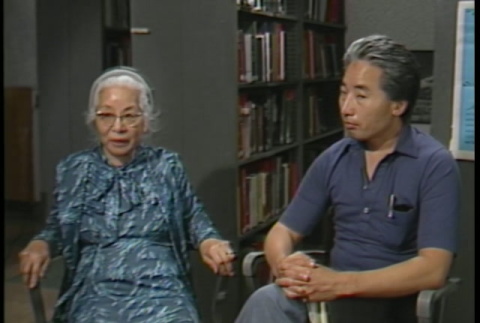
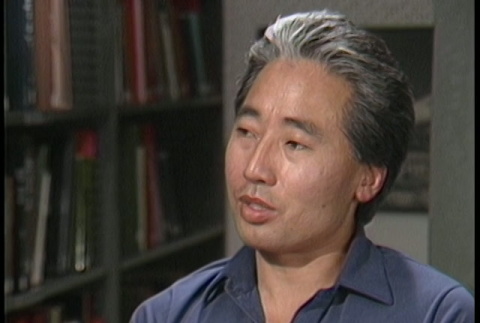
In 1944 the government reinstated the draft for Japanese Americans after suspending it in 1942 and began drafting men directly from the camps. This action angered many. At Heart Mountain concentration camp, Wyoming, resistance took the form of an organized movement calling itself the Fair Play Committee. Members demanded that their rights as citizens be restored before enlisting in the military. Eventually, sixty-three men from Heart Mountain refused induction and were sentenced to prison terms for draft evasion. In the other camps, disparate individuals made the decision to resist the draft. After being unfairly incarcerated for almost two years, they saw the draft as the final injustice. Ultimately, 267 men from all the concentration camps were convicted of evading the draft and most served time in prison. President Truman pardoned all of the resisters in 1947.

World War II (277)
Resistance and dissidence (97)
Draft resistance (393)

Related articles from the Densho Encyclopedia :
Draft resistance, Frank Emi, Gordon Hirabayashi, No-No Boy (book)
Facilities
Format
Genre
Usage

Use <Ctrl> or (⌘) keys to select multiple terms
393 items
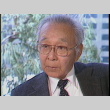
Interview with Gary and Grace Itano, part 6 of 6 (ddr-densho-1007-1748)
av Interview with Gary and Grace Itano, part 6 of 6 (ddr-densho-1007-1748)
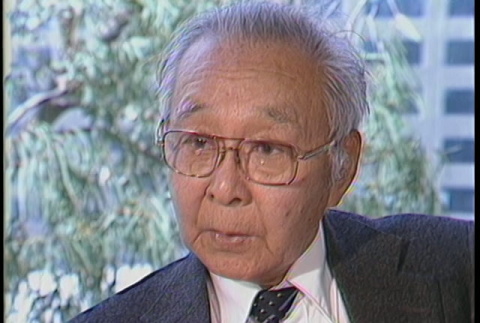
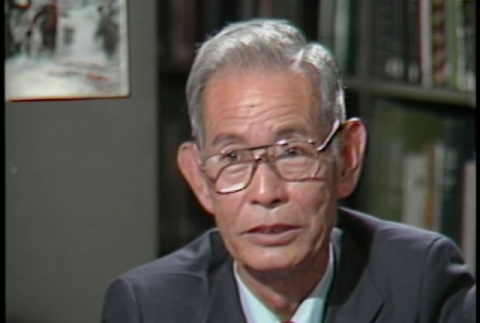
Gary discusses the decision the DB Boys made to refuse to serve, the decision to intern the Japanese American population, the importance of the Kibei to the DB Boys, his experience in Japan and his connection to his heritage, and his father's court martial. Loni Ding can be heard asking questions behind the camera. Original title: …
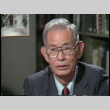
Interview with Arthur (Art) Morimitsu, part 5 of 6 (ddr-densho-1007-1753)
av Interview with Arthur (Art) Morimitsu, part 5 of 6 (ddr-densho-1007-1753)
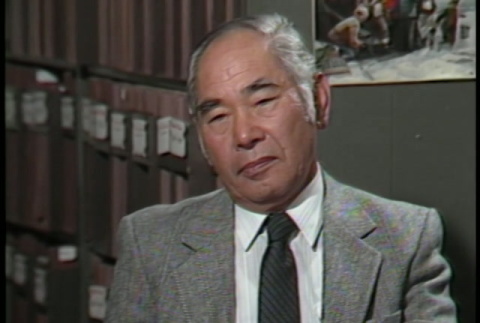
Morimitsu discusses his relationship with Caucasian American soldiers, stories from his service, and his thoughts on draft resisters. Video starts at 0:25. Loni Ding can be heard asking questions behind the camera. Original title: 62B, II VFW #5, VFW - LA, Art Morimitsu, Feb. 15, 1987. Interview continues at ddr.densho.org/ddr-densho-1007-1754/
Interview with William Kochiyama, part 2 of 3 (ddr-densho-1007-1523)
av Interview with William Kochiyama, part 2 of 3 (ddr-densho-1007-1523)
Kochiyama discusses the 442nd, particularly the rescue of the Lost Battalion. Also talks about draft resisters. Loni Ding can be heard asking questions behind the camera. Video starts at 1:21. Original title: 28, II NY #7, 6-5-84. Interview continues at ddr.densho.org/ddr-densho-1007-1524/
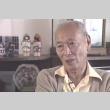
Interview with Gary and Grace Itano, part 2 of 6 (ddr-densho-1007-1806)
av Interview with Gary and Grace Itano, part 2 of 6 (ddr-densho-1007-1806)
Grace discusses working with her husband-to-be before the war, her husband asking for a divorce (knowing that he would be imprisoned for refusing to serve), her husband Henry's reasons for refusing to serve, her husband's family preventing him from going to college, trying and failing to live outside of camp in Arizona, evacuation and closing her …
Interview with Gary and Grace Itano, part 5 of 6 (ddr-densho-1007-1747)
av Interview with Gary and Grace Itano, part 5 of 6 (ddr-densho-1007-1747)
Gary discusses the legal efforts to reverse the charges of the DB Boys, his role in the hearings, and the reasons it took so long for the DB Boys to pursue legal action. Grace discusses why she buried her husband in Japan. Video starts at 0:51. Loni Ding can be heard asking questions behind the camera. …
Interview with Paul Minerich, Tim Nomiyama, Masao Kataoka, and Kenjiro Hayakawa, part 3 of 8 (ddr-densho-1007-1800)
av Interview with Paul Minerich, Tim Nomiyama, Masao Kataoka, and Kenjiro Hayakawa, part 3 of 8 (ddr-densho-1007-1800)
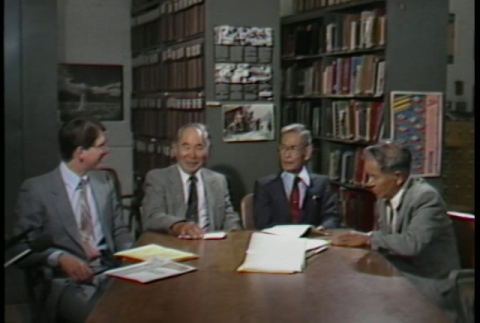
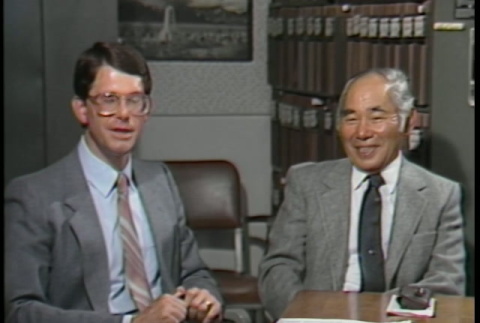
From left to right: Minerich, Nomiyama, Kataoka, Hayakawa. Kataoka discusses being a soldier when evacuation started, the interment of his wife, and the relationship between Kibei and Nisei soldiers. Kataoka and Nomiyama discuss how they met. Nomiyama discusses when he decided to refuse to serve, being called a traitor when he left Japan, returning to the …
Interview with Frank Emi, part 6 of 6; Hollywood Judo Dojo footage, part 1 of 3 (ddr-densho-1007-1745)
av Interview with Frank Emi, part 6 of 6; Hollywood Judo Dojo footage, part 1 of 3 (ddr-densho-1007-1745)
Interview continued from ddr.densho.org/ddr-densho-1007-1796/. Emi reads a bulletin from the Fair Play Committee. Starting at 8:41, Emi and Gary (last name unknown) discuss the history of Hollywood Judo Dojo and their experiences with judo. Last few minutes of tape are b-roll the dojo. Original title: 43B, II RES/PRO #7, Frank Emi, UCLA, 5-31-86, Judo Dojo …
Interview with Paul Minerich, Tim Nomiyama, Masao Kataoka, and Kenjiro Hayakawa, part 8 of 8; interview with Gary and Grace Itano, part 1 of 6 (ddr-densho-1007-1805)
av Interview with Paul Minerich, Tim Nomiyama, Masao Kataoka, and Kenjiro Hayakawa, part 8 of 8; interview with Gary and Grace Itano, part 1 of 6 (ddr-densho-1007-1805)
From left to right: Minerich, Nomiyama, Kataoka, Hayakawa. Kataoka discusses his hopes for the future, his feelings on Abraham Lincoln, and sneaking a letter from Hugh Nozawa to President Roosevelt out of camp. Minerich discusses the hearings that had taken place shortly before this interview at the Pentagon. Nomiyama discusses how he felt after the hearings …
Interview with Paul Minerich, Tim Nomiyama, Masao Kataoka, and Kenjiro Hayakawa, part 5 of 8 (ddr-densho-1007-1802)
av Interview with Paul Minerich, Tim Nomiyama, Masao Kataoka, and Kenjiro Hayakawa, part 5 of 8 (ddr-densho-1007-1802)
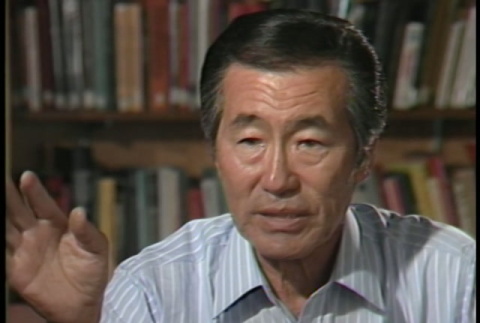
From left to right: Minerich, Nomiyama, Kataoka, Hayakawa. Kataoka and Hayakawa discuss why they refused to serve. Kataoka discusses why he had little faith that justice would be done and the change in attitudes towards Japanese Americans since the war. Nomiyama discusses why he refused to fight. Interview starts at 0:27. Loni Ding can be heard …
Interview with Robert H. Foote, part 4 of 4 (ddr-densho-1007-1528)
av Interview with Robert H. Foote, part 4 of 4 (ddr-densho-1007-1528)
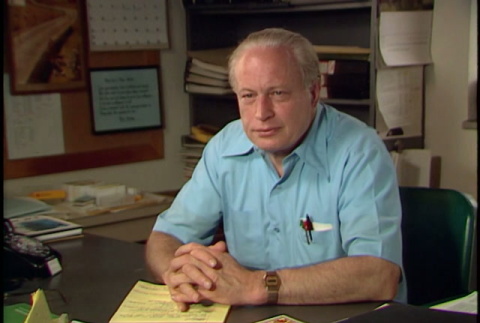
Foote discusses discrimination against Japanese-Americans. Also talks about draft resisters and those who were killed in action. Loni Ding can be heard asking questions behind the camera. Video starts at 1:00. Original title: 33, II NY #12, 6-85, Foote interview
Testimony of Jack Tono (ddr-densho-1007-1820)
doc Testimony of Jack Tono (ddr-densho-1007-1820)
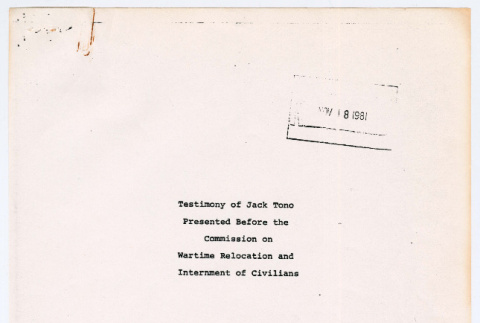
Jack Kiyoto Tono's statement to the Commission on Wartime Relocation and Internment of Civilians in New York City, New York on November 23, 1981. Tono describes his experience as a Japanese American draft resister and argues his support for redress.
Interview with Gary and Grace Itano, part 3 of 6 (ddr-densho-1007-1807)
av Interview with Gary and Grace Itano, part 3 of 6 (ddr-densho-1007-1807)
Grace discusses moving to Orange County after her husband's death, her impressions of the DB Boys and her relationship with them, Gary discusses learning about the DB Boys, his father's plans for his children, how going to Japan helped broaden his worldview, and his father's philosophy. Interview starts at 0:55. Loni Ding can be heard asking …
Interview with Hugh Nozawa, part 3 of 3 (ddr-densho-1007-1715)
av Interview with Hugh Nozawa, part 3 of 3 (ddr-densho-1007-1715)
Nozawa discusses being court-martialed for refusing to serve in the military while the internment camps were operating, the long fight for honorable discharge after the fact, and his reasons for trying to hard to reverse the dishonorable discharge given to Nisei who refused to serve. Original title: 222, II JA #54, Hugh Nozawa, Sun. Feb. 2
Interview with Hugh Nozawa, part 1 of 3 (ddr-densho-1007-1713)
av Interview with Hugh Nozawa, part 1 of 3 (ddr-densho-1007-1713)
Nozawa discusses being born in Santa Monica, attending high school in Japan, being drafted, being court-martialed for refusing to complete training, recently getting honorable discharge, the discrimination he and other Nisei faced in the army, and President Roosevelt's visit to Fort Riley. Loni Ding can be heard asking questions behind the camera. Original title: 220, II …
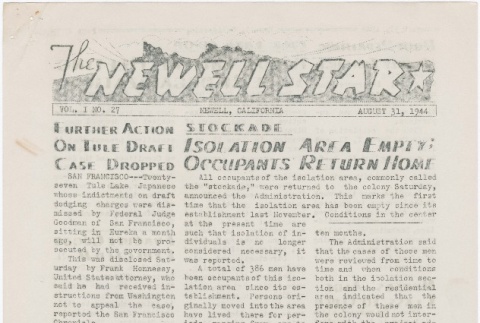
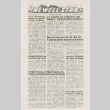
The Newell Star, Vol. I, No. 27 (August 31, 1944) (ddr-densho-284-33)
doc The Newell Star, Vol. I, No. 27 (August 31, 1944) (ddr-densho-284-33)
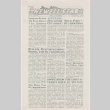
Selected article titles: "Further Action on Tule Draft Case Dropped" (p. 1), "Stockade: Isolation Area Empty; Occupants Return Home" (p. 1), and "Sending V-Mail in Japanese Permissible" (p. 4).
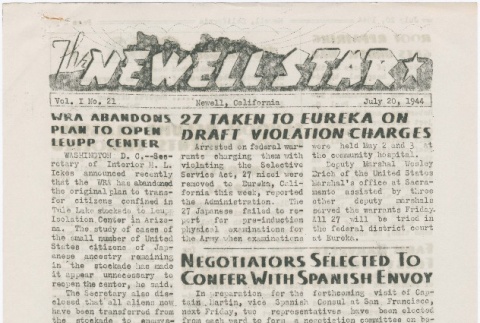
The Newell Star, Vol. I, No. 21 (July 20, 1944) (ddr-densho-284-26)
doc The Newell Star, Vol. I, No. 21 (July 20, 1944) (ddr-densho-284-26)
Selected article titles: "27 Taken to Eureka on Draft Violation Charges" (p. 1), "Two Charged with Sedition and Conspiracy" (p. 2), and "Black Reports Temporary Ban on Block Carnivals" (p. 4).
The Newell Star, Vol. I, No. 22 (July 27, 1944) (ddr-densho-284-28)
doc The Newell Star, Vol. I, No. 22 (July 27, 1944) (ddr-densho-284-28)
Selected article titles: "Status Unchanged as Hunger Strike Enters Ninth Day" (p. 1), "27 Freed; Due Process of Law Not Accorded--Judge" (pp. 1-2), "Obon Cancelled; Rites Held for Deceased Heroes" (p. 3), and "Bi-Ovum Babies Boost Births" (p. 4).
Akio Hoshino Segment 11 (ddr-densho-1000-26-11)
vh Akio Hoshino Segment 11 (ddr-densho-1000-26-11)
A unique Japanese American attitude regarding one's time in county jail for resisting the draft
Akio Hoshino Segment 10 (ddr-densho-1000-26-10)
vh Akio Hoshino Segment 10 (ddr-densho-1000-26-10)
Discussion of so-called "loyalty questions" and the decision to resist the draft
Akio Hoshino Segment 14 (ddr-densho-1000-26-14)
vh Akio Hoshino Segment 14 (ddr-densho-1000-26-14)
Reflections on the decision to resist the draft, telling younger generation about experiences
Akio Hoshino Segment 12 (ddr-densho-1000-26-12)
vh Akio Hoshino Segment 12 (ddr-densho-1000-26-12)
Description of McNeil Island Penitentiary, Washington; imprisoned for resisting the draft
Jim Akutsu Segment 39 (ddr-densho-1000-2-39)
vh Jim Akutsu Segment 39 (ddr-densho-1000-2-39)
A jury instructed to find a guilty verdict in draft resistance trial

Interview was conducted over two days because of delays caused by technical difficulties.

API