
Work and jobs
Both Issei and Nisei took jobs within the camps, at wages set not to exceed soldiers' pay: $12 per month for unskilled labor, $16 for skilled labor, and $19 for professional employees. WRA staff was paid much more for the same jobs. Though public opinion mandated such low pay, dissatisfied Japanese Americans objected to losing their right to make a decent living. They had to use their sparse income for necessities, such as warm clothing and shoes.
World War II
(283)
Concentration camps
(2384)
Work and jobs
(1553)
Related articles from the
Densho Encyclopedia :
Amache Silk Screen Shop
1553 items

1553 items
doc
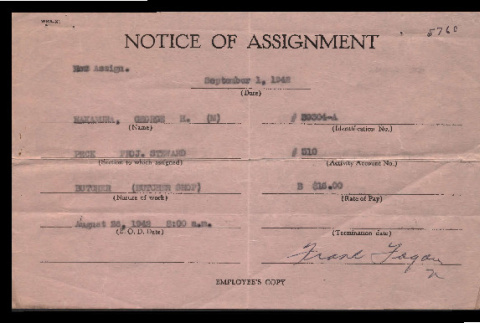
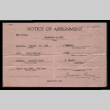
Notice of assignment, WRA-21, George Hideo Nakamura (ddr-csujad-55-2173)
Notice of assignment for George Hideo Nakamura as a butcher at Tule Lake incarceration camp. See this object in the California State Universities Japanese American Digitization project site: sac_jaac_2275
doc
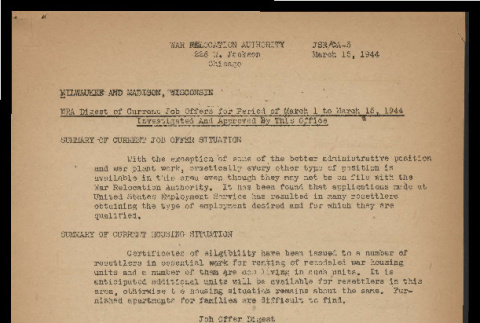
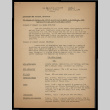
WRA digest of current job offers for period of March 1 to March 15, 1944, Milwaukee and Madison, Wisconsin (ddr-csujad-55-983)
Report on job vacancies for "resettlers" in Milwaukee and Madison, Wisconsin. Includes summary of jobs and housing and a list of job titles and pay for males and females. See this object in the California State Universities Japanese American Digitization project site: sac_jaac_0985
doc
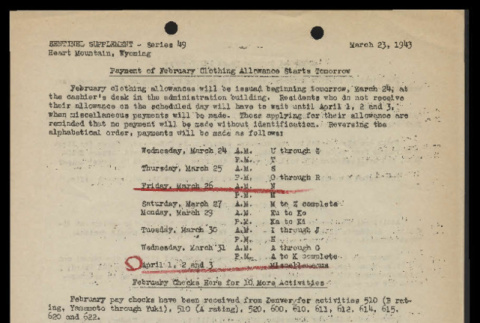
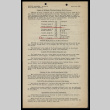
Sentinel supplement, series 49 (March 23, 1943) (ddr-csujad-55-1041)
News bulletin for incarcerees covering announcements, events, programs, policies, recreational activities, and jobs at Heart Mountain incarceration camp. Current issue includes information on February clothing allowances, beauty and barber shop openings, post office, unemployment compensation, railroad jobs, recreational activities, judo, employment, and shoe repair. See this object in the California State Universities Japanese American Digitization project …
doc
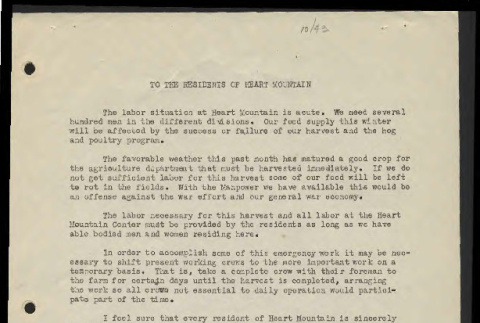
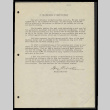
Notice from Guy Robertson, Project Director, to the residents of Heart Mountain, October 1943 (ddr-csujad-55-674)
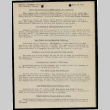
Notice from Guy Robertson to incarcerees regarding labor shortage, recruitment, and operations for agricultural laborers at Heart Mountain incarceration camp. See this object in the California State Universities Japanese American Digitization project site: sac_jaac_0676
doc
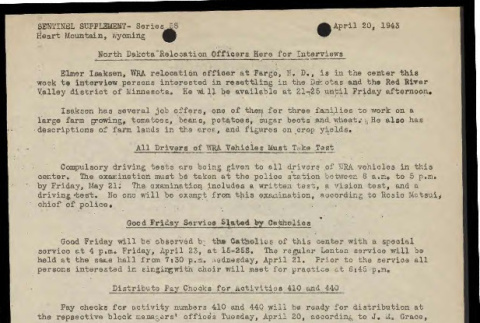
Sentinel supplement, series 58 (April 20, 1943) (ddr-csujad-55-1047)
News bulletin for incarcerees covering announcements, events, programs, policies, recreational activities, and jobs at Heart Mountain incarceration camp. Current issue includes information on interviews by Relocation Officers, driving tests, Good Friday services, employment, and sports schedules. See this object in the California State Universities Japanese American Digitization project site: sac_jaac_1049
doc
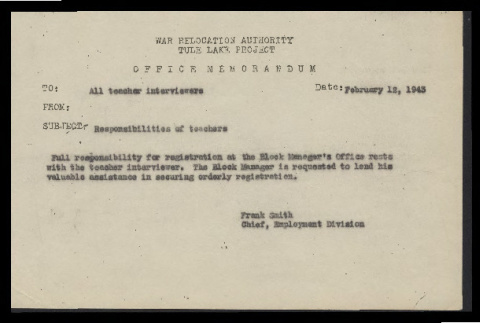
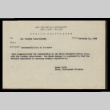
Memo from Frank Smith, Chief, Employment Division, to all teacher interviewers, February 12, 1943 (ddr-csujad-55-192)
Memorandum of understanding from Frank Smith, Chief of Employment Division in Tule Lake camp, to teacher interviewers regarding the responsibilities of teachers. See this object in the California State Universities Japanese American Digitization project site: sac_jaac_0194
img
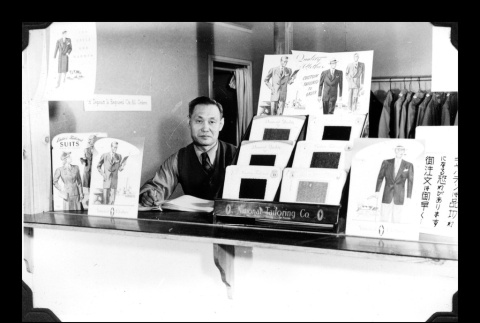
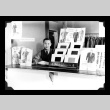
Mr. Momose, Tailor Shop Chief in the tailor shop, Amache Co-op (ddr-csujad-55-1565)
Black and white photograph of Mr. Momose, tailor shop chief, in the tailor shop at Amache Consumer Enterprises, Amache incarceration camp. From the Amache Co-op Souvenir Album, page 29. See also See this object in the California State Universities Japanese American Digitization project site: sac_jaac_1567
doc
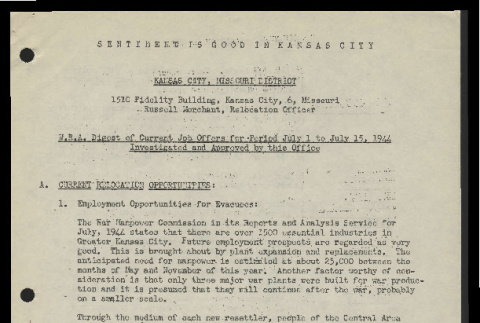
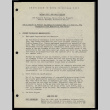
WRA digest of current job offers for period of July 1 to July 15, 1944, Kansas City, Missouri District (ddr-csujad-55-849)
Report on job vacancies and opportunities for "resettlers" in Kansas City, Missouri. Includes summary of jobs, housing, and a list of job titles and pay for males and females. See this object in the California State Universities Japanese American Digitization project site: sac_jaac_0851
doc
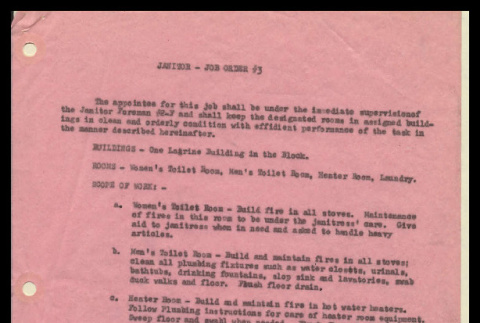
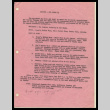
Janitor-job order #3 (ddr-csujad-55-633)
Description of the Janitor position at Heart Mountain incarceration camp outlining buildings and rooms, duties, and hours. See this object in the California State Universities Japanese American Digitization project site: sac_jaac_0635
doc
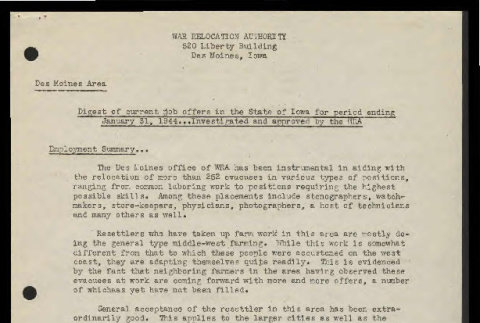
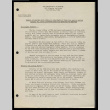
Digest of current job offers in the State of Iowa for period ending January 31, 1944 (ddr-csujad-55-808)
Report on job vacancies for "resettlers" in Iowa. Includes summary of jobs and housing and a list of job titles and pay for males and females. See this object in the California State Universities Japanese American Digitization project site: sac_jaac_0810
doc
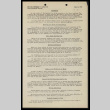
Sentinel supplement, series 106 (August 2, 1943) (ddr-csujad-55-1084)
News bulletin for incarcerees covering announcements, events, programs, policies, recreational activities, and jobs at Heart Mountain incarceration camp. Current issue includes information on a correction from a previous Sentinel publication, swimming hole, movies, sports announcements, a funeral, death announcement, and employment opportunities. See this object in the California State Universities Japanese American Digitization project site: sac_jaac_1086
doc
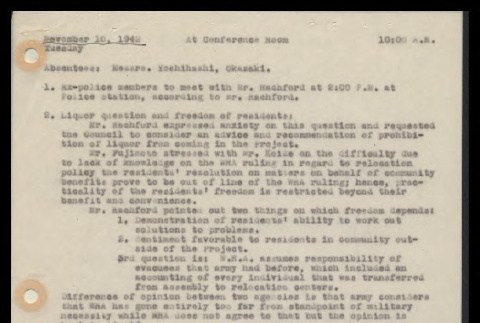
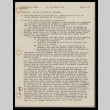
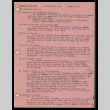
Minutes from the Heart Mountain Block Chairmen meeting, November 10, 1942 (ddr-csujad-55-314)
Minutes from the Heart Mountain Block Chairmen meeting. Includes discussion on liquor in the camp, fences, unemployment, wages, Fair Labor Practice committee, and formation of a Crafting Committee. See this object in the California State Universities Japanese American Digitization project site: sac_jaac_0316
doc
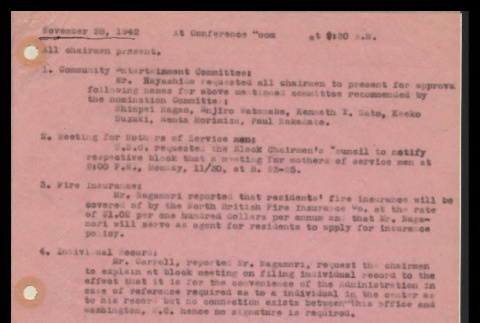
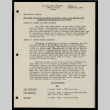
Minutes from the Heart Mountain Block Chairmen meeting, November 28, 1942 (ddr-csujad-55-327)
Minutes from the Heart Mountain Block Chairmen meeting. Includes discussion on wages, records, facilities, and hospital. See this object in the California State Universities Japanese American Digitization project site: sac_jaac_0329
doc
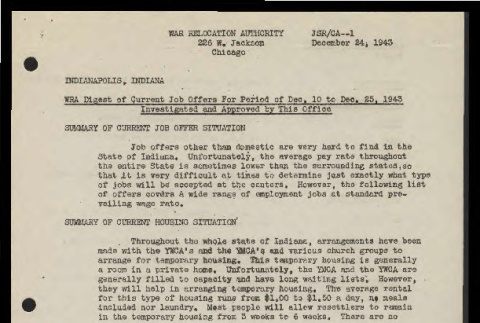
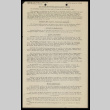
WRA digest of current job offers for period of Dec. 10 to Dec. 25, 1943, Indianapolis, Indiana (ddr-csujad-55-799)
Report on job vacancies for "resettlers" in Indianapolis, Indiana. Includes summary of jobs and housing and a list of job titles and pay for males and females. See this object in the California State Universities Japanese American Digitization project site: sac_jaac_0801
doc
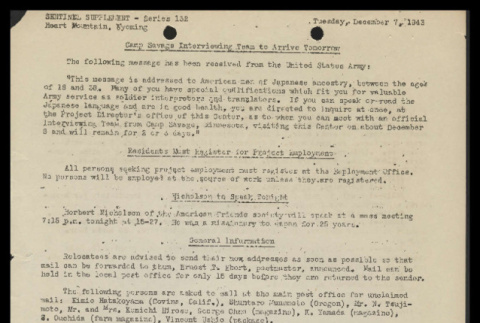
Sentinel supplement, series 152 (December 7, 1943) (ddr-csujad-55-1096)
News bulletin for incarcerees covering announcements, events, programs, policies, recreational activities, and jobs at Heart Mountain incarceration camp. Current issue includes information on recruiters from Camp Savage, sports announcements, and job offers. See this object in the California State Universities Japanese American Digitization project site: sac_jaac_1098
img
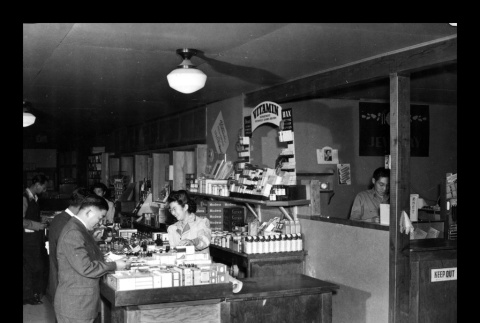
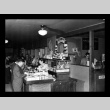
Variety Department, Amache Co-op (ddr-csujad-55-1579)
Black and white photograph depicting incarcerees at a counter in the variety department of Amache Consumer Enterprises, Amache incarceration camp. From the Amache Co-op Souvenir Album, page 35. See also sac_jaac_1530. See this object in the California State Universities Japanese American Digitization project site: sac_jaac_1581
doc
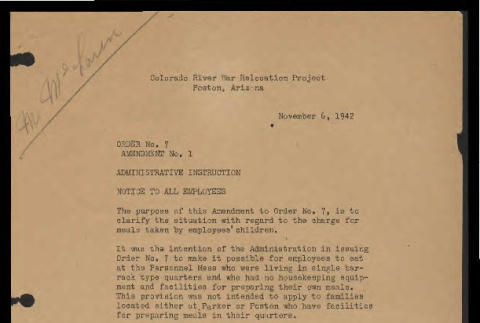
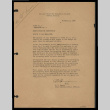
Administrative instruction (United States. War Relocation Authority) (November 6, 1942) (ddr-csujad-55-1638)
Administrative instruction amendment to Order no. 7 from A. W. Empie, Chief Administrative Officer, Poston to "All Employees" regarding meals for employees children. See this object in the California State Universities Japanese American Digitization project site: sac_jaac_1640
doc
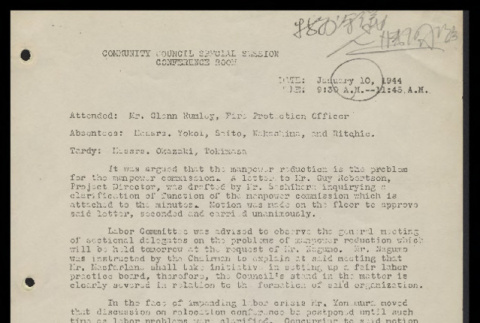
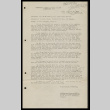
Minutes from Heart Mountain Community Council special session, January 10, 1944 (ddr-csujad-55-510)
Minutes from the Heart Mountain Community Council meeting Special Session. Includes discussion on labor, fire, and "evacuee doctors." See this object in the California State Universities Japanese American Digitization project site: sac_jaac_0512
img
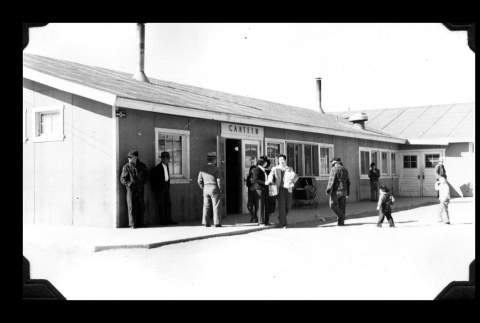
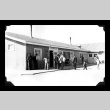
Canteen, Amache Co-op (ddr-csujad-55-1585)
Black and white photograph depicting incarcerees standing outside of the Canteen at Amache incarceration camp. From the Amache Co-op Souvenir Album, page 37. See also sac_jaac_1530. See this object in the California State Universities Japanese American Digitization project site: sac_jaac_1587
doc
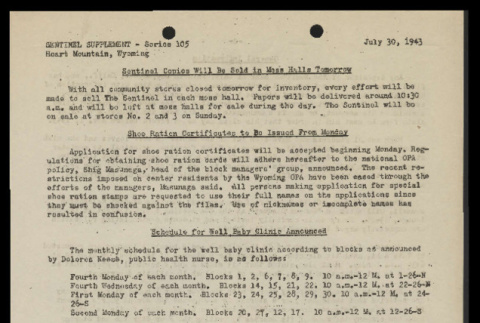
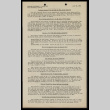
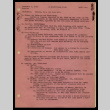
Sentinel supplement, sries 105 (July 30, 1943) (ddr-csujad-55-1082)
News bulletin for incarcerees covering announcements, events, programs, policies, recreational activities, and jobs at Heart Mountain incarceration camp. Current issue includes information on Sentinel sales, shoe and food rations, Well Baby clinic schedule, visit by geologist, funerals, straw bailing and track work, and employment opportunities. Includes Japanese text. See this object in the California State Universities …
doc
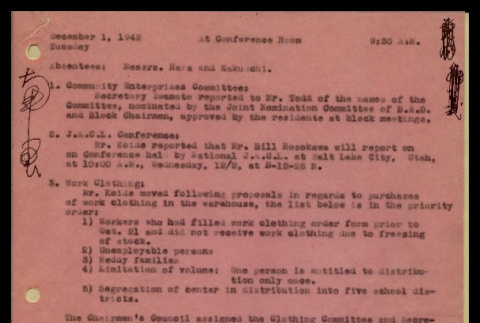
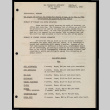
Minutes from the Heart Mountain Block Chairmen meeting, December 1, 1942 (ddr-csujad-55-370)
Minutes from the Heart Mountain Block Chairmen meeting. Includes discussion on work clothing, meal charges, wages, and "movie problems." See this object in the California State Universities Japanese American Digitization project site: sac_jaac_0372
doc
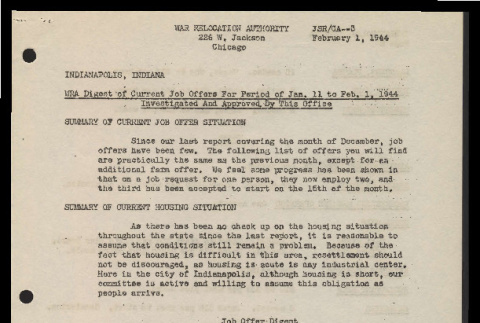
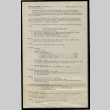
WRA digest of current job offers for period of Jan. 11 to Feb. 1, 1944, Indianapolis, Indiana (ddr-csujad-55-814)
Report on job vacancies for "resettlers" in Indianapolis, Indiana. Includes summary of jobs and housing and a list of job titles and pay for males and females. See this object in the California State Universities Japanese American Digitization project site: sac_jaac_0816
doc
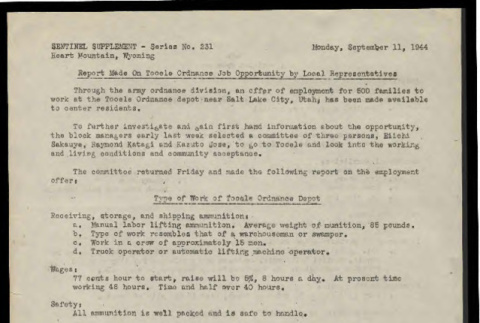
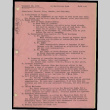
Sentinel supplement, series 231 (September 11, 1944) (ddr-csujad-55-938)
News bulletin from Heart Mountain incarceration camp covering work at the Tooele Ordinance Depot, death of incarceree, departure of enlisted incarcerees, funeral arrangements, and relocation of the Red Cross office. See this object in the California State Universities Japanese American Digitization project site: sac_jaac_0940
doc
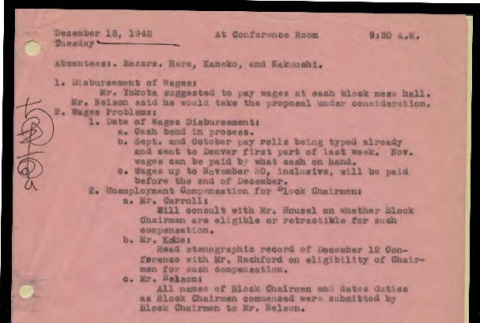
Minutes from the Heart Mountain Block Chairmen meeting, December 15, 1942 (ddr-csujad-55-380)
Minutes from the Heart Mountain Block Chairmen meeting. Includes discussion on "wage problems," unemployment compensation, personal property, Fair Practice Committee, schools, and community enterprises. See this object in the California State Universities Japanese American Digitization project site: sac_jaac_0382
doc
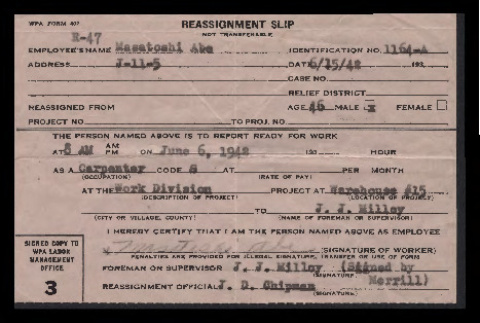
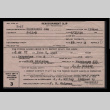
Reassignment slip, WPA Form 402, Masatoshi Abe (ddr-csujad-55-27)
Reassignment slip for Masatoshi Abe issued by the Works Progress Administration. The form includes completed identification and occupation information. WPA Form 402. See this object in the California State Universities Japanese American Digitization project site: sac_jaac_00030