
Living conditions
All of the camps were constructed according to the War Department's specifications, which included barbed-wire fences, guard towers, and armed guards around the perimeter. The camps were organized in "blocks" consisting of twelve to fourteen barracks, a mess hall, communal showers and toilets, laundry facilities, and a recreation hall. Each barracks was divided into four or six rooms with each room housing one family, no matter how large, and there was no running water. The furnishings that Japanese Americans found on their arrival were canvas cots, a potbellied stove, and a single bare light bulb. The thin walls offered little protection from the harsh weather, which ranged from 110 degrees in the summer to 25 degrees below zero on winter nights. The flimsy construction allowed no privacy and made normal family life difficult. Camp inmates improved their own living conditions by creating interior walls and partitions, constructing furniture from scrap lumber, and planting gardens.
World War II
(277)
Concentration camps
(1771)
Living conditions
(1870)
Related articles from the
Densho Encyclopedia :
Arts and crafts in camp,
Community analysts,
Manzanar Children's Village


This material is based upon work assisted by a grant from the Department of the Interior, National Park Service. Any opinions, finding, and conclusions or recommendations expressed in this material are those of the author(s) and do not necessarily reflect the views of the Department of the Interior.
Members of the National Japanese American Historical Society (NJAHS) arranged for and conducted this interview in conjunction with Densho.
This material is based upon work assisted by a grant from the Department of the Interior, National Park Service. Any opinions, finding, and conclusions or recommendations expressed in this material are those of the author(s) and do not necessarily reflect the views of the Department of the Interior.


This interview is audio-only. It contains raw footage used by Steven Okazaki in his 1985 film Unfinished Business.
This material is based upon work assisted by a grant from the Department of the Interior, National Park Service. Any opinions, finding, and conclusions or …
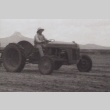
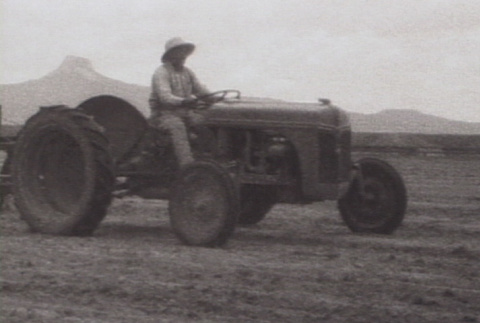
Eiichi Edward Sakauye shot footage of the Heart Mountain concentration camp, Wyoming, from 1943-1945, on 8 mm film. This interview is of Mr. Sakauye providing voice-over descriptions for his original footage.
Eiichi Edward Sakauye shot footage of the Heart Mountain concentration camp, Wyoming, from 1943-1945, on 8 mm film. This interview is of Mr. Sakauye providing voice-over descriptions for his original footage.
This material is based upon work assisted by a grant from the Department of the Interior, National Park Service. Any opinions, finding, and conclusions or recommendations expressed in this material are those of the author(s) and do not necessarily reflect the views of the Department of the Interior.
This material is based upon work assisted by a grant from the Department of the Interior, National Park Service. Any opinions, finding, and conclusions or recommendations expressed in this material are those of the author(s) and do not necessarily reflect the views of the Department of the Interior.
This material is based upon work assisted by a grant from the Department of the Interior, National Park Service. Any opinions, finding, and conclusions or recommendations expressed in this material are those of the author(s) and do not necessarily reflect the views of the Department of the Interior.