
Documentaries
Arts and literature
(32)
Performing arts
(236)
Film
(347)
Documentaries
(746)
Related articles from the
Densho Encyclopedia :
None,
None,
Manzanar Committee,
None,
OWI/WRA documentaries
746 items

746 items
img
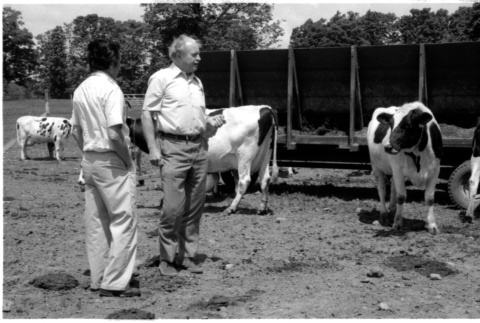
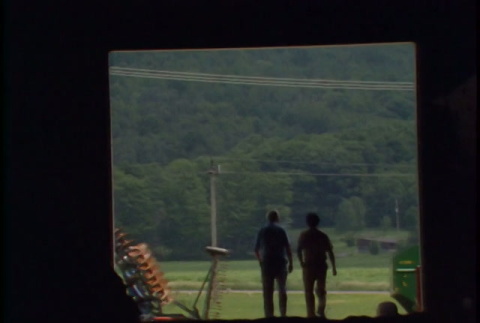
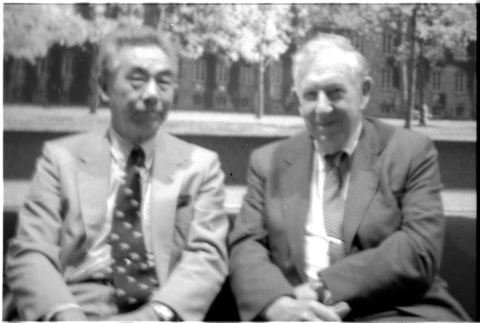
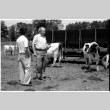
William Kochiyama and Robert H. Foote with cows (ddr-densho-1007-1360)
Negative. Taken during filming for The Color of Honor.
doc
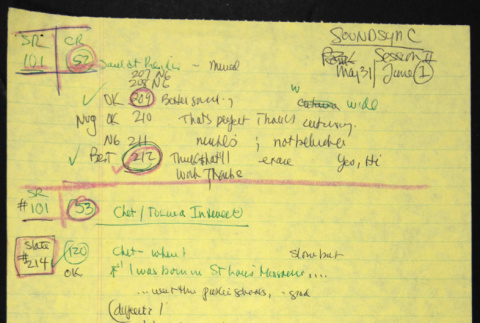
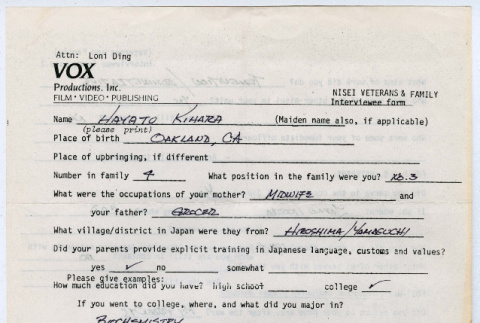
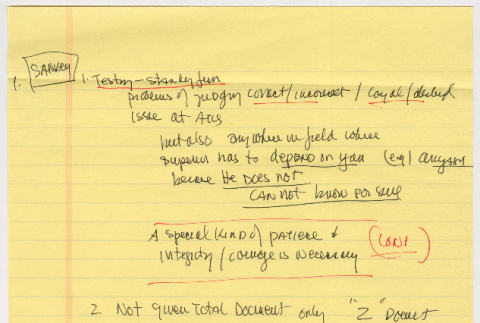
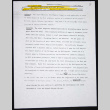
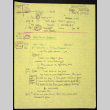
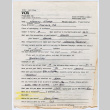
Sound sync and interview notes (ddr-densho-1007-1083)
Eric refers to Eric Saul of the Presidio Army Museum. Likely for Nisei Soldier.
av
William Kochiyama and Robert H. Foote walking around a Cornell university farm; B-roll from farm (ddr-densho-1007-1519)
B-roll features farm equipment, students, and livestock. Audio only from 13:08 to 15:21. Loni Ding (in red sweater) occasionally appears to give direction. Original title: 24, II NY #3, 6-5-85, Foote & Kochiyama, farm
av
Pre-war house footage, part 6 of 8 (ddr-densho-1007-1738)
B-roll: books, letters, photographs, exterior. At 10:45, footage of Rudy Tokiwa showing a grain of rice he's kept for luck since the start of the war. After interview, b-roll of a US military service banner. Original title: 81B, II TB-6, Reel #6, 6/27/87. Footage continues at ddr.densho.org/ddr-densho-1007-1739/
doc
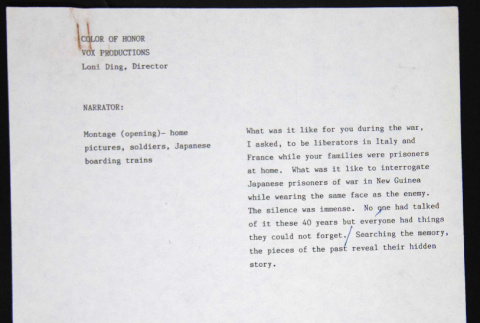
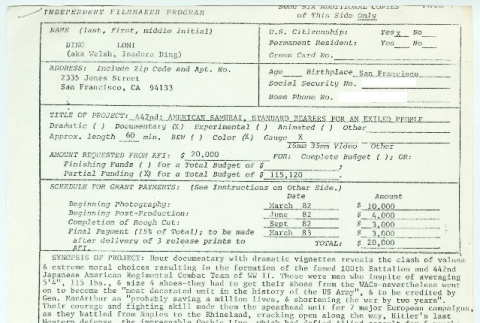
Funding request for "American Samurai" (Nisei Soldier) project (ddr-densho-1007-1464)
Grant proposal for the American Film Institute's Independent Filmmaker Program. Includes a thorough project synopsis; at the time, a 1-hour documentary was planned.
av
Interview with George Nakamura, part 5 of 5 (ddr-densho-1007-1684)
Nakamura discusses helping his son write a paper on internment, the importance of the Pacific Citizen newspaper for his children, and racial discrimination in the US. At 10:45, George and Loni Ding look and talk through several of his old papers and letters. Loni Ding can be heard asking questions in the background.Original title: II JA …
av
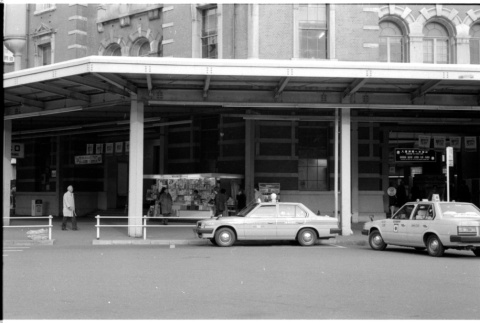
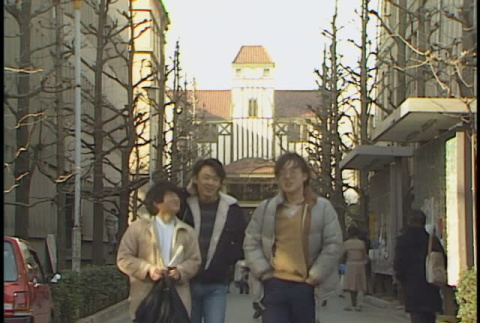
Tokyo b-roll: exterior shots (ddr-densho-1007-1729)
Exterior shots: driving around, Yasukuni shrine, folks walking around, statues. Original title: 236, II JA #68, Ueno Park, Mon. Feb. 3
av
Interview with Clarence Matsumura, part 4 of 5 (ddr-densho-1007-1772)
Matsumura discusses stumbling across Dachau near the end of the war, finding and rehabilitating concentration camp survivors in Waakirchen, pursuing the German military towards Berchtesgaden and then Berlin, Germany surrendering, the end of the war, and leaving the military. Interview starts at 0:50. Loni Ding can be heard asking questions in the background. Original title: II …
doc
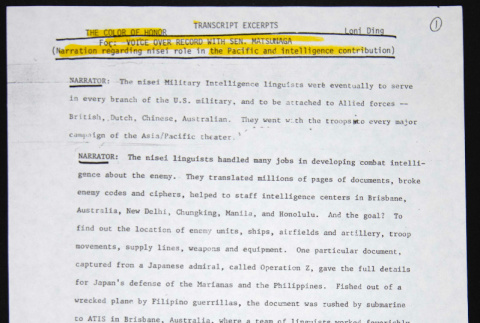
Chicago Tribune Color of Honor review (ddr-densho-1007-1375)
Clifford Terry was a longtime critic for the Tribune.
av
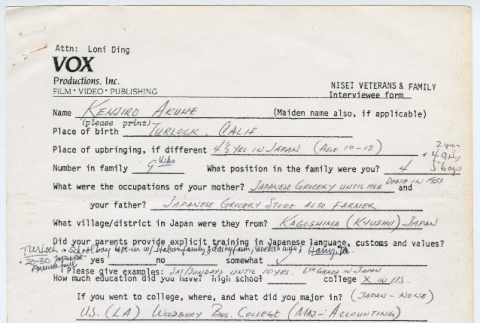
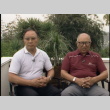
Interview with Harry and Ken Akune, part 1 of 6 (ddr-densho-1007-1589)
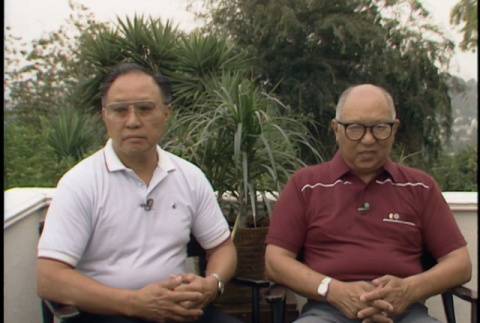
Ken is on the left, Harry on the right. The two discuss growing up together in Turlock, CA, the years they spent in Japan as children, their father's relationship with the Caucasian community in Turlock, and the racial discrimination they faced in Turlock. Video starts at 0:28. Loni Ding can be heard asking questions behind the …
av
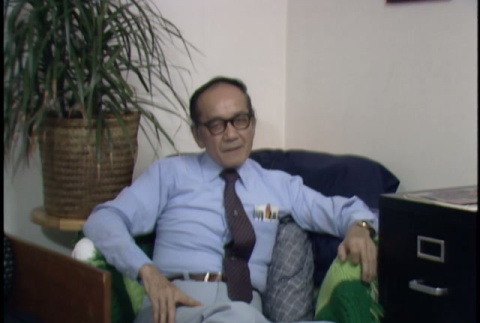
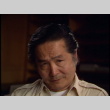
Interview with William Kochiyama, part 2 of 3 (ddr-densho-1007-1523)
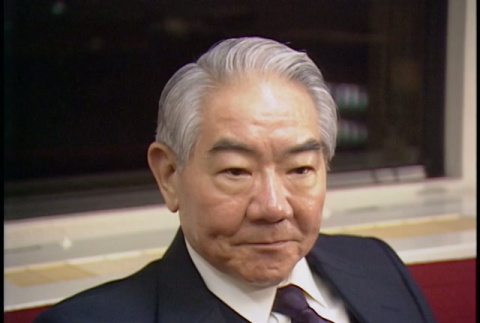
Kochiyama discusses the 442nd, particularly the rescue of the Lost Battalion. Also talks about draft resisters. Loni Ding can be heard asking questions behind the camera. Video starts at 1:21. Original title: 28, II NY #7, 6-5-84. Interview continues at ddr.densho.org/ddr-densho-1007-1524/
av
Interview with Jimmie Matsumura, part 3 of 4 (ddr-densho-1007-1607)
Matsumura discusses the time he spent in Japan as a child, the difficulty of Japanese high school, his work on the Far East military tribunal post-war. Video starts at 0:24. Loni Ding can be heard asking questions behind the camera. Audio cuts out at 20:36. Original title: II LA #34, 7-24-85, J. Matsumura Interview III. Interview …
av
Watsonville Issei Singers B-roll; piano and vocal performances (ddr-densho-1007-1659)
Includes footage of two solo songs by Issei women. Original title: 144, II MON #11, 9-9-85, #11, Watsonville Issei
av
Interview with Akiko, Brian Yamakoshi, Kenny and Chizuko, part 2 of 4 (ddr-densho-1007-1718)
Brian Yamakoshi discusses his reasons for playing koto, his feelings on the art form, and his approach to the instrument. Kenny discusses his experience playing taiko, his first time hearing Japanese drums, his time on an indigenous American reservation, growing up in La Habra, CA, and how time spent at a pueblo encouraged him to learn …
av
Interview with Ray Aka, part 5 of 6 (ddr-densho-1007-1689)
Aka discusses the role of Nisei in the occupation of Japan, his work with natural disaster aid in occupied Japan, and the nuances of translation work after the war. Loni Ding can be heard asking questions in the background. Original title: 200, II JA #23, Ray Aka, Feb. 1, 1986, has some distorted audio. Interview continues …
doc
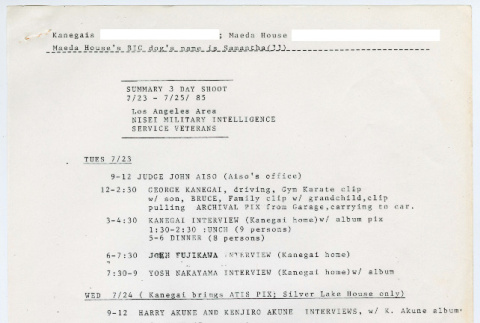
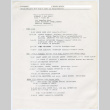
LA interview plans (ddr-densho-1007-960)
Schedule and locations for interviews conducted by Loni Ding in LA in July 1985. These interviews were used in the film Color of Honor.
av
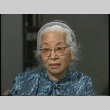
Interview with Gary and Grace Itano, part 2 of 6 (ddr-densho-1007-1806)
Grace discusses working with her husband-to-be before the war, her husband asking for a divorce (knowing that he would be imprisoned for refusing to serve), her husband Henry's reasons for refusing to serve, her husband's family preventing him from going to college, trying and failing to live outside of camp in Arizona, evacuation and closing her …