
Documentaries
Arts and literature
(32)
Performing arts
(236)
Film
(347)
Documentaries
(746)
Related articles from the
Densho Encyclopedia :
None,
None,
Manzanar Committee,
None,
OWI/WRA documentaries
746 items


746 items
img
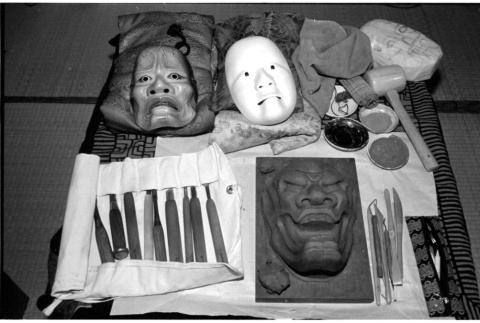
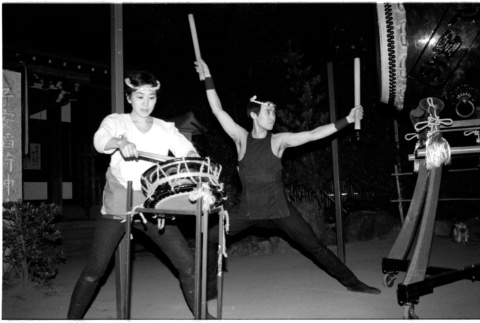
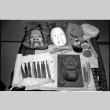
Mask making station and tools (ddr-densho-1007-1313)
Negative. Taken during filming for The Color of Honor.
img
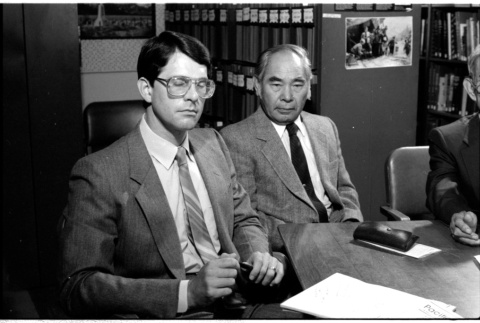
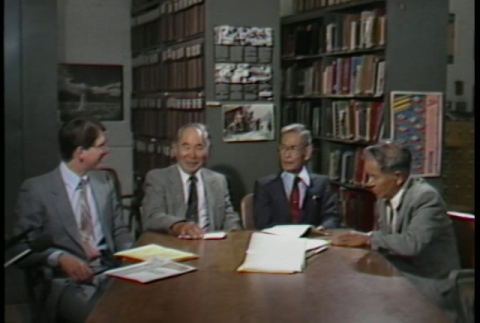
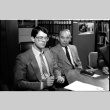
Paul Minerich and Tim Nomiyama (ddr-densho-1007-1149)
Negative. Masao Kataoka partially in frame to the right. Taken during interviews for The Color of Honor at UCLA.
av
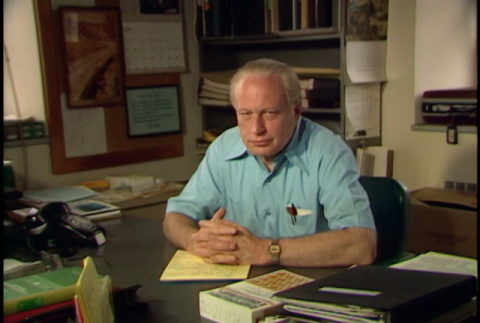
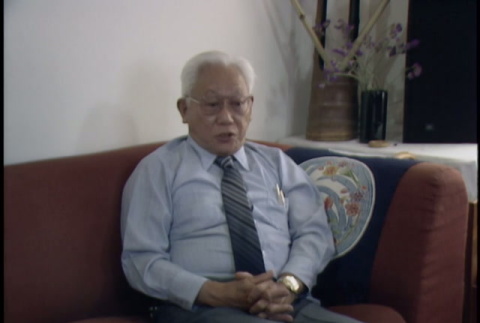
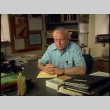
Interview with Robert H. Foote, part 2 of 4 (ddr-densho-1007-1526)
Foote dicusses his experiences serving as an officer in the 442nd, particulary his relationship with Nisei soldiers and their experiences with internment. Loni Ding can be heard asking questions behind the camera. Video starts at 0:54. Original title: 31, II NY #10, 6-85, Foote interview. Interview continues at ddr.densho.org/ddr-densho-1007-1527/
img
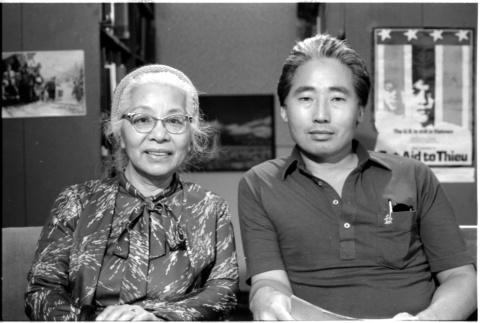
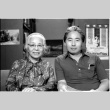
Grace Itano and Gary Itano (ddr-densho-1007-1141)
Negative. Names listed from left to right. Taken during interviews for The Color of Honor at UCLA.
img
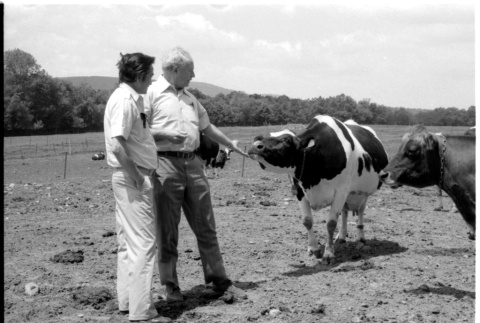
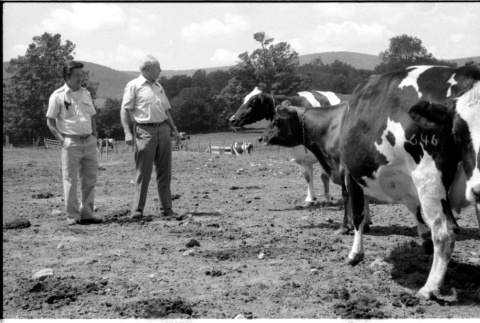
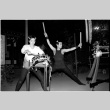
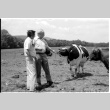
Robert H. Foote and William Kochiyama with cows (ddr-densho-1007-1238)
Negative. From a shoot for The Color of Honor.
av
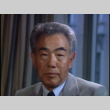
Interview with Yukio Kawamoto, part 2 of 8 (ddr-densho-1007-1546)
Kawamoto discusses working in the army's financial department, the internment of his parents, and joining the MIS. Video starts at 0:53. Loni Ding can be heard asking questions behind the camera. Original title: 48, II NY #30, 6-85, Kawamoto. Interview continues at ddr.densho.org/ddr-densho-1007-1547/
av
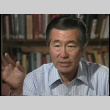
Interview with Frank Emi, part 4 of 6 (ddr-densho-1007-1795)
Emi discusses the importance of the Fair Play Committee winning their case, the lasting impact of his imprisonment, the loyalty questionnaire, the beginning of the draft resistance movement, why the story of the draft resisters doesn't get as much attention as it deserves, and why the JACL and Japanese American newspapers did not support draft resistance. …
av
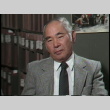
Interview with Paul Minerich, Tim Nomiyama, Masao Kataoka, and Kenjiro Hayakawa, part 2 of 8 (ddr-densho-1007-1799)
From left to right: Minerich, Nomiyama, Kataoka, Hayakawa. Minerich discusses the urgency of the DB Boys case. Nomiyama and Kataoka discuss whether they thought their court martials would ever be reversed. Kataoka discusses growing up in LA, meeting Edmund Zane in high school, how the two became friends, how Zane picked up the legal case of …
av
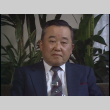
Interview with Shigeo Yamada, part 2 of 3 (ddr-densho-1007-1708)
Yamada discusses growing up on farms in Hansen and Jerome, ID, his parents' views on education, his first impressions of Japan, the sinking of the cruiser he served on in the Japanese navy and being rescued. Loni Ding can be heard asking questions behind the camera. Original title: II JA #47, Shigeo Yamada, Sun. Feb. 2. …
doc
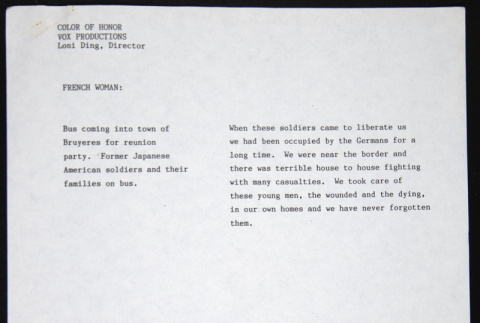
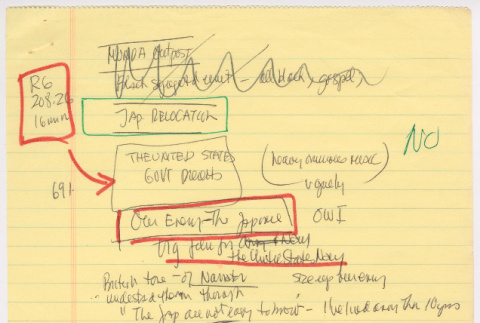
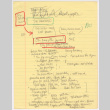
"Jap Relocation" notes (ddr-densho-1007-1040)
Notes taken on a 16mm reel from the National Archive.
doc
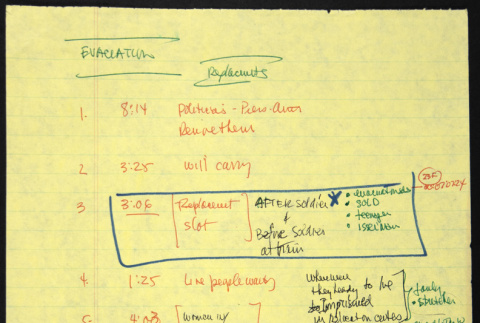
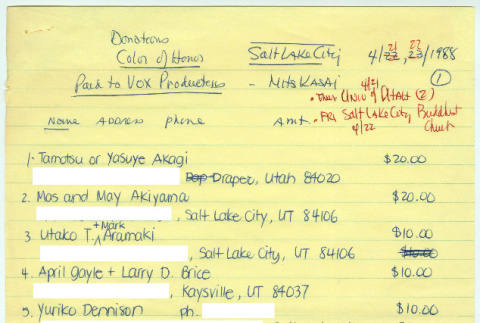
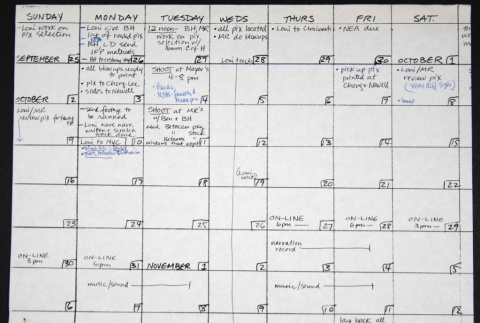
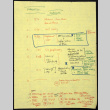
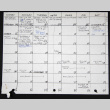
Color of Honor schedules/to do list (ddr-densho-1007-1055)
Dates listed are likely for 1988 or 1989.
av
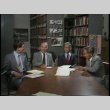
Interview with Paul Minerich, Tim Nomiyama, Masao Kataoka, and Kenjiro Hayakawa, part 6 of 8 (ddr-densho-1007-1803)
From left to right: Minerich, Nomiyama, Kataoka, Hayakawa. Hayakawa discusses confronting his commanding officer and why he chose not to serve. Nomiyama discusses how some of his friends didn't understand why he refused to serve, and telling his children about his experiences. Kataoka discusses telling his family about his experiences during the war. Interview starts at …

av
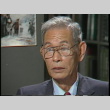
Interview with Henry (Hank) Gosho, part 3 of 3; synthesizer performance (ddr-densho-1007-1770)
Gosho discusses why he and his brothers were sent to Japan as children. Interview starts at 0:49. Loni Ding can be heard asking questions. Starting at 3:55, a song plays on synthesizer, presumably performed by Gosho. Original title: 23, Hank Gosho interview, 4-7-83
av
Interview with Paul Minerich, Tim Nomiyama, Masao Kataoka, and Kenjiro Hayakawa, part 7 of 8 (ddr-densho-1007-1804)
From left to right: Minerich, Nomiyama, Kataoka, Hayakawa. Nomiyama discusses why it took so long to restart efforts to get the court-martials of the DB Boys reversed. Kataoka discusses the efforts of Edmund Zane, why he decided to try again, and his frustration with the US government. Minerich discusses why the DB Boys refused service, the …
img
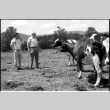
William Kochiyama and Robert H. Foote with cows (ddr-densho-1007-1352)
Negative. Taken during filming for The Color of Honor.
av
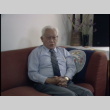
Interview with Jim Ariyasu, part 2 of 5 (ddr-densho-1007-1597)
Ariyasu discusses his deployment, having to sell a camera of his, the secrecy required of him while serving, the censorship of letters he sent back home, and military language school. Video starts at 0:23. Loni Ding can be heard asking questions behind the camera. Original title: II LA #24, 7-24-85, Jim Ariyasu Interview III. Interview continues …

av
Roger Daniels interviewed by Kent Hori, part 3 of 4 (ddr-densho-1007-1758)
Daniels discusses what may have happened if the Japanese American community resisted evacuation en masse, how Japanese Americans were placed under 4C (enemy alien, undraftable) status and the military's eventual interest in Japanese Americans (particularly Kibei) for intelligence work, the importance of the 100th Battalion and the 442nd Regimental Combat Team, the loyalty questionnaire, the persecution …
av
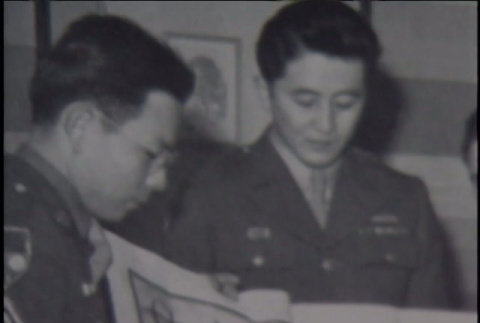
Miscellaneous b-roll for The Color of Honor (ddr-densho-1007-1616)
Certificates, letters, MISLS Album photos. Original title: 96, II LA #46, 7-25-85, Misc. Still Inserts
doc
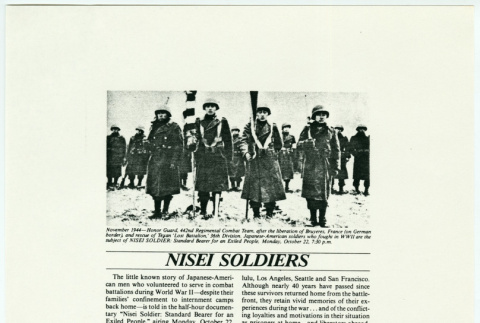
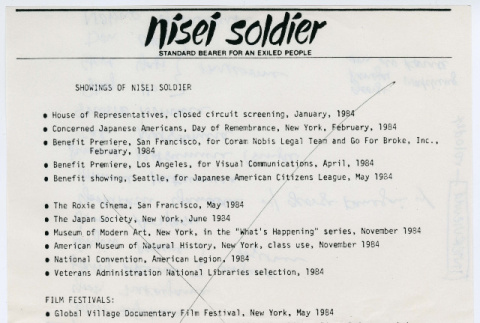
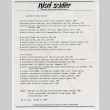
Nisei Soldier showings list + miscellaneous notes (ddr-densho-1007-976)
Back notes list Color of Honor interviewees.