
Documentaries
Arts and literature
(32)
Performing arts
(236)
Film
(347)
Documentaries
(746)
Related articles from the
Densho Encyclopedia :
None,
None,
Manzanar Committee,
None,
OWI/WRA documentaries
746 items

746 items
av
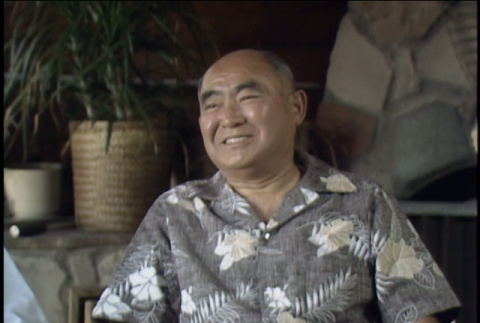
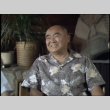
Interview with Don Oka, Steve Yagi, and Shigeo Ito, part 3 of 8 (ddr-densho-1007-1619)
Oka on the left, Yagi in the center, and Ito on the right. The three discuss their service in the Pacific theater, their military training in the Midwest, JICPOA, and their encounters with high-ranking officers. Video starts at 0:23. Loni Ding can be heard asking questions behind the camera. Original title: II LA #49, 7-26-85, Oka, …
doc
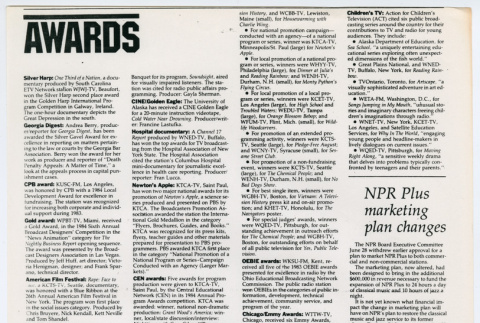
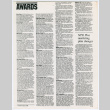
Nisei Soldier Golden Eagle award clipping (ddr-densho-1007-1017)
Nisei Soldier mentioned towards bottom half of second column.
av
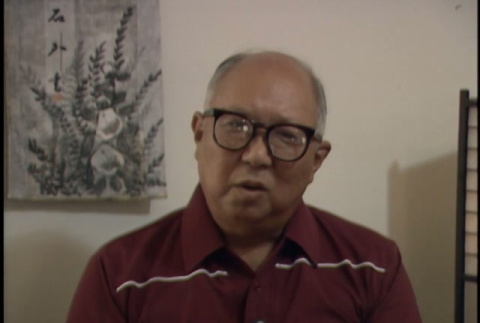
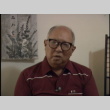
Interview with Harry Akune, part 2 of 4 (ddr-densho-1007-1601)
Akune discusses his decision to volunteer, his brothers in the Japanese army, his reaction to Pearl Harbor, the Japanese occupation in Manchuria, his time in language school, his family after the war, meeting his wife, his time in Chicago, and his translation work in the army in Brisbane. Video starts at 0:30. Loni Ding can be …
av
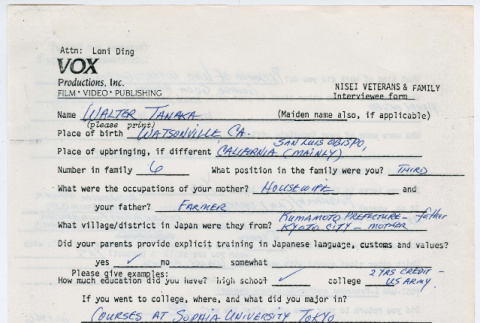
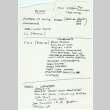
Tanaka family b-roll, part 3 of 7 (ddr-densho-1007-1642)
Stills from photo albums of the Tanaka family. Linked to Walter Tanaka, who was interviewed for The Color of Honor. Original title: 125, II SJ #32, 8-18-85, Reel 32 Albums. B-roll continues at ddr.densho.org/ddr-densho-1007-1643/
av
Interview with Gary and Grace Itano, part 5 of 6 (ddr-densho-1007-1747)
Gary discusses the legal efforts to reverse the charges of the DB Boys, his role in the hearings, and the reasons it took so long for the DB Boys to pursue legal action. Grace discusses why she buried her husband in Japan. Video starts at 0:51. Loni Ding can be heard asking questions behind the camera. …

av
Goro Sumida interviewed by Eric Saul, part 2 of 2 (ddr-densho-1007-1766)
Sumida discusses his family, visiting his family at Rohwer, his impressions of camp, his time in basic training, war stories from Germany, the awards he received after the war, and whether he considers himself lucky. This interview was not conducted specifically for Loni Ding's work, rather for a book the Presidio was putting together. Partial transcript …
doc
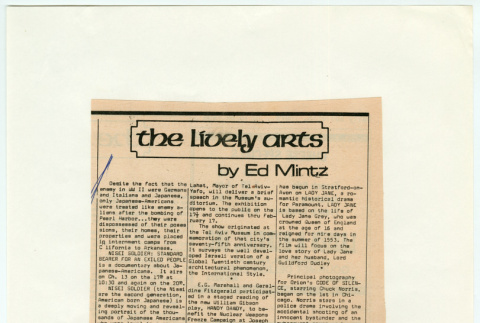
Nisei Soldier review by Ed Mintz in The Lively Arts column (ddr-densho-1007-1493)
Publisher unknown. Annotation on bottom notes an address, likely personal.
av
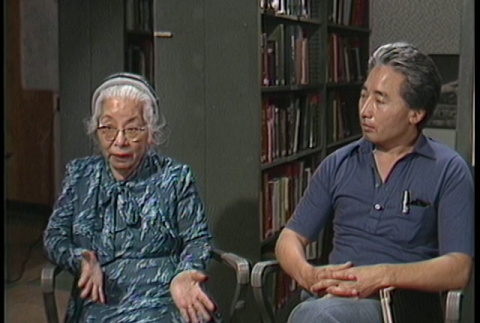
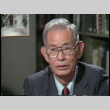
Interview with Paul Minerich, Tim Nomiyama, Masao Kataoka, and Kenjiro Hayakawa, part 3 of 8 (ddr-densho-1007-1800)
From left to right: Minerich, Nomiyama, Kataoka, Hayakawa. Kataoka discusses being a soldier when evacuation started, the interment of his wife, and the relationship between Kibei and Nisei soldiers. Kataoka and Nomiyama discuss how they met. Nomiyama discusses when he decided to refuse to serve, being called a traitor when he left Japan, returning to the …
img
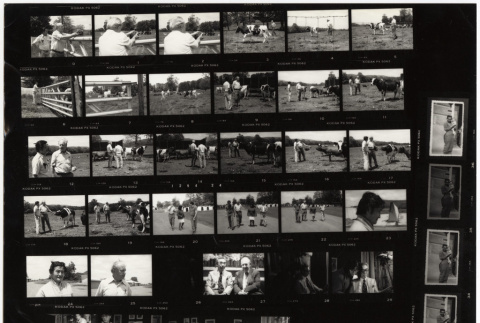
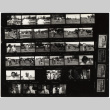
Contact sheet printout & envelope (ddr-densho-1007-1363)
Contains negatives ddr-densho-1007-1341 through ddr-densho-1007-1362, along with several others for which the actual negatives were not available for scanning. Originally in an envelope addressed to Loni Ding and labeled "FOOTE KOCHIYAMA CONTACTS BY NING"
av
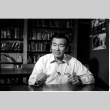
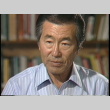
Interview with Frank Emi, part 6 of 6; Hollywood Judo Dojo footage, part 1 of 3 (ddr-densho-1007-1745)
Interview continued from ddr.densho.org/ddr-densho-1007-1796/. Emi reads a bulletin from the Fair Play Committee. Starting at 8:41, Emi and Gary (last name unknown) discuss the history of Hollywood Judo Dojo and their experiences with judo. Last few minutes of tape are b-roll the dojo. Original title: 43B, II RES/PRO #7, Frank Emi, UCLA, 5-31-86, Judo Dojo …
doc
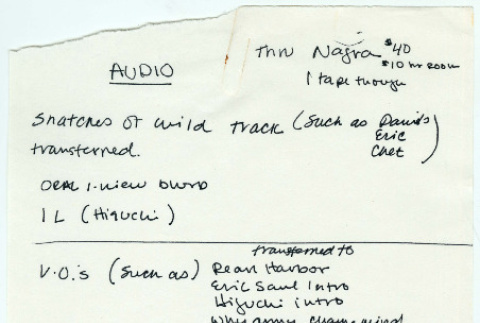
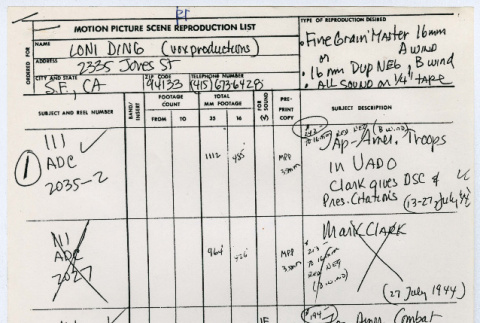
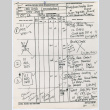
National Archives film order, annotated version (ddr-densho-1007-1118)
Annotated version of ddr-densho-1007-1117.
av
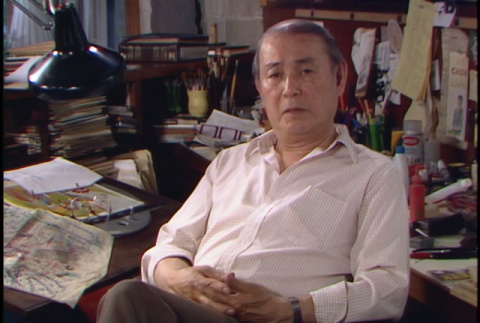
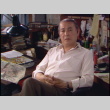
Interview with Chris Ishii, part 4 of 7 (ddr-densho-1007-1558)
Ishii discusses his mother gaining US citizenship, returning to work at Disney after the war, other animation work, detention at Santa Anita, the L'il Neebo comic strip, the MIS gopher mascot, and his political beliefs. Video starts at 0:55. Loni Ding can be heard asking questions behind the camera. Original title: 57, II NY #42, 6-85, …
doc
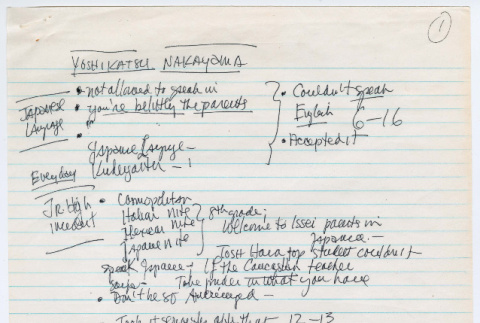
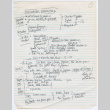
Yoshikatsu (Yosh) Nakayama interview notes (ddr-densho-1007-967)
Used for the film The Color of Honor.
av
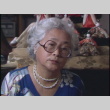
Interview with Kazuko Iijima, part 2 of 4 (ddr-densho-1007-1532)
Iijima discusses her parents and siblings, their expectations, growing up poor in Oakland, and discrimination. Particular emphasis on her mother, who died when Kazuko was young. Video starts at 0:56. Loni Ding can be heard asking questions behind the camera. Original title: 37, II NY #16, 6-85, Kazuko Iijima. Interview continues at ddr.densho.org/ddr-densho-1007-1533/
av
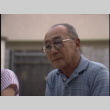
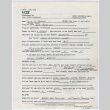
Kanegai family dinner and Moose (John) Fujikawa interview, part 1 of 4 (ddr-densho-1007-1582)
Footage of the Kanegai family eating in their backyard. Unscripted. The younger mustached man is Bruce Kanegai; the older man to his right is his father George. Video starts at 0:29. Interview with Fujikawa starts at 10:44. Fujikawa talks about his childhood in LA, his decision not to go to college, his reaction to Pearl Harbor, …
av
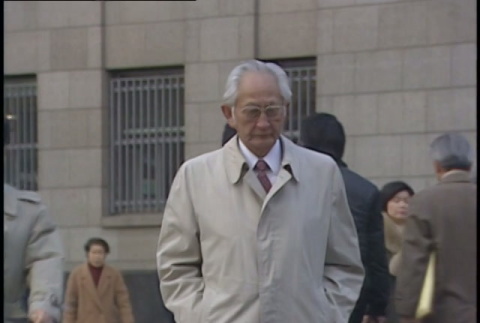
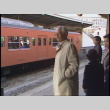
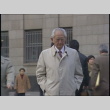
Exterior footage at Tokyo Station, part 2 (ddr-densho-1007-1722)
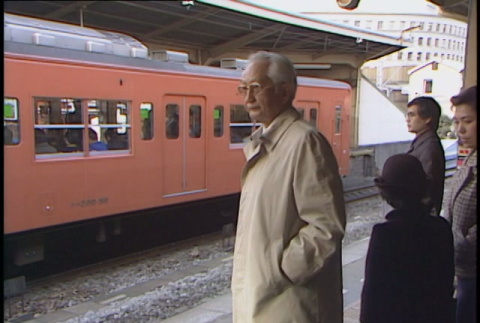
Footage of Harry Fukuhara walking around and taking a train from Tokyo Station. Also includes b-roll of views from the train and the surrounding area. Loni Ding can be heard directing. Original title: 229, II JA #61, Tokyo Station, Fri. Feb. 7
av
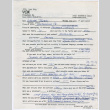
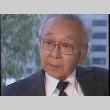
Exterior footage in Tokyo; taiko performance, part 1 of 2 (ddr-densho-1007-1723)
Footage of Harry Fukuhara walking around Tokyo. Footage of taiko setup and performance starts at 1:35. Performers are Kenny and Chizuko, married couple, last names unknown - interviewed in objects ddr-densho-1007-1717 to 1720. Original title: 230, II JA #62, Tokyo Station, taiko, Fri. Feb. 7. Taiko performance continues at ddr.densho.org/ddr-densho-1007-1724/
av
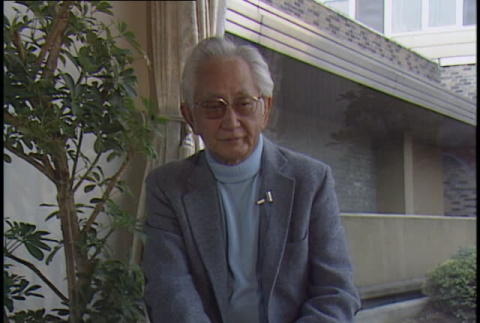
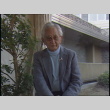
Interview with Arthur (Art) Morimitsu, part 4 of 6 (ddr-densho-1007-1752)
Morimitsu discusses the difficulty of getting promoted in the MIS and his time in Burma. Video starts at 0:17. Loni Ding can be heard asking questions in the background. Original title: 61B, II VFW #4, VFW - LA, Art Morimitsu, Feb. 15, 1987. Interview continues at ddr.densho.org/ddr-densho-1007-1753/
av
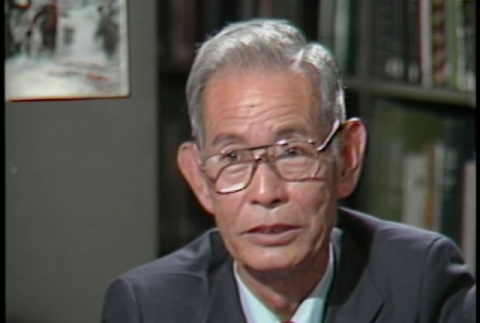
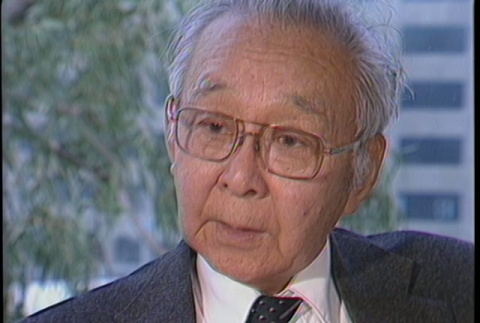
Interview with Harry Fukuhara, part 3 of 5 (ddr-densho-1007-1699)
Fukuhara discusses how he approached interviewing prisoners of war, his relationship with Caucasian soldiers in the military, and the risk of being captured by the Japanese military. Video starts at 0:25. Loni Ding can be heard asking questions behind the camera. Original title: 214, II JA #38, Harry Fukuhara, Sun. Feb. 2. Interview continues at ddr.densho.org/ddr-densho-1007-1700/