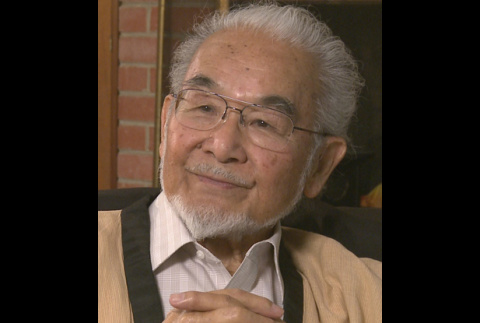
Family background: born in Japan; father's unorthodox arrival in the United States
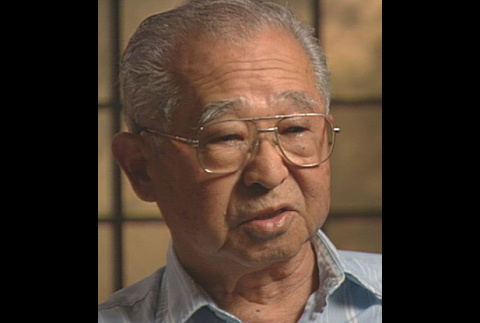
This interview was conducted by sisters Emiko and Chizuko Omori for their 1999 documentary, Rabbit in the Moon, about the Japanese American resisters of conscience in the World War II incarceration camps. As a result, the interviews in this collection are typically not …
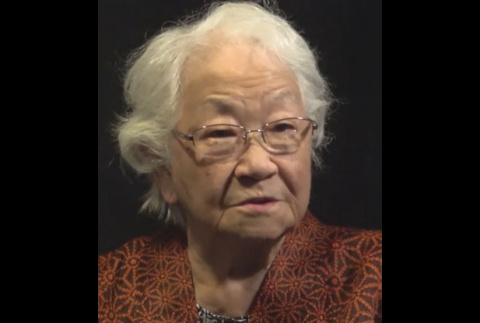
Description of siblings in Japan; working as a schoolboy in Pocatello, Idaho
This interview was conducted by sisters Emiko and Chizuko Omori for their 1999 documentary, Rabbit in the Moon, about the Japanese American resisters of conscience in the World War II incarceration camps. As a result, the interviews in this collection are typically not …
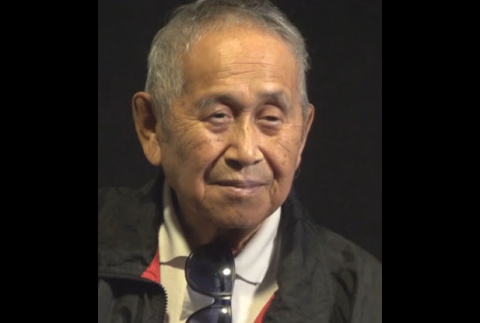
Family background: growing up in Hawaii, going to Japan as a child
This interview was conducted by sisters Emiko and Chizuko Omori for their 1999 documentary, Rabbit in the Moon, about the Japanese American resisters of conscience in the World War II incarceration camps. As a result, the interviews in this collection are typically not …
The Gentaro Takahashi Collection consists of photos, documents and ephemera from the time of Gentaro Takahashi’s arrival in the United States in 1907 to the 1970’s. The collection includes family photos in the U.S. and Japan, photos of Takahashi's travels in the U.S. including Duluth, Minnesota and Yellowstone National Park, correspondence and academic work from Boston …
Collection consists of two albums containing photos of Ikebana, bonsai and demonstrations created and performed by Ikebana artist, Pauline Sakahara, and two diplomas from Ikebana flower arranging schools. In 1958, she was secretary, interpreter, and student of the Ikebana expert, Madame Josui Oshikawa, headmaster of the Sho-fu Ryu school. Mrs. Sakahara graduated from the Sho-fu Ryu …
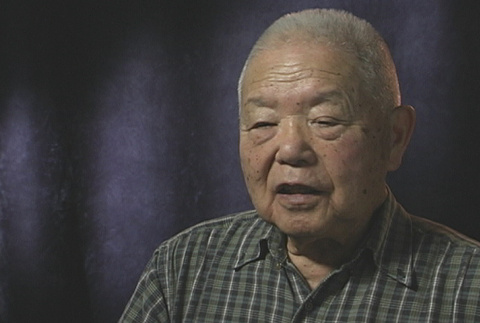
Nisei male. Born December 8, 1916, in Hawaii. Was already in the army when Japan bombed Pearl Harbor on December 7, 1941. Served with the Military Intelligence Service as a translator at the Pentagon and in Europe.
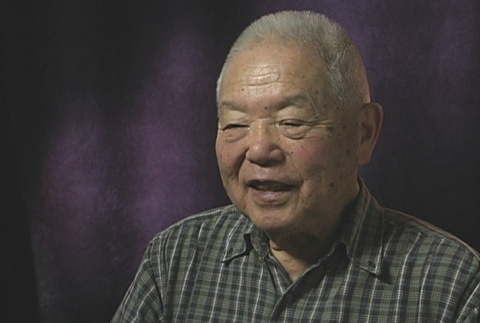
Nisei male. Born October 3, 1918, in Sacramento, California. During World War II, was drafted out of the Poston concentration camp, Arizona. Served with the Military Intelligence service as a translator and interpreter in India, Burma and Japan.
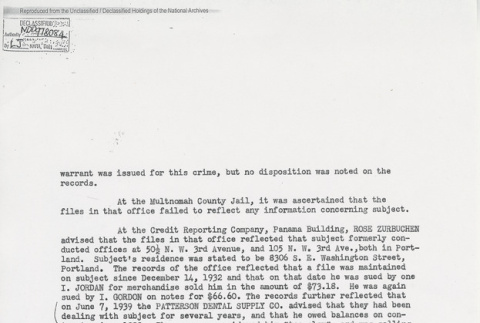
Photocopy of a declassified report on Keizaburo Koyama. A bench warrant was issued for Koyama for disregarding a signal, but no disposition was noted in his records. The files in the Multnomah County Jail did not show any information on Koyama's arrest or warrant on the matter. A report from the Credit Reporting Company from Rose …
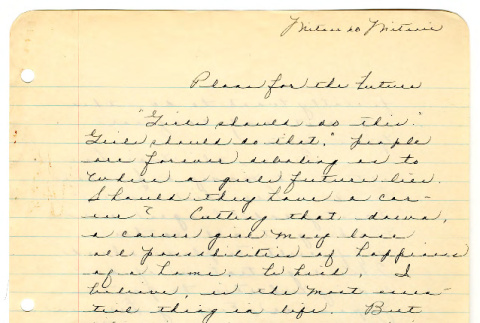
Term paper by Mitsuko Mitsui for Social Problems class taught by Mr. Harry Bentley Wells, a teacher at Manzanar High School. Mitsuko is very aware of the discussions of whether to return to Japan or stay in America and plans for what "girls" should be doing with their lives. Mitsuko wants to remain in America. She …
A letter from Masao Okine, who is stationed in Japan as a Nisei soldier to his parents, Seiichi and Ayame Okine. This letter is mailed via San Francisco, California by the U.S. Army Postal Service. In the letter, Masao writes about his visit to Hiroshima during the vacation. He meets Naoji Okine, Jokichi Yamanaka, Mr. Sasaki, …
A letter from Masao Okine to his parents, Seiichi and Tomeyo Okine in Hawthorne. This letter is written in Japan where Masao is currently stationed as a Nisei soldier and mailed via San Francisco by the U.S. Army Postal Service. In the letter, Masao describes his work as a US Army solider in Japan: He has …
A letter from Megumi and Yukie Sasaki in Hiroshima, Japan to Seiichi Okine. It appears to be written by Yukie Sasaki. She informs that she has received his letter on June 18 and package on June 21. She lists the items received including pairs of pants, shirts, shoes, socks, candles, sugar, threads, a comb, and white …
A letter from Jokichi Yamanaka in Hiroshima, Japan to his brother-in-law, Seichi Okine. Jokichi Yamanaka updates on his family noting that his his daughter Tomomi graduated from school and works as an interpreter at the U.S. military camp, Camp Kure. Mr. Nakano's house construction starts on April 14 and 15 and he is going to help …
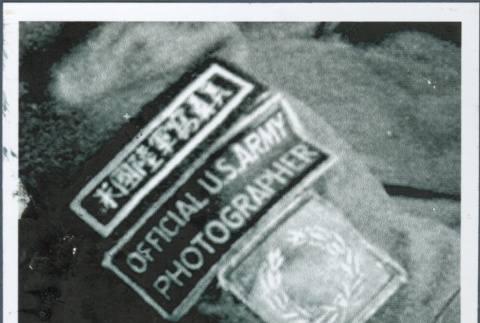
Caption: "At the end of WWII I was fortunate enough to be Photo Assignment Officer for the Signal Photo / division of the Supreme Command Allied Powers (SCAP) in Tokyo, Japan. Our responsibilities / were to take all newsworthy still photographs and newsreels requested by the Public Information / Office of SCAP. All photos taken in …
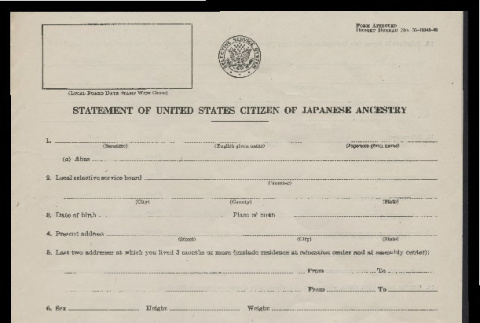
Questionnaire distributed to male U.S. citizens of Japanese ancestry over the age of 17, commonly known as the, "loyalty questionnaire." Individuals were required to supply information regarding place of birth; date of birth; places of residence; height; weight; hair color; eye color; voter status (when and where he first registered); if married, his wife's ancestry; the …
Nisei male. Born September 25, 1917, in Tacoma, Washington. Grew up in Tacoma except for living in Japan for several years at age four. Attended the University of Washington in Seattle, majoring in Political Science, Far Eastern Studies, with a minor in journalism. Prior to World War II, worked as sports editor for community newspaper, The …
Nisei male. Born September 25, 1917, in Tacoma, Washington. Grew up in Tacoma except for living in Japan for several years at age four. Attended the University of Washington in Seattle, majoring in Political Science, Far Eastern Studies, with a minor in journalism. Prior to World War II, worked as sports editor for community newspaper, The …
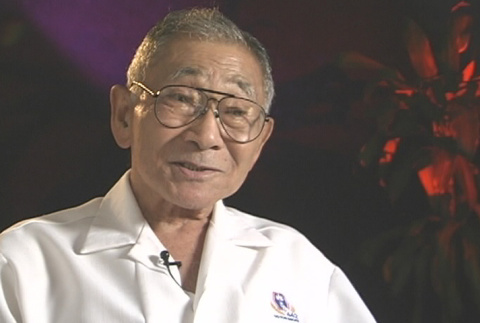
Nisei male. Born July 7, 1925, near San Jose. Grew up in Salinas, California, until he went to Japan at the age of thirteen. Studied in Japan until about 1939. Incarcerated at the Salinas Assembly Center, California, and Poston concentration camp, Arizona. Volunteered out of camp to serve in the U.S. military. Fought in Europe as …
Kibei male, born October 12, 1923, in Seattle, Washington. Raised primarily in San Francisco, California, spending four years in Hiratsuka, Japan. Was incarcerated with his family at Topaz concentration camp, Utah. Refused to sign the so-called "loyalty questionnaire," and as a consequence was moved to Tule Lake Segregation Center, California. In Tule, he renounced his U.S. …
Kibei male. Born August 1, 1915, in Portland, Oregon. Sent with siblings to be educated in Japan when ten years old. Returned to the United States in 1935. During World War II, was incarcerated at the Portland Assembly Center, Oregon, and Minidoka concentration camp, Idaho. Active in Seattle's postwar Japanese American community as a member and …
Nisei male. Born May 9, 1926, in Los Angeles, California. Grew up in Los Angeles and was in high school when Japan bombed Pearl Harbor on December 7, 1941. During the war, removed to the Manzanar concentration camp, California. Left camp to attend Morningside College in Sioux City, Iowa, then was inducted into the army. Joined …
Nisei male. Born August 10, 1925, in Chicago, Illinois. Grew up primarily in Los Angeles, California, where parents ran a restaurant. After the bombing of Pearl Harbor, removed to the Santa Anita Assembly Center, California, where he participating in running an organized gambling operation. Moved briefly to Heart Mountain concentration camp, Wyoming, before being sent to …
Nisei male. Born April 14, 1924, in San Francisco, California. Went to Japan with family at a very young age before returning to San Francisco. During World War II, removed to the Santa Anita Assembly Center, California, and the Topaz concentration camp, Utah. Answered "no-no" on the so-called "loyalty questionnaire" and transferred to Tule Lake concentration …
Kibei Nisei couple. Kikuno was born in the United States, then moved to Japan with her family after her father passed away. In the lead up to World War II, her uncle sent Kikuno and her brother back to the United States, where they were raised in foster care in northern California. During World War II, …
Kibei Nisei couple. Kikuno was born in the United States, then moved to Japan with her family after her father passed away. In the lead up to World War II, her uncle sent Kikuno and her brother back to the United States, where they were raised in foster care in northern California. During World War II, …



![Letter from Masao Okine to Mr. and Mrs. S. Okine, September 12, 1946 [in Japanese] (ddr-csujad-5-160)](https://ddr.densho.org/media/cache/08/9e/089e14d0745e8d4873311c8aab6a61cf.jpg)
![Letter from Masao Okine to Mr. and Mrs. Okine, January 10, 1946 [in Japanese] (ddr-csujad-5-121)](https://ddr.densho.org/media/cache/98/5a/985a9e384e81da3476dcd4c2284e90e7.jpg)
![Letter from Megumi Sasaki to Seiichi Okine, June 21, 1948 [in Japanese] (ddr-csujad-5-245)](https://ddr.densho.org/media/cache/b7/76/b7764f88b6bd7597de1dc49ee96f939c.jpg)
![Letter from Joikichi Yamanaka to Mr. S. Okine, April 13, 1948 [in Japanese] (ddr-csujad-5-242)](https://ddr.densho.org/media/cache/30/62/30620885d5cc7bee854070a5c04bd5a0.jpg)

![Letter from Masao Okine to Mr. and Mrs. S. Okine, September 12, 1946 [in Japanese] (ddr-csujad-5-160)](https://ddr.densho.org/media/cache/96/d6/96d638e1560b47cd51c4da27e183bb3c.jpg)
![Letter from Masao Okine to Mr. and Mrs. Okine, January 10, 1946 [in Japanese] (ddr-csujad-5-121)](https://ddr.densho.org/media/cache/b0/08/b008621cc4cbd7352bdd5ce9a5199fc8.jpg)
![Letter from Megumi Sasaki to Seiichi Okine, June 21, 1948 [in Japanese] (ddr-csujad-5-245)](https://ddr.densho.org/media/cache/15/d5/15d53566a077c704cbecaba67fb0cdc6.jpg)
![Letter from Joikichi Yamanaka to Mr. S. Okine, April 13, 1948 [in Japanese] (ddr-csujad-5-242)](https://ddr.densho.org/media/cache/d6/0c/d60c5e2a64bc9fe33741531ddc0fa2b2.jpg)