442nd Regimental Combat Team

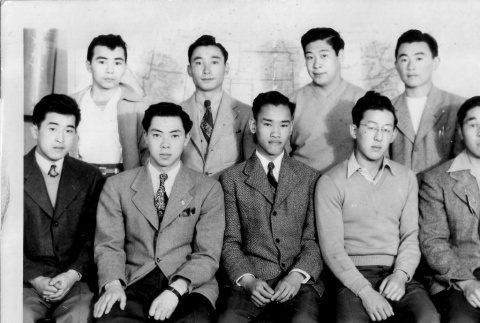
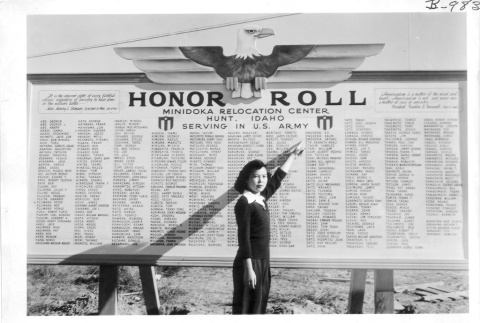
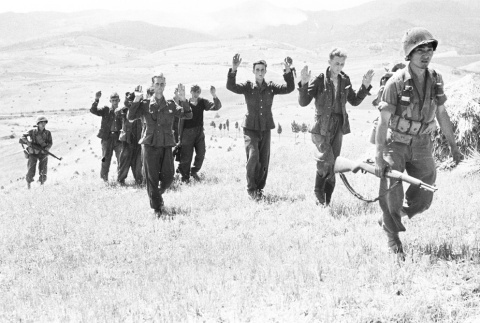
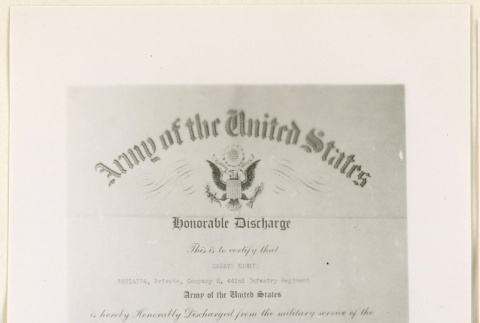
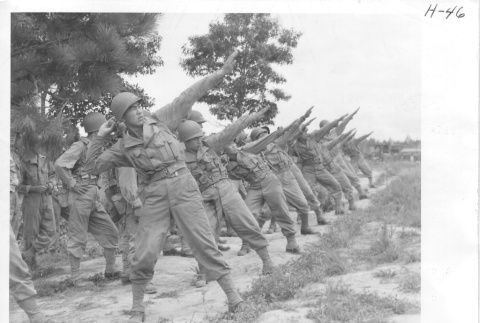
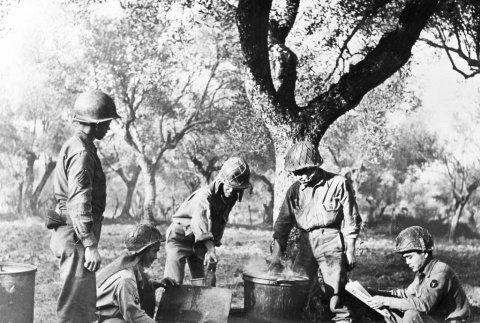
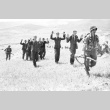
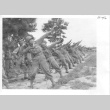
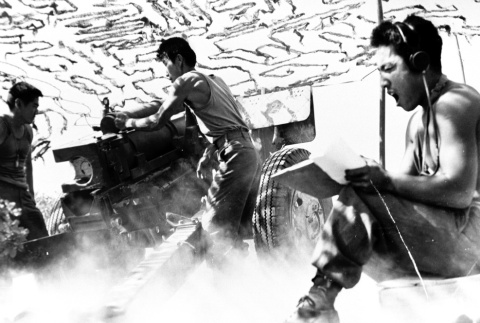
The 100th Infantry Battalion began as part of the Hawaii National Guard. On June 5, 1942, 1,432 men left Hawaii for training at Camp McCoy, Wisconsin, and later at Camp Shelby, Mississippi. The 100th shipped out to North Africa on August 23, 1943, and saw heavy action in Italy. Because of its heavy casualties and many honors, the 100th became known as the "Purple Heart Battalion." The 442nd Regimental Combat Team was initially formed in 1943 from Japanese American volunteers from Hawaii and the mainland. Perhaps not surprisingly, only about 1,250 Japanese Americans volunteered from the concentration camps. In Hawaii, where there was no mass removal, almost 10,000 volunteered. The 442nd arrived in Italy in June 1944 where the battle-tested 100th Infantry Battalion became its 1st Battalion. In seven major campaigns, the 442nd became the most decorated unit for its size and length of service; the unit suffered 9,476 casualties, more than 300 percent of its original strength.

World War II (277)
Military service (4131)
442nd Regimental Combat Team (3404)

Related articles from the Densho Encyclopedia :
442nd Regimental Combat Team, Mark W. Clark, Sadamitsu Neil Fujita, Go for Broke! (film), Stanley Hayami, Daniel Inouye, Mike Masaoka, Kazuo Masuda, Rescue of the Lost Battalion
Facilities
Format
Genre
Usage

Use <Ctrl> or (⌘) keys to select multiple terms

3404 items
The Newell Star, Vol. II, No. 18 (May 4, 1945) (ddr-densho-284-67)
doc The Newell Star, Vol. II, No. 18 (May 4, 1945) (ddr-densho-284-67)
Selected article titles: "Baseball Season Opens Tomorrow: Director to Throw First Ball" (p. 1), "War Dept.: 442nd Makes Big Gains in Italy" (pp. 1-2), "Center Firemen Help Quell Tule Lake Fire" (p. 1), and "'May Day' Set for This Sunday" (p. 4).
Going for Honor, Going for Broke (ddr-densho-1024-68)
av Going for Honor, Going for Broke (ddr-densho-1024-68)
Short 2006 documentary film that gives an overview of the 100th Infantry Battalion and 442nd Regimental Combat Team . Produced, written, directed, narrated & edited by George Toshio Johnston, he film was funded by a grant from the California Civil Liberties Public Education Program. See this item in the Densho Resource Guide at: Going for Honor, …
Letter to Yuri Domoto from Yoshito Shibata (ddr-densho-356-236)
doc Letter to Yuri Domoto from Yoshito Shibata (ddr-densho-356-236)
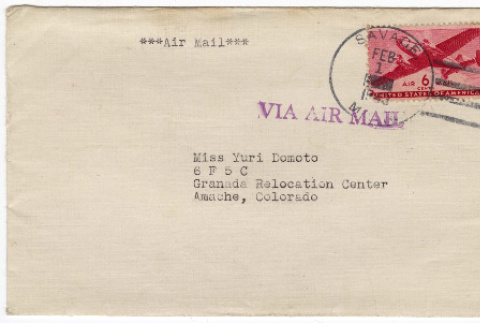
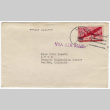
Letter to Yuriko Domoto Tsukada from Yoshito Shibata in which he talks about the press a Marine office gave about Nisei soldiers learning Japanese in Minnesota and using it in the Pacific theater, the announcement of the formation of 442nd/100th Battalion, a recent proposal to relocate Japanese Americans into Midwestern states in defense and agricultural jobs, …
James
vh James "Turk" Suzuki Interview Segment 23 (ddr-densho-1000-204-23)
Receiving protection from a farmer and his family while on a mission in Italy
Fred Shiosaki Interview Segment 20 (ddr-densho-1000-190-20)
vh Fred Shiosaki Interview Segment 20 (ddr-densho-1000-190-20)
Witnessing segregation Mississippi: "It was a just completely different world for us"

This interview was conducted as part of a project to capture stories of the Japanese American community of Spokane, Washington. Densho worked in collaboration with the Northwest Museum of Arts and Culture.

Fred Shiosaki Interview Segment 33 (ddr-densho-1000-190-33)
vh Fred Shiosaki Interview Segment 33 (ddr-densho-1000-190-33)
Aftermath of the battle of the "Lost Battalion"; not having time to write to family

This interview was conducted as part of a project to capture stories of the Japanese American community of Spokane, Washington. Densho worked in collaboration with the Northwest Museum of Arts and Culture.

Fred Shiosaki Interview Segment 22 (ddr-densho-1000-190-22)
vh Fred Shiosaki Interview Segment 22 (ddr-densho-1000-190-22)
Being reviewed by General George C. Marshall before going overseas

This interview was conducted as part of a project to capture stories of the Japanese American community of Spokane, Washington. Densho worked in collaboration with the Northwest Museum of Arts and Culture.

Fred Shiosaki Interview Segment 21 (ddr-densho-1000-190-21)
vh Fred Shiosaki Interview Segment 21 (ddr-densho-1000-190-21)
Training alongside Japanese Americans from Hawaii: learning pidgin "just so we could get by"

This interview was conducted as part of a project to capture stories of the Japanese American community of Spokane, Washington. Densho worked in collaboration with the Northwest Museum of Arts and Culture.

Fred Shiosaki Interview Segment 40 (ddr-densho-1000-190-40)
vh Fred Shiosaki Interview Segment 40 (ddr-densho-1000-190-40)
Returning home, meeting a member of the "Lost Battalion" from Texas

This interview was conducted as part of a project to capture stories of the Japanese American community of Spokane, Washington. Densho worked in collaboration with the Northwest Museum of Arts and Culture.

Fred Shiosaki Interview Segment 36 (ddr-densho-1000-190-36)
vh Fred Shiosaki Interview Segment 36 (ddr-densho-1000-190-36)
Being in a precarious position as reserves during the breaking of the Gothic Line

This interview was conducted as part of a project to capture stories of the Japanese American community of Spokane, Washington. Densho worked in collaboration with the Northwest Museum of Arts and Culture.

Fred Shiosaki Interview Segment 26 (ddr-densho-1000-190-26)
vh Fred Shiosaki Interview Segment 26 (ddr-densho-1000-190-26)
Remembering the battle of Hill 140

This interview was conducted as part of a project to capture stories of the Japanese American community of Spokane, Washington. Densho worked in collaboration with the Northwest Museum of Arts and Culture.

Fred Shiosaki Interview Segment 38 (ddr-densho-1000-190-38)
vh Fred Shiosaki Interview Segment 38 (ddr-densho-1000-190-38)
Escorting a German prisoner of war, feeling angry

This interview was conducted as part of a project to capture stories of the Japanese American community of Spokane, Washington. Densho worked in collaboration with the Northwest Museum of Arts and Culture.

Fred Shiosaki Interview Segment 34 (ddr-densho-1000-190-34)
vh Fred Shiosaki Interview Segment 34 (ddr-densho-1000-190-34)
Not realizing the 442nd's accomplishments until after the war

This interview was conducted as part of a project to capture stories of the Japanese American community of Spokane, Washington. Densho worked in collaboration with the Northwest Museum of Arts and Culture.

Fred Shiosaki Interview Segment 23 (ddr-densho-1000-190-23)
vh Fred Shiosaki Interview Segment 23 (ddr-densho-1000-190-23)
First impressions of war-torn Europe

This interview was conducted as part of a project to capture stories of the Japanese American community of Spokane, Washington. Densho worked in collaboration with the Northwest Museum of Arts and Culture.

Fred Shiosaki Interview Segment 31 (ddr-densho-1000-190-31)
vh Fred Shiosaki Interview Segment 31 (ddr-densho-1000-190-31)
Pulled out of rest period for the rescue of the "Lost Battalion"

This interview was conducted as part of a project to capture stories of the Japanese American community of Spokane, Washington. Densho worked in collaboration with the Northwest Museum of Arts and Culture.

Fred Shiosaki Interview Segment 43 (ddr-densho-1000-190-43)
vh Fred Shiosaki Interview Segment 43 (ddr-densho-1000-190-43)
The aftereffects of war: nightmares, reticence to talk about experiences

This interview was conducted as part of a project to capture stories of the Japanese American community of Spokane, Washington. Densho worked in collaboration with the Northwest Museum of Arts and Culture.

Fred Shiosaki Interview Segment 30 (ddr-densho-1000-190-30)
vh Fred Shiosaki Interview Segment 30 (ddr-densho-1000-190-30)
Combat in Bruyeres: new replacement soldiers seeing battle for the first time

This interview was conducted as part of a project to capture stories of the Japanese American community of Spokane, Washington. Densho worked in collaboration with the Northwest Museum of Arts and Culture.

Fred Shiosaki Interview Segment 27 (ddr-densho-1000-190-27)
vh Fred Shiosaki Interview Segment 27 (ddr-densho-1000-190-27)
A squad leader uses improvised Japanese language to communicate with troops

This interview was conducted as part of a project to capture stories of the Japanese American community of Spokane, Washington. Densho worked in collaboration with the Northwest Museum of Arts and Culture.

Fred Shiosaki Interview Segment 25 (ddr-densho-1000-190-25)
vh Fred Shiosaki Interview Segment 25 (ddr-densho-1000-190-25)
First experience with combat and casualties

This interview was conducted as part of a project to capture stories of the Japanese American community of Spokane, Washington. Densho worked in collaboration with the Northwest Museum of Arts and Culture.

Fred Shiosaki Interview Segment 35 (ddr-densho-1000-190-35)
vh Fred Shiosaki Interview Segment 35 (ddr-densho-1000-190-35)
Secretly being transferred back to Italy

This interview was conducted as part of a project to capture stories of the Japanese American community of Spokane, Washington. Densho worked in collaboration with the Northwest Museum of Arts and Culture.

Fred Shiosaki Interview Segment 32 (ddr-densho-1000-190-32)
vh Fred Shiosaki Interview Segment 32 (ddr-densho-1000-190-32)
Realizing the immense casualties after the battle of the "Lost Battalion"

This interview was conducted as part of a project to capture stories of the Japanese American community of Spokane, Washington. Densho worked in collaboration with the Northwest Museum of Arts and Culture.

Mitsuye May Yamada - Joe Yasutake - Tosh Yasutake Interview Segment 74 (ddr-densho-1000-135-74)
vh Mitsuye May Yamada - Joe Yasutake - Tosh Yasutake Interview Segment 74 (ddr-densho-1000-135-74)
Tosh enlists the help of a family friend to tell mother of decision to volunteer for the military
API