442nd Regimental Combat Team

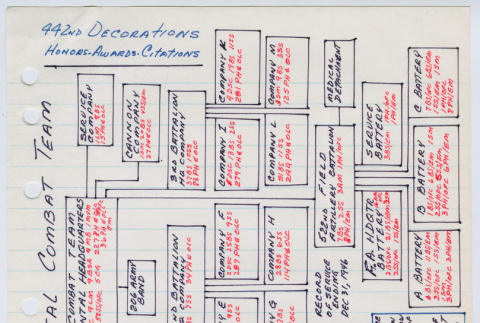
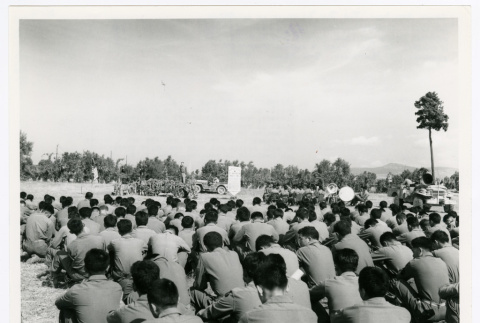
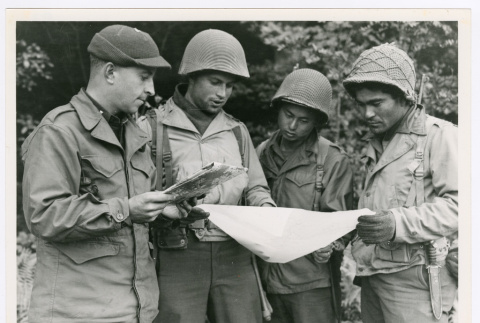
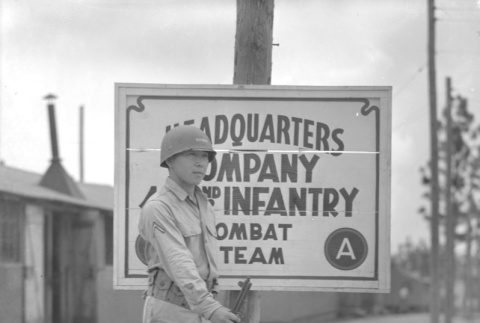
The 100th Infantry Battalion began as part of the Hawaii National Guard. On June 5, 1942, 1,432 men left Hawaii for training at Camp McCoy, Wisconsin, and later at Camp Shelby, Mississippi. The 100th shipped out to North Africa on August 23, 1943, and saw heavy action in Italy. Because of its heavy casualties and many honors, the 100th became known as the "Purple Heart Battalion." The 442nd Regimental Combat Team was initially formed in 1943 from Japanese American volunteers from Hawaii and the mainland. Perhaps not surprisingly, only about 1,250 Japanese Americans volunteered from the concentration camps. In Hawaii, where there was no mass removal, almost 10,000 volunteered. The 442nd arrived in Italy in June 1944 where the battle-tested 100th Infantry Battalion became its 1st Battalion. In seven major campaigns, the 442nd became the most decorated unit for its size and length of service; the unit suffered 9,476 casualties, more than 300 percent of its original strength.

World War II (283)
Military service (4287)
442nd Regimental Combat Team (3407)

Related articles from the Densho Encyclopedia :
442nd Regimental Combat Team, Mark W. Clark, Sadamitsu Neil Fujita, Go for Broke! (film), Stanley Hayami, Daniel Inouye, Mike Masaoka, Kazuo Masuda, Rescue of the Lost Battalion
Facilities
Format
Genre
Usage

Use <Ctrl> or (⌘) keys to select multiple terms

3407 items
Nisei Soldier: Standard Bearer for an Exiled People (ddr-densho-1007-1809)
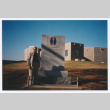
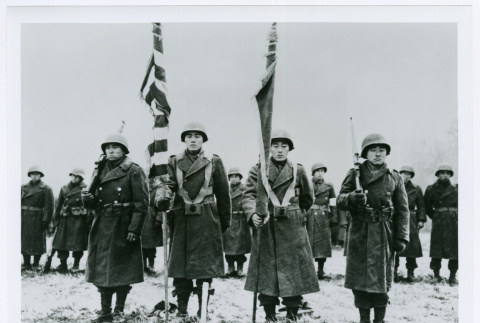
img Nisei Soldier: Standard Bearer for an Exiled People (ddr-densho-1007-1809)
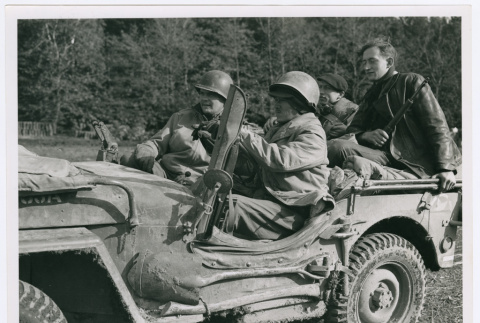
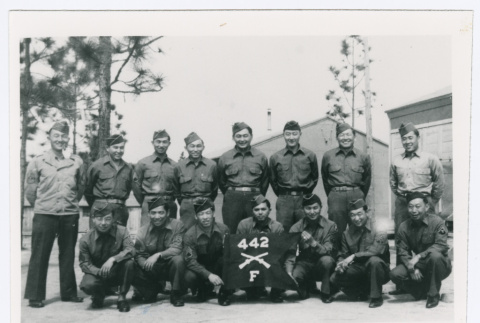
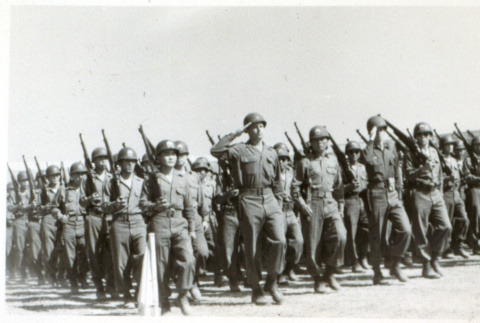
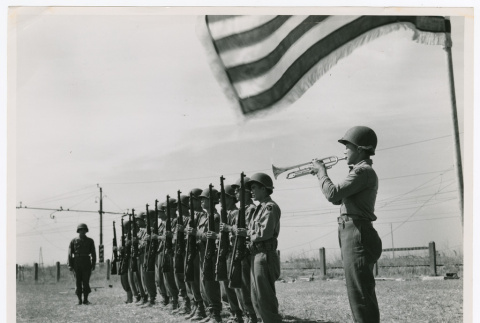
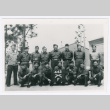
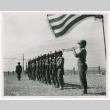
Caption: Honor Guard, 442nd Regimental Combat Team; all-Japanese American infantry unit, November 1944, after liberation of Bruyeres, France (on German boarder), and rescue of Texan 'Lost Battalion,' 36th Division. Information: Vox Productions, Inc. Loni Ding, Executive Director. San Francisco, CA.
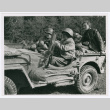
Risaku Kanayo receiving her late son's Silver Star (ddr-densho-1007-313)
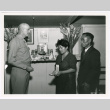
img Risaku Kanayo receiving her late son's Silver Star (ddr-densho-1007-313)
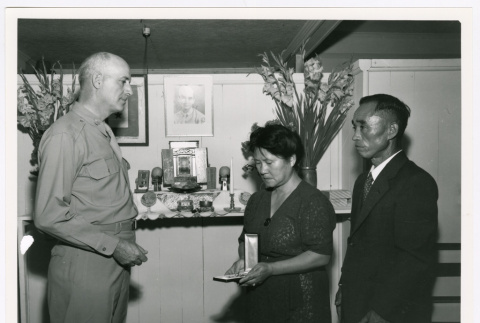
Pvt. Walter Kanayo fought in the 2nd Battalion of the 442nd. The man in the photo may be Chaplain Corwin H. Olds, CPBC. Caption on back.
Interview with Don Oka, Steve Yagi, and Shigeo Ito, part 7 of 8 (ddr-densho-1007-1775)
av Interview with Don Oka, Steve Yagi, and Shigeo Ito, part 7 of 8 (ddr-densho-1007-1775)
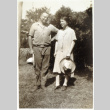
Continued from ddr.densho.org/ddr-densho-1007-1621/. Oka is on the left, Yagi in the center, and Ito on the right. Yagi discusses his family (some of whom were near Hiroshima at the time of the bomb) and their situation after the war, being discharged from the military, joining and working for the post office, and wanting to switch …
Rudy Tokiwa speaking (ddr-densho-1007-431)
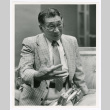
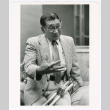
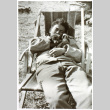
img Rudy Tokiwa speaking (ddr-densho-1007-431)
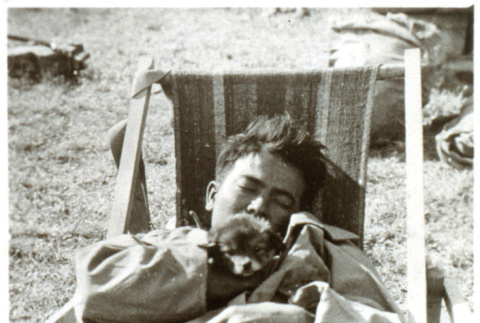
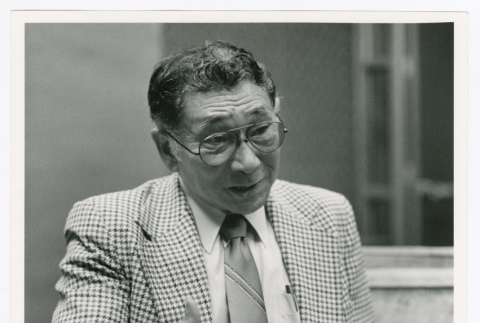
Duplicate of ddr-densho-1007-328. Back mentions "Nisei Soldier."
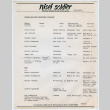
Chaplain Hiro Higuchi Interview Transcript (ddr-densho-1007-1870)
doc Chaplain Hiro Higuchi Interview Transcript (ddr-densho-1007-1870)
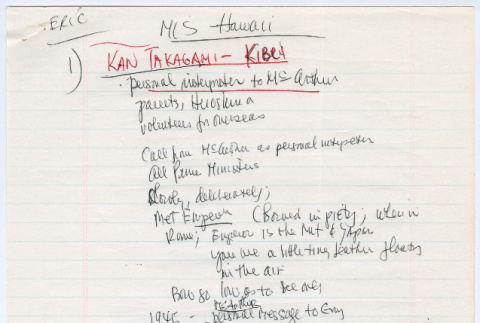
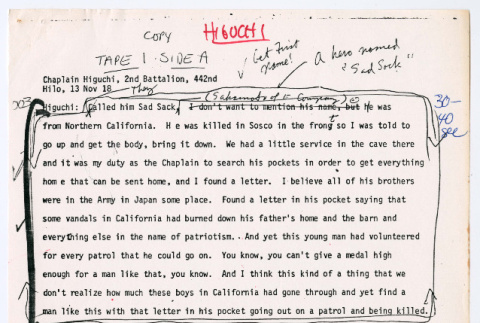
Eric Saul interview with Chaplain Hiro Higuchi, chaplain of the 2nd Battalion, 442nd Regimental Combat Team, conducted in Hilo, Hawaii. The date is incomplete though it likely occurred around November, 1980 based off of other Eric Saul interviews within the collection. In this interview Chaplain Higuchi recalls how wartime trauma shaped his ministry experiences.
Company K (442nd RCT) marching with the 3rd Battalion in
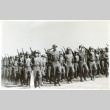
img Company K (442nd RCT) marching with the 3rd Battalion in "Yankee Stadium" (ddr-densho-1007-590)
Slide. Several soldiers marching. Taken at the Stadio Armani Picchi, which was referred to as "Yankee Stadium" by Americans postwar. Robert H. Foote is the oficer nearest the camera.
Interview with Robert H. Foote, part 2 of 4 (ddr-densho-1007-1526)
av Interview with Robert H. Foote, part 2 of 4 (ddr-densho-1007-1526)
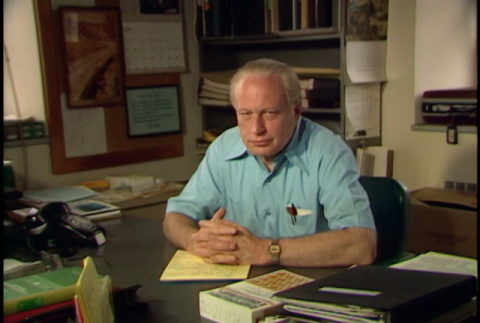
Foote dicusses his experiences serving as an officer in the 442nd, particulary his relationship with Nisei soldiers and their experiences with internment. Loni Ding can be heard asking questions behind the camera. Video starts at 0:54. Original title: 31, II NY #10, 6-85, Foote interview. Interview continues at ddr.densho.org/ddr-densho-1007-1527/
Roger Daniels interviewed by Kent Hori, part 3 of 4 (ddr-densho-1007-1758)
av Roger Daniels interviewed by Kent Hori, part 3 of 4 (ddr-densho-1007-1758)
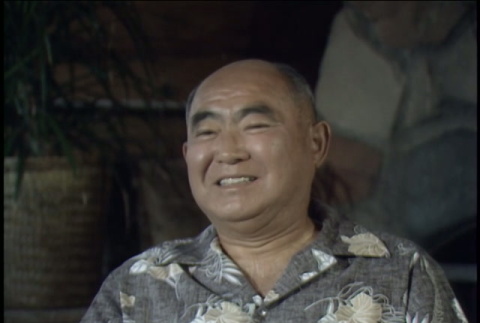
Daniels discusses what may have happened if the Japanese American community resisted evacuation en masse, how Japanese Americans were placed under 4C (enemy alien, undraftable) status and the military's eventual interest in Japanese Americans (particularly Kibei) for intelligence work, the importance of the 100th Battalion and the 442nd Regimental Combat Team, the loyalty questionnaire, the persecution …
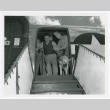
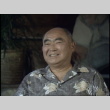
Rudy Tokiwa speaking (ddr-densho-1007-328)
img Rudy Tokiwa speaking (ddr-densho-1007-328)
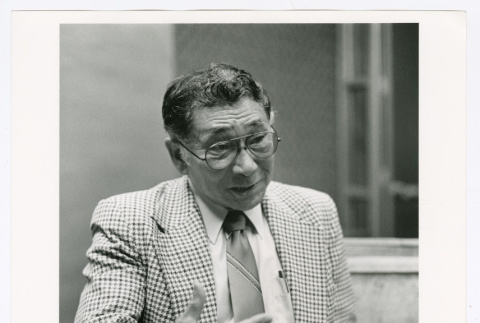
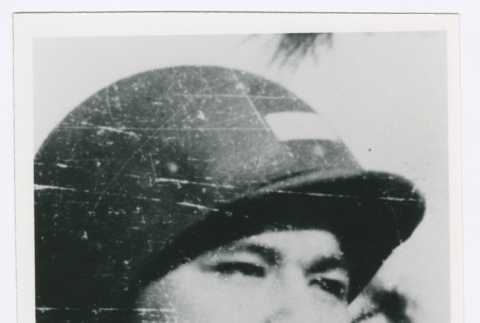
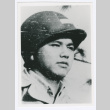
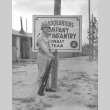
PFC Rudy Tokiwa fought in the 442nd after volunteering from camp. Caption on back.
API