
Discrimination
Race and racism
(446)
Discrimination
(952)
Related articles from the
Densho Encyclopedia :
Fletcher Bowron,
Iva Toguri D'Aquino,
Dies Committee,
John R. Lechner,
John Rankin,
Salt Lake City governors' meeting,
Earl Warren
952 items


952 items
av
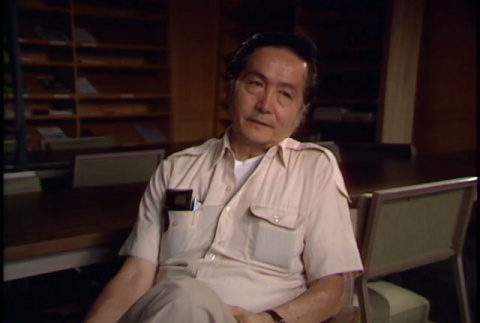
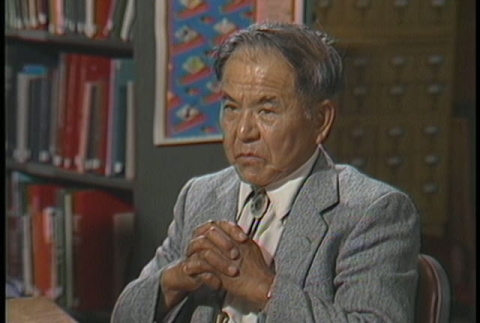
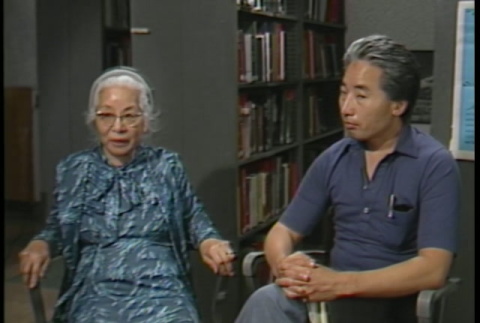
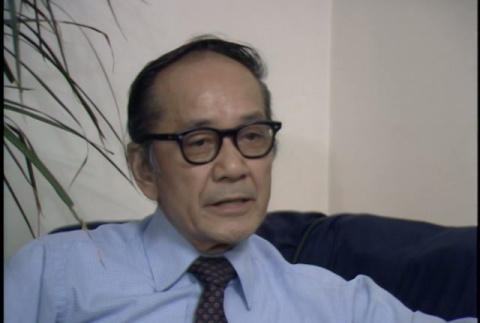
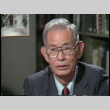
Interview with William Kochiyama, part 3 of 3 (ddr-densho-1007-1524)
Kochiyama discusses relations between Hawaiian and mainland recruits at Camp Shelby. Also talks about experiences with racism and activism in the 1950s and onward. Loni Ding can be heard asking questions behind the camera. Video starts at 0:56. Original title: 29, II NY #8, 6-5-85, Bill Kochyama Interview
av
Interview with Paul Minerich, Tim Nomiyama, Masao Kataoka, and Kenjiro Hayakawa, part 3 of 8 (ddr-densho-1007-1800)
From left to right: Minerich, Nomiyama, Kataoka, Hayakawa. Kataoka discusses being a soldier when evacuation started, the interment of his wife, and the relationship between Kibei and Nisei soldiers. Kataoka and Nomiyama discuss how they met. Nomiyama discusses when he decided to refuse to serve, being called a traitor when he left Japan, returning to the …
av
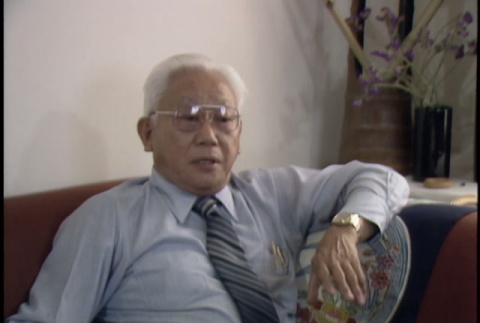
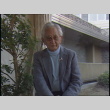
Interview with Harry Fukuhara, part 3 of 5 (ddr-densho-1007-1699)
Fukuhara discusses how he approached interviewing prisoners of war, his relationship with Caucasian soldiers in the military, and the risk of being captured by the Japanese military. Video starts at 0:25. Loni Ding can be heard asking questions behind the camera. Original title: 214, II JA #38, Harry Fukuhara, Sun. Feb. 2. Interview continues at ddr.densho.org/ddr-densho-1007-1700/
av
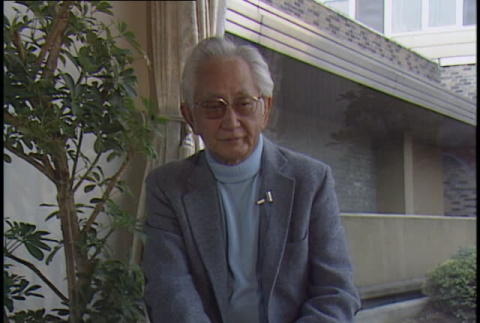
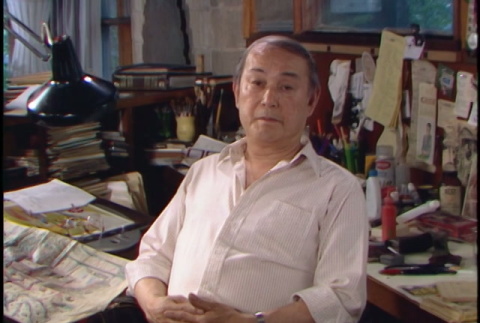
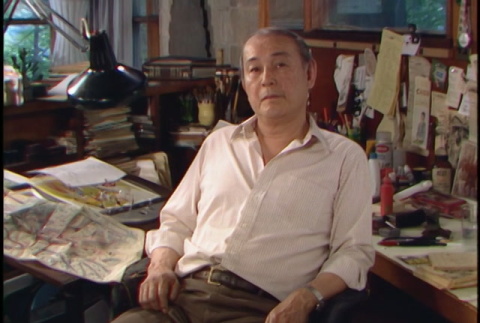
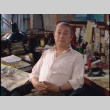
Interview with Chris Ishii, part 6 of 7 (ddr-densho-1007-1560)
Ishii discusses a poster he made during service in China, racial discrimination in the US, meeting and marrying his wife, and his father's death. Video starts at 0:50. Loni Ding can be heard asking questions behind the camera. Original title: 59, II NY #44, 6-85, Ishii. Interview continues at ddr.densho.org/ddr-densho-1007-1561/
av
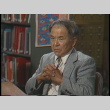
Interview with Paul Minerich, Tim Nomiyama, Masao Kataoka, and Kenjiro Hayakawa, part 5 of 8 (ddr-densho-1007-1802)
From left to right: Minerich, Nomiyama, Kataoka, Hayakawa. Kataoka and Hayakawa discuss why they refused to serve. Kataoka discusses why he had little faith that justice would be done and the change in attitudes towards Japanese Americans since the war. Nomiyama discusses why he refused to fight. Interview starts at 0:27. Loni Ding can be heard …
av
Interview with Manny Goldberg, part 1 of 6 (ddr-densho-1007-1562)
Goldberg discusses his service on Iwo Jima and Saipan, his work with Nisei, his education at New York University and the University of Michigan, his time at the MISLS, his thoughts on evacuation/internment and the difference in treatment of white and Nisei students at the MISLS. Video starts at 0:36. Loni Ding can be heard asking …
av
Interview with Chris Ishii, part 5 of 7 (ddr-densho-1007-1559)
Ishii discusses his basic training in Mississippi, Jim Crow, his experiences with Nisei interrogators in China, and his father moving to the US. Video starts at 0:55. Loni Ding can be heard asking questions behind the camera. Original title: 58, II NY #43, 6-85, Ishii. Interview continues at ddr.densho.org/ddr-densho-1007-1560/
av
Interview with Nobuo Yamashita, part 2 of 5 (ddr-densho-1007-1777)
Yamashita discusses serving with Minoru (Min) Hara, his family's business ventures (farming and produce), being deployed to the 6th Infantry Division in New Guinea, how he kept himself busy while serving, the story of a boy who was shot in a friendly fire incident, his issues with his officers, not getting furlough, and the death of …
av
Interview with John Fujii, part 1 of 2 (ddr-densho-1007-1691)
Fujii, who was born and lives in Japan, discusses growing up in Livingston, CA, realizing he was Japanese as a child, going to college at Pomona, segregation in the schools he attended as a child, and his family's internment during the war. Loni Ding can be heard asking questions in the background. Original title: 202, II …
av
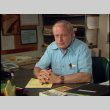
Interview with Robert H. Foote, part 4 of 4 (ddr-densho-1007-1528)
Foote discusses discrimination against Japanese-Americans. Also talks about draft resisters and those who were killed in action. Loni Ding can be heard asking questions behind the camera. Video starts at 1:00. Original title: 33, II NY #12, 6-85, Foote interview
av
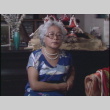
Interview with Kazuko Iijima, part 4 of 4 (ddr-densho-1007-1534)
Iijima discusses joining her husband at Camp Shelby in Mississippi, witnessing discrimination against others, the Nisei experience in camp, and the importance of talking about the past. Video starts at 0:53. Loni Ding can be heard asking questions behind the camera. Original title: 39, II NY #18, 6-85, Kazuko Iijima
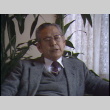
av
Interview with Barry Saiki, part 2 of 5 (ddr-densho-1007-1703)
Saiki discusses his mother's reaction to his father's arrest and imprisonment, his time at Stockton Assembly Center, the attitudes of incarcerees at Stockton, the difficulty Nisei faced trying to find jobs at the time, and being relocated to the Rohwer camp. Loni Ding can be heard asking questions behind the camera. Original title: II JA #42, …
av
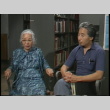
Interview with Gary and Grace Itano, part 3 of 6 (ddr-densho-1007-1807)
Grace discusses moving to Orange County after her husband's death, her impressions of the DB Boys and her relationship with them, Gary discusses learning about the DB Boys, his father's plans for his children, how going to Japan helped broaden his worldview, and his father's philosophy. Interview starts at 0:55. Loni Ding can be heard asking …
doc
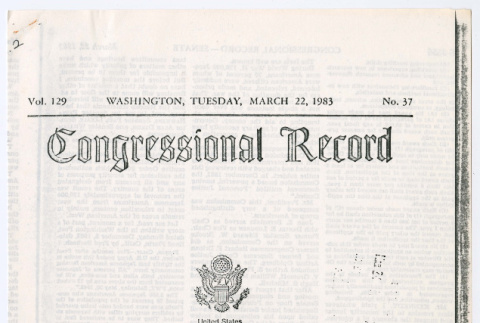
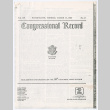
Congressional Record, vol. 129, no. 37: Proceedings and Debates of the 98th Congress, First Session (ddr-densho-1007-1863)
This Congressional Record excerpt includes the statement of Senator Howard Metzenbaum titled "Internment of Japanese Americans during World War II" given on March 22, 1983. In his statement Metzenbaum criticizes the motives of Executive Order 9066, describes impacts of incarceration, and argues for the need for redress.

av
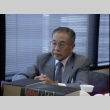
Roger Daniels interviewed by Kent Hori, part 2 of 4 (ddr-densho-1007-1757)
Daniels discusses the reaction to Pearl Harbor, anti-Japanese sentiment and hysteria, the decision to incarcerate, reactions to EO 9066, James Omura's testimony against internment (and reads a letter Omura wrote), the treatment of German and Italian Americans during the war, the process of evacuation, and resistance to evacuation. Part 1 of this interview is not in …
av
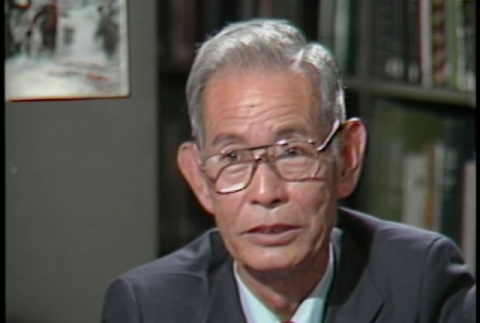
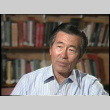
Interview with John Aiso, part 4 of 5 (ddr-densho-1007-1577)
Aiso discusses the difficulty Nisei had becoming commissioned officers, the qualities of Nisei MISLS students, how he himself learned Japanese, his time at Harvard Law School and difficulty finding a job, his time working for the British American Tobacco Company in Manchukuo, being drafted and founding the MISLS, and the role of Nisei soldiers during the …
av
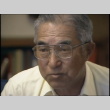
Interview with Frank Emi, part 3 of 6 (ddr-densho-1007-1794)
Emi discusses the racial discrimination he experienced as a child, not speaking up for himself in high school, the impact of racism on Nisei, the lessons he learned from his parents, the Fair Play Committee's case in the 10th Circuit Court of Appeals in Denver, and the charges levied against the Committee. Interview starts at 0:31. …
av
Interview with Shiro Tokuno, part 3 of 4 (ddr-densho-1007-1783)
Tokuno discusses the role of Nisei in the occupation, the attitudes Japanese nationals and American officers had toward Nisei, his service managing agricultural/forestry/fisheries/mining in occupied Japan, the policies he helped implement, moving to Sacramento and farming after the war, deciding to go into military intelligence, his mother's thoughts on him joining the military, and working with …
av
Interview with Bill Dizer, part 3 of 3 (ddr-densho-1007-1678)
Dizer discusses the differences between Nisei and Japanese nationals, his thoughts on Japanese/Nisei "ethnocentrism", his experience with Japanese work and social life, his advice for his Japanese and American peers, and his views on racial discrimination. Loni Ding can be heard asking questions in the background. Original title: 195, II JA #12, Bill Dizer, Fri. Jan. …
av
Interview with John Aiso, part 3 of 5 (ddr-densho-1007-1576)
Aiso discusses his relationships with students at the MISLS, the background of those enrolled, and the relationships between Nisei and white students. Video starts at 0:30. Loni Ding can be heard asking questions behind the camera. Original title: 73, II LA #3, 7-23-85, Judge Aiso III, Interview in Law Library Cont. Interview continues at ddr.densho.org/ddr-densho-1007-1577/
av
Interview with Hugh Nozawa, part 1 of 3 (ddr-densho-1007-1713)
Nozawa discusses being born in Santa Monica, attending high school in Japan, being drafted, being court-martialed for refusing to complete training, recently getting honorable discharge, the discrimination he and other Nisei faced in the army, and President Roosevelt's visit to Fort Riley. Loni Ding can be heard asking questions behind the camera. Original title: 220, II …

av
Roger Daniels interviewed by Kent Hori, part 4 of 4; interview with John Kaneko, part 1 of 3 (ddr-densho-1007-1759)
Daniels discusses the early successes of the Japanese army, the political justifications for relocation, why German and Italian Americans were not vilified in the same way, and the lack of support for Japanese Americans politically, culturally, and legally. Includes audio from reaction shots of Daniels and Hori, as well as recordings of Hori asking standalone questions. …
av
Interview with Clarence Matsumura, part 3 of 5 (ddr-densho-1007-1771)
Continued from ddr.densho.org/ddr-densho-1007-1609/. Matsumura discusses the impact of growing up in a small town in Wyoming (particularly the lack of discrimination), the discrimination he faced in Heart Mountain, the movie theaters he ran at Heart Mountain, the extracurricular programs he helped run in camp, going to school, volunteering for the military from school, his time …
av
Interview with Jim Ariyasu, part 5 of 5; interview with Harry Akune, part 1 of 4 (ddr-densho-1007-1600)
Ariyasu discusses saving a peer from a court martial, his real estate work, and racial solidarity. At 15:10, interview with Ariyasu ends and interview with Harry Akune begins. Akune discusses his time at Merced and Amache, volunteering for the army from camp, and his community's reaction to his decision to volunteer. Loni Ding can be heard …
doc
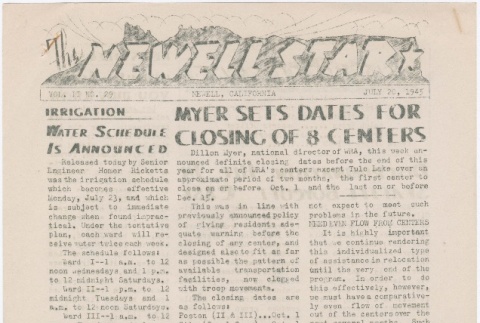
The Newell Star, Vol. II, No. 29 (July 20, 1945) (ddr-densho-284-77)
Selected article titles: "Myer Sets Dates for Closing of 8 Centers" (pp. 1-2), "Discrimination Hit in Seattle Boycott Case" (p. 2), "2 Army Officers to Fight Racial Discrimination" (p. 2), and "5422 Evacuees on WRA Payroll on June 30" (p. 4).