
Discrimination
Race and racism
(446)
Discrimination
(952)
Related articles from the
Densho Encyclopedia :
Fletcher Bowron,
Iva Toguri D'Aquino,
Dies Committee,
John R. Lechner,
John Rankin,
Salt Lake City governors' meeting,
Earl Warren
952 items

952 items
av
Interview with Harry and Ken Akune, part 5 of 6 (ddr-densho-1007-1593)
This tape exclusively features Ken Akune, who discusses a confrontation he had with a racist sergeant, the propaganda he helped create in China/Burma/India, and the relationship between US soldiers and Japanese prisoners of war. Video starts at 0:29. Loni Ding can be heard asking questions behind the camera. Original title: 79, II LA #20, 7-24-85, Ken …
av
Interview with Akiko, Brian Yamakoshi, Kenny and Chizuko, part 2 of 4 (ddr-densho-1007-1718)
Brian Yamakoshi discusses his reasons for playing koto, his feelings on the art form, and his approach to the instrument. Kenny discusses his experience playing taiko, his first time hearing Japanese drums, his time on an indigenous American reservation, growing up in La Habra, CA, and how time spent at a pueblo encouraged him to learn …
av
Interview with Harry Fukuhara, part 6 of 6 (ddr-densho-1007-1637)
Fukuhara discusses the reasons why some Nisei did not join the military, why he volunteered, his feelings on incarceration, and discrimination he faced in the US. Loni Ding can be heard asking questions behind the camera. Video ends at 20:00. Original title: 123, II SJ #29, 8-17-85, Harry's House SJ
av
Interview with Jim Ariyasu, part 4 of 5 (ddr-densho-1007-1599)
Ariyasu discusses his service in New Caledonia, Fiji, the Solomon Islands, and the Philippines, receiving a Bronze Star medal, and the difficulty of receiving an actual rank in the military. Loni Ding can be heard asking questions behind the camera. Original title: 85, II LA #26, 7-24-85, Ariyasu Interview V. Interview continues at ddr.densho.org/ddr-densho-1007-1600/
av
Interview with Hugh Nozawa, part 1 of 3 (ddr-densho-1007-1713)
Nozawa discusses being born in Santa Monica, attending high school in Japan, being drafted, being court-martialed for refusing to complete training, recently getting honorable discharge, the discrimination he and other Nisei faced in the army, and President Roosevelt's visit to Fort Riley. Loni Ding can be heard asking questions behind the camera. Original title: 220, II …
av
Balcony conversation between George Kanegai, Yosh Yamada, and Jimmie Matsumura ; interview with Jimmie Matsumura, part 1 of 4 (ddr-densho-1007-1605)
Matsumura discusses his time teaching at the 4th Army Military Intelligence School in San Francisco, his experience with John Aiso, his trouble with white officers, and being denied the rank he was promised. Interview starts at 3:20. Loni Ding can be heard asking questions behind the camera. Original title: II LA #32, 7-24-85, J. Matsumura Interview …
av
Interview with Paul Minerich, Tim Nomiyama, Masao Kataoka, and Kenjiro Hayakawa, part 4 of 8 (ddr-densho-1007-1801)
From left to right: Minerich, Nomiyama, Kataoka, Hayakawa. Nomiyama discusses waiting for an opportunity to take part in the war effort, joining company C at FortMcClellan in Alabama, wanting to be court martialed to have an opportunity to speak his mind, why he didn't want to serve in the Pacific, what he thought the war was …
av
Interview with Frank Emi, part 1 of 6 (ddr-densho-1007-1792)
Emi discusses resisting the draft, the difference between Nisei and Caucasians, Issei attitudes toward the draft, the attitudes of draft resisters, Heart Mountain as a "model" relocation camp, being arrested in camp by the FBI, awaiting trial in jail in Cheyenne and Laramie (in WY), his family's thoughts on him resisting the draft, and a fellow …
av
Interview with Hugh Nozawa, part 2 of 3 (ddr-densho-1007-1714)
Nozawa discusses the mistreatment of the Nisei during Roosevelt's visit to Fort Riley, a complaint he wrote to John J. McCloy afterwards, being punished for writing the letter without permission, the differences between Kibei and US-educated Nisei, growing up in Japan, being drafted while in Santa Monica, and being court martialed. Loni Ding can be heard …

av
Goro Sumida interviewed by Eric Saul, part 1 of 2 (ddr-densho-1007-1765)
Sumida discusses serving in the 100th Battalion, only having Christian priests during the war, his service in Brouay, his family, what a dead body smells like, the impact of wartime casualties, his relationship with his Caucasian officers, Hawaiian terms used during the war, how he wants the 100th to be remembered, Partial transcript available through 6:39 …
av
Interview with Clarence Matsumura, part 5 of 5 (ddr-densho-1007-1773)
Matsumura discusses being discharged from the military, moving to Minneapolis, working for Lew Bonn Company, attending the University of Minnesota, being ordered to report for duty in 1949, his difficulty talking about Dachau, his thoughts on war and America's role in international politics, the importance of fighting for what is right, his efforts against discrimination at …
av
Interview with Bill Dizer, part 3 of 3 (ddr-densho-1007-1678)
Dizer discusses the differences between Nisei and Japanese nationals, his thoughts on Japanese/Nisei "ethnocentrism", his experience with Japanese work and social life, his advice for his Japanese and American peers, and his views on racial discrimination. Loni Ding can be heard asking questions in the background. Original title: 195, II JA #12, Bill Dizer, Fri. Jan. …
av
Interview with John Aiso, part 3 of 5 (ddr-densho-1007-1576)
Aiso discusses his relationships with students at the MISLS, the background of those enrolled, and the relationships between Nisei and white students. Video starts at 0:30. Loni Ding can be heard asking questions behind the camera. Original title: 73, II LA #3, 7-23-85, Judge Aiso III, Interview in Law Library Cont. Interview continues at ddr.densho.org/ddr-densho-1007-1577/
av
Interview with Nobuo Yamashita, part 3 of 5 (ddr-densho-1007-1778)
Yamashita discusses why his parents didn't want him to go to college, joining his family's produce business, meeting his wife in Manzanar, his service in the Philippines, interrogating prisoners of war, seeing American prisoners who came out of Santo Tomas, the selfishness of weathy Japanese people in Korea, and not getting any promotions or furlough in …
av
Interview with William Kochiyama, part 3 of 3 (ddr-densho-1007-1524)
Kochiyama discusses relations between Hawaiian and mainland recruits at Camp Shelby. Also talks about experiences with racism and activism in the 1950s and onward. Loni Ding can be heard asking questions behind the camera. Video starts at 0:56. Original title: 29, II NY #8, 6-5-85, Bill Kochyama Interview
av
Interview with Harry Fukuhara, part 3 of 5 (ddr-densho-1007-1699)
Fukuhara discusses how he approached interviewing prisoners of war, his relationship with Caucasian soldiers in the military, and the risk of being captured by the Japanese military. Video starts at 0:25. Loni Ding can be heard asking questions behind the camera. Original title: 214, II JA #38, Harry Fukuhara, Sun. Feb. 2. Interview continues at ddr.densho.org/ddr-densho-1007-1700/
av
Interview with Barry Saiki, part 1 of 5 (ddr-densho-1007-1702)
Saiki discusses growing up in Stockton, CA, attending UC Berkeley, Pearl Harbor, the start of evacuation and negative press about Nisei during that time, graduating from Berkeley in 1942, entering Stockton Assembly Center, and the arrest and incarceration of his father. Loni Ding can be heard asking questions behind the camera. Original title: II JA #41, …
av
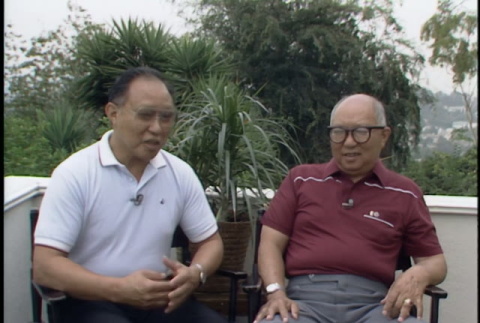
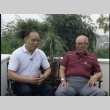
Interview with Harry and Ken Akune, part 2 of 6 (ddr-densho-1007-1590)
Ken is on the left, Harry on the right. The two discuss growing up as Nisei, anti-Japanese sentiment in the US, their relationship with their mother, the difference between Japanese nationals and Japanese Americans, Pearl Harbor, their time in internment at Merced and Amache, and their decision to volunteer for the military. Video starts at 0:28. …
av
Interview with Masaru Ogawa, part 1 of 3 (ddr-densho-1007-1710)
Ogawa discusses growing up in Hollywood, spending a year in Japan as a child, his experiences with discrimination in high school, attending Japanese classes, being denied from universities for being Japanese, working in Tokyo when the war started, and convincing his parents to move back to Japan in 1941. Loni Ding can be heard asking questions …
av
Interview with Bruce Kanegai and b-roll (ddr-densho-1007-1580)
Kanegai discusses teaching high school in Simi Valley, working on a yearbook, the hardships his parents faced, and anti-Japanese discrimination. Video starts at 0:29. Loni Ding can be heard asking questions behind the camera. First interview ends at 7:52, second interview starts at 9:18 and ends at 15:45. Rest of tape is b-roll of dojo and …
av
Interview with Jimmie Matsumura, part 2 of 4 (ddr-densho-1007-1606)
Matsumura discusses his time teaching at the 4th Army Military Intelligence School in San Francisco, his experience with John Aiso, his trouble with white officers, the difficulties his students faced, visiting his family at Heart Mountain, and the conflicting feelings his Nisei students had about military service. Loni Ding can be heard asking questions behind the …
av
Interview with Don Oka, Steve Yagi, and Shigeo Ito, part 5 of 8 (ddr-densho-1007-1774)
Continued from ddr.densho.org/ddr-densho-1007-1620/. Oka is on the left, Yagi in the center, and Ito on the right. Ito discusses the deaths of two Nisei on his team and the fear of being mistaken for a Japanese soldier. Oka discusses being interviewed for military intelligence at Camp Carson in Colorado, being treated differently than Caucasian soldiers, …
av
Interview with Chris Ishii, part 6 of 7 (ddr-densho-1007-1560)
Ishii discusses a poster he made during service in China, racial discrimination in the US, meeting and marrying his wife, and his father's death. Video starts at 0:50. Loni Ding can be heard asking questions behind the camera. Original title: 59, II NY #44, 6-85, Ishii. Interview continues at ddr.densho.org/ddr-densho-1007-1561/
av
Interview with Paul Minerich, Tim Nomiyama, Masao Kataoka, and Kenjiro Hayakawa, part 5 of 8 (ddr-densho-1007-1802)
From left to right: Minerich, Nomiyama, Kataoka, Hayakawa. Kataoka and Hayakawa discuss why they refused to serve. Kataoka discusses why he had little faith that justice would be done and the change in attitudes towards Japanese Americans since the war. Nomiyama discusses why he refused to fight. Interview starts at 0:27. Loni Ding can be heard …
av
Interview with Chris Ishii, part 5 of 7 (ddr-densho-1007-1559)
Ishii discusses his basic training in Mississippi, Jim Crow, his experiences with Nisei interrogators in China, and his father moving to the US. Video starts at 0:55. Loni Ding can be heard asking questions behind the camera. Original title: 58, II NY #43, 6-85, Ishii. Interview continues at ddr.densho.org/ddr-densho-1007-1560/