Social and recreational activities

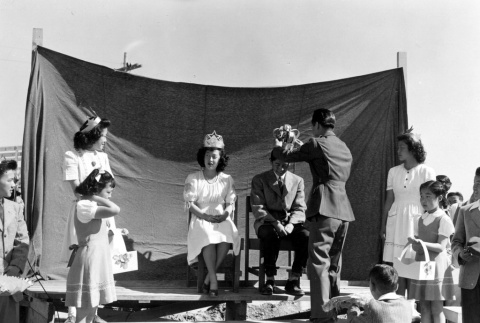
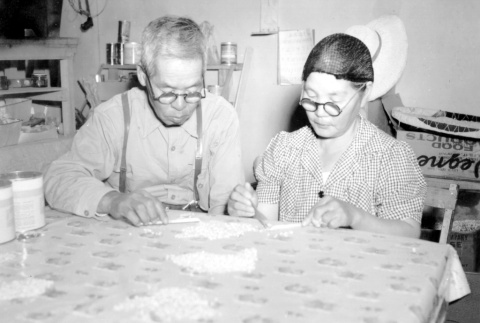
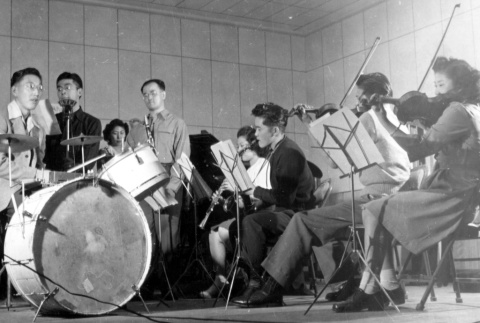
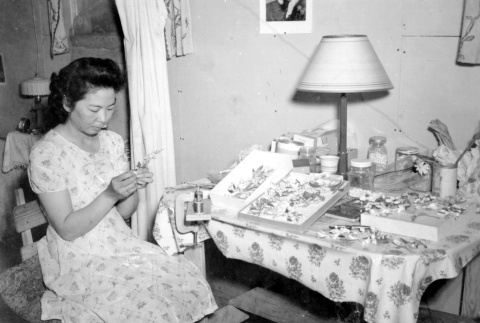
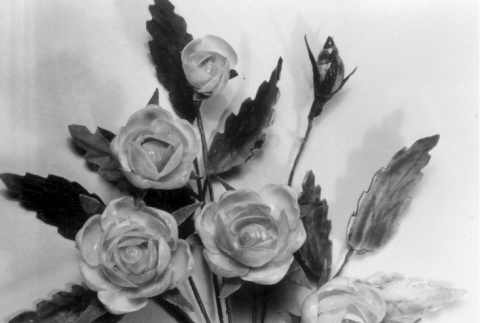
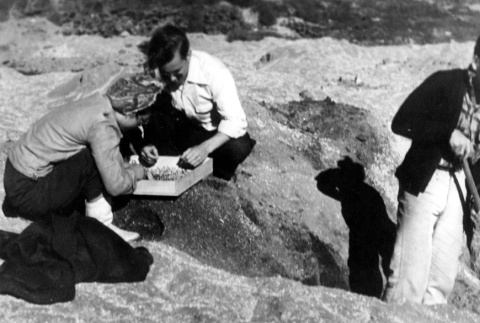
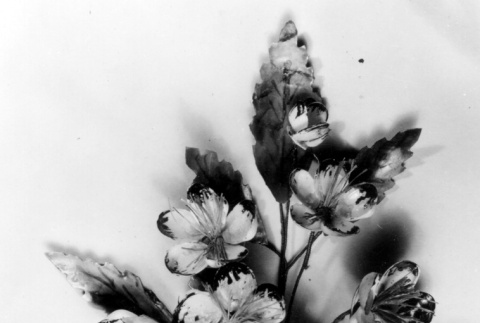
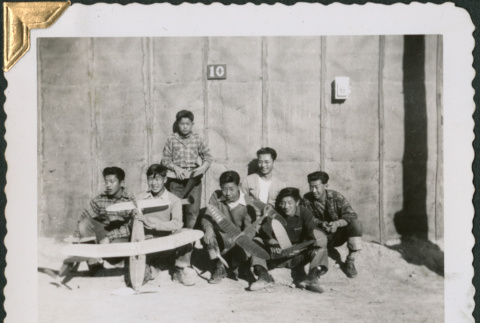
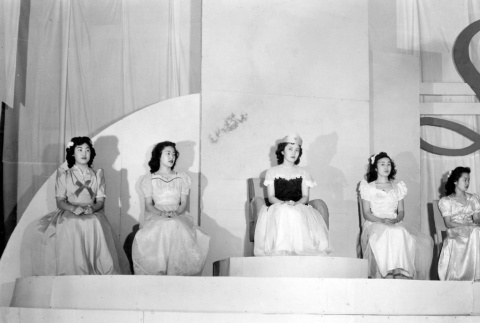
Japanese Americans found ways to fill the long days created by the enforced idleness of camp life. They made jewelry from shells found in the desert, built furniture for their rooms using scrap lumber and renovated the exteriors of their barracks. People also played cards, chess, checkers, mahjongg, and the Japanese games 'go' and 'shogi.' Camp inmates held dances, concerts, plays, and arts and crafts exhibitions. In Minidoka concentration camp, Idaho, they even held a beauty contest to select the "Sweetheart of Minidoka."

World War II (283)
Concentration camps (2078)
Social and recreational activities (1262)

Related articles from the Densho Encyclopedia :
Arts and crafts in camp, Music in camp
Facilities
Format
Genre
Usage

Use <Ctrl> or (⌘) keys to select multiple terms

1262 items
Minidoka camp queen and her court (ddr-densho-2-34)
img Minidoka camp queen and her court (ddr-densho-2-34)
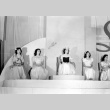
Minidoka concentration camp queen and her court. Left to right: Unidentified, Aiko Heyamoto, Grace Kawata, unidentified, and Ann Nakamura.
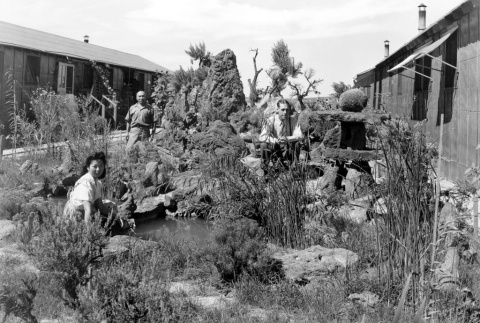
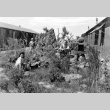
Camp garden (ddr-densho-2-69)
img Camp garden (ddr-densho-2-69)
This garden was designed by Mr. Kogita (first name unknown), second from the left. Peggie Yorita is on the far left.
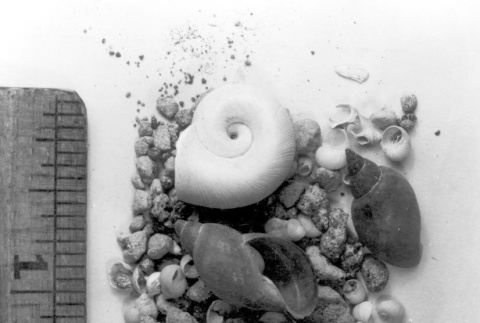
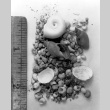
Shells used for jewelry making (ddr-densho-2-51)
img Shells used for jewelry making (ddr-densho-2-51)
Japanese Americans at the Tule Lake concentration camp enjoyed making jewelry from shells, such as the ones shown here, which were found within the confines of the camp. These shells have not yet been bleached. Tule Lake was drained in the early 1900s. The camp was located on the old lake bed, where people found shells …
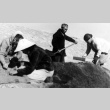
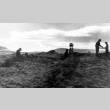
Japanese Americans digging for shells (ddr-densho-2-48)
img Japanese Americans digging for shells (ddr-densho-2-48)
Left to right: Peggie Yorita, Margaret Frost (wife of one of the camp's teachers), Kumataro Nishimura, and his wife, Kadju, dig and sift for shells at the Tule Lake concentration camp. Kumataro made the sieve by hand from scrap lumber and wire from a door screen. The shells were bleached and used for jewelry-making, which was …
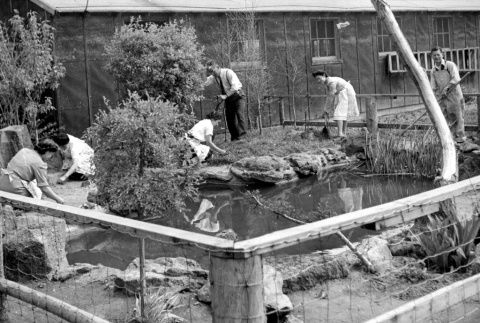
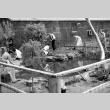
Block 26 garden and pond (ddr-densho-2-68)
img Block 26 garden and pond (ddr-densho-2-68)
Japanese Americans from Block 26 fashioned this garden and pond.
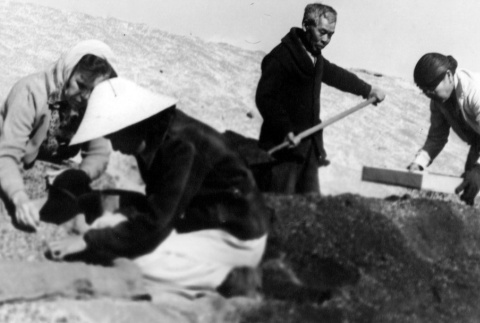
Japanese Americans digging for shells (ddr-densho-2-47)
img Japanese Americans digging for shells (ddr-densho-2-47)
These individuals are digging for shells to make jewelry, which was a popular pastime for many Japanese Americans in camp. Left to right: Kumataro Nishimura, Kadju Nishimura, Jimmie Yorita, Neal Frost (son of one of the teachers at Tule Lake), and Patsy Yorita. Tule Lake was drained in the early 1900s. The camp was located on …
Japanese Americans preparing shells for jewelry making (ddr-densho-2-50)
img Japanese Americans preparing shells for jewelry making (ddr-densho-2-50)
Kumataro (left) and Kadju Nishimura measure and separate shells to be used in jewelry-making. The Nishimuras woke up at the crack of dawn and dug waist-deep holes to find the shells. The shells were then bleached white and later painted. Tule Lake was drained in the early 1900s. The camp was located on the old lake …
Minidoka Matinee Orchestra (ddr-densho-2-36)
img Minidoka Matinee Orchestra (ddr-densho-2-36)
Left to right: Joe Owaki (drums), Hiro Nishimoto (MC), Dorrie Abe (piano), Ted Shimano (orchestra conductor), Amy Iguchi (clarinet), Yosh Ogata (saxophone), George Kaku (violin), and Sally Makishima (violin). The residents of the Minidoka concentration camp formed numerous musical ensembles to pass the time. Orchestras, bands, and choirs frequently staged performances for entertainment.
Japanese American making shell jewelry (ddr-densho-2-58)
img Japanese American making shell jewelry (ddr-densho-2-58)
Peggie Yorita making jewelry from shells found within the confines of the Tule Lake concentration camp. Making jewelry was a popular pastime for the Japanese Americans. Tule Lake was drained in the early 1900s. The camp was located on the old lake bed. As a result, shells were available for people to fashion into jewelry for …
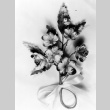
Jewelry made in camp (ddr-densho-2-49)
img Jewelry made in camp (ddr-densho-2-49)
This corsage pin was made by Peggie Yorita, a Japanese American at the Tule Lake concentration camp. The flowers and leaves are composed of shells found at the camp. Tule Lake was drained in the early 1900s. The camp was located on the old lake bed, where people found shells for making jewelry to sell to …
Japanese American and friend digging for shells (ddr-densho-2-60)
img Japanese American and friend digging for shells (ddr-densho-2-60)
Jimmie Yorita (right) digs for shells used by people in camp to make jewelry. His sister, Patsy (left), and Neal Frost, son of one of the camp's teachers, sift the dirt. Tule Lake was drained in the early 1900s. The camp was located on the old lake bed, where camp inmates found shells for making jewelry …
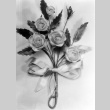
Corsage made of shells (ddr-densho-2-4)
img Corsage made of shells (ddr-densho-2-4)
This corsage pin was made by a Japanese American in camp. The flower petals and leaves are made from various types of shells found at the camp. She used toothbrush bristles dipped in cornmeal for stamens and wound the stems by hand with fine green thread. Wire from screen windows was used to put the pin …
Takeharu Inouye Diary (ddr-densho-365-2)
doc Takeharu Inouye Diary (ddr-densho-365-2)
In the second diary he kept in the camp at Tule Lake, Takeharu Inouye recounts his struggles with education and the boredom resulting from few recreational opportunities. Though he participated in several baseball games with his classmates, Takeharu spent the majority of his free time attending the movie showings that occurred daily or weekly throughout the …
Takeharu Inouye Diary (ddr-densho-365-3)
doc Takeharu Inouye Diary (ddr-densho-365-3)
In the final diary that Takeharu Inouye kept during his internment at Tule Lake, he includes descriptions of the movies he went to see daily, which served as his primary form of recreation. Takeharu also describes his feelings over succeeding and failing in his high school classes, since his friends would cheat off of his work, …
Group leaning on railing (ddr-densho-493-78)
img Group leaning on railing (ddr-densho-493-78)
Per donor note on page 29: Amache Warehouse workers at a picnic The woman in front of the group is Frances (Itabashi) Nishimura.
Aquila 1943 (ddr-densho-493-39)
doc Aquila 1943 (ddr-densho-493-39)
First edition of the Aquila, yearbook of Tri-State High School at the Tule Lake facility in Newell, California. The book includes a roster of all students, photos of the classes and clubs (including Zoology Club, Needle Arts Club, Tri-State Thespians, glee clubs, and others), names and photos of faculty and staff, and a written history of …
Letter to Frances (Itabashi) Nishimura from Mary Sakai (ddr-densho-493-24)
doc Letter to Frances (Itabashi) Nishimura from Mary Sakai (ddr-densho-493-24)
Letter from Mary Sakai thanking Frances for her modeling and the use of her clothing in a fashion show at Tule Lake. "Dear Frances, Your splendid cooperation in our successful fashion parade was very deeply appreciated by me and my fellow committee members. Thank you kindly for lending us your lovely collections, and I hope everything …
Group picnic (ddr-densho-493-84)
img Group picnic (ddr-densho-493-84)
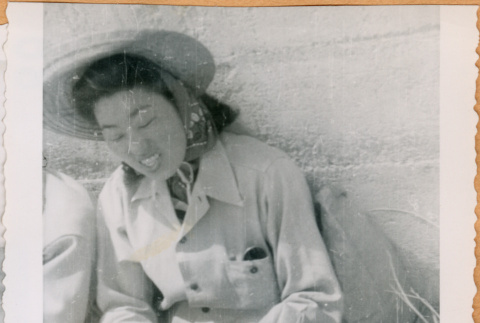
Per donor note on page 29: Amache Warehouse workers at a picnic
Woman at picnic (ddr-densho-493-83)
img Woman at picnic (ddr-densho-493-83)
Per donor note on page 29: Amache Warehouse workers at a picnic
Two people at a picnic with barracks in background (ddr-densho-493-63)
img Two people at a picnic with barracks in background (ddr-densho-493-63)
Caption below photo: May 1944 12E Picnic Amache The woman whose face can be seen is Frances (Itabashi) Nishimura.
API