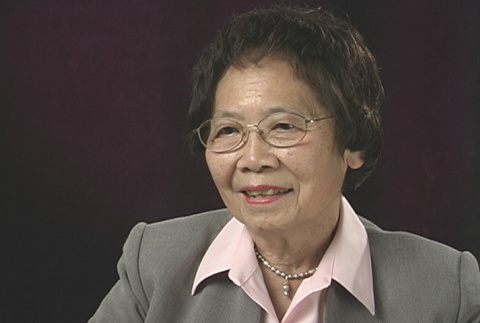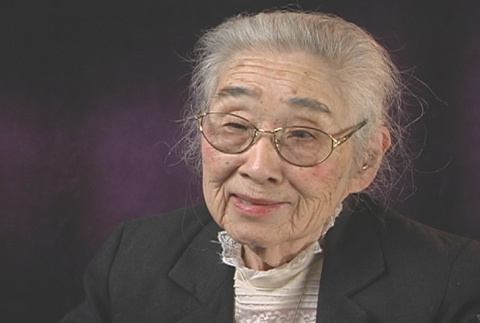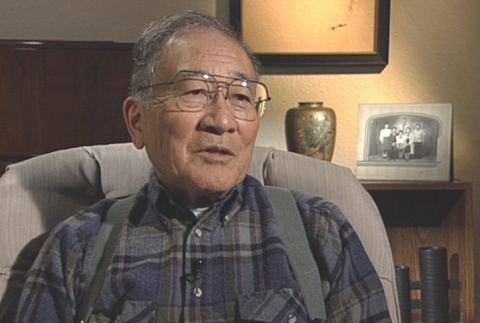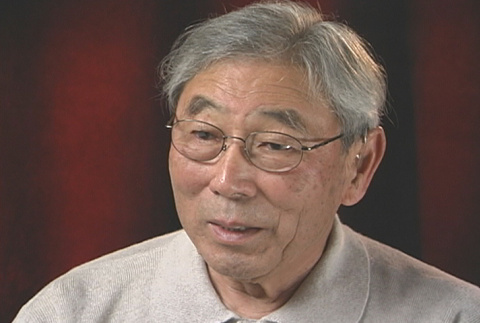
Receiving redress checks and apology

In 1988, President Ronald Reagan signed into law the Civil Liberties Act, which, among other things, mandated an official apology from the government and monetary payments to Japanese Americans incarcerated during World War II. On October 9, 1990, more than two years after the passage of the bill, the first of the redress payments were made in a formal ceremony to elderly issei survivors in Washington, D.C. Similar ceremonies were held in cities across the country. While few of those who were incarcerated feel that the government's apology erases what was done, many believe that a formal admission of wrongdoing helped resolve feelings of shame and corrected misperceptions held by the larger society.

Redress and reparations (1782)
Receiving redress checks and apology (141)
Facilities
Format
Genre
Usage

Use <Ctrl> or (⌘) keys to select multiple terms

141 items
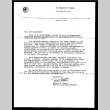
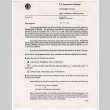
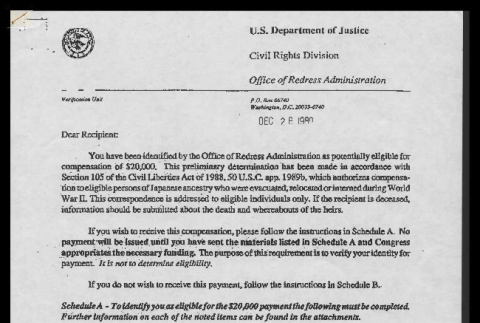
Letter from Robert K. Bratt, Administrator for Redress, U.S. Department of Justice to Dear Recipient, December 28, 1989 (ddr-csujad-55-2043)
doc Letter from Robert K. Bratt, Administrator for Redress, U.S. Department of Justice to Dear Recipient, December 28, 1989 (ddr-csujad-55-2043)
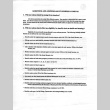
Correspondence from Robert K. Bratt to Dear Recipient regarding eligibility for redress payments. Includes Declaration of Eligibility by Persons Identified by the Office of Redress Administration for George Hideo Nakamura and Instructions for Submitting Documentation. See this object in the California State Universities Japanese American Digitization project site: sac_jaac_2146
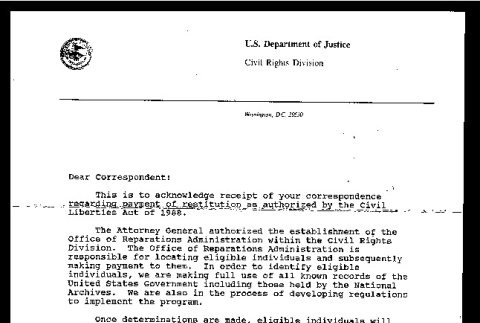
Letter from Robert K. Bratt, Reparations Administrator,  U.S. Department of Justice to Dear Correspondent, 1988 (ddr-csujad-55-86)
doc Letter from Robert K. Bratt, Reparations Administrator, U.S. Department of Justice to Dear Correspondent, 1988 (ddr-csujad-55-86)
Form letter acknowledging receipt of correspondence regarding restitution payment. See this object in the California State Universities Japanese American Digitization project site: sac_jaac_00090
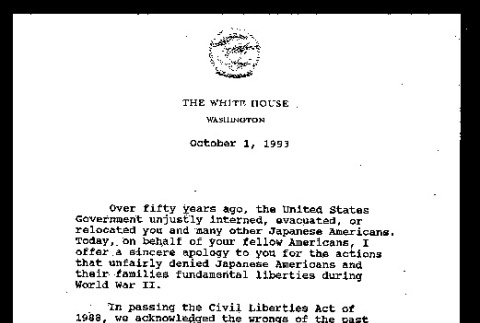
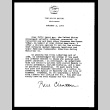
Letter from Bill Clinton, President of the United States, October 1, 1993 (ddr-csujad-55-2115)
doc Letter from Bill Clinton, President of the United States, October 1, 1993 (ddr-csujad-55-2115)
Form letter from President Bill Clinton to redress recipients expressing recognition of the injustices committed against Japanese Americans during World War II. See this object in the California State Universities Japanese American Digitization project site: sac_jaac_2218
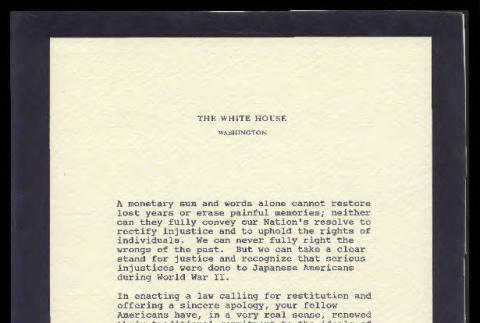
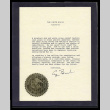
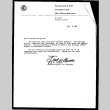
Letter of apology from George H.W. Bush, President of the United States, October 1990 (ddr-csujad-55-920)
doc Letter of apology from George H.W. Bush, President of the United States, October 1990 (ddr-csujad-55-920)
Letter of apology from George Bush expressing recognition of the injustices committed against Japanese Americans during World War II. See this object in the California State Universities Japanese American Digitization project site: sac_jaac_0922
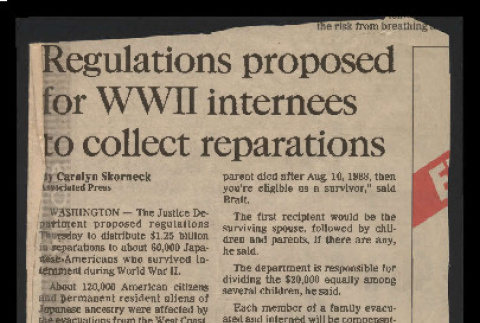
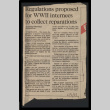
Regulations proposed for WWII internees to collect reparations (ddr-csujad-55-2110)
doc Regulations proposed for WWII internees to collect reparations (ddr-csujad-55-2110)
Newspaper clipping regarding the Civil Liberties Act of 1988 and the details of restitution payments for former incarcerees. See this object in the California State Universities Japanese American Digitization project site: sac_jaac_2213
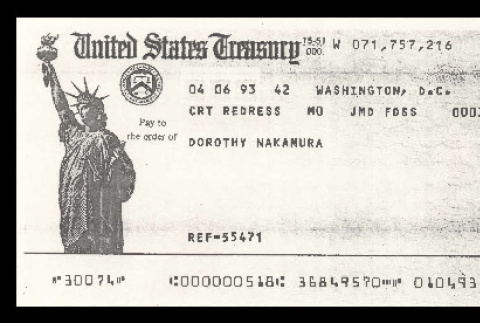
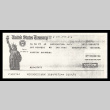
Check for $20,000 from the United States Treasury to Dorothy Nakamura (ddr-csujad-55-2116)
doc Check for $20,000 from the United States Treasury to Dorothy Nakamura (ddr-csujad-55-2116)
Restitution check for $20,000 from the United States Treasury to Dorothy Nakamura. See this object in the California State Universities Japanese American Digitization project site: sac_jaac_2219
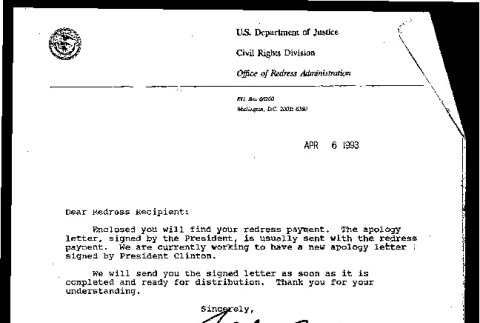
Letter from Paul W. Suddes to redress recipient, April 6, 1993 (ddr-csujad-55-2099)
doc Letter from Paul W. Suddes to redress recipient, April 6, 1993 (ddr-csujad-55-2099)
Correspondence from Paul Suddes to Redress Recipient regarding a delay in sending the apology letter. See this object in the California State Universities Japanese American Digitization project site: sac_jaac_2202
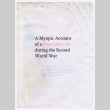
A Myopic Account of a Relocated Life during the Second World War (ddr-densho-468-97)
doc A Myopic Account of a Relocated Life during the Second World War (ddr-densho-468-97)
Personal recollections of life in an assembly center and relocation camp for Japanese descendants and various digressions
Letter from Robert K. Bratt to Joseph Ishikawa (ddr-densho-468-93)
doc Letter from Robert K. Bratt to Joseph Ishikawa (ddr-densho-468-93)
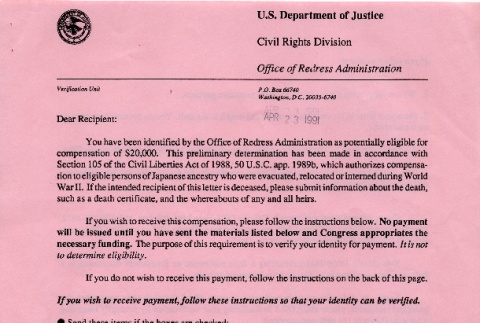
Letter of Redress notifying recipient of eligibility for compensation ($20,000) under Section 1-5 of Civil Liberties Act of 1888.
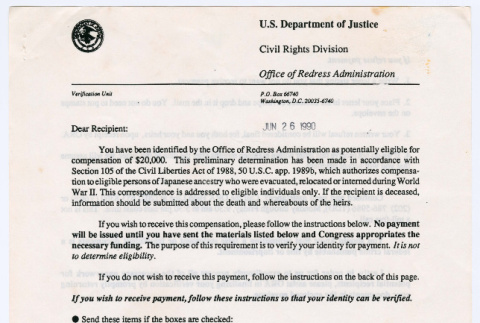
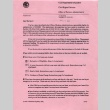
Redress compensation eligibility form (ddr-densho-153-21)
doc Redress compensation eligibility form (ddr-densho-153-21)
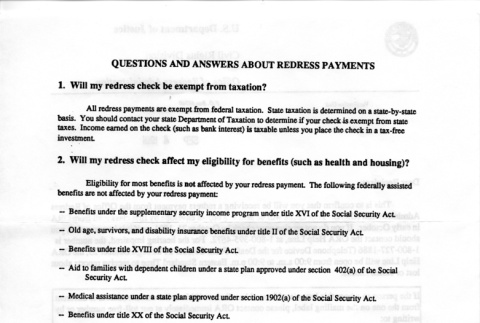
Form sent by the Justice Department's Office of Redress Administration detailing instructions for requesting redress compensation.
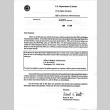
Redress confirmation letter (ddr-densho-153-22)
doc Redress confirmation letter (ddr-densho-153-22)
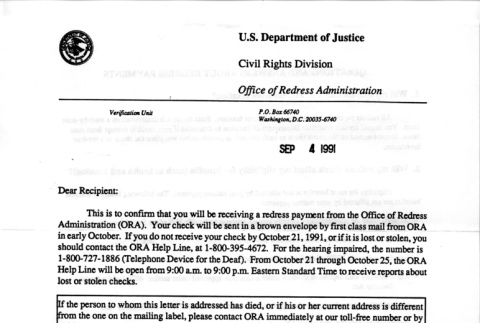
Letter from the Justice Department's Office of Redress Administration notifying recipient of impending arrival of redress compensation check.
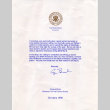
Written apology (ddr-densho-153-20)
doc Written apology (ddr-densho-153-20)
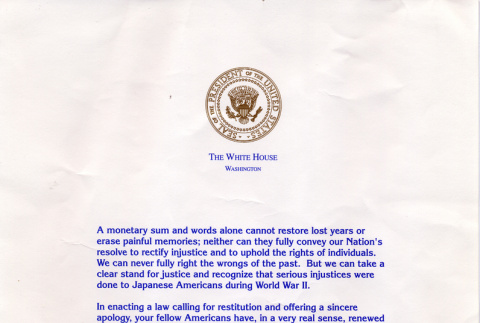
This written apology from former U.S. President George Bush accompanied redress checks for former camp inmates.
Crystal City Chatters Issue 8 (ddr-densho-537-21)
doc Crystal City Chatters Issue 8 (ddr-densho-537-21)
Issue 8 includes an article about German-American internees, a letter from Professor Michael Hoshiko, discussion of a PBS program about Estelle Ishigo, and more.
Tokio Yamane Interview Segment 37 (ddr-densho-1000-432-37)
vh Tokio Yamane Interview Segment 37 (ddr-densho-1000-432-37)
Decision to donate redress money (Japanese language)

This interview was conducted in Japanese. The transcript is a translation of the original interview. This material is based upon work assisted by a grant from the Department of the Interior, National Park Service. Any opinions, finding, and conclusions or recommendations expressed in this material are those of the …
Mae Kanazawa Hara Interview Segment 22 (ddr-densho-1000-168-22)
vh Mae Kanazawa Hara Interview Segment 22 (ddr-densho-1000-168-22)
Receiving redress check and apology: donating an organ to church in memory of parents
Arthur Ogami Interview Segment 42 (ddr-densho-1000-154-42)
vh Arthur Ogami Interview Segment 42 (ddr-densho-1000-154-42)
Feelings upon receiving redress: "the apology is just a piece of paper"
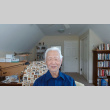
Mitsuye May Yamada Interview Segment 42 (ddr-densho-1000-137-42)
vh Mitsuye May Yamada Interview Segment 42 (ddr-densho-1000-137-42)
Mixed feelings upon receiving redress check and apology

Mitsuye Yamada was interviewed together with her two surviving brothers, William Toshio Yasutake and Joseph Yasutake, in group sessions on October 8-9, 2002. She was interviewed individually on October 9-10, 2002.

Before being contacted by Densho, the Yasutake siblings had planned to conduct their own family history interviews. …
Tsuguo
vh Tsuguo "Ike" Ikeda Interview III Segment 8 (ddr-densho-1000-125-8)
Reaction to receiving redress and presidential apology, "a miracle"

As a teenager prior to World War II, began keeping scrapbooks with newspaper articles and memorabilia, a lifetime habit.

Marian Asao Kurosu Interview Segment 83 (ddr-densho-1000-118-83)
vh Marian Asao Kurosu Interview Segment 83 (ddr-densho-1000-118-83)
Reactions to receiving redress money

During this interview, Mrs. Kurosu alternately speaks in both English and Japanese. As a result, the English translation of the transcript contains [Jpn.] and [Eng.], which indicate whether the original dialogue was spoken in Japanese or English.

API