Returning home

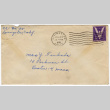
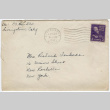
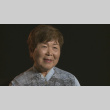
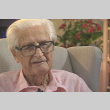
When the camps closed, Japanese Americans were handed $25 and put on trains headed for the places they had been forcibly removed from nearly four years earlier. Harassment was common -- many returning Japanese Americans were greeted with signs reading "No Japs Allowed." Other discovered their property had been vandalized or stolen. Homes and businesses that had been boarded up or left in the care of others were abandoned and stripped of furnishings and goods. For the majority, who did not have homes to return to, housing was the most serious problem. Housing discrimination was severe in many areas and persisted to varying degrees until the civil rights legislation of the 1960s. Former camp inmates with no other options moved into hostels and converted community institutions with conditions not much better than the camps they had just left. Although this period was stressful, it is remembered as a time when people came together to share what they had.

World War II (277)
Leaving camp (372)
Returning home (1150)

Related articles from the Densho Encyclopedia :
Alien land laws, Hood River incident, Kazuo Masuda, Return to West Coast
Facilities
Format
Genre
Usage

Use <Ctrl> or (⌘) keys to select multiple terms

1150 items
The Newell Star, Vol. II, No. 10 (March 9, 1945) (ddr-densho-284-59)
doc The Newell Star, Vol. II, No. 10 (March 9, 1945) (ddr-densho-284-59)
Selected article titles: "Japan Sends New Memo on Exchange of Nationals" (p. 1), "Night Attack Reported on Santa Clara Evacuee" (p. 1), and "Long Beach YWCA Ready to Give Assistance" (p. 3).
The Newell Star, Vol. II, No. 9 (March 2, 1945) (ddr-densho-284-58)
doc The Newell Star, Vol. II, No. 9 (March 2, 1945) (ddr-densho-284-58)
Selected article titles: "More Internees to Leave Sunday" (p. 1), "WRA Determined to Close Centers-Myer" (p. 2), and "GI's May Visit Interned Kins" (p. 4).
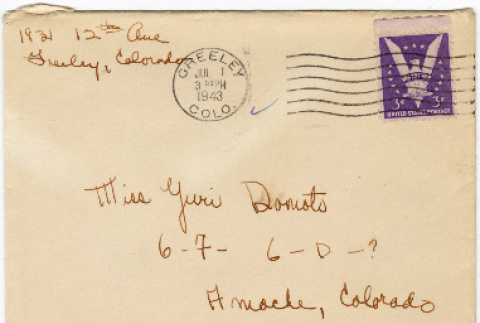
Letter to Yuri Tsukada from Wak Domoto (ddr-densho-356-581)
doc Letter to Yuri Tsukada from Wak Domoto (ddr-densho-356-581)
Letter to Yuriko Domoto Tsukada from her sister Wakako Domoto. Wak writes her journey to California during which she learned a lot of news about individuals they knew in Japan and Nisei who served in the war, she also details how she spent Easter with their sister Tokuko Kishi.
Chinese Wedding Celebration (ddr-one-1-237)
img Chinese Wedding Celebration (ddr-one-1-237)
Black and white photographic negative of Fred Lee and Betty Jean (Chinn) Lee's wedding guests outside in front of a fence. On the ground is a dragon costume. An unidentified man is spinning a long pole in front of crowd to the right, several men in the crowd appear to be playing a large drum, gong …
Nancy Kyoko Oda Segment 5 (ddr-densho-1000-463-5)
vh Nancy Kyoko Oda Segment 5 (ddr-densho-1000-463-5)
Returning to California after the war where father taught judo
Floyd Schmoe Interview II Segment 1 (ddr-densho-1000-86-1)
vh Floyd Schmoe Interview II Segment 1 (ddr-densho-1000-86-1)
Giving aid to Japanese Americans returning to Washington state after the war

In this interview Mr. Schmoe refers to Aki Kurose, a former employee, fellow Quaker, peace activist, and long-time friend. At the time of this interview, Ms. Kurose had recently passed away after a long struggle with cancer. At the time of this interview, Mr. …
Alan Nishio Segment 2 (ddr-densho-1000-450-2)
vh Alan Nishio Segment 2 (ddr-densho-1000-450-2)
Distant relationship with father while helping with gardening route
Kazuko Iwahashi Interview Segment 20 (ddr-densho-1000-337-20)
vh Kazuko Iwahashi Interview Segment 20 (ddr-densho-1000-337-20)
Leaving camp and returning home

This material is based upon work assisted by a grant from the Department of the Interior, National Park Service. Any opinions, finding, and conclusions or recommendations expressed in this material are those of the author(s) and do not necessarily reflect the views of the Department of the Interior.
Ayako Murakami - Masako Murakami Segment 22 (ddr-densho-1000-63-22)
vh Ayako Murakami - Masako Murakami Segment 22 (ddr-densho-1000-63-22)
Returning to Seattle after World War II, reopening the family business
Jim Akutsu Segment 45 (ddr-densho-1000-2-45)
vh Jim Akutsu Segment 45 (ddr-densho-1000-2-45)
Starting over, Engineers Professional Union; job discrimination in civil service

Interview was conducted over two days because of delays caused by technical difficulties.
Henry Miyatake Interview IV Segment 1 (ddr-densho-1000-56-1)
vh Henry Miyatake Interview IV Segment 1 (ddr-densho-1000-56-1)
War Relocation Authority's efforts to encourage the hiring of Japanese Americans
Isami Nakao - Kazuko Nakao Segment 26 (ddr-densho-1000-68-26)
vh Isami Nakao - Kazuko Nakao Segment 26 (ddr-densho-1000-68-26)
Returning home to Bainbridge Island to find tenant refusing to leave
Sam Mihara Interview Segment 16 (ddr-densho-1000-516-16)
vh Sam Mihara Interview Segment 16 (ddr-densho-1000-516-16)
Returning home where father helped other Japanese Americans with citizenship and housing
Tomio Moriguchi Interview I Segment 10 (ddr-densho-1000-59-10)
vh Tomio Moriguchi Interview I Segment 10 (ddr-densho-1000-59-10)
Fortuitous circumstances and strong business sense eases the chore of restarting business
Tomio Moriguchi Interview I Segment 16 (ddr-densho-1000-59-16)
vh Tomio Moriguchi Interview I Segment 16 (ddr-densho-1000-59-16)
Postwar opportunities for Japanese Americans: societal, cultural, and self-imposed limitations
Tomio Moriguchi Interview I Segment 9 (ddr-densho-1000-59-9)
vh Tomio Moriguchi Interview I Segment 9 (ddr-densho-1000-59-9)
Parents' reasons for settling in Seattle and restarting Uwajimaya
API