Selected article titles: "Inertia Prevents Tule Relocation"; "'He Seems to Have Been Born Brave'"; "Interior Secretary States WRA to Drop Tule Lake Management by February 1"; "Fear Mother Atomic Bomb Victim in Japan"; "Committee Supporting Non-Deportation Plan"; "Tokyo Rose Jailed on Suspicion of Treason"; "'They Speak Only Japanese at Restaurant'"; "Still Remembered"; "Soldier Killed in Plane …
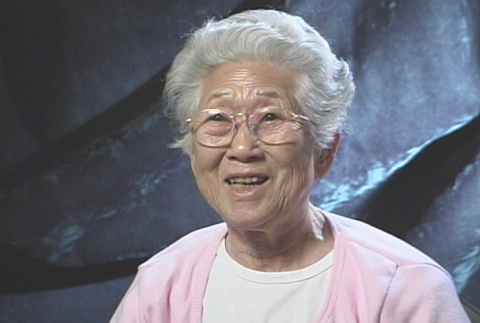
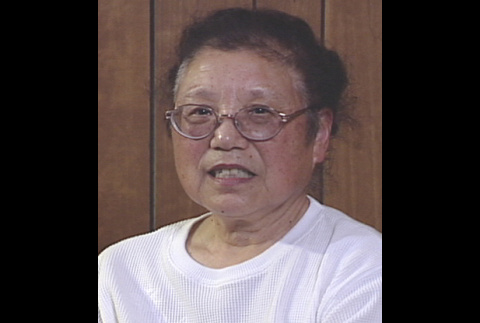
Feelings about attending the Tule Lake pilgrimage (Japanese language)
This interview was conducted in Japanese. It was translated so as to convey Mrs. Terasaki's way of speaking as closely as possible. For example, there are instances in which she makes some grammatical errors. These mistakes are conveyed through similar grammatical errors in English, in order to …
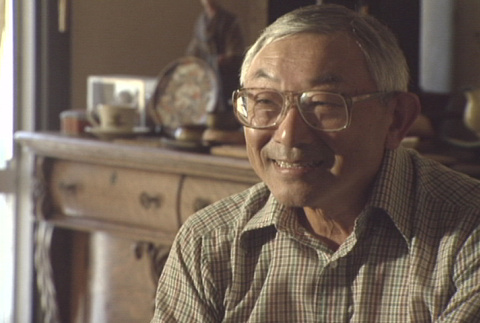
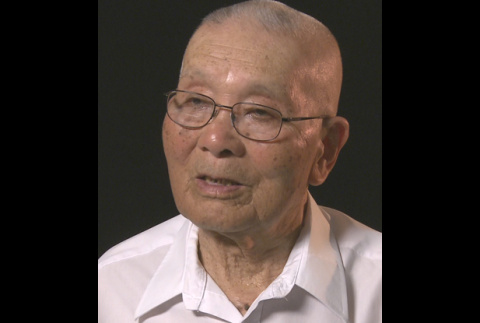
Recalling seeing "agitators" thrown into the stockade at Tule Lake
This interview was conducted by sisters Emiko and Chizuko Omori for their 1999 documentary, Rabbit in the Moon, about the Japanese American resisters of conscience in the World War II incarceration camps. As a result, the interviews in this collection are typically not life histories, …
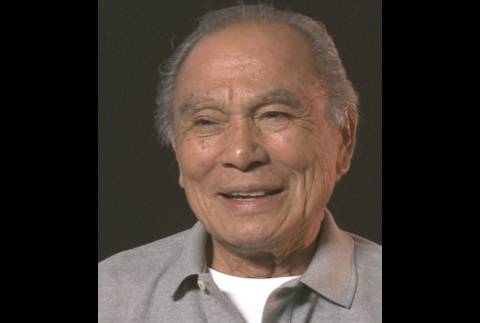
Research study's focus on protest within Tule Lake concentration camp, California
This interview was conducted by sisters Emiko and Chizuko Omori for their 1999 documentary, Rabbit in the Moon, about the Japanese American resisters of conscience in the World War II incarceration camps. As a result, the interviews in this collection are typically not life …
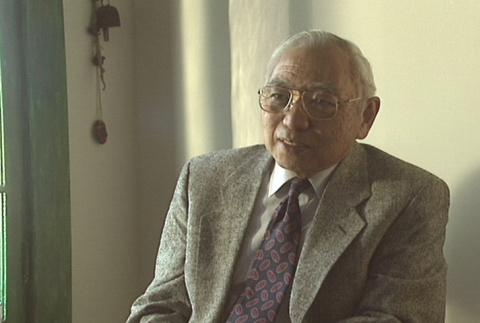
Thoughts on poor condition of Tule Lake concentration camp, California
This interview was conducted by sisters Emiko and Chizuko Omori for their 1999 documentary, Rabbit in the Moon, about the Japanese American resisters of conscience in the World War II incarceration camps. As a result, the interviews in this collection are typically not life histories, …
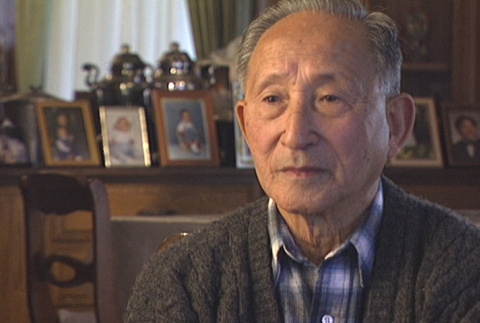
Deciding to stay out of camp politics at Tule Lake
This interview was conducted by sisters Emiko and Chizuko Omori for their 1999 documentary, Rabbit in the Moon, about the Japanese American resisters of conscience in the World War II incarceration camps. As a result, the interviews in this collection are typically not life histories, …
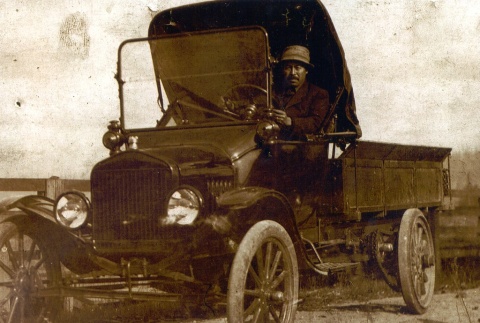
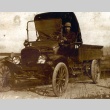
The Tsubota collection consists of photographs from the personal family collection of Minoru "Min" Tsubota, who was interviewed by Densho in 2003. The photographs document Minoru's life growing up in Kent, Washington, through his incarceration at Tule Lake concentration camp, and finally through his military service.
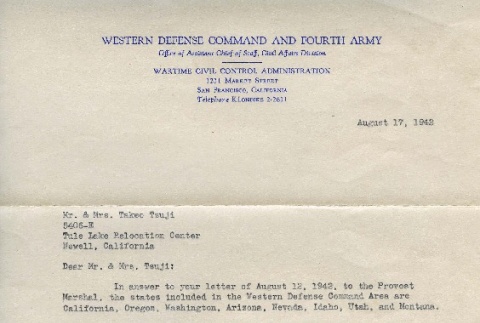
This collection is comprised of documents from the personal collection of Takeo Tsuji, who was held in the Tule Lake concentration camp, California, during World War II. Many of the documents are related to Mr. Tsuji's efforts to have his belongings restored to him after the war.
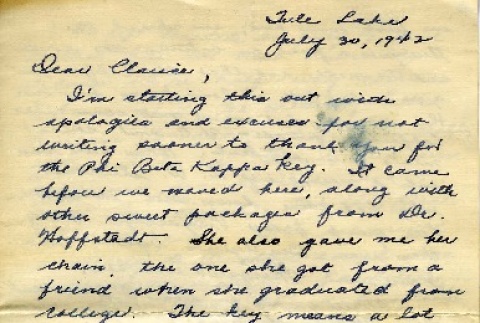
This collection consists of letters written to Clarice Osterud Hargiss, a student at the University of Washington during World War II. The letters were written by two Nisei friends, one in the Minidoka concentration camp, Idaho, and the other at the Tule Lake concentration camp, California.
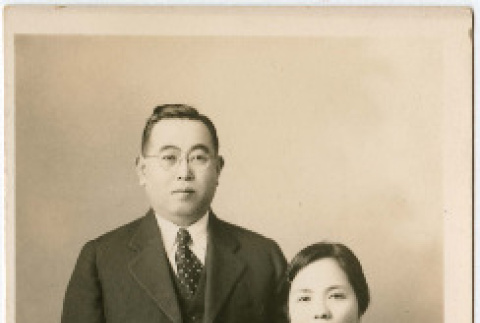
The Kosai-Takemoto Collection includes photos from the Kosai family and Japanese American community in Tacoma, Washington before the war. There are several photos of Eiko and Ken at Tule Lake, including their wedding. Redress and reparations documents to the descendants of Masa Kosai are included.
Sansei female. Born August 2, 1922, in Suooshima, Yamaguchi, Japan, and lived there until she was about 1 1/2 years old. Grew up in Tacoma, Washington. During World War II, incarcerated at the Pinedale Assembly Center, California, and Tule Lake concentration camp, California. At Tule Lake she and her husband married, and her oldest son, Kenichi, …
Kibei Nisei male. Born October 4, 1915, in Stockton, California. As a young child, sent to Japan to live with grandparents and attend school. Returned to California at age eighteen, and drafted into the U.S. military. Discharged from the army after Japan bombed Pearl Harbor. Removed to the Tanforan Assembly Center, Washington, and the Topaz concentration …
Nisei male. Born February 13, 1929, in Seattle, Washington. Grew up in Hollywood, California, and was living there when Japan bombed Pearl Harbor in 1941. Removed to the Manzanar concentration camp, California. Parents signed "no-no" on the so-called "loyalty questionnaire" and the family was transferred to the Tule Lake concentration camp, California, then designated as a …
Selected article titles: "Shiramizu Test Case is Moved to California Federal Court" (p. 1), "Methodist Pastor Criticizes 'Prejudice' in Town of Cody" (p. 1), "16 Unions Force Evacuees to Quit Jobs in Chicago, Move Thought Significant" (p. 1), "Two Students are Beaten at Laramie" (p. 1), "Editorial: Over-Optimism" (p. 4), "Tule Lake Draft Case Dismissed" (p. …
Selected article titles: "Washington Puts 'Silencer' on LaGuardia. Liberal-Minded Groups Support Secretary Ickes in Opposing Race Hatred" (p. 1), "Radios, Cameras Returned to Owners" (p. 2), "High School Commencement Exercises Set. 302 Seniors to Receive Diplomas; Lovell Mayor Will Address Graduates" (p. 8), "125 to Leave for Tule Lake" (p. 8), "Leupp Center Will Reopen" (p. …
Selected article titles: "Charge Wounded Nisei Treated Like PWs. Japanese American Veterans Forced to Travel in Hold of Navy Transport Hayes" (p. 1), "Tule Lake, Last of Centers, Closed by Relocation Agency" (p. 1), "Report 7100 Persons Repatriated to Japan" (p. 2), "Second Battalion of 442nd Combat Team Deactivated" (p. 3), "Final Segregee Group Moved From …
Selected article titles: "Supreme Court rules on citizenship, Calif. Prop. 14" (p. 1), "Hosokawa commissioned to write 'popular history'" (p. 1), "Fair housing bills under study" (p. 1), "S.F. Japan center must not lose its 'cultural' sight" (p. 1), "Justice Dept. not now maintaining Tule Lake center" (p. 2), "Episodes of Evacuation: Internment on Rainbow Island" …
Selected article titles: "Textbook Revision Resolution Vents Bad Feelings in California" (pp. 1, 3), "JACL to Dedicate Tule Lake Linkville Cemetery Sept. 10" (p. 1), "ORA Estimates 16,000 Eligible Potentials for Redress 70 Years and Up as of 1988" (p. 2), and "A Brown Japanese Amerasian Speaks: The Defense and Nurture of Amerasian Culture in America" …
Selected article titles: "Vietnamese Internment in Sac'to Suggested" (pp. 1, 8), "Rohwer Monument Dedicated in a Memorial Day Service" (pp. 1-2), "Bitter Memories Recalled at Tule Lake Pilgrimage" (p. 2), "Inouye Offers Nuclear Plan to Avoid a Holocaust" (p. 2), and "The Hattiesburg Story: One Vet of Famed 442nd RCT Lives Near Shelby" (p. 9).
Meeting minutes of incarceree-led Tule Lake Camp government. Includes discussion of release of prisoners from army stockades, especially who to target for releasing, and lack of employment. See this object in the California State Universities Japanese American Digitization project site: sjs_sch_0028
Letter from incarerees requesting Tule Lake administration cut off employment from couples to make employment accessible for large families who have more expenses. Somewhat dire and threatening tone to letter. See this object in the California State Universities Japanese American Digitization project site: sjs_sch_0015
Photo of people standing along a snowy hillside looking down over a valley most likely overlooking Tule lake camp. From photo album of Robert Billigmeier. See this object in the California State Universities Japanese American Digitization project site: mei_05_105
A photograph of five young Nisei women incarcerated at Tule Lake, California. They are standing outside posing together for the camera. Barracks are visible behind them. See this object in the California State Universities Japanese American Digitization project site: csumb_ms15_0042
Meeting minutes between incarceree led Tule Lake Camp government and the Advisory Council. Primarily a discussion of employment-related concerns including creating a subcommittees for employment and fair practices. See this object in the California State Universities Japanese American Digitization project site: sjs_sch_0031
Meeting minutes between incarceree led Tule Lake Camp government and the Advisory Council. Discusses role of the Co-ordinating Committee within the Camp, and the rejection of employees from camp jobs. See this object in the California State Universities Japanese American Digitization project site: sjs_sch_0034