
5070 items



5070 items
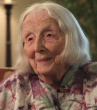
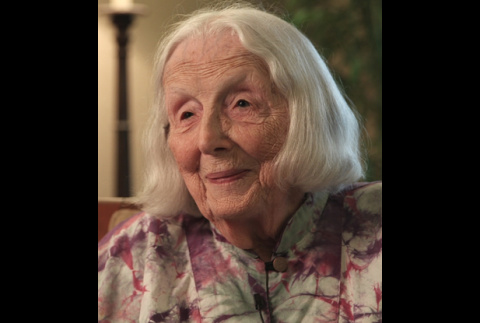
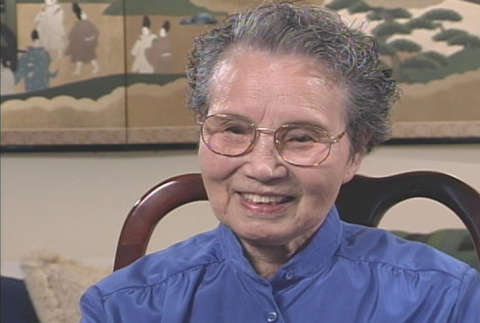
Narrator Eleanor Davis
White female. Born November 17, 1922, in Seattle, Washington. Parents were both chiropractors and supportive of Japanese Americans around the time of World War II. Attended the University of Washington in 1940 and became friends with Gordon Hirabayashi.
doc
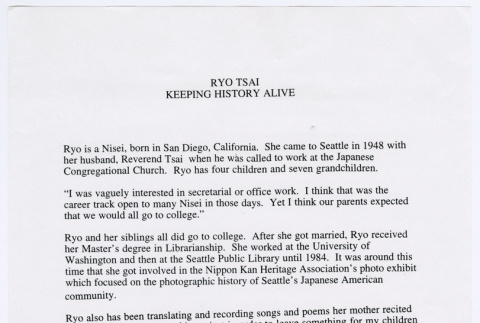
Ryo Tsai: Keeping History Alive (ddr-densho-446-453)
Description of Ryo Tsai's life for the Strength and Diversity Exhibit: Japanese American Women 1885-1990
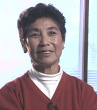
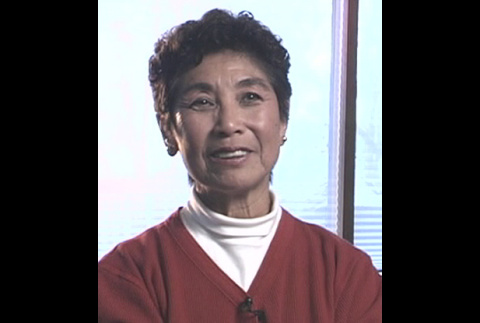
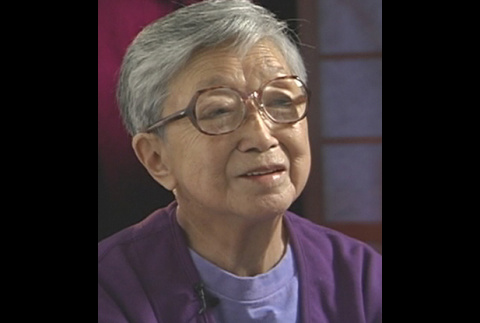
Narrator June Takahashi
Nisei female. Born July 21, 1926, in Petersburg, Alaska. Both mother and father were jailed in Petersburg after the bombing of Pearl Harbor. Incarcerated at the Puyallup Assembly Center, Washington, and Minidoka concentration camp, Idaho. Resettled in Seattle, Washington.
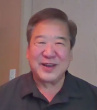
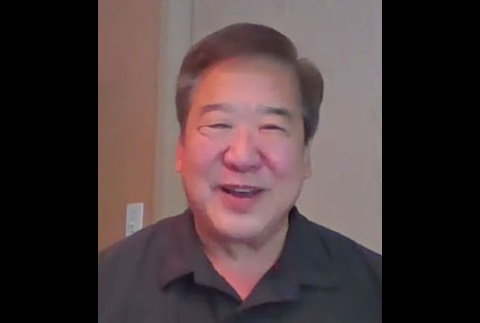
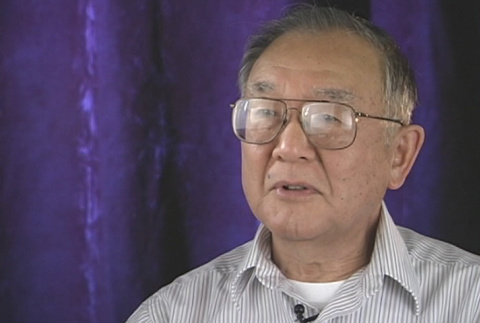
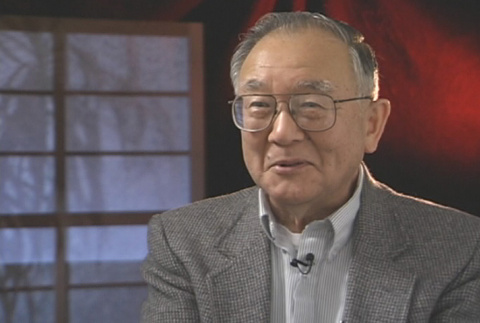
Narrator Bill Tashima
In this interview, Ana Tanaka led a conversation with Bill Tashima. Bill spoke of his growing up in Cleveland, Ohio, his early involvement with JACL as a youth participant, and his coming to the Pacific Northwest in the 1980's. Bill has extensive experience with Seattle JACL's advocacy, community outreach, civil rights and for ensuring the continuation …
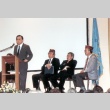
Collection
Yanagihara Collection (ddr-densho-26)
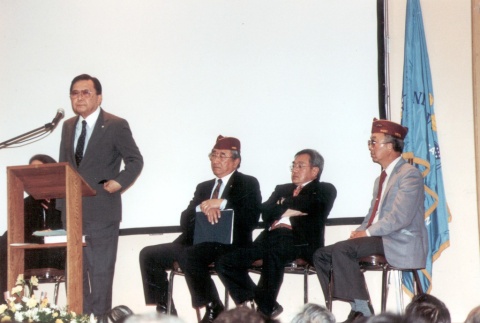
The Yanagihara collection contains materials from the pre-War, War, and post-War years. The pre-War photographs show life for the Yanagihara family. The Wartime photographs show life at Minidoka concentration camp in Hunt Idaho. The post-War photographs include events such as the redress movement and the memorial to Japanese American soldiers at the Nisei Veterans Hall in …
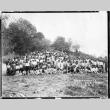
Collection
Tanagi Collection (ddr-densho-136)
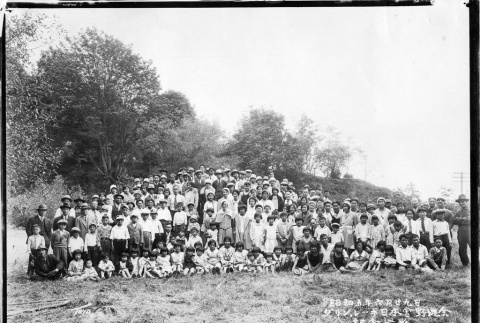
The Tanagi collection, circa 1930s, features the leisure and business activities of the Japanese American community of Green Lake, an area located in North Seattle. Prior to World War II, the Tanagi family leased a farm on what is now a commercial shopping mall. These photos were also used in the book, The Green Lake Japanese …
Collection
Nippon Kan Heritage Association Collection (ddr-densho-353)
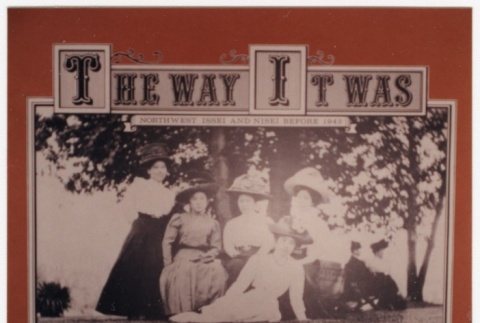
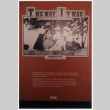
The Nippon Kan Heritage Association (NKHA) was a nonprofit organization founded in Seattle, Washington in the 1980s, after the Nippon Kan theater was restored. NKHA was not directly associated with the theater but did produce content that was put on there. This collection documents an exhibit put on by the NKHA: "The Way It Was: Northwest …
Narrator Fumiko M. Noji
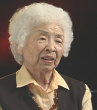
Nisei female. Born October 13, 1909, in Bellingham, Washington. Lost her United States citizenship when she married an Issei through an arranged marriage. Before 1920, her husband's family established Columbia Greenhouse, one of the first Japanese American-owned greenhouse businesses. Incarcerated at Puyallup Assembly Center, Washington, and Tule Lake concentration camp, California. Husband was held by the …
Narrator Angela Berry
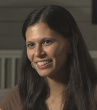
Female of Filipino American descent. Born in 1979 in Seattle, Washington, but grew up on Bainbridge Island, Washington. Granddaughter of Felix Narte, one of the well-known Filipino men on Bainbridge Island who worked for the Japanese American strawberry farmers.
Narrator Lois Shikami
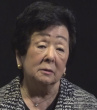
Nisei female. Born August 25, 1931, in Seattle, Washington. During World War II, incarcerated at the Puyallup Assembly Center, Washington, and the Minidoka concentration camp, Idaho. After leaving camp, lived in Wisconsin for several years before eventually moving to Chicago, Illinois.
img
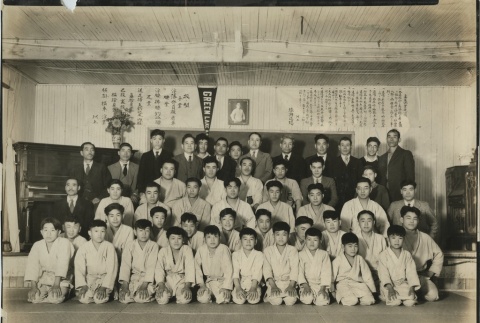
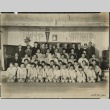
Green Lake Judo Team (ddr-densho-136-38)
Green Lake Dojo was established in 1932. Classes were held twice a week at the Community Hall in North Seattle. The mass removal of Japanese Americans from Seattle forced Green Lake Dojo to close in 1942. Back row (L to R): Sumio Mochizuki, Akira Kumasaka. Fifth row (L to R): Mr. Tanagi, unidentified, Kiyoshi Tada, Mr. …

doc
Inspection card (ddr-densho-493-13)
Surgeon's inspection card for Buichiro Itabashi's journey on the S.S. Shinano from Kobe, Japan, to Seattle, Washington, U.S.A. . Itabashi's name appears misspelled on the card. Front of card reads: "INSPECTION CARD / (Immigrants and Steerage Passengers)." Filled portion of card reads: "Port of departure, Kobe, Japan. Date of departure, JUL 26th 1902 / Name of …
vh
Henry Miyatake Interview IV (ddr-densho-1000-56)
Nisei male. Born April 28, 1929, in Seattle, Washington. Incarcerated at Puyallup Assembly Center and Minidoka concentration camp, Idaho. Had some key childhood experiences with discrimination that made him a self-described, "independent thinker," and later, an influential figure in the Japanese American community. While a teenager in camp, he wrote and defended an essay criticizing the …
vh
Marion Tsutakawa Kanemoto Interview (ddr-densho-1000-148)
Nisei female. Born December 30, 1927, in Seattle, Washington. Lived in Japan for fifteen months as a child, before returning to Seattle to attend junior high school. After the bombing of Pearl Harbor, father was picked up by the FBI and taken to the Department of Justice camp at Missoula, Montana. Removed to the Puyallup Assembly …
vh
Henry Miyatake Interview I (ddr-densho-1000-53)
Nisei male. Born April 28, 1929, in Seattle, Washington. Incarcerated at Puyallup Assembly Center and Minidoka concentration camp, Idaho. Had some key childhood experiences with discrimination that made him a self-described, "independent thinker," and later, an influential figure in the Japanese American community. While a teenager in camp, he wrote and defended an essay criticizing the …
vh
Henry Miyatake Interview V (ddr-densho-1000-57)
Nisei male. Born April 28, 1929, in Seattle, Washington. Incarcerated at Puyallup Assembly Center and Minidoka concentration camp, Idaho. Had some key childhood experiences with discrimination that made him a self-described, "independent thinker," and later, an influential figure in the Japanese American community. While a teenager in camp, he wrote and defended an essay criticizing the …
vh
Henry Miyatake Interview III (ddr-densho-1000-55)
Nisei male. Born April 28, 1929, in Seattle, Washington. Incarcerated at Puyallup Assembly Center and Minidoka concentration camp, Idaho. Had some key childhood experiences with discrimination that made him a self-described, "independent thinker," and later, an influential figure in the Japanese American community. While a teenager in camp, he wrote and defended an essay criticizing the …
vh
Henry Miyatake Interview VI (ddr-densho-1000-58)
Nisei male. Born April 28, 1929, in Seattle, Washington. Incarcerated at Puyallup Assembly Center and Minidoka concentration camp, Idaho. Had some key childhood experiences with discrimination that made him a self-described, "independent thinker," and later, an influential figure in the Japanese American community. While a teenager in camp, he wrote and defended an essay criticizing the …
vh
Marian Asao Kurosu Interview (ddr-densho-1000-118)
Issei female. Born March 10, 1907, in Fukui prefecture, Japan. Graduated from Jinai Girls School. After grandfather's death, came to Seattle, Washington in 1924 to join father and uncle, working in family-run agricultural greenhouse. Arranged marriage to Mr. Roy Naoe Kurosu, an Issei working in Tacoma sawmills. Started new greenhouse in Sunnydale, Washington until all people …
vh
Henry Miyatake Interview II (ddr-densho-1000-54)
Nisei male. Born April 28, 1929, in Seattle, Washington. Incarcerated at Puyallup Assembly Center and Minidoka concentration camp, Idaho. Had some key childhood experiences with discrimination that made him a self-described, "independent thinker," and later, an influential figure in the Japanese American community. While a teenager in camp, he wrote and defended an essay criticizing the …
av
Interview with Gary and Grace Itano, part 2 of 6 (ddr-densho-1007-1806)
Grace discusses working with her husband-to-be before the war, her husband asking for a divorce (knowing that he would be imprisoned for refusing to serve), her husband Henry's reasons for refusing to serve, her husband's family preventing him from going to college, trying and failing to live outside of camp in Arizona, evacuation and closing her …
Narrator Yukiko Miyake
Nisei female. Born July 21, 1910, in Seattle, Washington. Spent prewar childhood in Seattle's Nihonmachi, raised by her maternal grandmother. Married Henry Miyake, an Issei, photographer and owner of Takano Studio. Incarcerated at Puyallup Assembly Center, Washington, and Minidoka concentration camp, Idaho.
doc
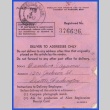
Alien certificate of identification (ddr-densho-23-8)
After the bombing of Pearl Harbor on December 7, 1941, Issei were required to carry identification documents because of their alien status. (Issei were barred from becoming naturalized citizens until 1952.) This document belonged to Bunshiro Tazuma, a permanent resident of Seattle since 1917. The identification certificate was the same size as an American passport and …
doc
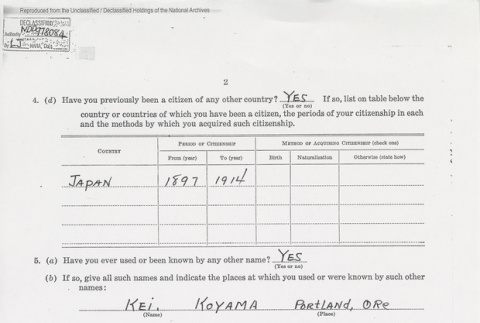
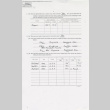
U.S. Department of Justice Alien Enemy Questionnaire page 2 of 26. (ddr-one-5-121)
Photocopy of a declassified questionnaire used to determine if the person named is to be considered an enemy alien. This page covers questions 4 - 6a of 111. Dr. Koyama lists his names as "Kei, Koyama," Ken Koyäma," "Ken Keizaburo Koyama," and "Dr. Kei Koyama." He lists his time in the United States as living in …
doc
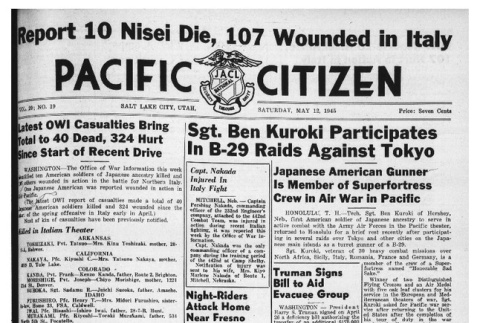
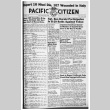
The Pacific Citizen, Vol. 20 No. 19 (May 12, 1945) (ddr-pc-17-19)
Selected article titles: "Sgt. Ben Kuroki Participates In B-29 Raids Against Tokyo" (p. 1), "Truman Signs Bill to Aid Evacuee Group" (p. 1), "Seek to Repeal California Code Permitting Segregated Schools" (p. 1), "Neighbors Express Regret Over Vandalism Which Defaced Home Of Returned Nisei in Seattle" (p. 3), "New Statewide Anti-Evacuee Group Asks Confiscation of Property …