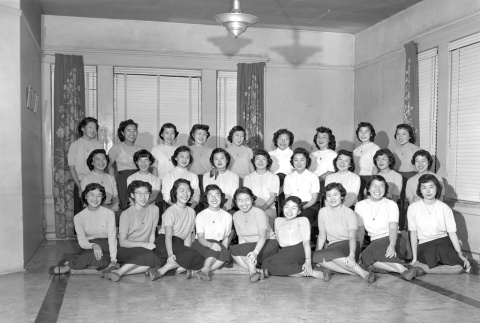
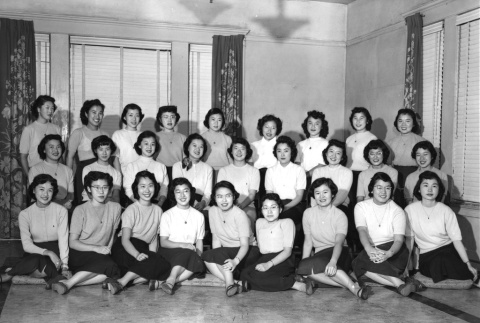
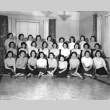
Black and white photographic negative of the Sorelles, a high school social group. Back Row (left to right): Elsie Okazaki, Anges (Inouye) Kitayama, Atsuko "Alice" Kida, Atsuko “Alice” (Matsumoto) Ando, Nami (Miura) Koida, Kimi Wakabayashi, Grace Mieko (Muramatsu) Ouchida, Masae “Elsie” (Morita) Onishi, and Betty Nakashimada. Middle Row (left to right): Rose Haruye (Muramatsu) Ouchida, Kathleen …
Original black and white photographic print of the Sorelles, a high school social group. Back Row (left to right): Elsie Okazaki, Agnes (Inouye) Kitayama, Atsuko “Alice” Kida, Atsuko “Alice” (Matsumoto) Ando, Nami (Miura) Koida, Kimi Wakabayashi, Grace Mieko (Muramatsu) Ouchida, Masae “Elsie” (Morita) Onishi, and Betty Nakashimada. Middle Row (left to right): Rose Haruye (Muramatsu) Ouchida, …
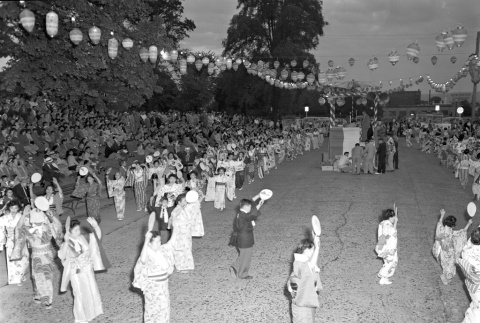
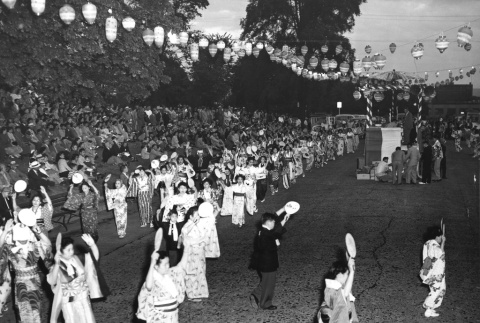
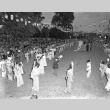
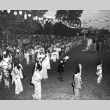
Black and white photographic negative of Obon dancers in large circle around podium holding "uchiwa" (fan) above their heads. Large crowd watches on from left side of image. Outer circle of Obon dancers from right to left, starting left of podium: Tomi Tsujimura, Shizuko Oda, unidentified woman, Phyllis Midori (Ando) Muramatsu, all remaining unidentified. Inner circle …
Black and white photographic print of large group dancing Odori (a traditional folk dance) with "uchiwa" (fans) during Obon Festival in front a large seated crowed outside. Outer circle of Obon dancers from right to left, starting left of podium: Tomi Tsujimura, Shizuko Oda, unidentified woman, Phyllis Midori (Ando) Muramatsu, all remaining unidentified. Inner circle of …
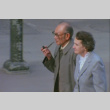
Caucasian male. Born December 1, 1927, in New York City, New York. Charles Phelps Taft Professor Emeritus of History, University of Cincinnati. Served as a consultant to the Commission on Wartime Relocation and Internment of Civilians from 1981 to 1983. Has researched and written numerous books about the Japanese American experience, including Prisoners Without Trial: Japanese …
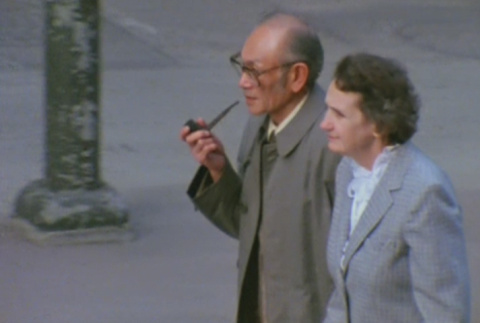
This interview centers on the experiences of Fred Korematsu, a Nisei who challenged the constitutionality of Executive Order 9066, which authorized the mass removal of Japanese Americans during World War II. Mr. Korematsu lost his initial legal case in 1944, but in the early 1980s, his case was reopened after the discovery of a crucial document …
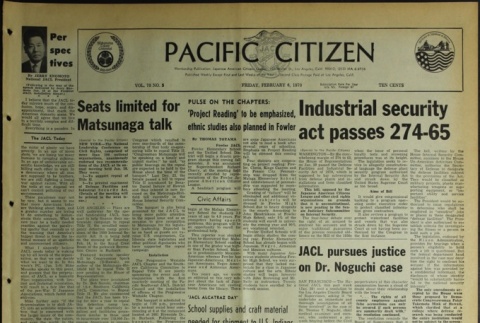
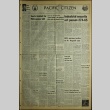
Selected article titles: "Seats limited for Matsunaga talk" (p. 1), "'Project Reading' to be emphasized, ethnic studies also planned in Fowler" (p. 1), "School supplies and craft material needed for shipment to U.S. Indians" (p. 1), "Industrial security act passes 274-65" (p. 1), "JACL pursues justice on Dr. Noguchi case" (p. 1), "Parents held responsible for …
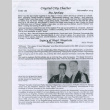
Issue 8 includes an article about German-American internees, a letter from Professor Michael Hoshiko, discussion of a PBS program about Estelle Ishigo, and more.
Gus J. Solomon, U.S. federal district judge from Portland, Oregon, was involved in Min Yasui's case on behalf of the American Civil Liberties Union. In 1942, Min Yasui deliberately defied the curfew imposed upon Japanese Americans in Portland, Oregon, and was arrested. His case was tried, and he was sentenced to one year in prison and …
Issue 72 includes mention of the death of Bert Nakano, humorous articles, a book review for Tetsuden Kashima's book "Judgment Without Trial," and more.
Issue 14 includes inviting Peruvian Japanese detainees for future gatherings, collecting materials for a museum and reunion, health updates for members, and more.
Nisei male. Born October 19, 1916, in Hood River, Oregon. Earned a law degree from the University of Oregon law school and was practicing law prior to World War II. In 1942, deliberately defied the curfew imposed upon Japanese Americans in Portland, Oregon, and was arrested. His case was tried, and he was sentenced to one …
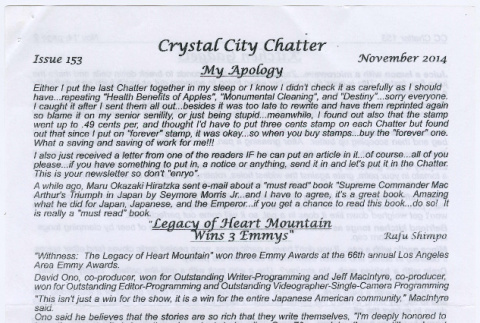
Issue 153 includes an article about "Legacy of Heart Mountain" winning three Emmys, cooking advice, a book review for "The Train to Crystal City," and more.