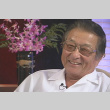
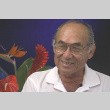
Rewards and difficulties involved in running a Japantown business
This interview was conducted by the Japanese American Museum of San Jose, and is part of a project entitled "Lasting Stories: The Resettlement of San Jose Japantown," a collaborative project between the Japanese American Museum of San Jose and Densho.
This interview was conducted at the 1998 Americans of Japanese Ancestry Veterans National Convention, held in Honolulu, Hawaii. Given the full conference schedule, interviews conducted at the reunion were shorter in length than typical Densho interviews. Beverly Kashino, one of the interviewers, is Shiro and Louise Kashino's daughter.
This interview was conducted at the 1998 Americans of Japanese Ancestry Veterans National Convention, held in Honolulu, Hawaii. Given the full conference schedule, interviews conducted at the reunion were shorter in length than typical Densho interviews. Beverly Kashino, one of the interviewers, is Shiro and Louise Kashino's daughter.
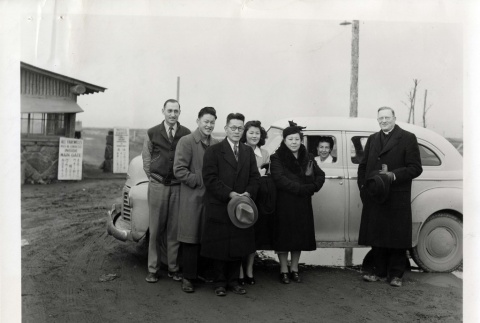
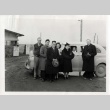
Rev. L. H. Tibesar, Maryknoll and pastor of Our Lady Queen of Martyrs, Seattle posed at Minidoka Concentration Camp near Hunt, Idaho. (L to R) Y. M. McLaughlin, Charles Kinoshita, Fred Kinoshita, Mary Kinoshita, Akino Kinoshita, Jean Alexander, Rev. L. H. Tibesar.
This content is copyright restricted. Densho and its partners have received permission from the …
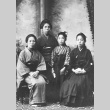
The B. Shibayama collection consists of photographs from the personal family collection of Betty Morita Shibayama, who was interviewed by Densho in 2003. The photographs document Betty's life in prewar Hood River, Oregon, her experiences in Minidoka concentration camp, Idaho, and her involvement in the fight for redress for Japanese Latin Americans.
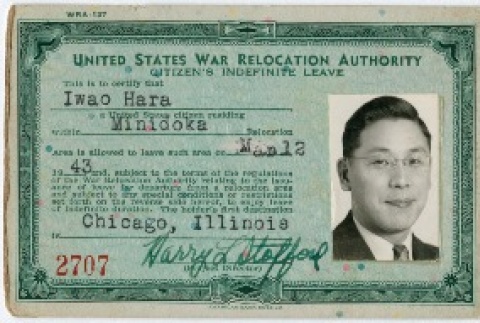
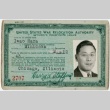
The Mae Hara Collection is comprised of photographs and documents from the personal family collection of Mae Hara, a Japanese American who was interview by Densho in 2004. The photos depict Mae's prewar life in Seattle, Washington. The documents concern her family's Oyster business pre-war, relocation to Minidoka, and post war life.
The Grant Hirabayashi Collection features five photographs and documents from the personal collection of Grant Hirabayshi, who was interviewed by Densho in 2006. The collection focuses on Mr. Hirabayashi's work as one of the famed Merrill's Marauders during World War II and as an interpreter and translator during the U.S. occupation of Japan.
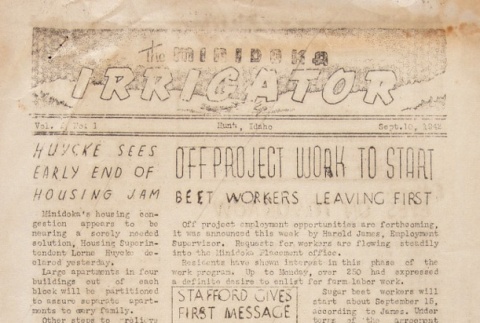
This collection consists of selected issues of the Minidoka Irrigator, a newspaper published by the inmates at the Minidoka concentration camp, Idaho. The paper was published from 1942 until 1945. Many of the issues are originals, and were donated to Densho by Cherry Kinoshita, who was on the staff of the Irrigator.
The Matsumoto collection consists of photographs from the personal family collection of Ranger Roy H. Matsumoto, who was interviewed by Densho in 2003. Mr. Matsumoto was one of the famed Merrill's Marauders, and the photographs depict aspects of his life from his childhood in California through his induction into the Ranger Hall of Fame.
This interview was conducted at the 1998 Americans of Japanese Ancestry Veterans National Convention, held in Honolulu, Hawaii. Because of the full conference schedule, interviews conducted at the reunion were generally shorter in length than the typical Densho interview and tend to concentrate on the individual's military service during World War II.
This interview was conducted at the 1998 Americans of Japanese Ancestry Veterans National Convention, held in Honolulu, Hawaii. Given the full conference schedule, interviews conducted at the reunion were shorter in length than typical Densho interviews and concentrated on a single topic, namely, the individual's military service during World War II.
This interview was conducted at the 1998 Americans of Japanese Ancestry Veterans National Convention, held in Honolulu, Hawaii. Because of the full conference schedule, interviews conducted at the reunion were generally shorter in length than the typical Densho interview. Kari Hiraoka, one of the interviewers, is Shiro and Louise Kashino's daughter.
Present-day walk-through of site of family business, the Mandarin Restaurant
This interview was conducted by the Japanese American Museum of San Jose, and is part of a project entitled "Lasting Stories: The Resettlement of San Jose Japantown," a collaborative project between the Japanese American Museum of San Jose and Densho.
Opening a Chinese restaurant in San Jose, California, after World War II
This interview was conducted by the Japanese American Museum of San Jose, and is part of a project entitled "Lasting Stories: The Resettlement of San Jose Japantown," a collaborative project between the Japanese American Museum of San Jose and Densho.
A difficult childhood: living alone in San Francisco with an unfit guardian
This interview was conducted by the Japanese American Museum of San Jose, and is part of a project entitled "Lasting Stories: The Resettlement of San Jose Japantown," a collaborative project between the Japanese American Museum of San Jose and Densho.
Family background: parents' immigration from Japan, leasing a ranch in California
This interview was conducted by the Japanese American Museum of San Jose, and is part of a project entitled "Lasting Stories: The Resettlement of San Jose Japantown," a collaborative project between the Japanese American Museum of San Jose and Densho.
Moving to Stockton, California, in an attempt to avoid mass removal
This interview was conducted by the Japanese American Museum of San Jose, and is part of a project entitled "Lasting Stories: The Resettlement of San Jose Japantown," a collaborative project between the Japanese American Museum of San Jose and Densho.
This interview was conducted at the 1998 Tule Lake Pilgrimage held at Klamath Falls, Oregon and at the site of Tule Lake incarceration camp in California. Given the limited time available during this event, the length and breadth of this interview are shorter than other Densho interviews.
This interview was conducted at the 1998 Americans of Japanese Ancestry Veterans National Convention, held in Honolulu, Hawaii. Given the full conference schedule, interviews conducted at the reunion were shorter in length than typical Densho interviews. Beverly Kashino, one of the interviewers, is Shiro and Louise Kashino's daughter.
This interview was conducted at the 1998 Americans of Japanese Ancestry Veterans National Convention, held in Honolulu, Hawaii. Given the full conference schedule, interviews conducted at the reunion were shorter in length than typical Densho interviews. Beverly Kashino, one of the interviewers, is Shiro and Louise Kashino's daughter.
This interview was conducted at the 1998 Americans of Japanese Ancestry Veterans National Convention, held in Honolulu, Hawaii. Given the full conference schedule, interviews conducted at the reunion were shorter in length than typical Densho interviews. Beverly Kashino, one of the interviewers, is Shiro and Louise Kashino's daughter.
This interview was conducted at the 1998 Americans of Japanese Ancestry Veterans National Convention, held in Honolulu, Hawaii. Given the full conference schedule, interviews conducted at the reunion were shorter in length than typical Densho interviews. Beverly Kashino, one of the interviewers, is Shiro and Louise Kashino's daughter.
This interview was conducted at the 1998 Americans of Japanese Ancestry Veterans National Convention, held in Honolulu, Hawaii. Given the full conference schedule, interviews conducted at the reunion were shorter in length than typical Densho interviews. Beverly Kashino, one of the interviewers, is Shiro and Louise Kashino's daughter.
This interview was conducted at the 1998 Americans of Japanese Ancestry Veterans National Convention, held in Honolulu, Hawaii. Given the full conference schedule, interviews conducted at the reunion were shorter in length than typical Densho interviews. Beverly Kashino, one of the interviewers, is Shiro and Louise Kashino's daughter.
This interview was conducted at the 1998 Americans of Japanese Ancestry Veterans National Convention, held in Honolulu, Hawaii. Given the full conference schedule, interviews conducted at the reunion were shorter in length than typical Densho interviews. Beverly Kashino, one of the interviewers, is Shiro and Louise Kashino's daughter.