

Topics
Facilities
Format
Genre
Usage

Use <Ctrl> or (⌘) keys to select multiple terms

155 items
Roger Daniels Interview Segment 11 (ddr-densho-1012-17-11)
vh Roger Daniels Interview Segment 11 (ddr-densho-1012-17-11)
The role of the War Relocation Authority in dispersing Japanese Americans after camp (audio only)

This interview is audio-only. It contains raw footage used by Steven Okazaki in his 1985 film Unfinished Business.

This material is based upon work assisted by a grant from the Department of the Interior, National Park Service. Any opinions, finding, …

Roger Daniels Interview Segment 8 (ddr-densho-1012-17-8)
vh Roger Daniels Interview Segment 8 (ddr-densho-1012-17-8)
Terminology for the different types of wartime camps (audio only)

This interview is audio-only. It contains raw footage used by Steven Okazaki in his 1985 film Unfinished Business.

This material is based upon work assisted by a grant from the Department of the Interior, National Park Service. Any opinions, finding, and conclusions or recommendations expressed …

Roger Daniels Interview Segment 6 (ddr-densho-1012-17-6)
vh Roger Daniels Interview Segment 6 (ddr-densho-1012-17-6)
Japanese American community response to the Japanese American Citizens League (audio only)

This interview is audio-only. It contains raw footage used by Steven Okazaki in his 1985 film Unfinished Business.

This material is based upon work assisted by a grant from the Department of the Interior, National Park Service. Any opinions, finding, and conclusions or …

Roger Daniels Interview Segment 18 (ddr-densho-1012-17-18)
vh Roger Daniels Interview Segment 18 (ddr-densho-1012-17-18)
Thoughts on whether the World War II incarceration can happen again (audio only)

This interview is audio-only. It contains raw footage used by Steven Okazaki in his 1985 film Unfinished Business.

This material is based upon work assisted by a grant from the Department of the Interior, National Park Service. Any opinions, finding, and conclusions …

Roger Daniels Interview Segment 7 (ddr-densho-1012-17-7)
vh Roger Daniels Interview Segment 7 (ddr-densho-1012-17-7)
Description of dissent at the Manzanar concentration camp (audio only)

This interview is audio-only. It contains raw footage used by Steven Okazaki in his 1985 film Unfinished Business.

This material is based upon work assisted by a grant from the Department of the Interior, National Park Service. Any opinions, finding, and conclusions or recommendations expressed …

Roger Daniels Interview Segment 5 (ddr-densho-1012-17-5)
vh Roger Daniels Interview Segment 5 (ddr-densho-1012-17-5)
FBI arrests and the effect on the Japanese American community (audio only)

This interview is audio-only. It contains raw footage used by Steven Okazaki in his 1985 film Unfinished Business.

This material is based upon work assisted by a grant from the Department of the Interior, National Park Service. Any opinions, finding, and conclusions or …

Roger Daniels Interview Segment 17 (ddr-densho-1012-17-17)
vh Roger Daniels Interview Segment 17 (ddr-densho-1012-17-17)
The impact of the coram nobis cases (audio only)

This interview is audio-only. It contains raw footage used by Steven Okazaki in his 1985 film Unfinished Business.

This material is based upon work assisted by a grant from the Department of the Interior, National Park Service. Any opinions, finding, and conclusions or recommendations expressed in …

Roger Daniels Interview Segment 12 (ddr-densho-1012-17-12)
vh Roger Daniels Interview Segment 12 (ddr-densho-1012-17-12)
Reasons for different wartime treatment of German and Italian Americans (audio only)

This interview is audio-only. It contains raw footage used by Steven Okazaki in his 1985 film Unfinished Business.

This material is based upon work assisted by a grant from the Department of the Interior, National Park Service. Any opinions, finding, and conclusions or …

Roger Daniels Interview Segment 3 (ddr-densho-1012-17-3)
vh Roger Daniels Interview Segment 3 (ddr-densho-1012-17-3)
Rumors and the Japanese American community before and after the bombing of Pearl Harbor (audio only)

This interview is audio-only. It contains raw footage used by Steven Okazaki in his 1985 film Unfinished Business.

This material is based upon work assisted by a grant from the Department of the Interior, National Park Service. Any opinions, …

Roger Daniels Interview Segment 1 (ddr-densho-1012-17-1)
vh Roger Daniels Interview Segment 1 (ddr-densho-1012-17-1)
Description of the "yellow peril" (audio only)

This interview is audio-only. It contains raw footage used by Steven Okazaki in his 1985 film Unfinished Business.

This material is based upon work assisted by a grant from the Department of the Interior, National Park Service. Any opinions, finding, and conclusions or recommendations expressed in this material …

Roger Daniels Interview Segment 10 (ddr-densho-1012-17-10)
vh Roger Daniels Interview Segment 10 (ddr-densho-1012-17-10)
The Japanese American Citizens League's leaders' response to Hirabayashi, Yasui and Korematsu (audio only)

This interview is audio-only. It contains raw footage used by Steven Okazaki in his 1985 film Unfinished Business.

This material is based upon work assisted by a grant from the Department of the Interior, National Park Service. Any opinions, finding, and …
American Concentration Camps VOLUME 9 June, 1942- November, 1945 (ddr-densho-372-9)
doc American Concentration Camps VOLUME 9 June, 1942- November, 1945 (ddr-densho-372-9)
Description about this volume reads directly from the book as follows: Volume 9 contains archival documents from June 1942 to November 1945 which show how some within the military and government establishments were considering the use of Japanese American manpower and special skills. The use of this manpower, as De Witt and his key subordinates correctly …
American Concentration Camps VOLUME 3 February 20, 1942- March 31, 1942 (ddr-densho-372-3)
doc American Concentration Camps VOLUME 3 February 20, 1942- March 31, 1942 (ddr-densho-372-3)
Volume 3 divides into 4 sections. Description about this volume reads directly from the book as follows: Section 1 contains archival documents from February 20, 1942 to March 19, 1942 regarding the basic decision of how to remove more than 100,000 human beings which was delegated to General De Witt and his staff. Section 2 contains …
American Concentration Camps VOLUME 7 1943 (ddr-densho-372-7)
doc American Concentration Camps VOLUME 7 1943 (ddr-densho-372-7)
Volume 7 divides into three sections. Description about this volume reads directly from the book as follows: The first section containing archival documents from 1943 depict the continuing resistance of General De Witt and his subordinates to the "liberalization" of policies toward Japanese Americans. This section also contains the White House response to the congressional criticism …

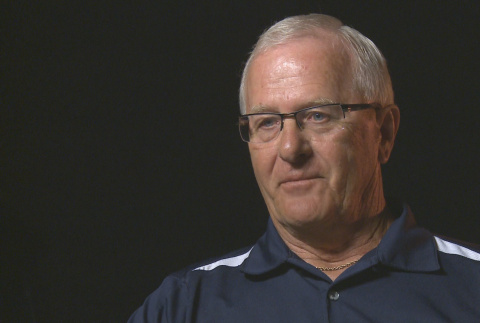
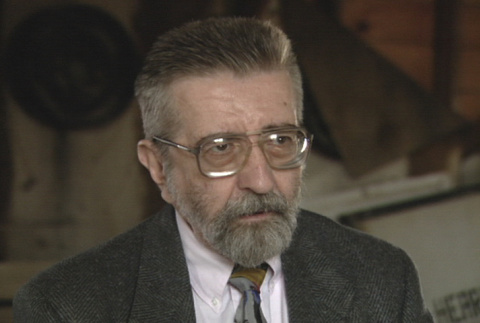
Narrator Roger Daniels

White male. Born December 1, 1927, in New York City, New York. Charles Phelps Taft Professor Emeritus of History, University of Cincinnati. Served as a consultant to the Commission on Wartime Relocation and Internment of Civilians from 1981 to 1983. Has researched and written numerous books about the Japanese American experience, including Prisoners Without Trial: Japanese …
Roger Daniels interviewed by Kent Hori, part 4 of 4; interview with John Kaneko, part 1 of 3 (ddr-densho-1007-1759)
av Roger Daniels interviewed by Kent Hori, part 4 of 4; interview with John Kaneko, part 1 of 3 (ddr-densho-1007-1759)
Daniels discusses the early successes of the Japanese army, the political justifications for relocation, why German and Italian Americans were not vilified in the same way, and the lack of support for Japanese Americans politically, culturally, and legally. Includes audio from reaction shots of Daniels and Hori, as well as recordings of Hori asking standalone questions. …
American Concentration Camps Volumes 1-9 Collection (ddr-densho-372)
Collection American Concentration Camps Volumes 1-9 Collection (ddr-densho-372)
The documents printed here in these nine volumes trace and explicate not only the decision to submit a whole people to internal exile but also delineate the execution and modification of the policy during the course of the war. The documents were drawn largely from the archives of the government department chiefly responsible, the War department, …
Orest Kruhlak Interview (ddr-densho-1000-296)
vh Orest Kruhlak Interview (ddr-densho-1000-296)
Male of Ukrainian descent. Born October 15, 1940, in Edmonton, Alberta, Canada. Attended Western Washington University in Bellingham, Washington, and then earned a PhD at the University of Alberta. Worked to establish a research program in the Office of the Commissioner to examine issues of official languages in Canada. In 1986, appointed as Assistant Under-Secretary of …
Roger Daniels Interview Segment 6 (ddr-densho-122-25-6)
vh Roger Daniels Interview Segment 6 (ddr-densho-122-25-6)
The role of the American Civil Liberties Union in the resistance movement

This interview was conducted by filmmaker Frank Abe for his 2000 documentary, Conscience and the Constitution, about the World War II resisters of conscience at the Heart Mountain incarceration camp. As a result, the interviews in this collection are typically not life histories, …

Roger Daniels Interview Segment 2 (ddr-densho-122-25-2)
vh Roger Daniels Interview Segment 2 (ddr-densho-122-25-2)
Background of the resistance movement and the response of the JACL and the ACLU to their stand

This interview was conducted by filmmaker Frank Abe for his 2000 documentary, Conscience and the Constitution, about the World War II resisters of conscience at the Heart Mountain incarceration camp. As a result, the interviews in this collection …

Roger Daniels Interview Segment 1 (ddr-densho-122-25-1)
vh Roger Daniels Interview Segment 1 (ddr-densho-122-25-1)
The Japanese American Citizens League's response to those who protested the mass removal

This interview was conducted by filmmaker Frank Abe for his 2000 documentary, Conscience and the Constitution, about the World War II resisters of conscience at the Heart Mountain incarceration camp. As a result, the interviews in this collection are typically not life …

Roger Daniels Interview Segment 4 (ddr-densho-122-25-4)
vh Roger Daniels Interview Segment 4 (ddr-densho-122-25-4)
Finding out about the draft resistance through research and personal interviews; encountering hesitation in talking about the issues

This interview was conducted by filmmaker Frank Abe for his 2000 documentary, Conscience and the Constitution, about the World War II resisters of conscience at the Heart Mountain incarceration camp. As a result, the interviews in this …

Roger Daniels Interview Segment 5 (ddr-densho-122-25-5)
vh Roger Daniels Interview Segment 5 (ddr-densho-122-25-5)
Discussion of the leave clearance questionnaire: "it was stupid and counterproductive"

This interview was conducted by filmmaker Frank Abe for his 2000 documentary, Conscience and the Constitution, about the World War II resisters of conscience at the Heart Mountain incarceration camp. As a result, the interviews in this collection are typically not life histories, instead …

Roger Daniels Interview Segment 7 (ddr-densho-122-25-7)
vh Roger Daniels Interview Segment 7 (ddr-densho-122-25-7)
Discussion of the JACL and the issue of loyalty

This interview was conducted by filmmaker Frank Abe for his 2000 documentary, Conscience and the Constitution, about the World War II resisters of conscience at the Heart Mountain incarceration camp. As a result, the interviews in this collection are typically not life histories, instead primarily focusing …

Roger Daniels Interview Segment 3 (ddr-densho-122-25-3)
vh Roger Daniels Interview Segment 3 (ddr-densho-122-25-3)
The ramifications of the resistance movement on later American history

This interview was conducted by filmmaker Frank Abe for his 2000 documentary, Conscience and the Constitution, about the World War II resisters of conscience at the Heart Mountain incarceration camp. As a result, the interviews in this collection are typically not life histories, instead primarily …

API