
Work and jobs
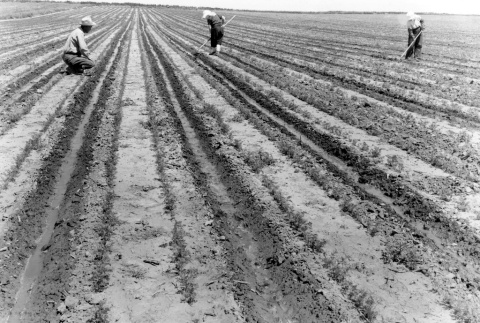
Both Issei and Nisei took jobs within the camps, at wages set not to exceed soldiers' pay: $12 per month for unskilled labor, $16 for skilled labor, and $19 for professional employees. WRA staff was paid much more for the same jobs. Though public opinion mandated such low pay, dissatisfied Japanese Americans objected to losing their right to make a decent living. They had to use their sparse income for necessities, such as warm clothing and shoes.
World War II
(283)
Concentration camps
(2384)
Work and jobs
(1550)
Related articles from the
Densho Encyclopedia :
Amache Silk Screen Shop
1550 items




1550 items
doc
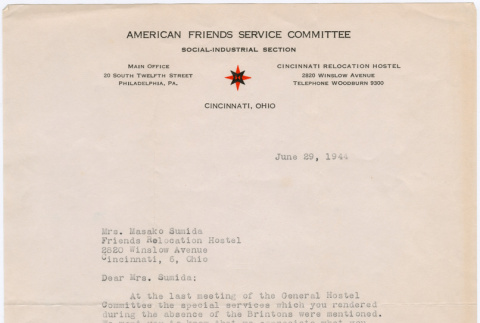
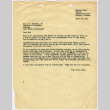
Letter from M. S. Schneider to Masako Sumida (ddr-densho-379-46)
Thank you letter for the special services at the American Friends Hostel while the Brittons were away.
doc
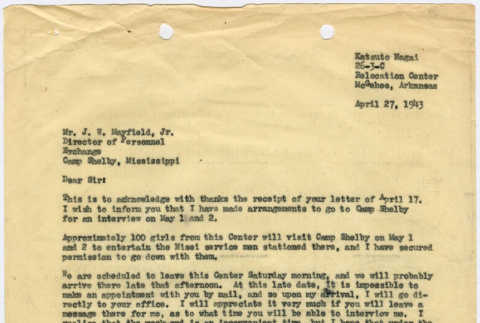
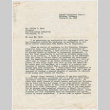
Letter from Kats Nagai to J. W. Mayfield, Jr. (ddr-densho-379-340)
Letter requests Mr. Mayfield granting a job interview while Mr. Nagai is accompanying a group of girls from his camp to visit Camp Shelby.
doc
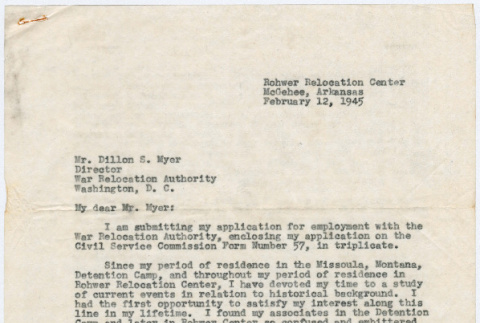
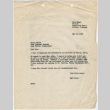
Letter from Chimata Sumida to Dillion S. Myer (ddr-densho-379-224)
Cover letter for his government employment application requesting consideration for a position with the War Relocation Authority. He stated "I would like to serve as a liaison worker between the evacuees in and out of the Centers, and the field offices of the War Relocation Authority..."
doc
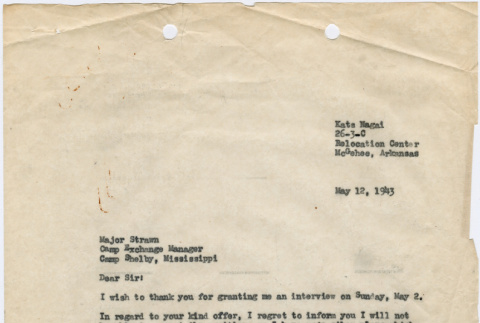
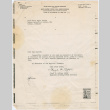
Letter from Kats Nagai to Major Strawn (ddr-densho-379-339)
Thank you and regret letter for granting interview for a position at Camp Shelby, Mississippi. Mr. Nagai referred the opening to Mr. Mouton, Center Employment officer, and to other interested individuals.
doc
Interview transcript of Grace Rayko Sumida (ddr-densho-379-392)
Report of Interview of Grace Rayko Sumida before the U.S. Civil Service Commission regarding alleged activities favorable to Japan.
doc
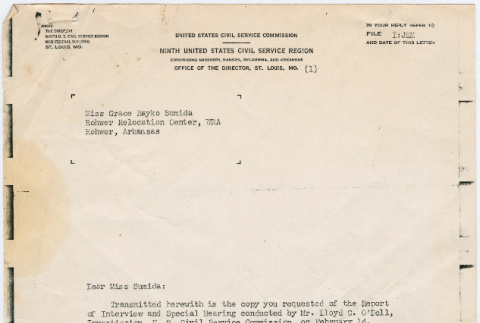
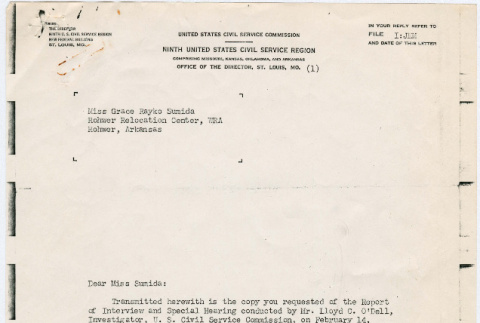
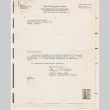
Interview of Grace Rayko Sumida before the U.S. Civil Service Commission (ddr-densho-379-54)
Interview and Special Hearing conducted by Lloyd C. Odell, Investigator of the U.S. Civil Service Commission about alleged activities of Grace Rayko Sumida.
img
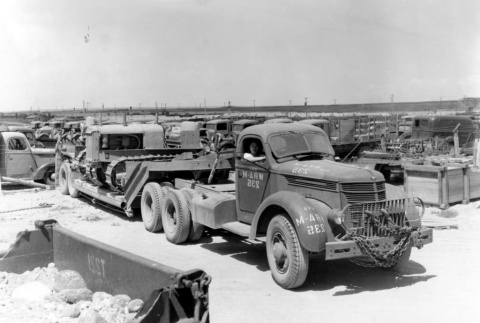
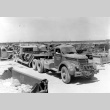
Japanese American in a camp truck (ddr-densho-2-43)
Peggie Yorita sits in a truck used at the Minidoka concentration camp. Peggie Bain believes that the trucks and farming equipment shown in this photo were being readied for sale since the camp was about to close.
doc
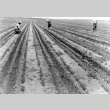
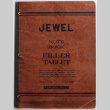
Takeharu Inouye Diary (ddr-densho-365-1)
Takeharu Inouye's first diary documents his family's forced move to the Sacramento Assembly Center, followed by their move to the Tule Lake concentration camp. Since his mother, Miyoe Inouye, was a teacher, thirteen-year-old Takeharu's diary focuses on his classes in the Japanese and American schools at Tule Lake. His struggles with his schoolwork, as well as …
img
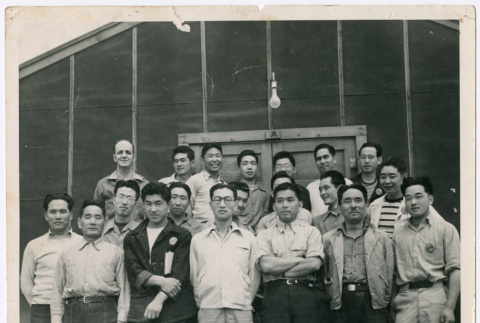
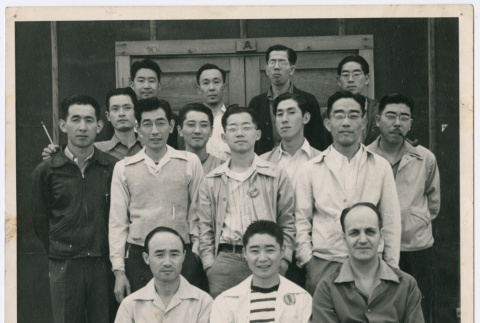
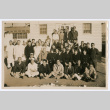
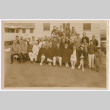
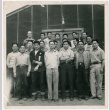
Tule Lake Housing Warehouse Crew (ddr-densho-517-2)
Group photo of 20 men. Written on back: "Tule Lake 1943 / Housing Warehouse Crew" in black ink. Written on back: "Roy 3rd from left in dark shirt" in pencil.
img
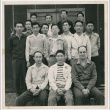
Tule Lake Housing Warehouse Crew (ddr-densho-517-1)
Group photo of 15 men. Written on back: "Tule Lake / 1943?" in pencil.
img
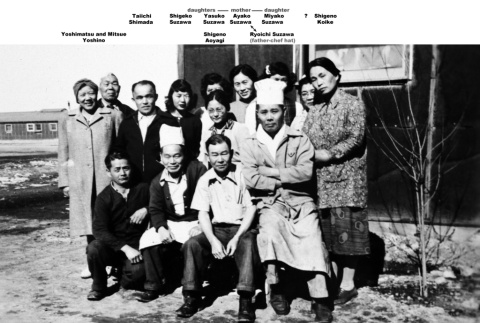
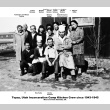
Group posing for photo outside barracks (ddr-ajah-6-144)
Caption below photo: Topaz, Utah Incarceration Camp Kitchen Crew circa 1943-1945 Most are from Alameda, CA. Individuals identified.

doc
Forum on Japanese Americans in the Victory Program (ddr-densho-423-135)
Argues for use of Japanese American workers in war industry work, that they are loyal as demonstrated by their willingness to be relocated. Sponsored by the Japanese American Committee for Democracy

doc
What About Our Japanese-Americans? (ddr-densho-493-36)
31-page pamphlet authored by Carey McWilliams for the American Council of the Institute of Pacific Relations, published by the Public Affairs Committee, Inc. as part of a Public Affairs Pamphlets series. Inner note says that the text was also to be published shortly by Little, Brown and Company under the title of Prejudice. The Japanese-Americans: a …

doc
Notice to Report to Work on Project (ddr-densho-493-17)
Notice addressed to Tomio Itabashi calling him to work in the role of "Foreman, Grade B" at the C 1 Mess Hall at 2:30pm on the day the notice was issued. Sex marked "M" race marked "J". Signatures illegible.

img
Five men and one women standing by truck (ddr-densho-493-61)
Caption on page: Amache 1944 Refrigeration Gang Nish
img
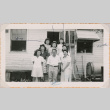
Group of men and women outside building (ddr-densho-493-54)
Caption on page next to photo: Warehouse gang. Some individuals identified

img
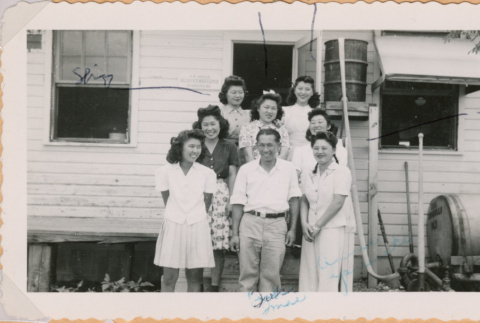
Group of five women and a man on steps of Farm Division Building (ddr-densho-493-68)
Caption below photo: Property Warehouse Gang Oct. 1944 Frances (Itabashi) Nishimura poses with her friends.

doc
Shizuo Nishimura's WRA employee driver's license (ddr-densho-493-28)
Card signed by Shizuo, with text "FORM WRA-22 / Employee Driver’s License / 17504 / WAR RELOCATION AUTHORITY / This license, when officially signed and dated, authorizes Shizuo Nishimura [signed] an employee of the War Relocation Authority, when his/her signature appears in the left-hand margin, to operate Government-owned motor vehicles on official business only. This license …

doc
Information concerning Tule Lake Center (ddr-densho-485-1)
A pamphlet belonging to Frank D. Fagan of the Tule Lake Personnel Office. The pamphlet provides information for Tule Lake employees regarding the area, dormitory fees and amenities, recreational activities, schools, and more.

img
Mrs. Okamoto at 40 canteen (ddr-densho-518-98)
Written next to photograph in scrapbook: 40 Canteen, Mrs. Okamoto.

