
Food
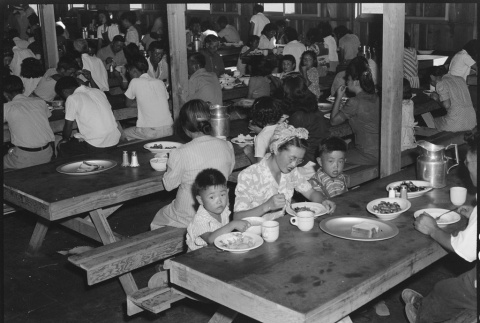
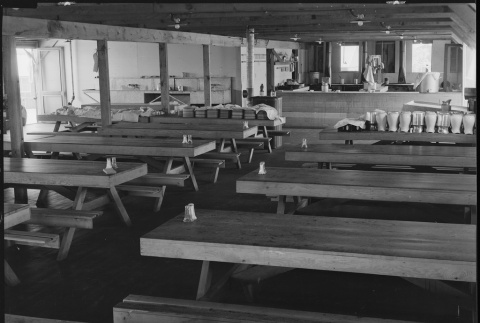
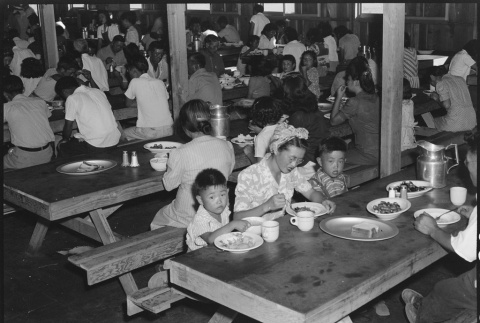
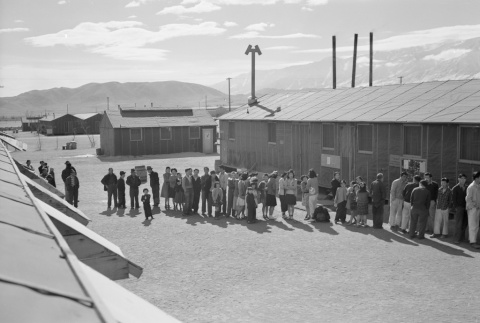
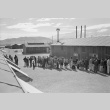
The eating facilities in the camps were large mess halls with long lines and crowded tables. Group living tended to erode family solidarity, as teenagers escaped parental authority by eating with friends rather than family. The quality of the food was poor and milk and fresh meat were constantly in short supply. Inexpensive foods such as wieners, dried fish, pancakes, macaroni and pickled vegetables were served often. The diets of the camp inmates improved only after they began growing some of their own food.
World War II
(283)
Concentration camps
(2384)
Food
(283)
283 items


283 items
doc
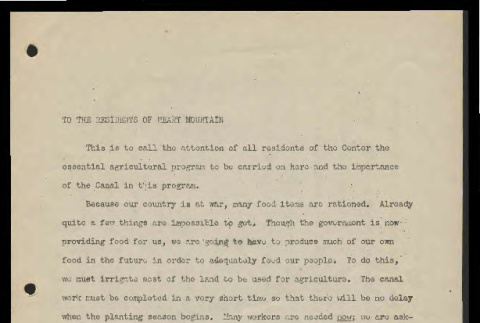
Notice from Harry Tateishi, Foreman, Canal Project, to the residents of Heart Mountain, 1943 (ddr-csujad-55-670)
Notice from Harry Tateishi, foreman on Canal Project, to incarcerees at the Heart Mountain incarceration camp regarding a forthcoming agricultural program and irrigation project. See this object in the California State Universities Japanese American Digitization project site: sac_jaac_0672
doc
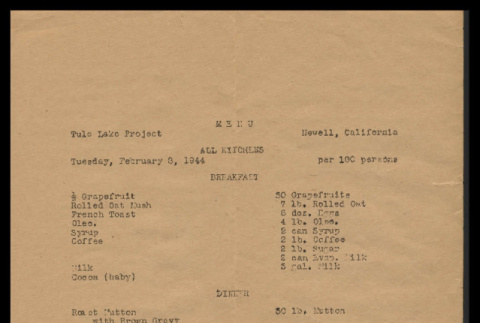
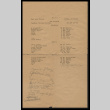
Menu (ddr-csujad-55-1904)
Menu for breakfast, dinner, and supper at the Tule Lake incarceration camp. See this object in the California State Universities Japanese American Digitization project site: sac_jaac_1907
img
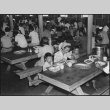
Japanese Americans eating in mess hall (ddr-densho-151-66)
Original WRA caption: Manzanar Relocation Center, Manzanar, California. Mealtime in one of the messhalls at this War Relocation Authority center for evacuees of Japanese ancestry.
img
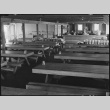
Mess hall (ddr-densho-151-433)
Original caption: Manzanar Relocation Center, Manzanar, California. Messhall #16 at this War Relocation Authority center for evacuees of Japanese ancestry. An evacuee of 290 persons are fed three meals a day in each messhall, and all work is done by the evacuees themselves.
img
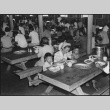
Mealtime in mess hall (ddr-densho-151-432)
Original caption: Manzanar Relocation Center, Manzanar, California. Mealtime in one of the messhalls at this War Relocation Authority center for evacuees of Japanese ancestry.
img
Japanese Americans lining up for mess hall (ddr-densho-93-21)
Original Ansel Adams caption: Mess line, noon, Manzanar Relocation Center, California / photograph by Ansel Adams.
img
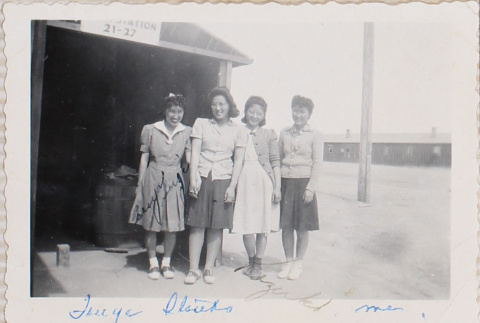
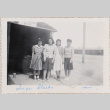
Four woman standing outside building with sign, Station 21-27 (ddr-densho-464-22)
Names inscribed on front: (l to r) Itsuko, Tsuye, Kazuko, me.
doc
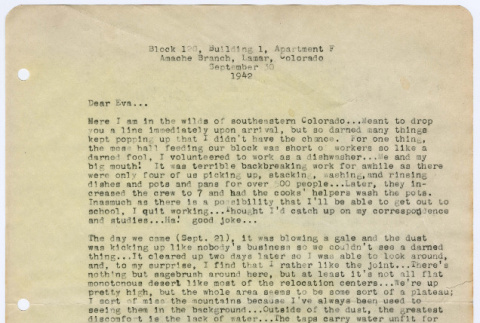
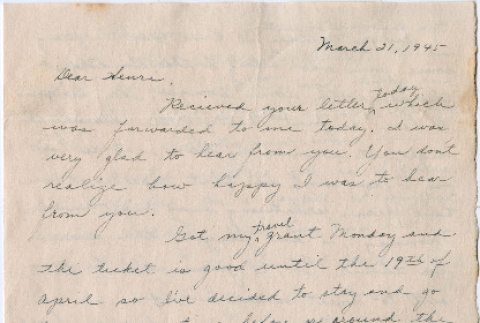
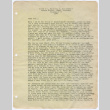
Letter from Joseph Ishikawa to Eva (ddr-densho-468-99)
Letter written from Granada (Amache) describing life in the concentration camp compared to Santa Anita.
doc
A Myopic Account of a Relocated Life during the Second World War (ddr-densho-468-97)
Personal recollections of life in an assembly center and relocation camp for Japanese descendants and various digressions
doc
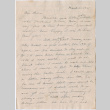
Letter from Helen Takahashi to Henri Takahashi; Letter from Tomoye (Nozawa) Takahashi to Henri Takahashi. In same envelope (ddr-densho-410-413)
Letter 1: Helen plans to come to San Francisco to visit him after Easter, sent cards to the Yabuki family. Letter 2: Rice is scarce in the camps now, most being sent overseas as part of the lend-lease program, some have had no rice for weeks, encourages Henri to get a job soon as they will …
img
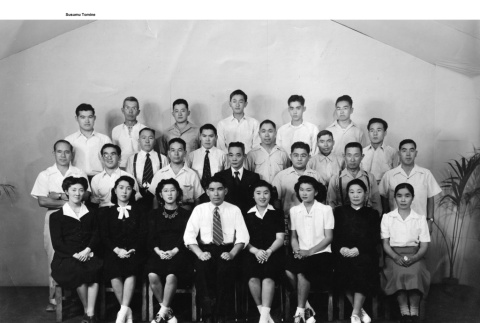
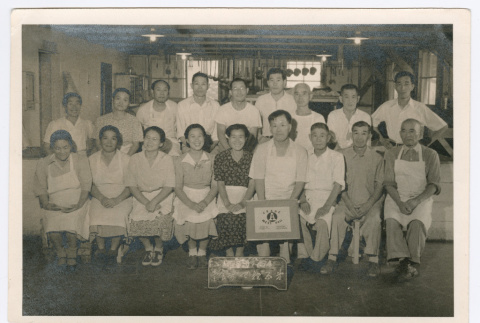
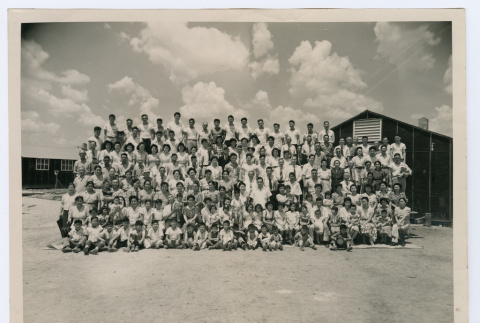
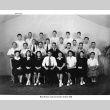
Large group portrait of Mess hall staff (ddr-ajah-6-947)
Caption below photo: Mess 58 crew. Tule Lake Center, Summer 1945

doc
Letter from Ruth Yamada to Matsuye Koike, October 23, 1942 (ddr-densho-432-7)
This letter discusses life at Rohwer concentration camp, including discussion of the food, environment, church, and school. Matsuye Koike received the letter while imprisoned at Fort Lincoln, Bismark, ND. The letter was "detained alien enemy mail examined."
av
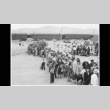
Sowing Seeds of Life... of Hope (ddr-densho-1024-80)
Japanese vegetable seeds played an enormous part in making life more bearable for the Japanese people who were incarcerated in a concentration camp at Heart Mountain, Wyoming during WWII. See this item in the Densho Resource Guide at: Sowing Seeds of Life... of Hope (film). See this item in the Digital Library of the Japanese …
doc
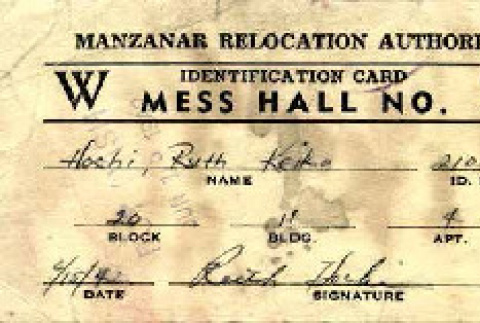
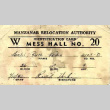
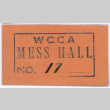
Mess Hall Identification Card (ddr-csujad-29-24)
Manzanar mess hall identification card. Block 20, Building 11, Apt. 4. Belonging to Ruth Hochi. See this object in the California State Universities Japanese American Digitization project site: 4137_M03
img
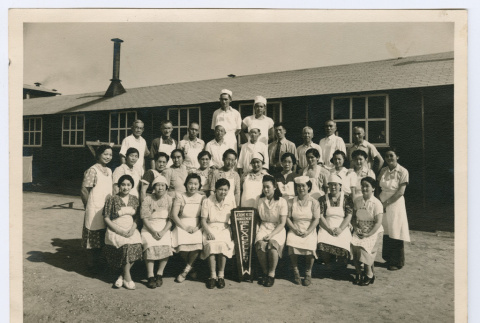
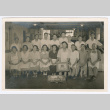
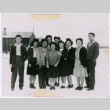
Mess Hall workers (ddr-densho-363-22)
The caption on the back of the photograph reads "Heart Mt Mess Hall workers Kimi Komoto + workers". Pictured from left to right: Unidentified, Kimi Komoto, Kimi Uchida, Tomi Ichida, Chiyo Sakane, Asano Marutama, Toshiko Tsuyuki, Ruth Murakami, Hatsuye Shimizu, Unidentified

doc
Letter from Masako Tada to Marion Blomgren (ddr-densho-540-24)
Masako Tada discusses her daily life in the Midoka concentration camp.
img
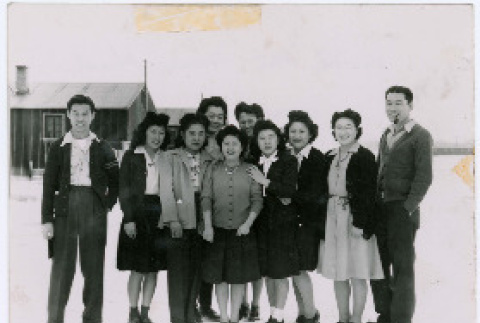
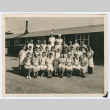
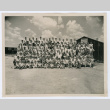
Jerome Mess Management Award staff group photo (ddr-densho-545-9)
Image displaying staff members with the Jerome Mess Management award.
doc
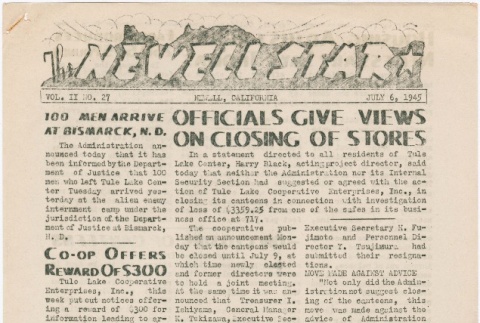
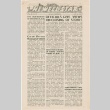
The Newell Star, Vol. II, No. 27 (July 6, 1945) (ddr-densho-284-75)
Selected article titles: "Officials Give Views on Closing of Stores" (pp. 1-2), "Skeleton Remains of Young Indian Found at Blk. 51" (p. 1), "Housing Adjustments Necessary Says Thomas" (p. 2), and "Farm Produces 250,545 Pounds" (p. 2).
doc
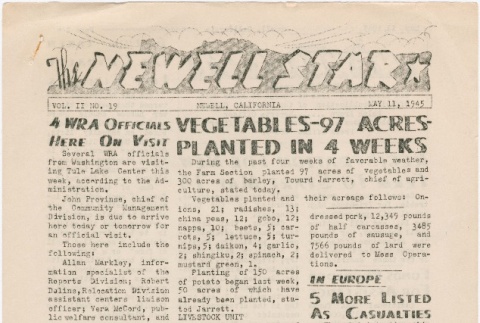
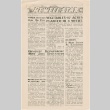
The Newell Star, Vol. II, No. 19 (May 11, 1945) (ddr-densho-284-68)
Selected article titles: "Treasury Department Move Aids Resettlers" (pp. 1-2), "Action Taken on Casualty List Schemes" (p. 2), and "Philadelphia: Teamsters Union Admits Japanese" (p. 3).
doc
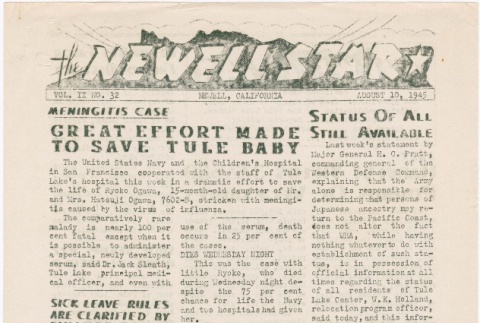
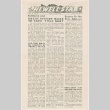
The Newell Star, Vol. II, No. 32 (August 10, 1945) (ddr-densho-284-80)
Selected article titles: "Meningitis Case: Great Effort Made to Save Tule Baby" (pp. 1-2), "July: Harvest Yields 372,580 Pounds of Vegetables" (p. 2), "Resettlers May Obtain Materials" (p. 2), and "Allowances for GI's Dependents" (p. 4).
doc
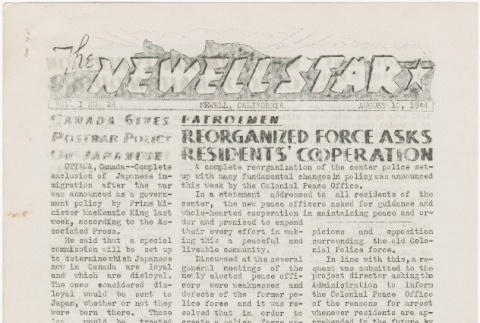
The Newell Star, Vol. I, No. 24 (August 10, 1944) (ddr-densho-284-30)
Selected article titles: "Canada Gives Postwar Policy on Japanese" (p. 1), "Patrolmen: Reorganized Force Asks Residents' Cooperation" (pp. 1-2), and "WRA Announces Revision of Food Ration Quotas" (p. 2).
doc
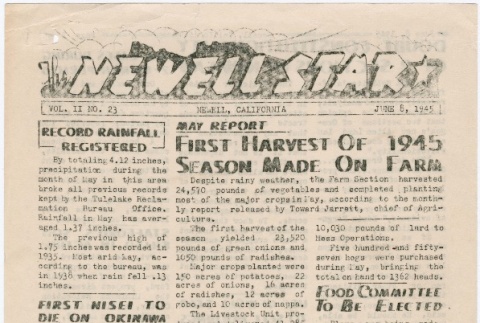
The Newell Star, Vol. II, No. 23 (June 8, 1945) (ddr-densho-284-72)
Selected article titles: "Food Committee to Be Elected" (p. 1), "Eight Violators Given Jail Terms" (p. 1), "Doubt Constitutionality of 2 Sections of New Law" (p. 2), and "Japanese in LA Hold Memorial Day Services" (p. 3).