Food
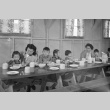
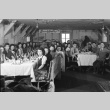
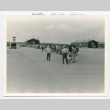
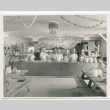
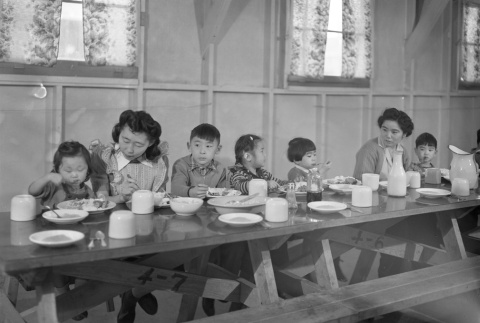
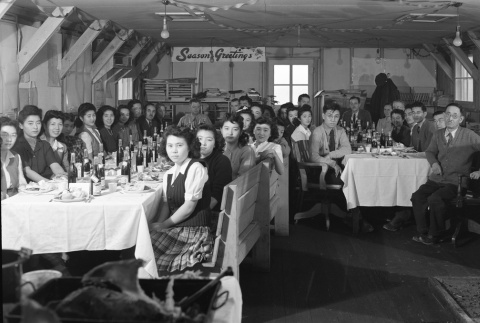
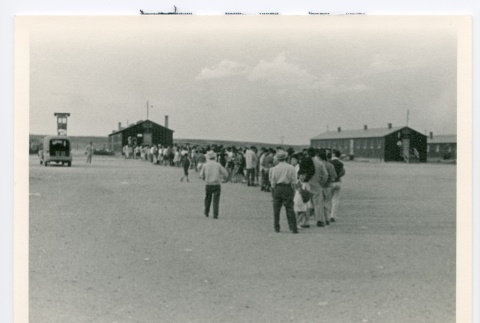
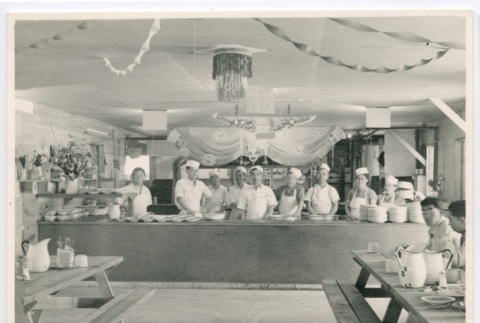
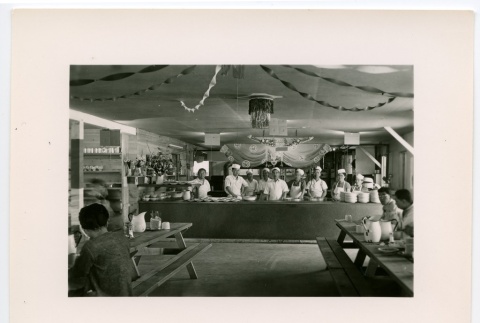
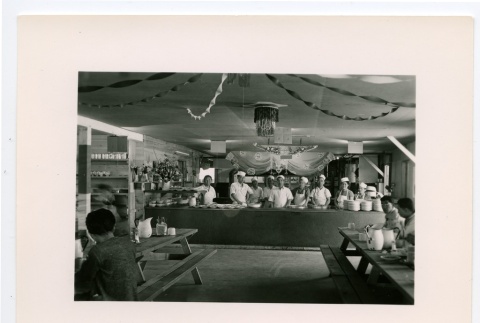
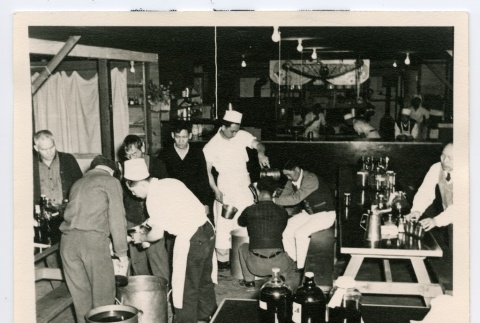
The eating facilities in the camps were large mess halls with long lines and crowded tables. Group living tended to erode family solidarity, as teenagers escaped parental authority by eating with friends rather than family. The quality of the food was poor and milk and fresh meat were constantly in short supply. Inexpensive foods such as wieners, dried fish, pancakes, macaroni and pickled vegetables were served often. The diets of the camp inmates improved only after they began growing some of their own food.
World War II
(283)
Concentration camps
(2384)
Food
(283)
283 items
![[Incarcerees preparing food] (ddr-csujad-56-134)](https://ddr.densho.org/media/cache/c4/07/c4070e9aae17c75980176229b4b2c0c8.jpg)
![[Mess hall] (ddr-csujad-56-156)](https://ddr.densho.org/media/cache/a3/cd/a3cda976cc03cbf706448516750e5921.jpg)
![[Children's Village incarcerees wait at mess hall] (ddr-csujad-29-321)](https://ddr.densho.org/media/cache/2a/32/2a3242758ec8cb2c50021d597731218e.jpg)

![[Teenagers eating at the mess hall] (ddr-csujad-29-216)](https://ddr.densho.org/media/cache/c7/cb/c7cba0753108e25d3a3475b2ecb8f221.jpg)

283 items
![[Incarcerees preparing food] (ddr-csujad-56-134)](https://ddr.densho.org/media/cache/eb/53/eb532eedbd47c45cc1ce5ada6cd277b8.jpg)
img
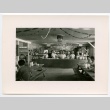
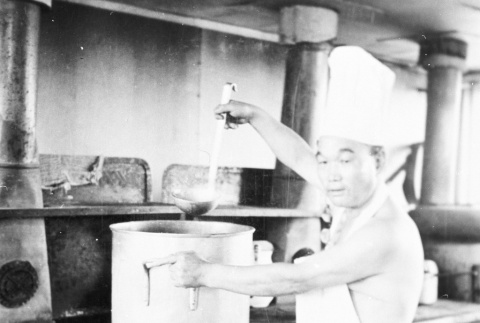
[Incarcerees preparing food] (ddr-csujad-56-134)
Photo of three people preparing food with two others standing next to them. A third young man is exiting the scene. Photo provided by Tak Kameoka. See this object in the California State Universities Japanese American Digitization project site: nbea08-02-001
![[Mess hall] (ddr-csujad-56-156)](https://ddr.densho.org/media/cache/0d/22/0d22ad378a26ed64586b5b58d8b39d8a.jpg)
img
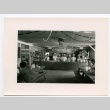
[Mess hall] (ddr-csujad-56-156)
Incarcerees eating in the mess hall. Photo provided by Tak Kameoka. See this object in the California State Universities Japanese American Digitization project site: nbea08-02-023
doc
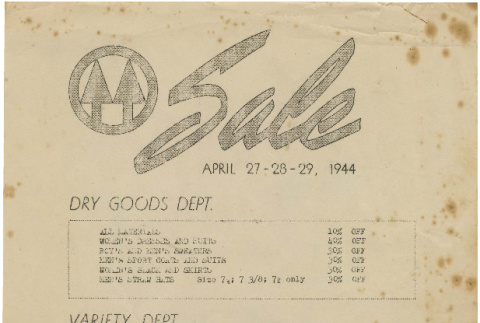
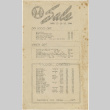
O-OP canteen sale (ddr-csujad-7-22)
Advertisement for sale at the camp's commisary. See this object in the California State Universities Japanese American Digitization project site: HMLSC_Canteen_Sale_P01
doc
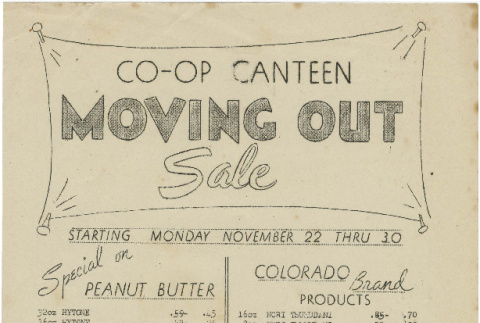
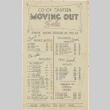
CO-OP canteen moving out sale (ddr-csujad-7-19)
Advertisement for sale at the camp commissary at Amache. See this object in the California State Universities Japanese American Digitization project site: HMLSC_Co-op Canteen Moving Out Sale
doc
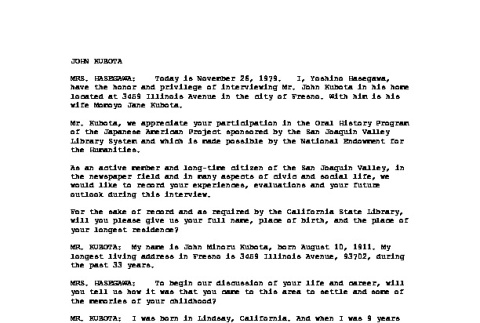
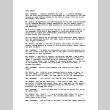
John Kubota (ddr-csujad-8-31)
Oral history interview with John Kubota. Information on the oral history project is found in: csuf_stp_0012A; Glossary in: csuf_stp_0014. See this object in the California State Universities Japanese American Digitization project site: FCPL Kubota, John
doc
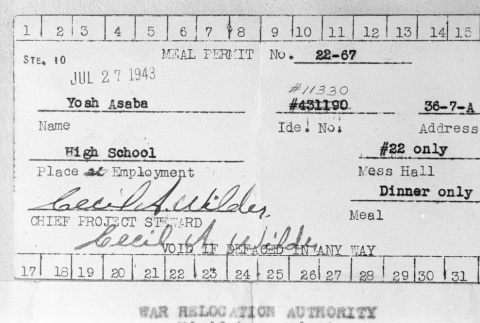
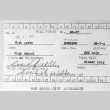
Camp meal ticket (ddr-densho-13-25)
This meal ticket was required when a camp inmate wanted to eat outside his or her designated mess hall.
img
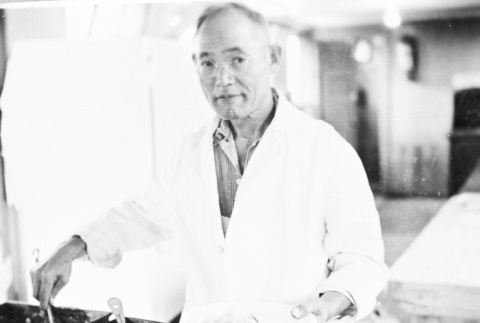
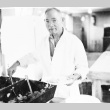
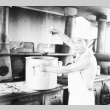
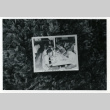
Japanese American preparing meal (ddr-densho-15-70)
Jim Shiga, well-known for his cooking skills, prepares a meal in the camp's warehouse kitchen.
img
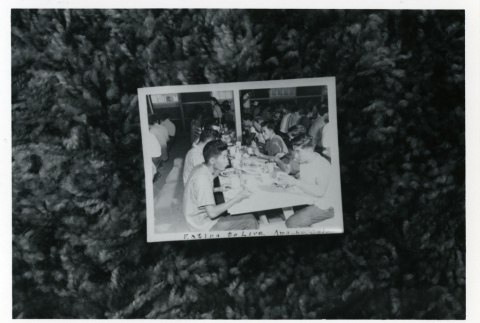
Eating to live (ddr-csujad-29-160)
Photograph of boys eating at the Granada camp. The caption reads: Eating to live. Amache, Co. See this object in the California State Universities Japanese American Digitization project site: P101
![[Children's Village incarcerees wait at mess hall] (ddr-csujad-29-321)](https://ddr.densho.org/media/cache/02/79/02796a4ab5292c48507b4e17f18b3b95.jpg)
img
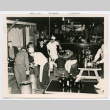
[Children's Village incarcerees wait at mess hall] (ddr-csujad-29-321)
Nineteen incarcerees wait for food at Children's Village in Manzanar. See this object in the California State Universities Japanese American Digitization project site: P264

av
An Oral History with Seiko Ishida (ddr-csujad-29-11)
Retired Kibei teacher recounts samurai parents' background and their immigration to Seattle, Washington; socioeconomic composition of Seattle's Japanese community; earlier teacher training; prewar stays in Japan as a child and as a tutor in a missionary family; experiences as a teacher in the wartime resettlement in New York; and postwar return to Los Angeles. This oral …
![[Teenagers eating at the mess hall] (ddr-csujad-29-216)](https://ddr.densho.org/media/cache/97/66/976616cf01a8fd5cfa4ed18366a8d48e.jpg)
img
[Teenagers eating at the mess hall] (ddr-csujad-29-216)
Photograph of 10 teenagers eating at a mess hall in the Granada camp. See this object in the California State Universities Japanese American Digitization project site: P159

vh
An Oral History with Norman Y. Mineta (ddr-csujad-29-55)
Japanese American congressman, representing the Thirteenth Congressional District of California, born and raised in San Jose, California, discusses his early life, graduation from the University of California, Berkeley, and receiving a commission and serving in the armed forces from 1953-1956. Recalls the removal, "relocation," and incarceration of Japanese Americans during World War II at the Heart …
doc
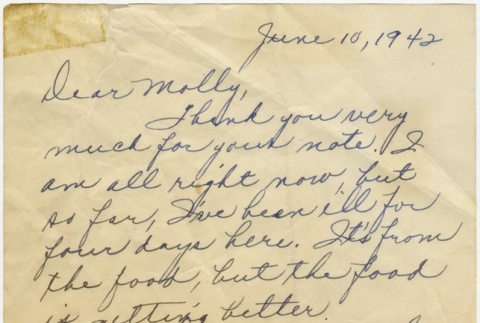
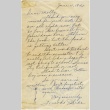
Letter to Molly Wilson from Tomoko Ikeda (June 10, 1942) (ddr-janm-1-1)
Handwritten letter written by Tomoko Ikeda to Molly Wilson, June 10, 1942. Letter was written from an assembly center or a relocation center, and mentions adjusting to food in center and missing school.
doc
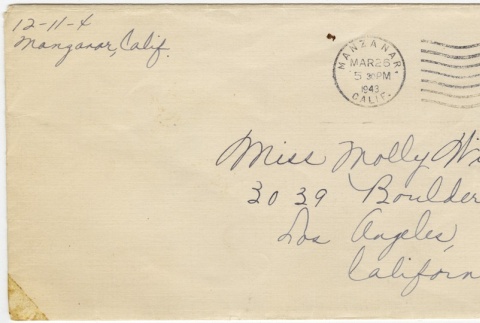
Letter (with envelope) to Molly Wilson from Chiyeko Akahoshi (March 25, 1943) (ddr-janm-1-105)
Handwritten letter to Molly Wilson from Chiyeko Akahoshi (March 25, 1943). Envelope is postmarked March 26, 1943 from the Manzanar Incarceration Camp in Manzanar, California.
doc
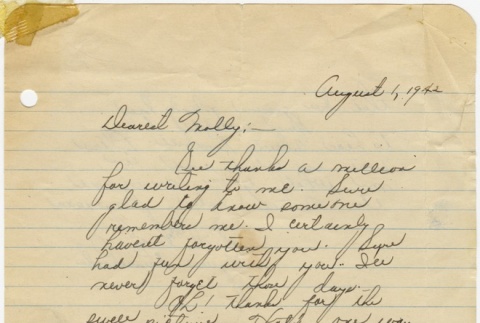
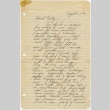
Letter to Molly Wilson from Yuri Shimobochi (August 1, 1942) (ddr-janm-1-56)
Handwritten letter to Molly Wilson from Yuri Shimobochi (August 1, 1942). Letter is from the Heart Mountain Incarceration Camp in Cody, Wyoming.
doc
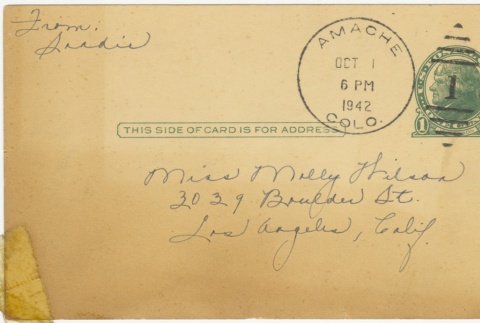
Postcard to Molly Wilson from Sandie Saito (September 28, 1942) (ddr-janm-1-11)
Postcard to Molly Wilson from Sandie Saito (September 28, 1942). It is postmarked October 1, 1942 from the Granada (Amache) Incarceration Camp in Amache, Colorado.
doc
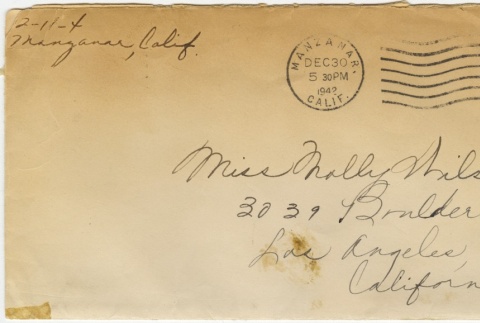
Letter (with envelope) to Molly Wilson from Chiyeko Akahoshi (December 26, 1942) (ddr-janm-1-104)
Handwritten letter to Molly Wilson from Chiyeko Akahoshi (December 26, 1942). Envelope is postmarked December 30, 1942 from the Manzanar Incarceration Camp in Manzanar, California.