Concentration camps

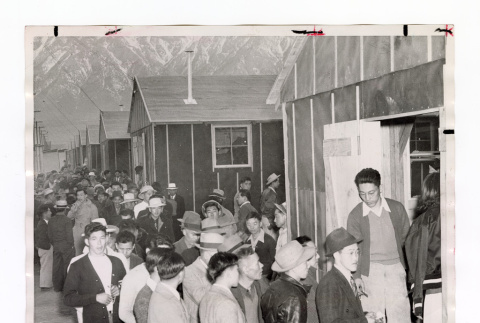
The War Relocation Authority (WRA) oversaw construction of ten concentration camps in sparsely populated and isolated areas. Between June and October 1942, Japanese Americans were transferred from the "assembly centers" to the larger camps. Housing approximately 120,000 people, the camps were designed to be self-contained communities, complete with hospitals, post offices, schools, warehouses, and residential areas. The WRA attempted to establish normalcy by setting up newspapers, a degree of self-government, sports leagues, and social events. But confinement, monotony, and harsh conditions exacerbated tensions between pro- and anti-camp administration residents and between the disempowered Issei and their U.S.-born Nisei children. At several centers, conflicts erupted into violence and at the Manzanar concentration camp the unrest resulted in fatal shootings. The WRA gradually granted work and school leave to those they considered "loyal." The last camp closed in March 1946.

World War II (277)
Concentration camps (1771)

Related articles from the Densho Encyclopedia :
Concentration Camps, U.S.A. (book), Gila River, Heart Mountain, Jerome, Manzanar, Minidoka, Poston (Colorado River), Psychological effects of camp, Rohwer, Sites of incarceration, Topaz, Tule Lake
Facilities
Format
Genre
Usage

Use <Ctrl> or (⌘) keys to select multiple terms

1771 items
Nisei men gathered in front of barracks at Manzanar (ddr-csujad-52-7)
img Nisei men gathered in front of barracks at Manzanar (ddr-csujad-52-7)
A group of men in front of barracks at Manzanar. The caption printed in the Long Beach Independent reads, "Japanese Roundup: This was the scene 18 years ago as many Nisei were herded into an alien reception center at Manzanar. Many were American Citizens and others were aliens. The first to arrive helped prepare the camp …
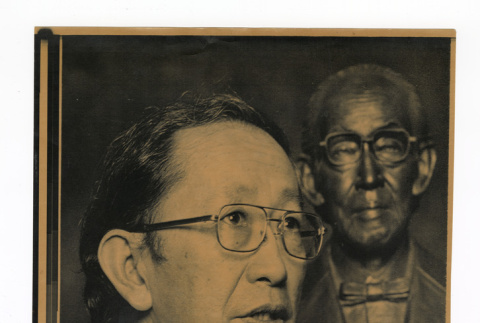
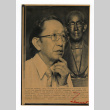
Archie Miyatake in front of a bust of his father, Toyo, who documented life at Manzanar through photographs (ddr-csujad-52-43)
img Archie Miyatake in front of a bust of his father, Toyo, who documented life at Manzanar through photographs (ddr-csujad-52-43)
Caption below image reads, "TIME TO REMEMBER--Archie Miyatake sits in his Los Angeles photographer's studio Wednesday and ponders his family's ordeal at the Manzanar relocation camp for Japanese-Americans during WWII. In background is a bust of his father, Toyo, whose hanuting and illicit photos of Manzanar camp life help keep alive the nation's shame for a …
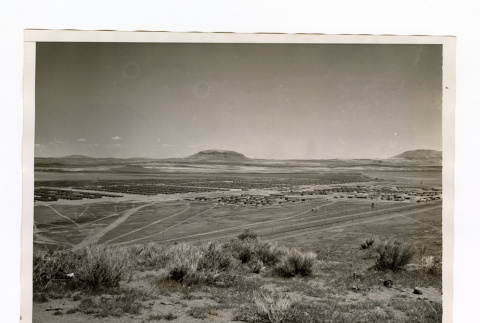
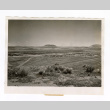
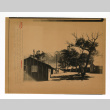
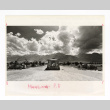
General view of Tule Lake incarceration camp (ddr-csujad-52-29)
img General view of Tule Lake incarceration camp (ddr-csujad-52-29)
Caption pasted on reverse of image (now missing) reads, "GENERAL VIEW OF RELOCATION CENTER, This is a general view of the Tulelake, Calif., Japanese relocation center located near the California-Oregon border and 40 miles southeast of Klamath Falls, Ore. The land is an old lake bottom developed by the U.S. reclamation service. About 7,000 acres are …
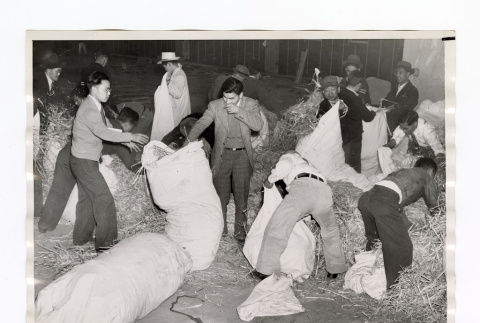
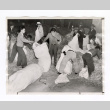
New arrivals at Manzanar fill mattresses with straw (ddr-csujad-52-27)
img New arrivals at Manzanar fill mattresses with straw (ddr-csujad-52-27)
Caption pasted on reverse of image reads, "Japanese evacuees who arrived at the alien reception center at Manzanar, Calif., Mar. 24, 1942, fill mattresses with straw as they prepared to spend their first night in their new homes. The emigres were among the first in the greatest forced migration in the nation's history." See this object …
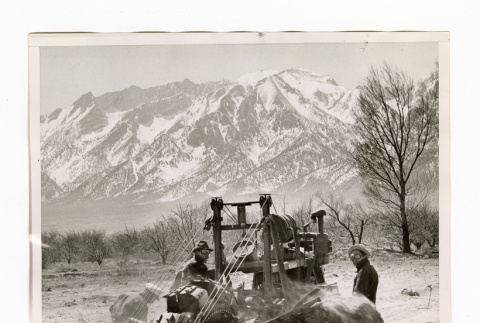
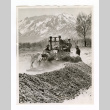
Laying water line at Manzanar (ddr-csujad-52-24)
img Laying water line at Manzanar (ddr-csujad-52-24)
Caption from reverse of image reads, "LAYING WATER LINE FOR JAPANESE BOOM TOWN, A trench digger churned its way across the floor of Owens Valley March 19 to speed laying of a water supply line for the boom town for evacuated Japanese being erected at Manzanar under the direction of Lt. Gen. John L. Dewitt of …
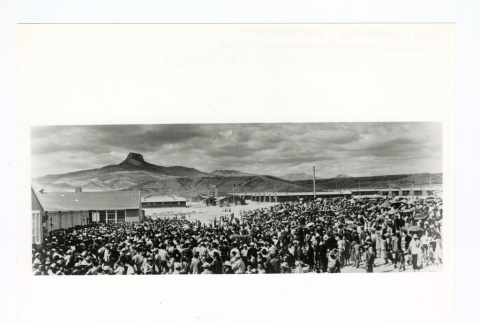
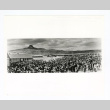
Large crowd of people are gathered outside at an incarceration camp (ddr-csujad-52-42)
img Large crowd of people are gathered outside at an incarceration camp (ddr-csujad-52-42)
A large group of people gathered in an open area with a building to the left and many buildings in the background. The buildings appear to be rows of barracks with other buildings between the rows of barracks. There is a mountain with little vegetation off in the distance. See this object in the California State …
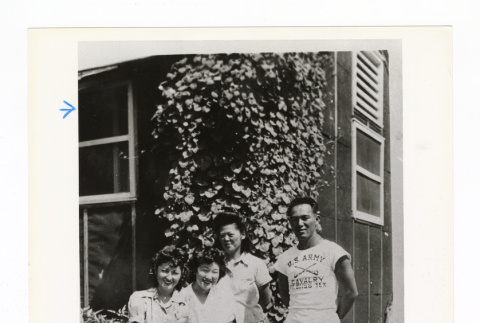
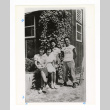
Sumi Seki and three of her friends in front of barracks (ddr-csujad-52-41)
img Sumi Seki and three of her friends in front of barracks (ddr-csujad-52-41)
Sumi Seki, left, with three friends outside of a barracks at an incarceration camp. Seki became an activist for human rights after the war. See this object in the California State Universities Japanese American Digitization project site: hslb_npc_0045
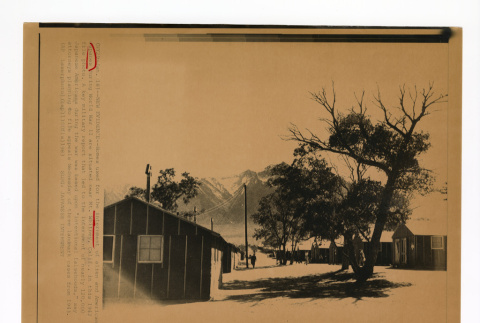
Barracks at Manzanar with Mt. Whitney in the background (ddr-csujad-52-35)
img Barracks at Manzanar with Mt. Whitney in the background (ddr-csujad-52-35)
Caption next to image reads, "NEW EVIDENCE--Homes used for the internment of alien and American Japanese during World War II are situated near Mt. Whitney, Calif., in this 1942 file photo. A key military report that led to the internment of nearly 120,000 Japanese Americans during the war was based upon 'intentional falsehoods,' say attorneys planning …
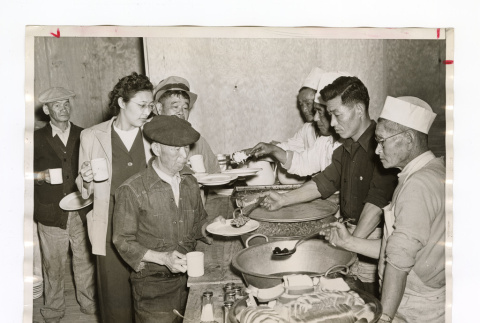
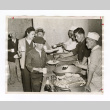
Food service at Manzanar (ddr-csujad-52-28)
img Food service at Manzanar (ddr-csujad-52-28)
Caption pasted on reverse of image reads, "FIRST MEAL IN NEW ALIEN CAMP, Japanese evacuated from their Los Angeles homes line up to receive their first meal after their arrival Mar. 24, 1942, in the alien reception center at Manzanar." See this object in the California State Universities Japanese American Digitization project site: hslb_npc_0032
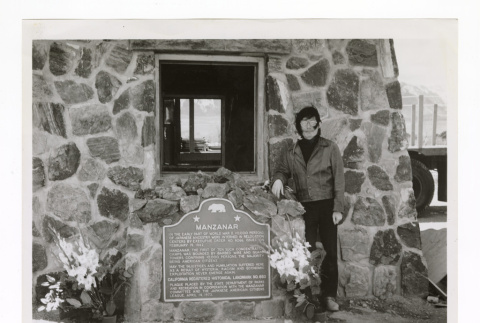
George Takei stands with commemorative plaque designating Manzanar a State Monument (ddr-csujad-52-37)
img George Takei stands with commemorative plaque designating Manzanar a State Monument (ddr-csujad-52-37)
Caption on the back of the photograph, created by NBC Television/KNBC 4 Los Angels, reads, "Host George Takei stands with the commemorative plaque designating Manzanar a State Monument in a special repeat telecast of EXPRESSION: EAST-WEST's half-hour examination of Manzanar and other 1942 relocation camps, airing Sat., May 5 at 2:30 p.m. on KNBC/Channel 4. Other …
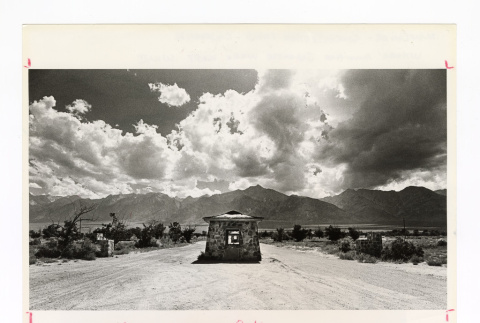
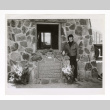
Guard station at Manzanar (ddr-csujad-52-1)
img Guard station at Manzanar (ddr-csujad-52-1)
An abandoned guard station at the entrance to Manzanar. Notation on the back of the photo states "Manzanar - Concentration Camp - California, Where American Japanese were kept WWII." The caption printed in the Press-Telegram, in September of 1985, reads "Infamous Manzanar was the first and best-known of the U.S. internment camps where more than 100,000 …
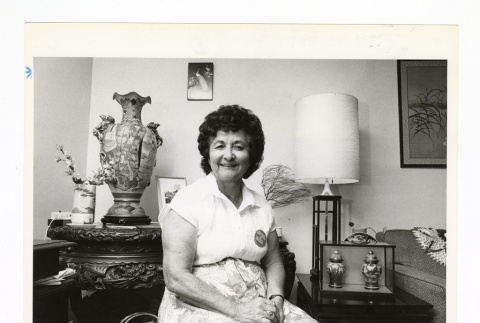
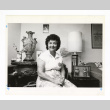
Sumi Seki , 63, of Long Beach, has become an activist concerning the World War II internment and human rights (ddr-csujad-52-40)
img Sumi Seki , 63, of Long Beach, has become an activist concerning the World War II internment and human rights (ddr-csujad-52-40)
A woman, wearing a white shirt and floral print skirt, poses in front of pottery and furniture. Two quotes attached to image read, "Sumi Seki, interred in Jerome Ark. during WWII as a 'precaution' Actually a racist move by our government" and "These days Sumi Seki, 63, of Long Beach, has become an activist concerning the …
Letter from Masao Okine to [Hatsuno] Hotty Okine, April 24, 1945 (ddr-csujad-5-76)
doc Letter from Masao Okine to [Hatsuno] Hotty Okine, April 24, 1945 (ddr-csujad-5-76)
A letter from Masao Okine in Fort Meade, Maryland, to his sister, Hatsuno Hotty Okine in the Rohwer incarceration camp, Arkansas. He encloses a dependency allotment form 620 in the letter and instructs Hatsuno to fill it out and talk to the Red Cross for assistance. He also asks her to send him a letter and …
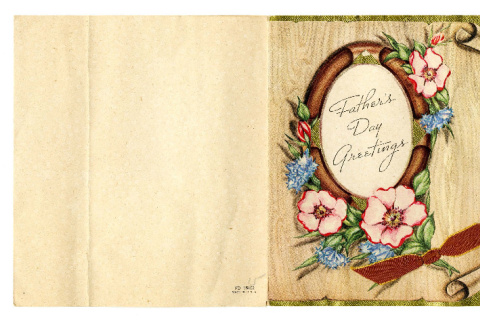
Father's Day card from Masao Okine to Mr. S. Okine, June 9, 1945 (ddr-csujad-5-81)
doc Father's Day card from Masao Okine to Mr. S. Okine, June 9, 1945 (ddr-csujad-5-81)
A Father's Day card from Masao Okine to his father, Seiichi Okine. Masao writes from Fort Meade, Minnesota, where he attends the U.S. military Japanese language School to Seiichi Okine who is incarcerated in the Rohwer camp, Arkansas. See this object in the California State Universities Japanese American Digitization project site: oki_01_20_001
Relocation program: [a guidebook for the residents of relocation centers] (ddr-csujad-5-69)
doc Relocation program: [a guidebook for the residents of relocation centers] (ddr-csujad-5-69)
Japanese translation of "Relocation program: a guidebook for the residents of relocation centers." It describes the policies and procedures of the War Relocation Authority Relocation Program. Includes policies and procedures on leave and return to a camp, placement, travel and subsistence, food, lodging, health service, employment and compensation, clothing allowances, community government, education, internal security, consumer …
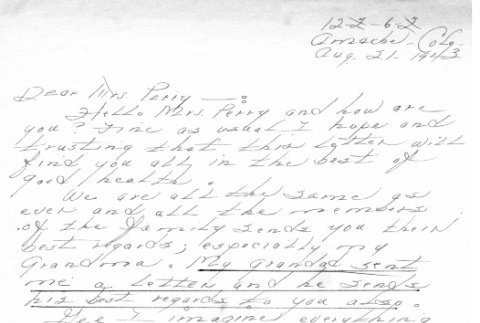
Letter from Kazuo Ito to Lea Perry, August 21, 1943 (ddr-csujad-56-51)
doc Letter from Kazuo Ito to Lea Perry, August 21, 1943 (ddr-csujad-56-51)
Letter from Kazuo Ito to Lea Perry. The original letters are housed with the Sonoma County Japanese American Citizens League (JACL), and were borrowed for digitization courtesy of the JACL, December 2014. Transcript is found in item: ssu_nbea_9049. See this object in the California State Universities Japanese American Digitization project site: nbea08-01-049
[Nakamura screen printing] (ddr-csujad-56-221)
img [Nakamura screen printing] (ddr-csujad-56-221)
Dorothy Nakamura works on a screen print in the camp printing shop. Page 7 of Kawase Family Photo Album, Book Two. See this object in the California State Universities Japanese American Digitization project site: nbea08-03-030
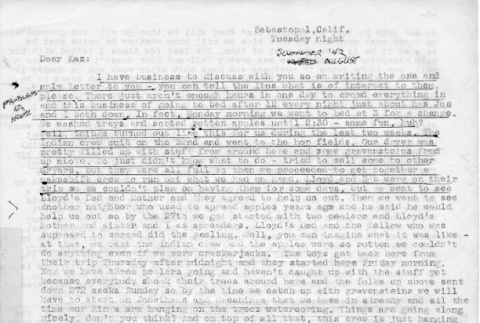
Letter from Lea Perry to Kazuo Ito, August 1942 (ddr-csujad-56-4)
doc Letter from Lea Perry to Kazuo Ito, August 1942 (ddr-csujad-56-4)
Letter from Lea Perry to Kazuo Ito. The original letters are housed with the Sonoma County Japanese American Citizens League (JACL), and were borrowed for digitization courtesy of the JACL, December 2014. Transcript is found in item: ssu_nbea_9002. See this object in the California State Universities Japanese American Digitization project site: nbea08-01-002
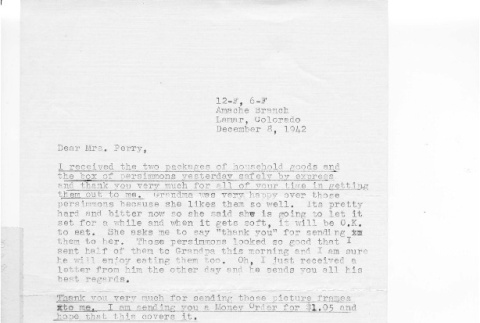
Letter from Kazuo Ito to Lea Perry, December 8, 1942 (ddr-csujad-56-29)
doc Letter from Kazuo Ito to Lea Perry, December 8, 1942 (ddr-csujad-56-29)
Letter from Kazuo Ito to Lea Perry. The original letters are housed with the Sonoma County Japanese American Citizens League (JACL), and were borrowed for digitization courtesy of the JACL, December 2014. See this object in the California State Universities Japanese American Digitization project site: nbea08-01-027
[Crop land] (ddr-csujad-56-169)
img [Crop land] (ddr-csujad-56-169)
Field of crops with some trucks on a road in the distance. Photo provided by Tak Kameoka. See this object in the California State Universities Japanese American Digitization project site: nbea08-02-036
[Digging] (ddr-csujad-56-240)
img [Digging] (ddr-csujad-56-240)
Young Japanese American man with shovel full of sand from the banks of the Arkansas River near Camp Amache. Page 26 of Kawase Family Photo Album, Book Two. See this object in the California State Universities Japanese American Digitization project site: nbea08-03-049
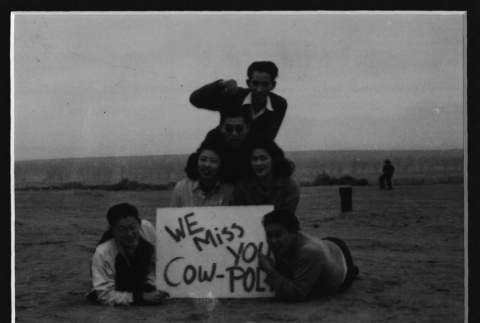
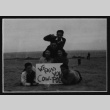
Cow-poly (ddr-csujad-56-223)
img Cow-poly (ddr-csujad-56-223)
Young Japanese American incarcerees pose around a sign reading 'We miss you Cow-Poly'. Page 9 of Kawase Family Photo Album, Book Two. See this object in the California State Universities Japanese American Digitization project site: nbea08-03-032
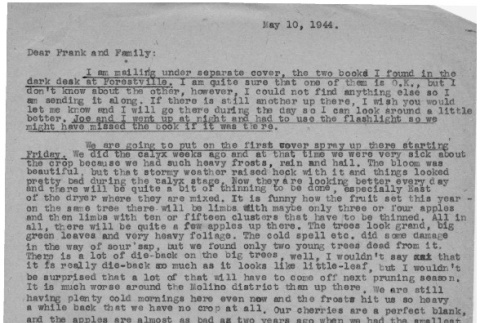
Letter from Lea Perry to Frank Ito and family, May 10, 1944 (ddr-csujad-56-79)
doc Letter from Lea Perry to Frank Ito and family, May 10, 1944 (ddr-csujad-56-79)
Letter from Lea Perry to Frank Ito and family. The original letters are housed with the Sonoma County Japanese American Citizens League (JACL), and were borrowed for digitization courtesy of the JACL, December 2014. See this object in the California State Universities Japanese American Digitization project site: nbea08-01-077
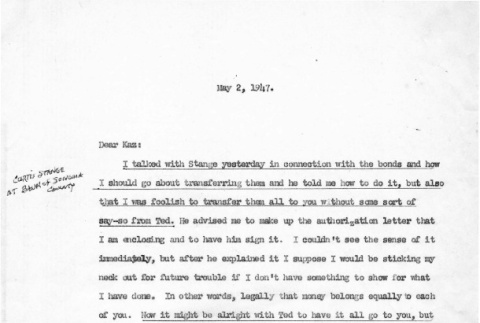
Letter from Lea Perry to Kazuo Ito, May 2, 1947 (ddr-csujad-56-127)
doc Letter from Lea Perry to Kazuo Ito, May 2, 1947 (ddr-csujad-56-127)
Letter from Lea Perry to Kazuo Ito. The original letters are housed with the Sonoma County Japanese American Citizens League (JACL), and were borrowed for digitization courtesy of the JACL, December 2014. See this object in the California State Universities Japanese American Digitization project site: nbea08-01-125
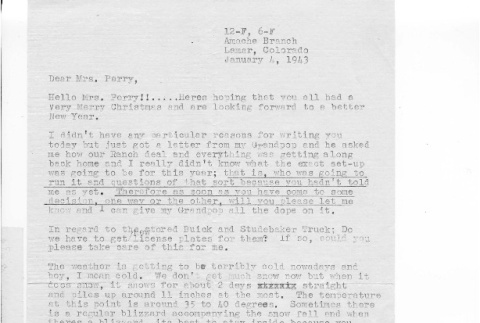
Letter from Kazuo Ito to Lea Perry, January 4, 1943 (ddr-csujad-56-33)
doc Letter from Kazuo Ito to Lea Perry, January 4, 1943 (ddr-csujad-56-33)
Letter from Kazuo Ito to Lea Perry. The original letters are housed with the Sonoma County Japanese American Citizens League (JACL), and were borrowed for digitization courtesy of the JACL, December 2014. See this object in the California State Universities Japanese American Digitization project site: nbea08-01-031
API