Economic losses

The economic and emotional toll associated with the uprooting of Japanese Americans from their homes and businesses was enormous. The cost was especially high for the issei (first-generation immigrants), who had worked most of their lives to establish financial security for themselves and their children. Many Japanese Americans bitterly recall being forced to sell property, personal belongings, and business equipment for a fraction of their value to opportunistic scavengers. Evacuees could take only what they could carry. They left behind heirlooms, cherished toys, and family pets. Farmers continued to work for a harvest they would never see, told it would be "disloyal" to stop. The bustling Nihonmachis (Japantowns) of the West Coast closed down and never fully recovered, even after the war ended.

World War II (283)
Economic losses (578)
Facilities
Format
Genre
Usage

Use <Ctrl> or (⌘) keys to select multiple terms

578 items
Boarded-up store formerly run by Japanese Americans (ddr-densho-37-304)
img Boarded-up store formerly run by Japanese Americans (ddr-densho-37-304)
Original WRA caption: Stores and homes formerly inhabited by Japanese. Some of them are now used by Chinese people. Note boarded up windows and doors.
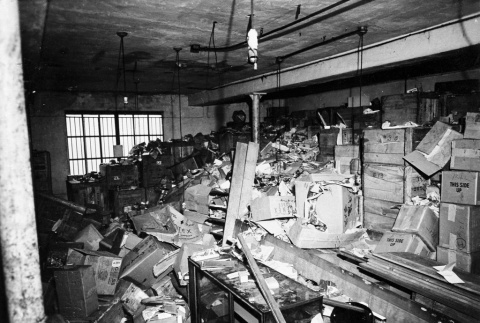
Vandalism of Japanese American property (ddr-densho-37-285)
img Vandalism of Japanese American property (ddr-densho-37-285)
Original WRA caption: View of the results of vandalism at the White Star Soda Works, 416 Jackson Street, Los Angeles, California.
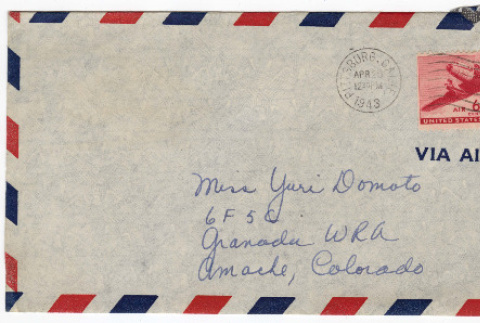
Letter to Yuri Domoto from Yoshito Shibata (ddr-densho-356-245)
doc Letter to Yuri Domoto from Yoshito Shibata (ddr-densho-356-245)
Letter to Yuriko Domoto Tsukada from Yoshito Shibata in which he describes a visit to the Domoto Family's nursery in Hayward which was under the care of Pete Milan.
API