
Issei
The earliest wave of Japanese immigrants, the Issei (first generation), had a strong sense of their ethnic identity and retained the values and traditions of their country of birth. Most came to the United States as sojourners and planned to return to Japan after earning their fortunes. In addition, discriminatory laws forbade them from becoming American citizens and from exercising other basic rights, such as owning or leasing land. Since they were thus prevented from fully taking part in American life, it is not surprising that many still identified strongly with the culture of their homeland.
Identity and values
(362)
Issei
(1037)
Related articles from the
Densho Encyclopedia :
Issei
1037 items
![Ko Fukazawa Setsu-shi [The late Mr. Setsu Fukazawa] (ddr-csujad-25-351)](https://ddr.densho.org/media/cache/cf/d9/cfd96abde0eb914e7dd63a7b1f779cd2.jpg)
1037 items
![Ko Fukazawa Setsu-shi [The late Mr. Setsu Fukazawa] (ddr-csujad-25-351)](https://ddr.densho.org/media/cache/26/74/26743fe39c1fe83a9a55501f724bc005.jpg)
img
Ko Fukazawa Setsu-shi [The late Mr. Setsu Fukazawa] (ddr-csujad-25-351)
A photograph of the late Mr. Setsu Fukazawa who died at the age of 57 on March 5, 1937 in Salt Lake, Utah. See this object in the California State Universities Japanese American Digitization project site: jia_12_013
img
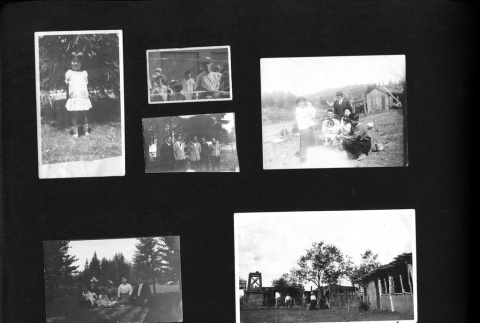
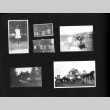
Japanese family, picnic (ddr-csujad-25-298)
A page from a photo album including Japanese family photographs. Seven photographs are pasted on the page. Include photographs of Japanese families having a picnic. The photographs are probably taken n the early 1900s. Location is unknown. See this object in the California State Universities Japanese American Digitization project site: jia_10_01_006
img
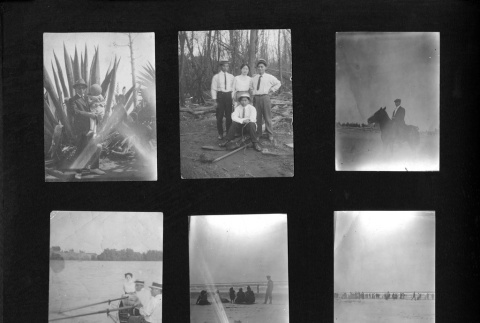
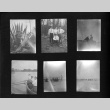
Japanese family (ddr-csujad-25-294)
A page from a photo album including Japanese family photographs. Some photographs are taken at the beach. One of the photographs depicts a Japanese man riding a horse. The photographs are taken in the early 1900s. Location is unknown. See this object in the California State Universities Japanese American Digitization project site: jia_10_01_002
img
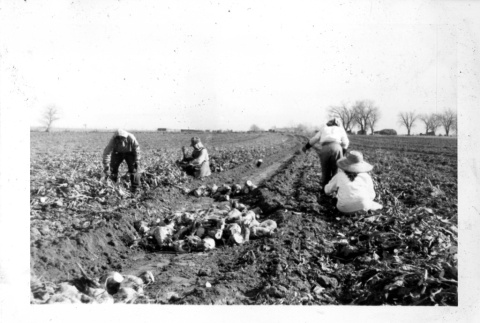
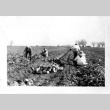
Taenaka family in a farm (ddr-csujad-25-91)
A photograph of the Taenaka family in a farm, Brighton, Colorado. Includes Tamesaburo Taenaka, Kamie Taenaka, Ukichi Taenaka [?], and Yaeko Taenaka [?], harvesting sugar beets in McMorrow's farm. The same image is found in item: ucsb_jia_0081. See this object in the California State Universities Japanese American Digitization project site: jia_08_01_033
doc
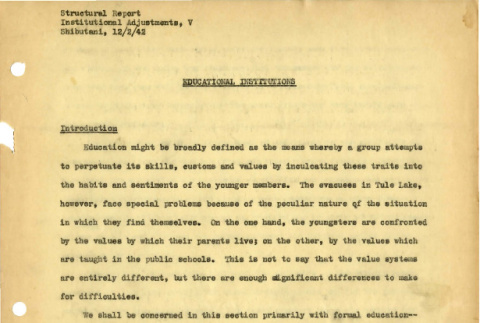
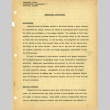
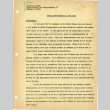
Structural report, institutional adjustments, V: educational institutions (ddr-csujad-26-20)
Essay observing education levels, types of students, and establishment of education programs at Tule Lake for English speaking students. Includes descriptions of programs for various age groups including nursery, primary, secondary, adult education, college and the Student Relocation Council. Report compiled as a portion of the Japanese American Evacuation and Resettlement Study (JERS). See this object …
doc
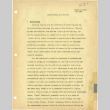
Structural report, disorganization and reorganization, IV: social reorganization in Tule Lake (ddr-csujad-26-21)
Manuscript evaluating potential behavior patterns and social organization among incarcerees at Tule Lake including leadership roles, planning boards, efforts to curb juvenile delinquency and "Nisei apathy." Report compiled as a portion of the Japanese American Evacuation and Resettlement Study (JERS). See this object in the California State Universities Japanese American Digitization project site: mei_02_28_001
doc
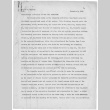
Recreational organization (ddr-csujad-26-10)
Report detailing the establishment of a recreation and community activities department including its organization, activities planning, personnel problems and conflicts, issues with structure and equipment, and a structural diagram of the community activities section. The report focuses on the place of recreation in the lives of incarcerees and the differences between Issei and Nisei leading to …
img
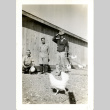
Three men and chickens (ddr-csujad-26-132)
Photo of three Japanese American men in front of a chicken coop with chickens. From photo album of Robert Billigmeier. See this object in the California State Universities Japanese American Digitization project site: mei_05_102
doc
Recreational activities in the Gila community (ddr-csujad-26-28)
Report detailing the establishment of the Community Activities Department to organize sports, dances, a library, movies, talent shows, drama performances, and lectures by the National Park Service about the desert environs. Includes description of issues with the installation of organized recreation due to lack of funding and personnel issues. Report compiled as a portion of the …
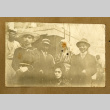
img
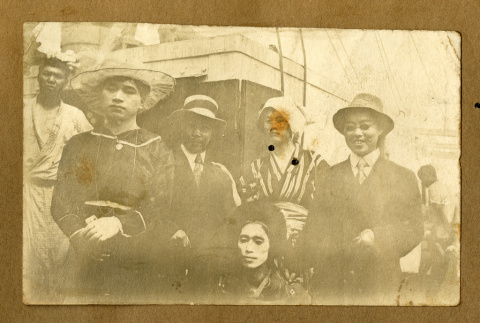
Japanese immigrants to Peru (ddr-csujad-33-3)
A group photograph of Japanese immigrants to Peru dressed in western clothes and kimonos. It appears to be taken on a passenger ship to Peru. A photo from an album: Colonisation Japonaise au Perou (csudh_cjp_0001), page 1. See this object in the California State Universities Japanese American Digitization project site: cjp_01_01_002
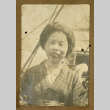
img
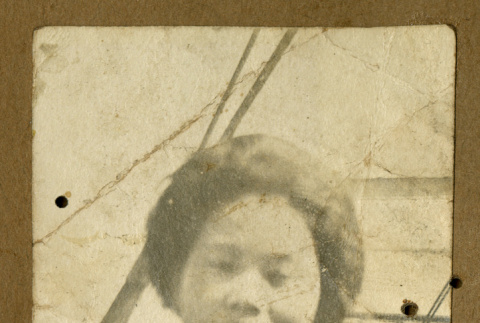
Japanese immigrant woman to Peru (ddr-csujad-33-6)
A photograph of a Japanese immigrant woman wearing a kimono. It appears to be taken on a passenger ship to Peru. A photo from an album: Colonisation Japonaise au Perou (csudh_cjp_0001), page 2. See this object in the California State Universities Japanese American Digitization project site: cjp_01_02_005
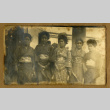
img
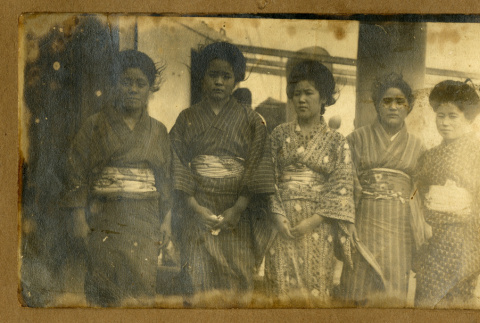
Japanese immigrant women to Peru (ddr-csujad-33-5)
A group photograph of Japanese immigrant women wearing kimonos. It appears to be taken on a passenger ship to Peru. A photo from an album: Colonisation Japonaise au Perou (csudh_cjp_0001), page 1. See this object in the California State Universities Japanese American Digitization project site: cjp_01_01_004
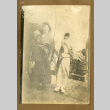
img
Japanese immigrant women to Peru (ddr-csujad-33-11)
Photographed are Japanese immigrant women in kimonos. It appears to be taken on a passenger ship to Peru. A photo from an album: Colonisation Japonaise au Perou (csudh_cjp_0001), page 2. See this object in the California State Universities Japanese American Digitization project site: cjp_01_02_010
doc
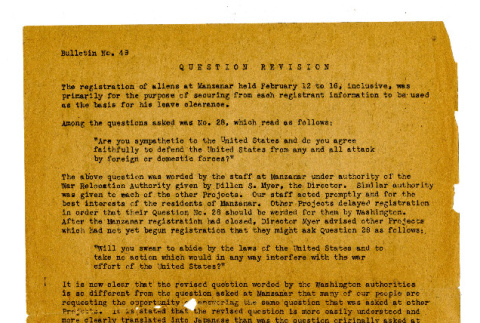
Bulletin, no. 49 (ddr-csujad-34-5)
An issue of "Bulletin" circulated in the Manzanar camp, titled: Question revision. An assessment, that is, "loyalty questionnaire," was conducted in the Manzanar camp on February 12-16 by the War Department and WRA prior to other camps. However, the question 28 was confusing and revised before the assessment was conducted in other camps. The bulletin informed …
img
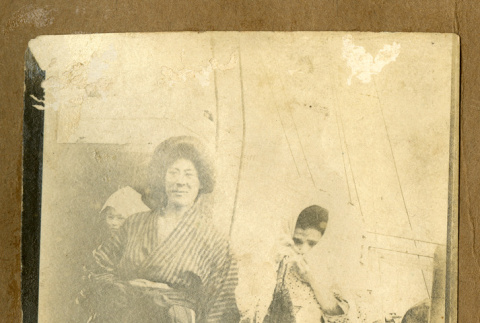
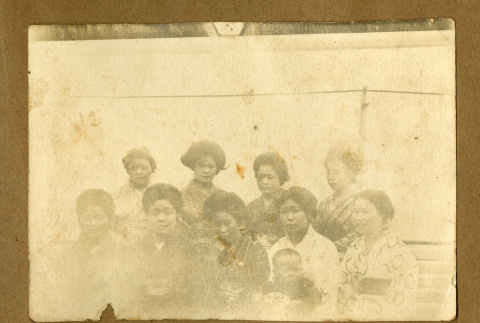
Japanese immigrant women to Peru (ddr-csujad-33-4)
A group photograph of Japanese immigrant women wearing kimonos. It appears to be taken on a passenger ship to Peru. One of them is holding a baby. A photo from an album: Colonisation Japonaise au Perou (csudh_cjp_0001), page 1. See this object in the California State Universities Japanese American Digitization project site: cjp_01_01_003
doc
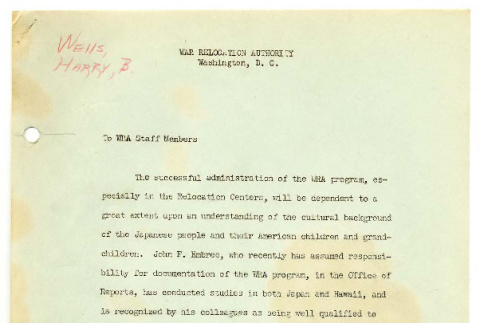
Dealing with Japanese-Americans by John F. Embree, Documents Section, Office of Reports (ddr-csujad-48-131)
Short report from WRA Documents Section leader John F. Embree on recommended attitudes, suggestions, and practices while interacting with incarcerated Japanese Americans. According to Embree, race is hereditary while culture is acquired, and Caucasians should refrain from making stereotypical images of "Japanese types." Embree describes the differences in culture and attitudes including questions of loyalty between …
doc
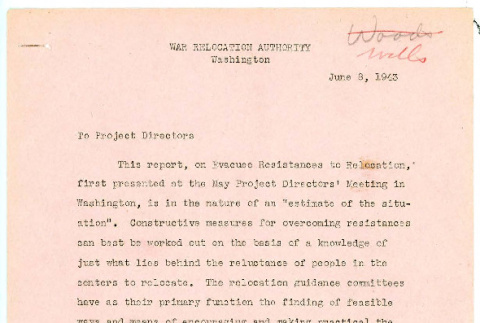
Letter from Dillon S. Myer, Director, War Relocation Authority, to Project Directors, June 8, 1943; Community analysis report, no. 5 (June 1943) (ddr-csujad-48-57)
Letter from Dillon S. Myer to Project Directors on June 8, 1943. Report on "Evacuee Resistances to Relocation" (or, leaving the incarceration camps). Evacuee resistance to relocation. Presents three "fundamental reasons" for the "relocation program" designed to encourage people to move out of the incarceration camps, then describes the "ideal relocation program," which would see "every …
doc
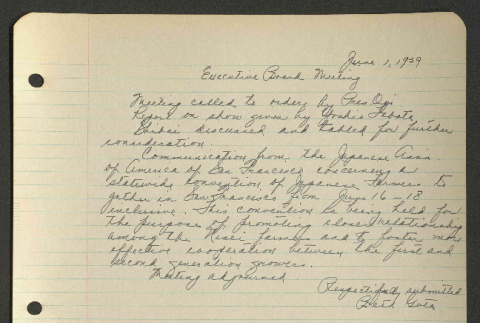
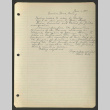
Executive board meeting of the Monterey Peninsula Japanese American Citizens League, June 1, 1939 (ddr-csujad-44-134)
Minutes of the Monterey Peninsula Japanese American Citizens League executive board meeting. Topics covered include the statewide convention of Japanese farmers, held to promote "closer relationships among the Nisei farmers and to foster more effective cooperation between the first and second generation grower." See this object in the California State Universities Japanese American Digitization project site: …
img
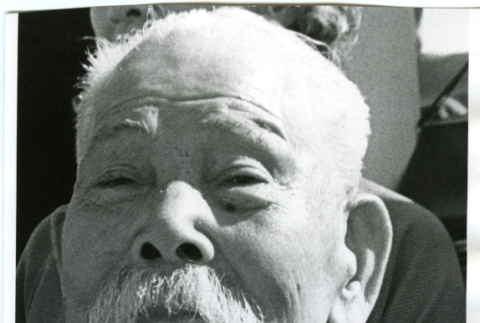
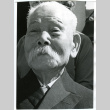
Photograph of Nisaburo Aibara (ddr-csujad-46-3)
Photograph of Nisaburo Aibara in 1968 as he receives the Ruby Medal of the Order of the Sacred Treasure from the Japanese government. See this object in the California State Universities Japanese American Digitization project site: csus_nac_0003
doc
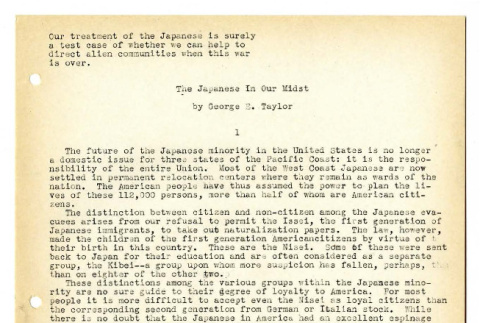
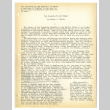
Japanese in Our Midst (ddr-csujad-19-50)
This is an article from the magazine "The Atlantic Monthly," April 1943 which provides a detailed description about the large number of Japanese American people settled in "permanent relocation centers" on the West Coast. It also talks about the distinction between citizen and non-citizen among "the Japanese evacuees." See this object in the California State Universities …
doc
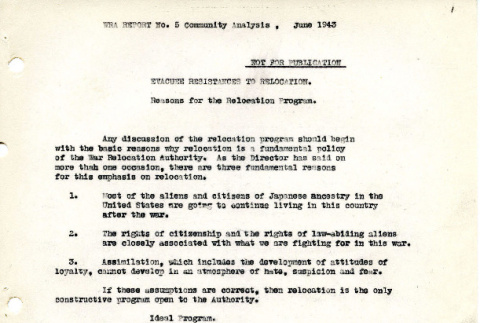
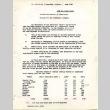
Community analysis report, no. 5, June 1943 (ddr-csujad-19-4)
Titled as: Evacuee resistance to relocation. Presents three "fundamental reasons" for the "relocation program" designed to encourage people to move out of the incarceration centers, then describes the "ideal relocation program," which would see "every one relocated before June 30, 1944." Provides statistics on numbers of people who left centers on indefinite leave in April and …
doc
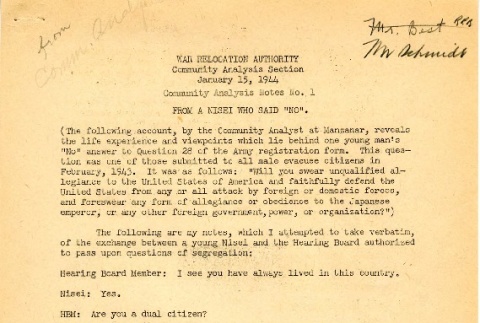
Community Analysis Notes, no. 1, January 15, 1944 (ddr-csujad-2-84)
Titled as: From a Nisei who said "No." Account by an unnamed Community Analyst at Manzanar of the "life experience and viewpoints" influencing a young man's "No" response to the Army registration form's Question 28. The account stems from the analyst's notes, reproduced verbatim, from an exchange between the young man and the Hearing Board authorized …
doc
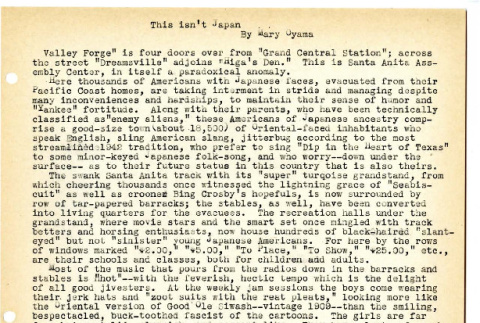
This isn't Japan (ddr-csujad-19-54)
This is an article from the magazine "Common Ground," autumn 1942, by Mary Oyama which describes the cultural differences between the younger Japanese American Nisei and the older Issei generations. See this object in the California State Universities Japanese American Digitization project site: WRA_02-10_02
img
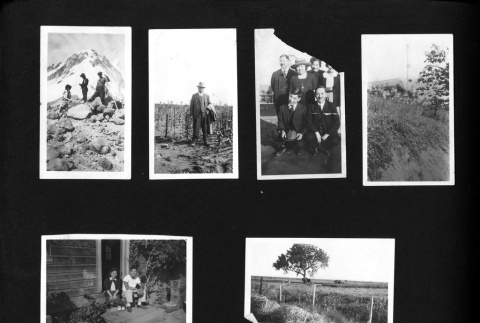
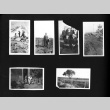
Japanese family (ddr-csujad-25-304)
A page from a photo album including Japanese family photographs. Pasted on the page are family photographs including Japanese men hiking, a group of Japanese men and women, and a Japanese man standing in a farm. The photographs are probably taken in the early 1900s. Location is unknown. See this object in the California State Universities …
img
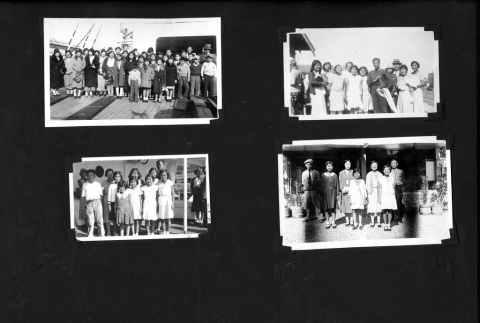
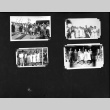
Taenaka family with the Japanese American community in Los Angeles, California (ddr-csujad-25-266)
A page from the Taenaka family photo album. Pasted on the page are four photographs including the Taenaka family and the Japanese American community in Los Angeles, California. Two of the photographs are taken on the deck of the ship. Another photograph includes a baseball player of the local Japanese American baseball team, Rafu Nippon. The …