
Issei
The earliest wave of Japanese immigrants, the Issei (first generation), had a strong sense of their ethnic identity and retained the values and traditions of their country of birth. Most came to the United States as sojourners and planned to return to Japan after earning their fortunes. In addition, discriminatory laws forbade them from becoming American citizens and from exercising other basic rights, such as owning or leasing land. Since they were thus prevented from fully taking part in American life, it is not surprising that many still identified strongly with the culture of their homeland.
Identity and values
(362)
Issei
(1037)
Related articles from the
Densho Encyclopedia :
Issei
1037 items
![Bokoku homon kinen [Memory of visiting home country] (ddr-csujad-25-128)](https://ddr.densho.org/media/cache/b7/13/b713bb38b9517a35465b019dc63dbd08.jpg)
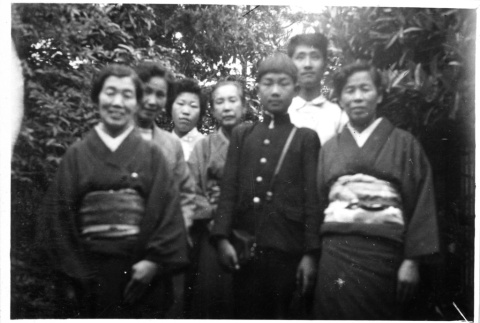
![Rosanzerusu Betsuin Kankodan [Koyasan Los Angeles Branch Tourist Party, Byodoin] (ddr-csujad-25-142)](https://ddr.densho.org/media/cache/6b/1c/6b1c3ca5a6336296744d1ec3f2abdf2e.jpg)
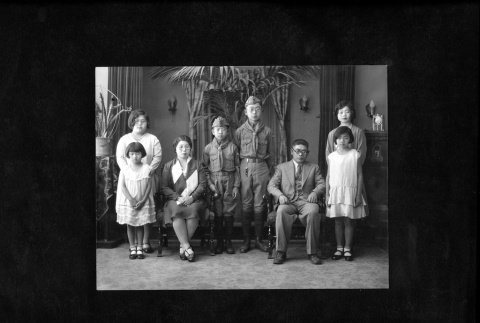
![Ko Nakatani Yukio sogi kinen [Commemorative photograph for the late Yukio Nakatani's funeral] (ddr-csujad-25-336)](https://ddr.densho.org/media/cache/9d/06/9d06687d7680efba10ed0eee920e79ff.jpg)
1037 items
doc
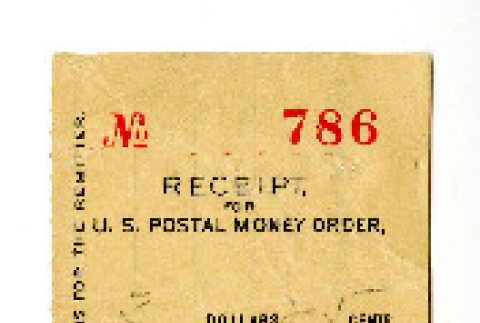
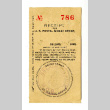
Receipt for U.S. postal money order (ddr-csujad-38-528)
A receipt for U.S. postal money order for 2 dollars 25 cents. Issued by M.O.B. [Money Order Branch] of Seligman, Arizona. It was probably purchased by Tomosuke Masukawa. It is enclosed in an envelope which is found in item: csudh_nao_0504. See this object in the California State Universities Japanese American Digitization project site: nao_05_01_001
img
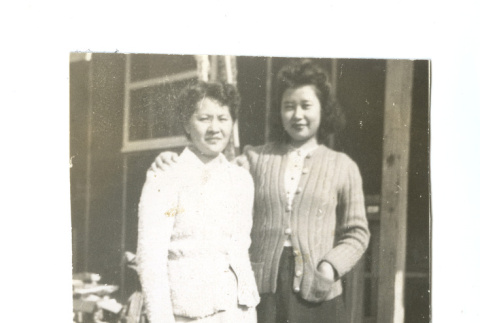
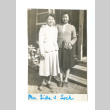
Helen Ida and Sally Sakaye Sasaki (ddr-csujad-38-267)
Photographed are Helen Ida and Sally Sakaye Sasaki, incarcerees at the Jerome camp in Arkansas. The photo was sent from Sally Sakaye Sasaki at the Jerome camp to Mitzi Masukawa Naohara at the Poston camp in Arizona. The caption reads: Mrs. Iida [Ida] and Sada. The handwritten note on the back side reads: Mrs. Helen Ida …
doc
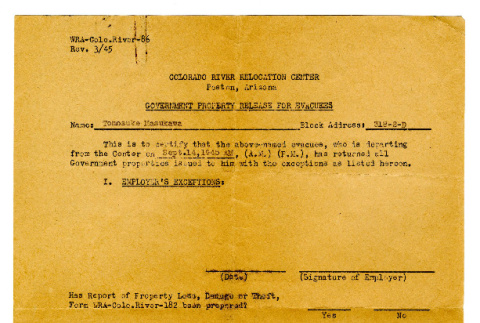
Government property release for evacuees (ddr-csujad-38-544)
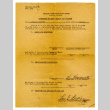
A form of "Government property release for evacuees" issued for Tomosuke Masukawa, Block 318-2-D at the Poston camp, Arizona. It is singed by Block Manager, H. Hanemoto and Leave Officer in the camp. See this object in the California State Universities Japanese American Digitization project site: nao_05_09_002
doc
Certificate of identification, Form AR-AE-23, Tomosuke Masukawa (ddr-csujad-38-541)
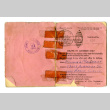
A certificate of identification for Tomosuke Masukawa including his personal data, photograph, registration number, fingerprint, signature, and, "Notice to holder of this certificate." Form AR-AE-23. See this object in the California State Universities Japanese American Digitization project site: nao_05_07_002
doc
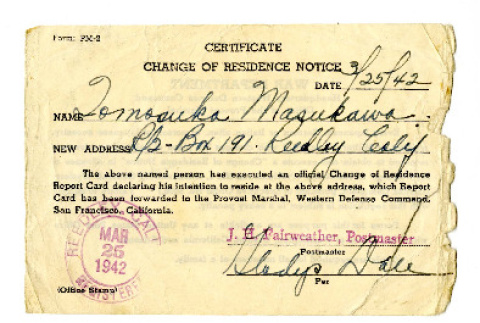
Certificate change of residence notice, Form PM-2, Tomosuke Masukawa (ddr-csujad-38-542)
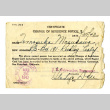
A certificate change of residence notice, Form PM-2, for Tomosuke Masukawa issued by a postmaster in Reedley, California. Form PM-2. See this object in the California State Universities Japanese American Digitization project site: nao_05_08_001
img
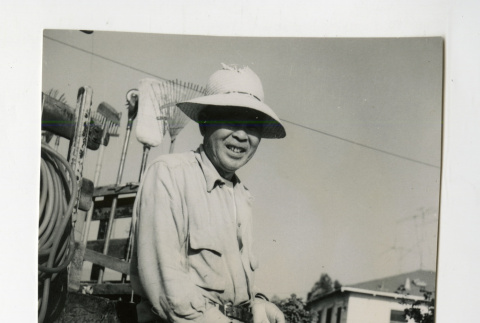
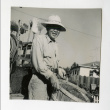
Tomosuke Masukawa (ddr-csujad-38-312)
See this object in the California State Universities Japanese American Digitization project site: nao_02_19_013
doc
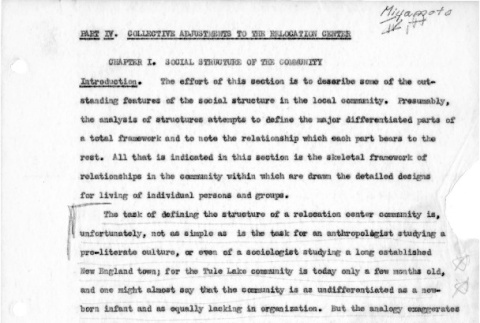
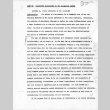
Part IV. Collective adjustments to the relocation center, chapter I: social structure of the community (ddr-csujad-26-5)
Description of camp social structures including "Caucasian-Japanese relations" highlighting tension and hostility by three groups that most directly involve Japanese Americans and the incarceration: The War Relocation Authority (WRA), the US Army and the American public. Using case - studies, the manuscript examines these relationships and discusses the circumstances of incarceration contributing to differences in social …
doc
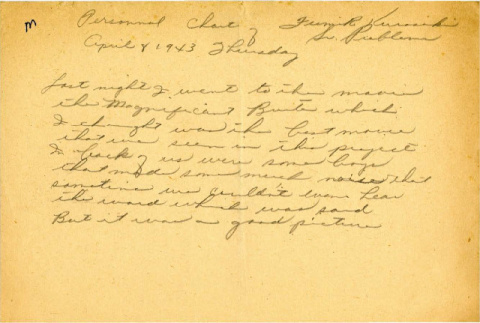
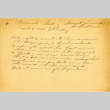
Chapter 8, 9, 10 personality cards (ddr-csujad-26-35)
Journal entries written by high school students discussing their observations and perspectives on a variety of topics including movies, dances, dissatisfaction with recreation, family dynamics, desire to leave camp, cultural and generational differences, and weather. Each entry includes the full date and student name. The entries were part of a class assignment and collected for the …
doc
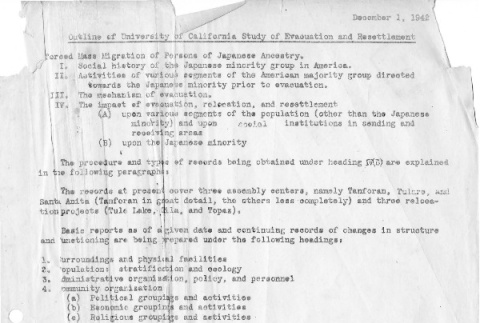
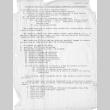
Outline of University of California study of evacuation and resettlement (ddr-csujad-26-2)
Outline for an academic social science study, the Japanese American Evacuation and Resettlement Study (JERS), led by the University of California of the incarceration of Japanese Americans during World War II. Outline highlights area of administrative, social, political and personal areas to be studied by a team of researchers encamped with incarcerees. See this object in …
doc
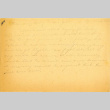
Personality cards (ddr-csujad-26-43)
Journal entries written by high school students discussing their observations and perspectives on a variety of topics including family interactions, memories, homesickness, friendships, social interactions, school, self-reflection, juvenile delinquency, peer behaviors, death, religion, opinions, and worldviews. Each entry includes the full date and student name. The entries were part of a class assignment and collected for …
doc
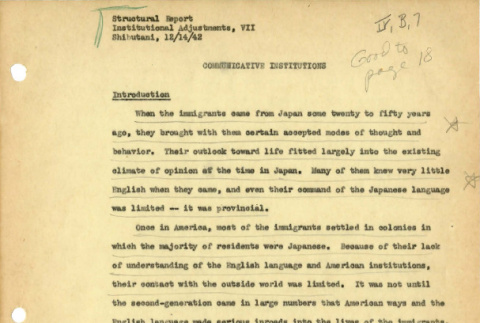
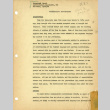
Structural report, institutional adjustments, VII: communicative institutions (ddr-csujad-26-13)
Description of observed language skills, languages spoken, and cultural differences contributing to difficulty in communication among incarcerees. The report defines communicative institutions "as means of passing information from place or person to another." Report compiled as a portion of the Japanese American Evacuation and Resettlement Study (JERS). See this object in the California State Universities Japanese …
doc
Broadcast affair Tule Lake (ddr-csujad-26-18)
Chronological account of an Office of War Information visit to Tule Lake to ask incarcerees to broadcast about the conditions of the incarceration camp in response to reported propaganda broadcasts on Tokyo radio. Report describes conditions under which the broadcast would have been made, details of meetings, and arguments for and against the broadcast. Report compiled …
img
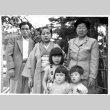
Kamie Taenaka, family reunion (ddr-csujad-25-173)
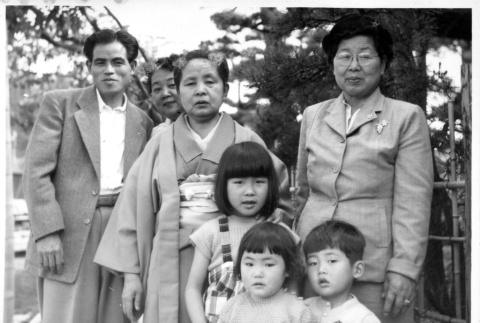
A group photograph of Kamie Taenaka and her relatives probably taken in Hamamatsu, Japan. The same image is found in item: ucsb_jia_0128. See this object in the California State Universities Japanese American Digitization project site: jia_08_03_045
img
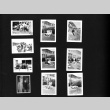
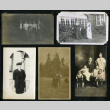
Japanese association (ddr-csujad-25-306)
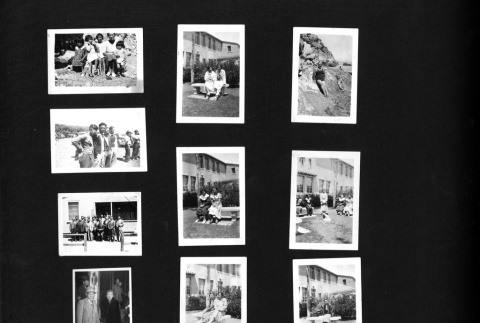
A page from a photo album including Japanese family photographs. Pasted on the page are family photographs including Japanese men, women and children. One of the photographs captures a group of Japanese men who belong to the local Japanese association. Also include photographs of Japanese-American females taken at school and dated June 15, 1934. See this …
img
Japanese family (ddr-csujad-25-10)
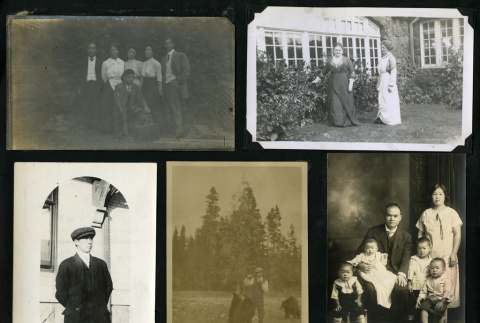
A page from an album containing Japanese family photographs. Five photographs are pasted on the page. All photographs appear to be taken in Washington in the early 1900s. Include Japanese men in suits, women in western dress, and children. Include a family portrait which is taken at "Jackson Studio" in Seattle, Washington. Also include one photograph …
img
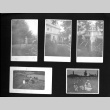
Japanese family (ddr-csujad-25-299)
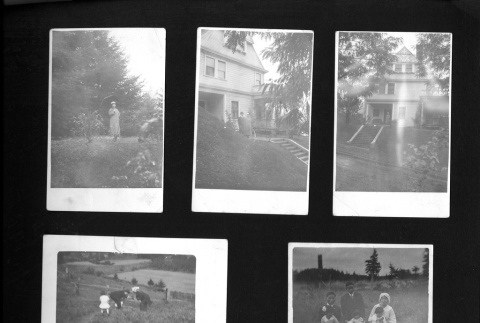
A page from a photo album including Japanese family photographs. Five photographs are pasted on the page, including photographs of a Japanese couple standing in front of a house and a photograph of a Japanese family having a picnic. The photographs are probably taken in the early 1900s. Location is unknown. See this object in the …
![Bokoku homon kinen [Memory of visiting home country] (ddr-csujad-25-128)](https://ddr.densho.org/media/cache/b4/60/b460681538e5970aaae7aa2c20f83134.jpg)
img
Bokoku homon kinen [Memory of visiting home country] (ddr-csujad-25-128)
An album titled as Bokoku homon kinen [Memory of visiting home country] containing mainly photographs taken during Kamie Taenaka's trip to Japan. Kamie Taenaka participates in the Koyasan Los Angeles Branch Tourist Party tour in 1955, which is arranged by Koyasan Los Angeles Branch and conducted by Nihon Kotsu Kosha, a Japanese tourist agency. She also …
img
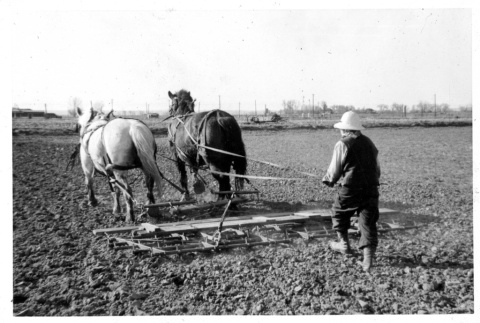
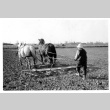
Taenaka family in farm (ddr-csujad-25-100)
A photograph of a farmer, probably Taenaka family member, and a horse drawn plow in a sugar beet farm. The photograph appears to be taken in Brighton, Colorado. See this object in the California State Universities Japanese American Digitization project site: jia_08_01_042
img
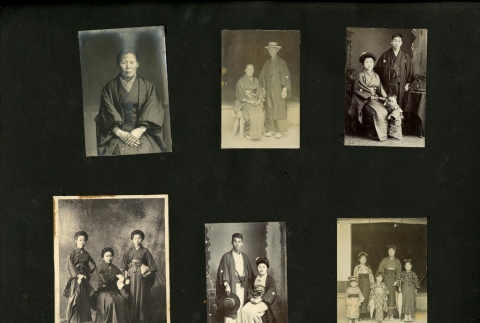
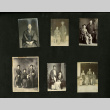
Family in Japan (ddr-csujad-25-221)
A page of the Taenaka family photo album. Pasted on the page are six photographs of the Taenakas' relatives in Japan. Include Japanese men, women, and children dressed in kimono. All are most likely taken in Japan in the early 1900s. See this object in the California State Universities Japanese American Digitization project site: jia_09_01_016
img
Family in Japan (ddr-csujad-25-154)
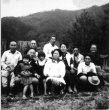
A photograph of the local Japanese, probably taken in Totsugawa, Japan. They appear to be the Taenakas' relatives. This photograph is found in item: ucsb_jia_0128. See this object in the California State Universities Japanese American Digitization project site: jia_08_03_026
img
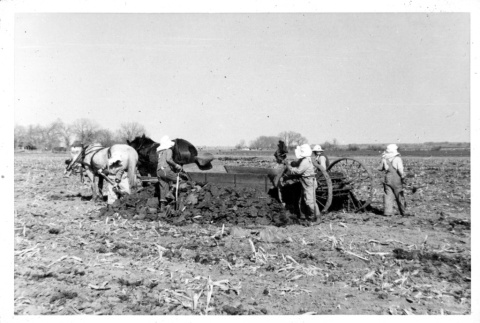
Taenaka family in farm (ddr-csujad-25-103)
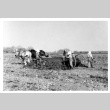
A photograph of farmers, probably the Taenaka family, and a horse drawn plow in a sugar beet farm. The photograph appears to be taken in Brighton, Colorado. See this object in the California State Universities Japanese American Digitization project site: jia_08_01_045
img
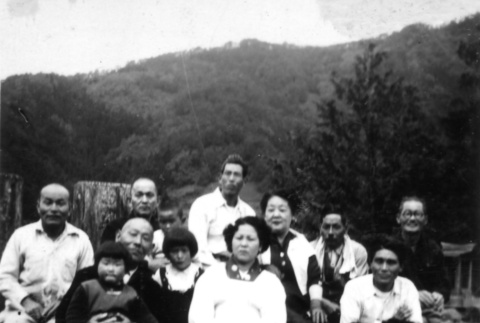
Family in Japan (ddr-csujad-25-191)
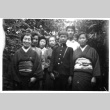
A photograph of local Japanese men and women taken in Nagahama, Japan, around 1955. They are the Taenakas' relatives, including Ukichi Taenaka's wife and son. The same image is found in item: ucsb_jia_0128. See this object in the California State Universities Japanese American Digitization project site: jia_08_03_063
![Rosanzerusu Betsuin Kankodan [Koyasan Los Angeles Branch Tourist Party, Byodoin] (ddr-csujad-25-142)](https://ddr.densho.org/media/cache/2b/c7/2bc76feac217539cbdfbcad4642d4813.jpg)
img
Rosanzerusu Betsuin Kankodan [Koyasan Los Angeles Branch Tourist Party, Byodoin] (ddr-csujad-25-142)
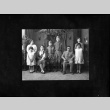
A group photograph of Koyasan Los Angeles Branch Tourist Party, including Kamie Taenaka, taken at Byodoin, a temple in Kyoto, Japan. The same image is found in item: ucsb_jia_0128. See this object in the California State Universities Japanese American Digitization project site: jia_08_03_014
img
Taenaka family portrait (ddr-csujad-25-256)
A page from the Taenaka family photo album. Pasted on the page is a portrait of the Taenaka family taken in Los Angeles, California around 1930. Includes: Tamesaburo, Kamie, Haruko, Yaeko, Ukichi, Toshikuni, Chiyoko, and Saiko. See this object in the California State Universities Japanese American Digitization project site: jia_09_01_051
![Ko Nakatani Yukio sogi kinen [Commemorative photograph for the late Yukio Nakatani's funeral] (ddr-csujad-25-336)](https://ddr.densho.org/media/cache/37/7f/377f2efa4862ecdab05e4f00d012e054.jpg)
img
Ko Nakatani Yukio sogi kinen [Commemorative photograph for the late Yukio Nakatani's funeral] (ddr-csujad-25-336)
A group photograph of the attendees of Yukio Nakatani's funeral held at a Buddhist temple. The photograph is taken on August 23, 1937 by "Aiko," a photo studio in Seattle, Washington. Funeral flowers are offered by: Yamaguchi Prefecture Association, Holiness Church, Kamejiro Yuasa, Yoshihito Yuasa, Shigezaburo Fukuhara, Fumikichi Okazaki, Sadao Nakatani, Cannery Workers, and others. See …