Arrival

Labor contractors transported workers from Japan to work on Hawaiian sugar plantations. Many Japanese then emigrated to the mainland and worked for lumber companies, railroads, and canneries. In the early 1900s these immigrants began to establish families through the picture bride system (shashin-kekkon, literally "photograph marriage"). Immigrant bachelors sent photographs and information about themselves to go-betweens (baishakunin) who arranged meetings with the families in Japan. Marriage ceremonies took place in Japan (without bridegrooms), then the new brides traveled to the United States to join their husbands. Many arrived to discover that their husbands had misrepresented their appearances or situations.

Immigration and citizenship (488)
Arrival (214)

Related articles from the Densho Encyclopedia :
Immigration
Facilities
Format
Genre
Usage

Use <Ctrl> or (⌘) keys to select multiple terms

214 items
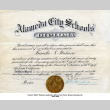
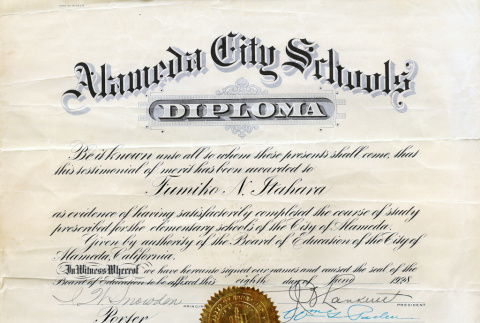
Elementary School diploma for Fumiko N. Itahara (ddr-ajah-6-514)
doc Elementary School diploma for Fumiko N. Itahara (ddr-ajah-6-514)
Caption below image: Fumiko "Nellie" Itahara's graduation diploma from Porter School, Alameda, CA. June 1928
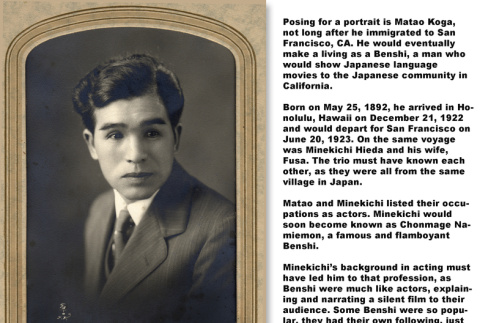
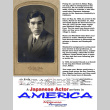
Document titled:  A Japanese Actor arrives in America (ddr-ajah-6-167)
doc Document titled: A Japanese Actor arrives in America (ddr-ajah-6-167)
Includes portrait of Matao Koga taken at the T.Y. Sato Studio in San Francisco, portion of ships manifest from 1923 and biographical details of Koga's life
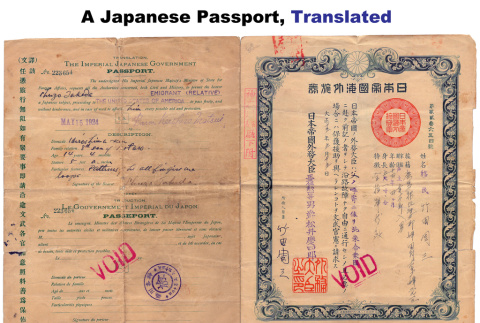
Image of Shuzo
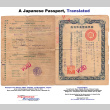
doc Image of Shuzo "Bill" Takeda's Japanese passport titled: A Japanese Passport, translated (ddr-ajah-6-508)
Caption below image: Passport for Shuzo "Bill" Takeda, of Hiroshima, Japan so he could immigrate to America / May 15, 1924. Shozo would later marry Fumiko "Nellie" Itahara and live in Alameda, CA.
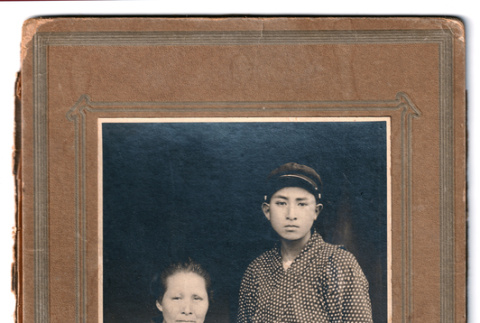
Portrait of Shuzo Takeda and his mother (ddr-ajah-6-512)
img Portrait of Shuzo Takeda and his mother (ddr-ajah-6-512)
Caption below photo: At right is Shuzo Takeda, 14, just prior to leaving Japan for American. His mother is to the left. He was her eighth son. He arrived in San Francisco, CA aboard the last ship allowed to come from Japan, as laws enacted in 1924 effectively ended Japanese immigration to America
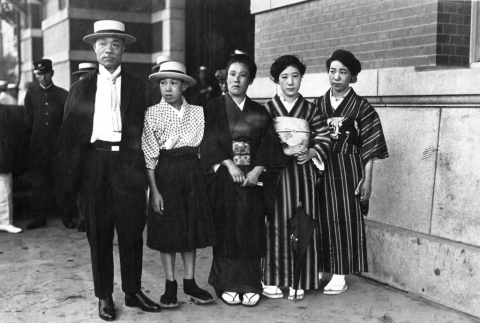
Family standing on sidewalk (ddr-ajah-6-328)
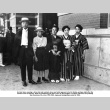
img Family standing on sidewalk (ddr-ajah-6-328)
Caption below photo: An Issei man, wearing a straw hat and western shoes and what appears to be his family, perhaps right after the women arrive in America. Note the traditional geta shoes worn by his daughter. Location unknown, but probably San Francisco, CA circa 1915-1924. Japanese Immigration ended in 1924.
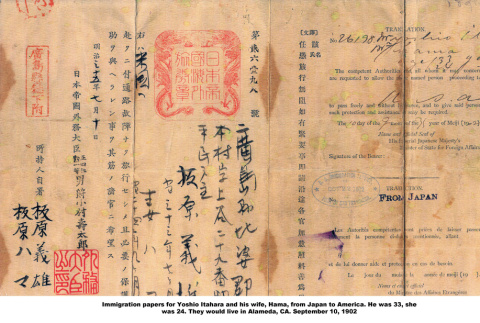
Immigration document (ddr-ajah-6-494)
doc Immigration document (ddr-ajah-6-494)
Caption below document: Immigration papers for Yoshio Itahara and his wife, Hama, from Japan to American. He was 33, she was 24. They would live in Alameda, CA., September 10, 1902
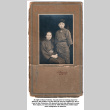
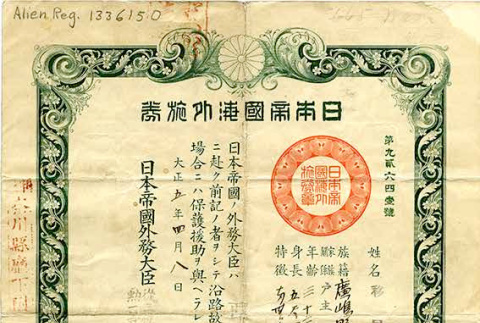
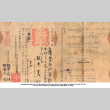
The Imperial Japanese Government Passport for Moritaro Ishida, in Japanese (ddr-csujad-29-6)
doc The Imperial Japanese Government Passport for Moritaro Ishida, in Japanese (ddr-csujad-29-6)
A passport for Moritaro Ishida issued on April 8, 1916. Registered by Consulate General of Japan in Seattle on June 21, 1923. See this object in the California State Universities Japanese American Digitization project site: 1339_M01_01
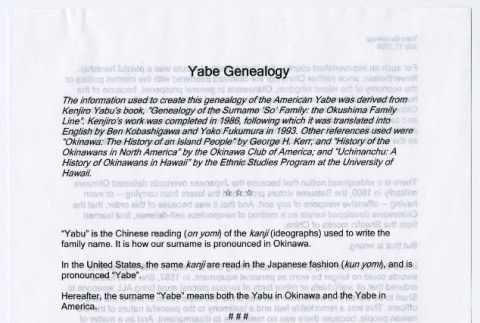
Yabe Genealogy (ddr-ohs-1-68)
doc Yabe Genealogy (ddr-ohs-1-68)
Genealogy of the Yabe (also written as Yabu) family history from its roots in Okinawa to its branches in the United States, spanning more than 500 years of documented lineage.
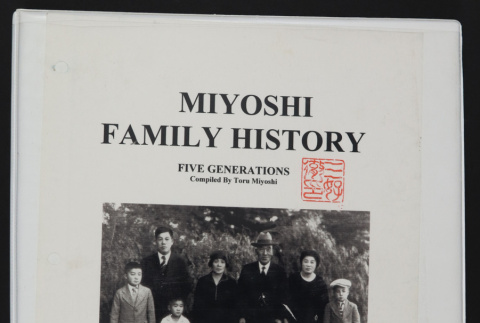
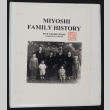
Miyoshi Family History part 1 (ddr-densho-480-174)
doc Miyoshi Family History part 1 (ddr-densho-480-174)
Details Miyoshi family history, including Japanese ancestry, immigration to the United States, individual family member's life stories, and life at the Gila River Concentration Camp.
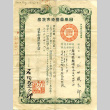
Passport or Visa (ddr-densho-430-36)
doc Passport or Visa (ddr-densho-430-36)
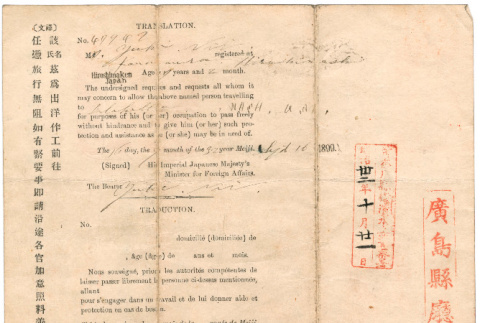
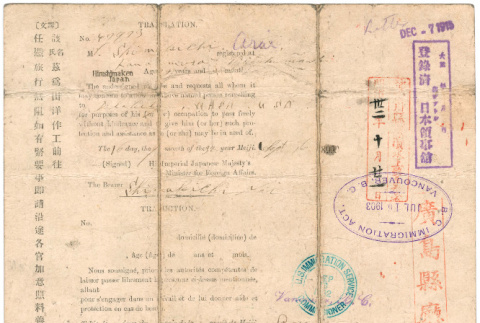
Passport or Visa documents for Yuki Yone Arai. Last page is photocopy of page 1 with notes.
Passport or Visa (ddr-densho-430-35)
doc Passport or Visa (ddr-densho-430-35)
Passport or Visa documents for Shimakichi Arai. Last page is photocopy of page 1 with notes.
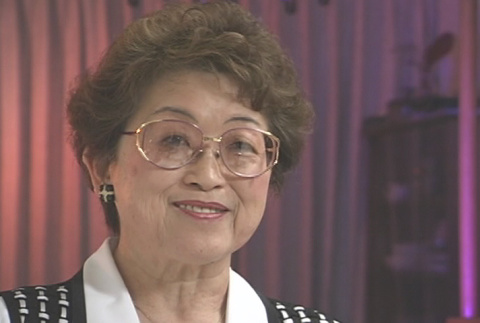
Louise Kashino Segment 1 (ddr-densho-1000-31-1)
vh Louise Kashino Segment 1 (ddr-densho-1000-31-1)
Family background: working odd jobs around Washington state

For the first hour of this interview, an additional camera crew from KCTS Television was also present.

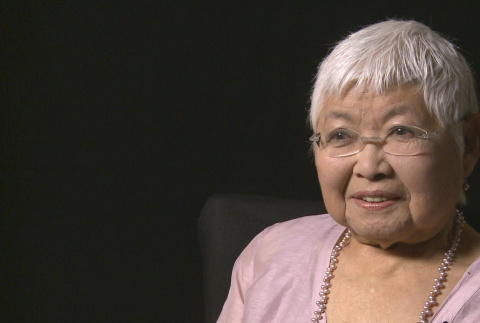
Michiko Frances Chikahisa Interview Segment 4 (ddr-densho-1000-347-4)
vh Michiko Frances Chikahisa Interview Segment 4 (ddr-densho-1000-347-4)
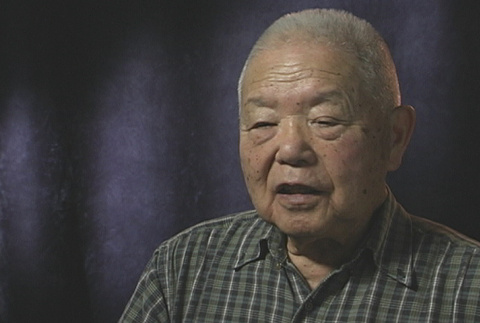
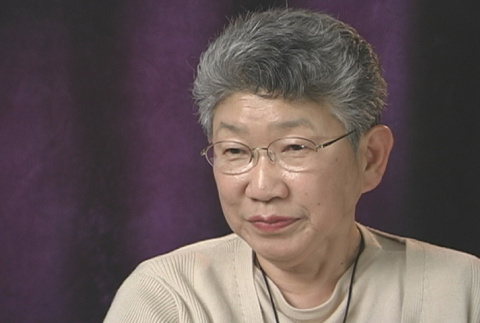
Mother's arrival in the U.S. as a "picture bride"

This material is based upon work assisted by a grant from the Department of the Interior, National Park Service. Any opinions, finding, and conclusions or recommendations expressed in this material are those of the author(s) and do not necessarily reflect the views of the Department of the …

Floyd Shimomura Segment 3 (ddr-densho-1000-466-3)
vh Floyd Shimomura Segment 3 (ddr-densho-1000-466-3)
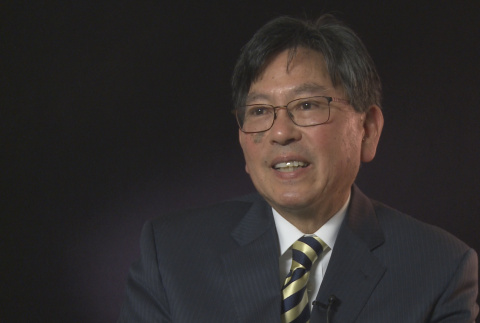
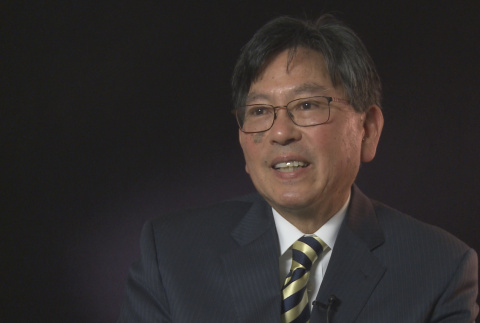
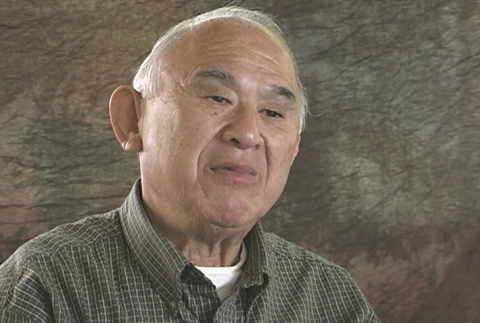
Grandparents' arranged marriage and running a boarding house
Floyd Shimomura Segment 2 (ddr-densho-1000-466-2)
vh Floyd Shimomura Segment 2 (ddr-densho-1000-466-2)
Grandfather's family background: working in the U.S. as a sharecropper
Bob Suzuki Segment 1 (ddr-densho-1000-452-1)
vh Bob Suzuki Segment 1 (ddr-densho-1000-452-1)
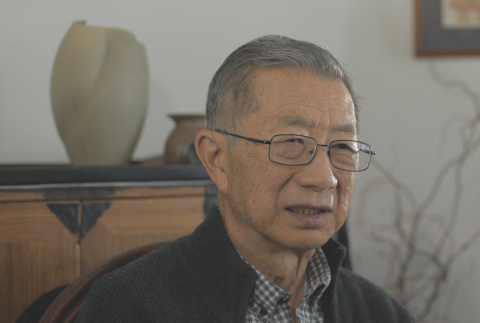
Father's family background: snuck into the U.S. as an illegal immigrant
Gene Akutsu Segment 1 (ddr-densho-1000-1-1)
vh Gene Akutsu Segment 1 (ddr-densho-1000-1-1)
Immigrant parent's arrival in U.S. and means of making a living
Isami Nakao - Kazuko Nakao Segment 5 (ddr-densho-1000-68-5)
vh Isami Nakao - Kazuko Nakao Segment 5 (ddr-densho-1000-68-5)
Kay's family background: parents' arrival in the U.S., getting into farming
Toshi Nagamori Ito Interview Segment 2 (ddr-densho-1000-309-2)
vh Toshi Nagamori Ito Interview Segment 2 (ddr-densho-1000-309-2)
Mother's immigration to the United States: becoming director of a shelter for "picture brides"
This material is based upon work assisted by a grant from the Department of the Interior, National Park Service. Any opinions, finding, and conclusions or recommendations expressed in this material are those of the author(s) and do not necessarily reflect the views …
Betty Morita Shibayama Interview Segment 1 (ddr-densho-1000-152-1)
vh Betty Morita Shibayama Interview Segment 1 (ddr-densho-1000-152-1)
Family background: grandfather "jumped ship" on way to Mexico and landed in Seattle, Washington
API