Japanese language schools

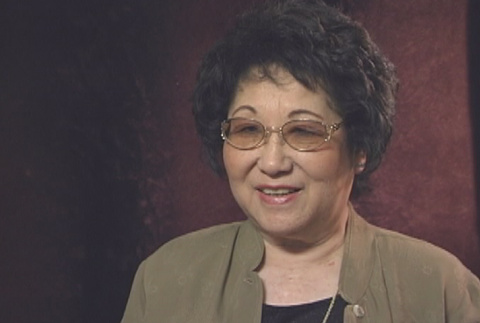
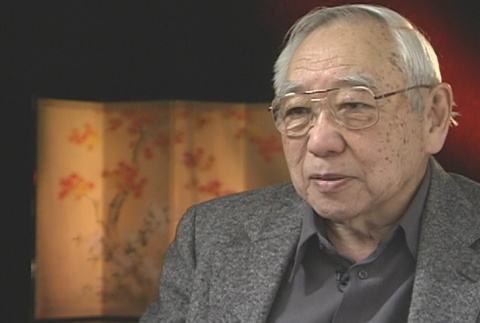
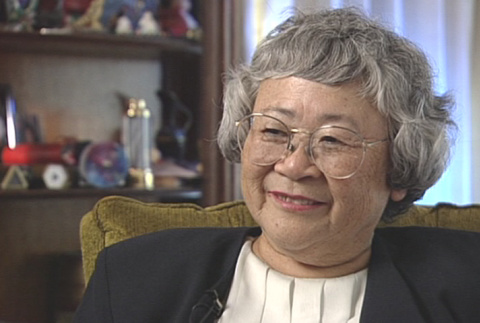
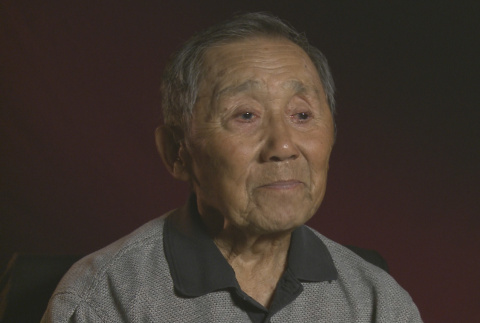
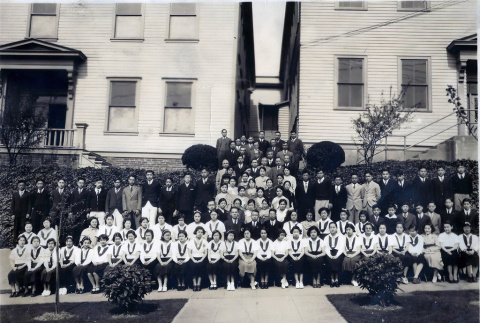
Each day, after public school ended, Nisei (second-generation) children attended Japanese language schools for an hour's instruction in Japanese language and culture. Issei (first-generation) parents wanted their children to learn Japanese to help them succeed in the community and if they ever moved to Japan. The Nisei were moderately interested at best, and language acquisition was spotty. Japanese language schools were considered suspect after the attack on Pearl Harbor, and their principals were among the first arrested.

Education (363)
Japanese language schools (240)

Related articles from the Densho Encyclopedia :
Japanese language schools, Takie Okumura
Facilities
Format
Genre
Usage

Use <Ctrl> or (⌘) keys to select multiple terms

240 items
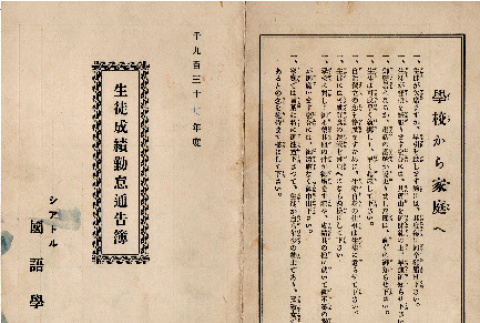
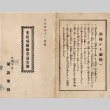
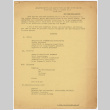
Japanese Language School Report Card (ddr-densho-474-144)
doc Japanese Language School Report Card (ddr-densho-474-144)
Starr Urakawa's report card from the Seattle Japanese Language School (Seattle Kokugo Gakko)
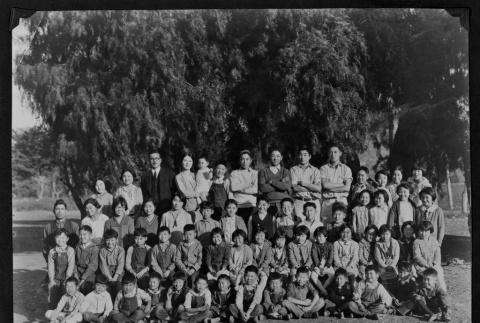
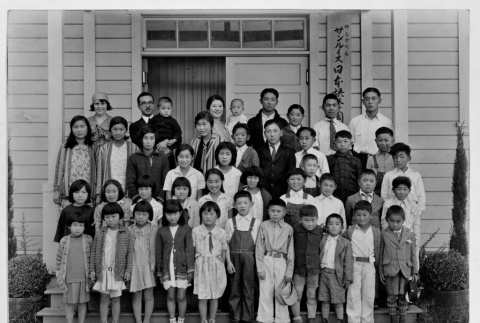
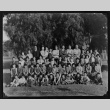
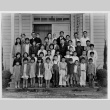
Children and staff outside San Luis Japanese Language School, 1929 (ddr-densho-1007-53)
img Children and staff outside San Luis Japanese Language School, 1929 (ddr-densho-1007-53)
Scanned from negative
Bottom inscription: San Luis Japanese Language School December, 1929
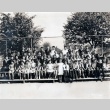
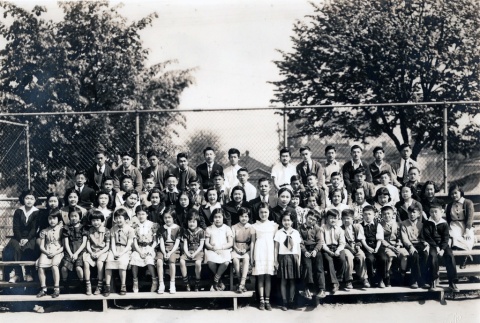
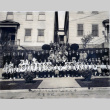
Haruo and Takako Hashiguchi with their students of the Toko Juku Japanese School (ddr-densho-474-187)
img Haruo and Takako Hashiguchi with their students of the Toko Juku Japanese School (ddr-densho-474-187)
Haruo Hashiguchi and Takako Nogaki Hashiguchi are in center. In the back row, fourth from the right is Hachiro Hashiguchi
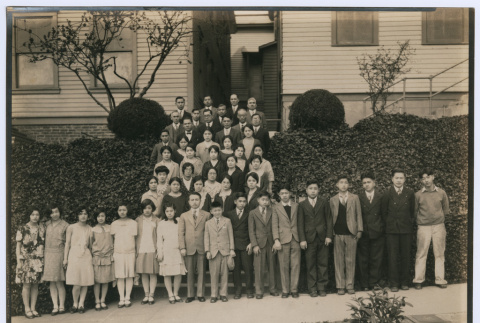
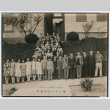
Children and staff outside San Luis Japanese Language School, 1930 (ddr-densho-1007-51)
img Children and staff outside San Luis Japanese Language School, 1930 (ddr-densho-1007-51)
Scanned from negative
Bottom inscription: San Luis Japanese Language School December, 1930. Est. 1926
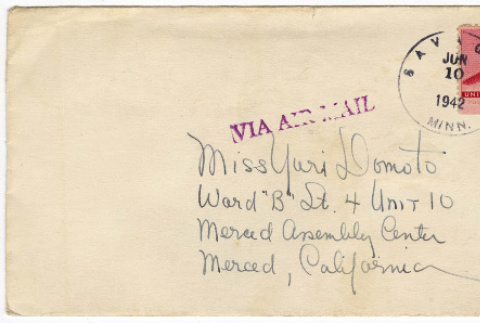
Letter to Yuri Domoto from Yoshito Shibata (ddr-densho-356-220)
doc Letter to Yuri Domoto from Yoshito Shibata (ddr-densho-356-220)
Envelope and letter to Yuriko Domoto Tsukada from Yoshito Shibata in which he tells Yuriko about his transfer to Camp Savage to study Japanese and the general schedule of the language school. He inquires about her family's adjustment to life in the Assembly center and provides her with his new address.
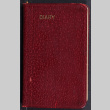
Yuriko Domoto diary 1927 (ddr-densho-356-690)
doc Yuriko Domoto diary 1927 (ddr-densho-356-690)
Yuriko Domoto Tsukada's daily diary from 1927. All the diary pages after March 7th were not scanned as they were blank, however the monthly accounting pages in the back were scanned.
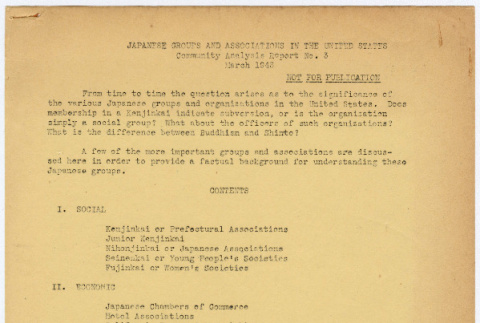
Japanese Groups and Associations in the United States: Community Analysis Report No. 3 March 1943 (ddr-densho-356-1031)
doc Japanese Groups and Associations in the United States: Community Analysis Report No. 3 March 1943 (ddr-densho-356-1031)
Japanese Groups and Associations in the United States: Community Analysis Report No. 3 March 1944. Report reviewing Japanese social groups like Kenjinkai to determine if they indicate subversion within membership. Also attempts to determine the differences between Buddhism and Shintoism.
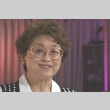
Louise Kashino Segment 5 (ddr-densho-1000-31-5)
vh Louise Kashino Segment 5 (ddr-densho-1000-31-5)
Memories of attending Seattle's Japanese Language School

For the first hour of this interview, an additional camera crew from KCTS Television was also present.
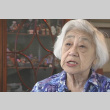
Nobu Suzuki Interview I Segment 9 (ddr-densho-1000-84-9)
vh Nobu Suzuki Interview I Segment 9 (ddr-densho-1000-84-9)
Attending elementary and Japanese schools

References are made to several of Nobu Suzuki's personal papers, which are currently available for public perusal at the University of Washington's Manuscripts and University Archives.
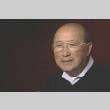
Fred Shiosaki Interview Segment 7 (ddr-densho-1000-190-7)
vh Fred Shiosaki Interview Segment 7 (ddr-densho-1000-190-7)
Memories of traveling into Spokane every weekend to attend Japanese language school

This interview was conducted as part of a project to capture stories of the Japanese American community of Spokane, Washington. Densho worked in collaboration with the Northwest Museum of Arts and Culture.
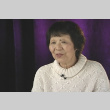
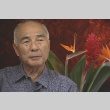
Hiroko Nakashima Segment 3 (ddr-densho-1000-69-3)
vh Hiroko Nakashima Segment 3 (ddr-densho-1000-69-3)
Attending elementary school and Japanese language school in Spokane, Washington
Sadaichi Kubota Segment 4 (ddr-densho-1000-40-4)
vh Sadaichi Kubota Segment 4 (ddr-densho-1000-40-4)
Development of Nisei values in prewar Hawaii, Japanese language school

This interview was conducted at the 1998 Americans of Japanese Ancestry Veterans National Convention, held in Honolulu, Hawaii. Because of the full conference schedule, interviews conducted at the reunion were generally shorter in length than the typical Densho interview and tend to concentrate on the individual's …
Fumiko Uyeda Groves Segment 12 (ddr-densho-1000-10-12)
vh Fumiko Uyeda Groves Segment 12 (ddr-densho-1000-10-12)
Attending Bailey Gatzert Elementary School and the Japanese Language School
Kazue Yamamoto Interview Segment 6 (ddr-densho-1000-197-6)
vh Kazue Yamamoto Interview Segment 6 (ddr-densho-1000-197-6)
Memories of Japanese language school: strict atmosphere

This interview was conducted as part of a project to capture stories of the Japanese American community of Spokane, Washington. Densho worked in collaboration with the Northwest Museum of Arts and Culture.
Frances Midori Tashiro Kaji Interview Segment 6 (ddr-densho-1000-258-6)
vh Frances Midori Tashiro Kaji Interview Segment 6 (ddr-densho-1000-258-6)
Attending Japanese language school

This material is based upon work assisted by a grant from the Department of the Interior, National Park Service. Any opinions, finding, and conclusions or recommendations expressed in this material are those of the author(s) and do not necessarily reflect the views of the Department of the Interior.
Mary Hirata Segment 8 (ddr-densho-1000-22-8)
vh Mary Hirata Segment 8 (ddr-densho-1000-22-8)
Memories of prewar Seattle: Alki Beach, walking to "Tip School"
API