
5022 items
![Higashi Hongwanji [Honganji] (ddr-csujad-5-233)](https://ddr.densho.org/media/cache/f9/b1/f9b12798ade107b9db57916a6ff410be.jpg)

![Letter from Megumi Sasaki to Mr. S. Okine, January 22, 1948 [in Japanese] (ddr-csujad-5-244)](https://ddr.densho.org/media/cache/b2/18/b218515d9fb17ec64e05f946d132ed87.jpg)
![Letter from Fusako Sasaki to Mr. S. Okine, June 15, 1948 [in Japanese] (ddr-csujad-5-293)](https://ddr.densho.org/media/cache/7e/ea/7eead1b002623d814ef3326b09a594db.jpg)
5022 items
img
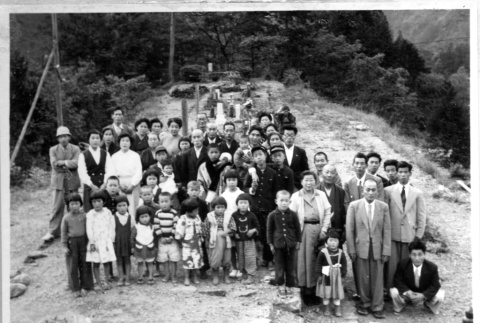
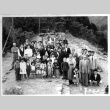
Kamie Tanaka, ritual event (ddr-csujad-25-160)
A photograph of Kamie Taenaka and her relatives taken at a ritual event in Totsugawa, Japan. The same image is found in item: ucsb_jia_0128. See this object in the California State Universities Japanese American Digitization project site: jia_08_03_032
img
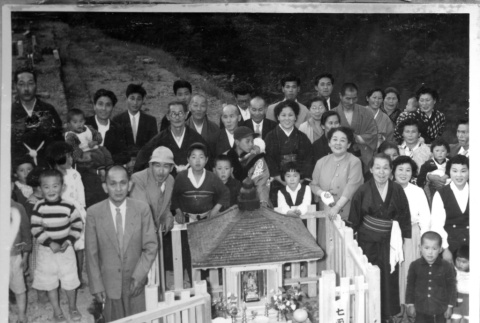
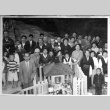
Kamie Taenaka, ritual event (ddr-csujad-25-159)
A photograph of Kamie Taenaka and her relatives taken at a ritual event in Totsugawa, Japan. The same image is found in item: ucsb_jia_0128. See this object in the California State Universities Japanese American Digitization project site: jia_08_03_031
img
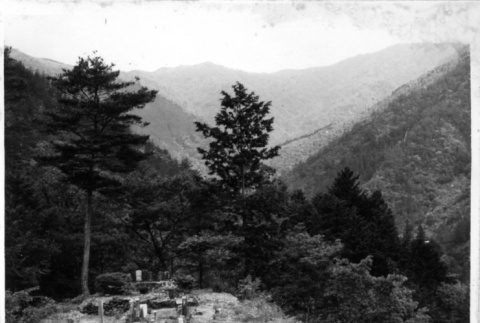
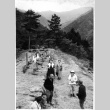
Totsugawa, ritual event (ddr-csujad-25-163)
A photograph of Kamie Taeneka and her relatives taken at a ritual event in Totsugawa, Japan. The same image is found in item: ucsb_jia_0128. See this object in the California State Universities Japanese American Digitization project site: jia_08_03_035
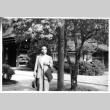
img
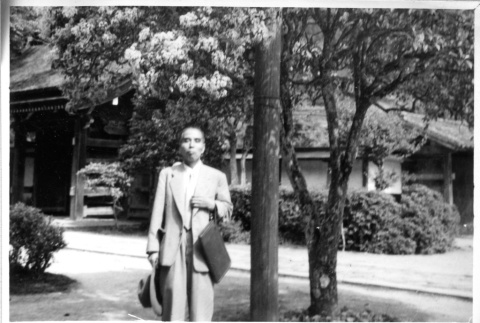
Murooji (ddr-csujad-25-186)
A photograph of a tourist taken at Murooji, a temple in Nara, Japan after the war. The same image is found in item: ucsb_jia_0128. See this object in the California State Universities Japanese American Digitization project site: jia_08_03_058
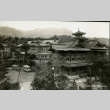
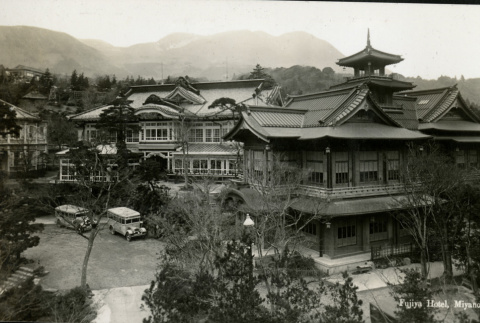
img
Fujiya Hotel (ddr-csujad-11-161)
A photograph of the Fujiya Hotel, located in Miyanoshita in the Hakone area of Japan. From page 58 of: Tazu Kawamoto photo album (csudh_taz_0001). See this object in the California State Universities Japanese American Digitization project site: taz_01_58_001
![Higashi Hongwanji [Honganji] (ddr-csujad-5-233)](https://ddr.densho.org/media/cache/ba/07/ba073cca24175d29df53dfa05399925b.jpg)
img
Higashi Hongwanji [Honganji] (ddr-csujad-5-233)
A sheet including the illustration of Higashi Honganji [in Kyoto, Japan?]. This item is enclosed in an envelope, which is found in item: csudh_oki_0223. See this object in the California State Universities Japanese American Digitization project site: oki_02_64_006
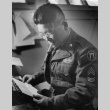
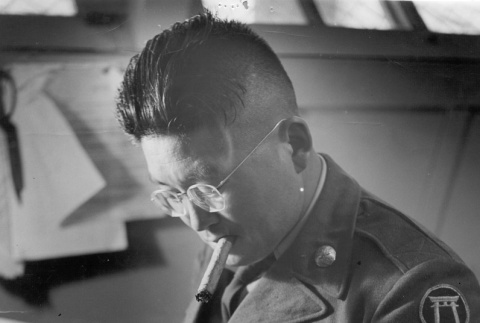
img
Nisei soldier in Okinawa (ddr-densho-107-36)
Msgt Matsumoto transferred from Japan to Ryukyu Command, Okinawa, under U.S. jurisdiction until 1956. He was in charge of labor forces of more than 500 native Okinawans working for the Signal Corps on the island, in jobs such as construction crews, splicers, telephone operators, linesmen, radio repairmen, auto mechanics, kitchen personnel, office clerks, etc.
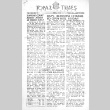
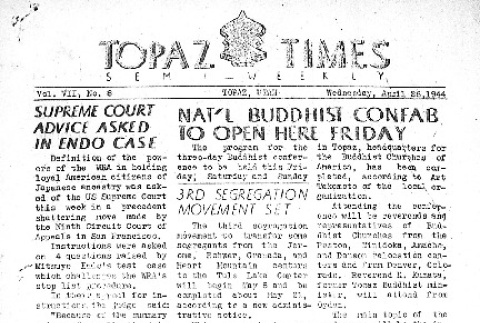
doc
Topaz Times Vol. VII No. 8 (April 26, 1944) (ddr-densho-142-299)
Selected article titles: "Supreme Court Advice Asked in Endo Case" (p. 1), "5 Former Residents of Hawaii Leave Topaz to Join Relatives" (p. 1), "Nisei ERC Use Mooted. Stimson Explains Placing of Draftees in Inactive Status" (p. 2), "Calif. Alien Land Law Changes Proposed" (p. 2), "Evacuation is Propaganda News for Japan, Nash" (p. 2).
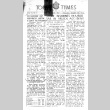
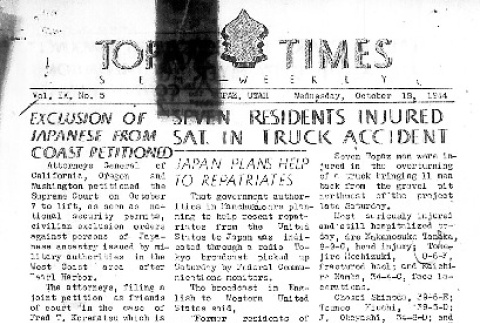
doc
Topaz Times Vol. IX No. 5 (October 18, 1944) (ddr-densho-142-349)
Selected article titles: "Exclusion of Japanese from Coast Petitioned" (p. 1), "Seven Residents Injured Sat. in Truck Accident" (p. 1), "Japan Plans Help to Repatriates" (p. 1), "'Remember Pearl Harbor' League Rapped by Myer" (p. 2), "Colonization Plan for Residents Unable to Leave Centers Suggested" (p. 2), "Army Claims Evacuation was Military Necessity" (p. 3).
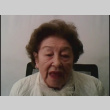
av
Anna Towata (ddr-ajah-8-10)
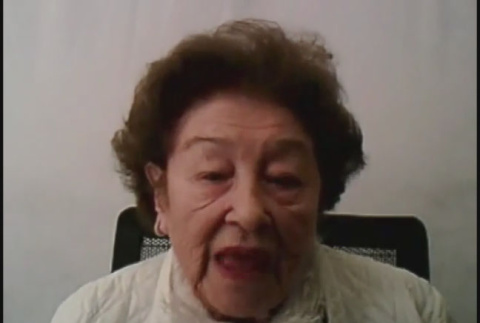
Anna Towata was born on November 10, 1916, in Sonoma, California. Her mother was of German descent and her father was born in Japan. During World War II, was sent to the Tanforan Assembly Center, California, and the Topaz concentration camp, Utah. After the war, returned to Alameda and eventually opened a flower shop.
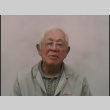
av
Yasuo Yamashita (ddr-ajah-8-12)
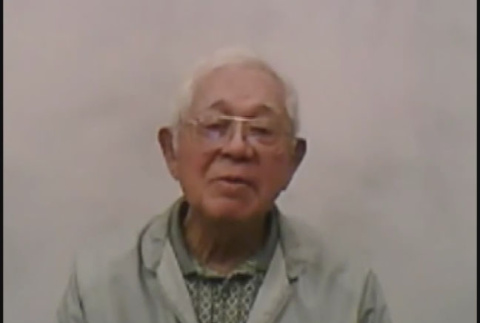
Yasuo Yamashita was born on November 22, 1919, in Alameda, California. During World War II, was removed to the Gila River concentration camp, Arizona. Drafted into the army and transferred to the Military intelligence Service. Served with ATIS (Allied Translator Interpreter Section) during the occupation of Japan after the war, before teturning to Alameda.
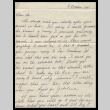
doc
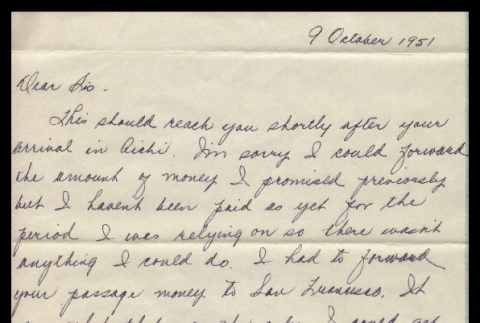
Letter from Akio Adachi to Sio, October 9, 1951 (ddr-csujad-55-2248)
Correspondence from Aki [Akio Adachi] to Sio [Masako Adachi?] regarding her travel from Japan to the United States, family affairs, and Akio's work. See this object in the California State Universities Japanese American Digitization project site: sac_jaac_2351
doc
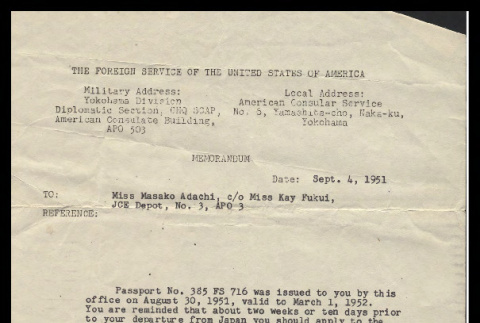
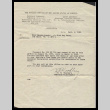
Memo from the Foreign Service of the United States of America to Masako Adachi, September 4, 1951 (ddr-csujad-55-2309)
Memorandum of understanding from the Foreign Service of the United States to Masako Adachi regarding her passport and notification of departure from Japan. See this object in the California State Universities Japanese American Digitization project site: sac_jaac_2414
doc
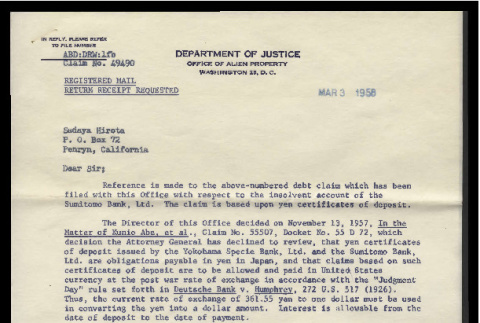
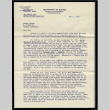
Letter from Arthur R. Schor, Chief, Claims Section, Office of Alien Property, Department of Justice, to Sadae Hirota, March 3, 1958 (ddr-csujad-55-1903)
Correspondence from Arthur Schor to Sadaye [Sadae] Hirota regarding a debt claim and procedures for maintaining the claim or utilizing the funds in Japan. See this object in the California State Universities Japanese American Digitization project site: sac_jaac_1906
img
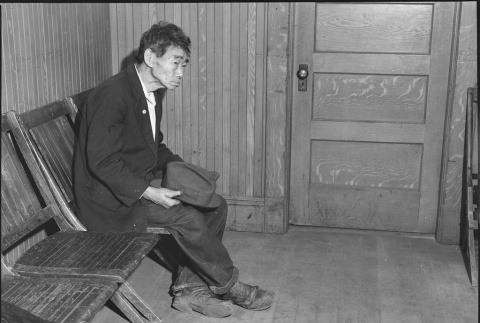
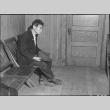
Issei man waiting to register for mass removal (ddr-densho-151-238)
Original caption: Byron, California. Toshi Mizoguchi waiting at the Wartime Civil Control Administration station to register for evacuation. Mr. Mizoguchi came to the United States from Japan in 1892 and has been a farm laborer on California ranches since that time. He is unmarried. He is seen wearing an American flag on a celluloid button.
doc
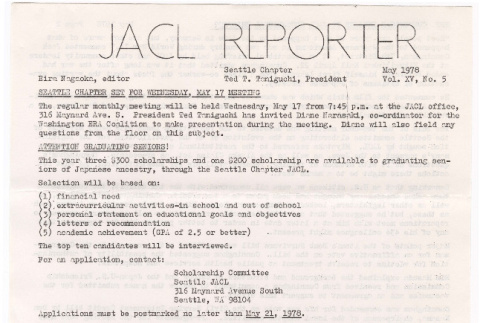
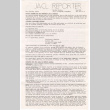
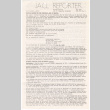
Seattle Chapter, JACL Reporter, Vol. XV, No. 5, May 1978 (ddr-sjacl-1-212)
Newsletter covering the following topics: Ron Mamiya heads action against Seattle School District for incident at office with racial slurs; Denise Louie Day Care Center established; Cong. Cunningham attends JACL Educational Briefing on Reparations; Seattle JACL to submit National Resolution calling for boycott of states not ratifying ERA; thoughts on Japan Tour (Eira Nagaoka).
doc
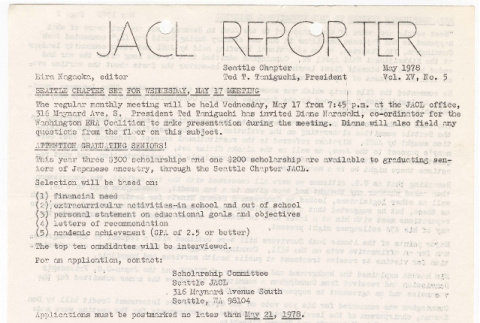
Seattle Chapter, JACL Reporter, Vol. XV, No. 5, May 1978 (ddr-sjacl-1-267)
Newsletter covering the following topics: Ron Mamiya heads action against Seattle School District for incident at office with racial slurs; Denise Louie Day Care Center established; Cong. Cunningham attends JACL Educational Briefing on Reparations; Seattle JACL to submit National Resolution calling for boycott of states not ratifying ERA; thoughts on Japan Tour (Eira Nagaoka).
vh
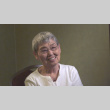
Shimako "Sally" Kitano Interview (ddr-manz-1-54)
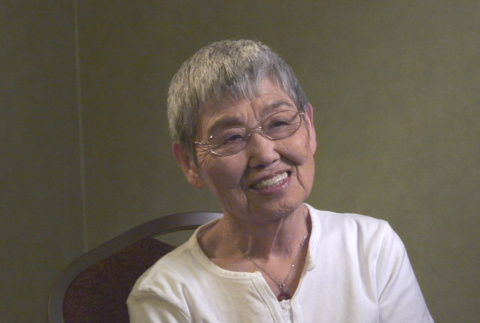
Nisei female. Born April 6, 1932, in Bainbridge Island, Washington. Grew up on Bainbridge, and was eight years old when Japan bombed Pearl Harbor on December 7, 1941. Removed with family to the Manzanar concentration camp, California. Before the war was over, moved to Chicago, Illinois. Returned to Bainbridge Island after World War II.
vh
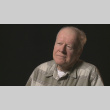
Michael J. Forrester Interview (ddr-densho-1000-438)
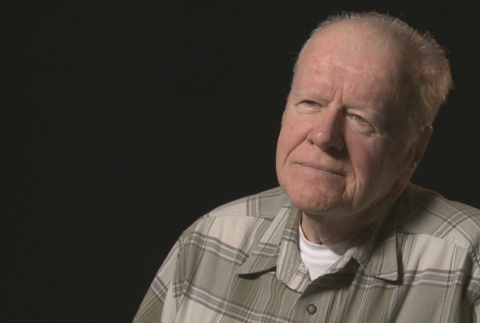
White male. Born 1937 in Brooklyn, New York. Grew up in New York, where father was a mechanic. After World War II, enlisted in the Air Force and was sent serve in Japan. While there, met future wife, got married and returned to the U.S. Established a successful career with the Federal Aviation Administration.
doc
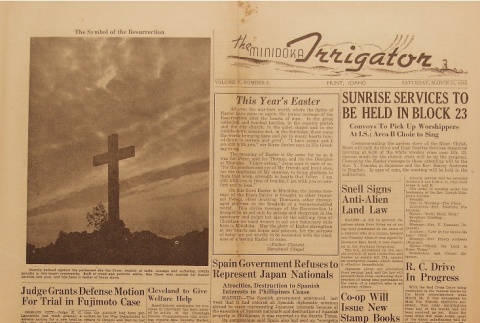
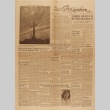
Minidoka Irrigator Vol. V No. 5 (March 31, 1945) (ddr-densho-119-132)
Selected article titles: "The Symbol of the Resurrection" (p. 1), "Judge Grants Defense Motion for Trial in Fujimoto Case" (p. 1), "Spain Government Refuses to Represent Japan Nationals" (p. 1), "Confiscated Property to Be Returned" (p. 1), "Vandals Topple Gravestones in Fresno Cemetery" (p. 1), "Seattle Council Asked to Act on Discrimination" (p. 1).
av
Interview with John Burden (ddr-densho-1007-1655)
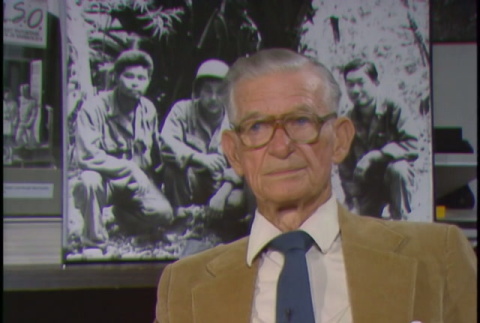
Burden discusses growing up in Japan, the difference between Nisei and Japanese nationals, the accomplishments of Nisei soldiers, the difference in the treatment of Niseis before and after the war. Loni Ding can and her crew can be heard in the background. Original title: 140, II B/K #10, Burden/Kihara, 12/15/85
img
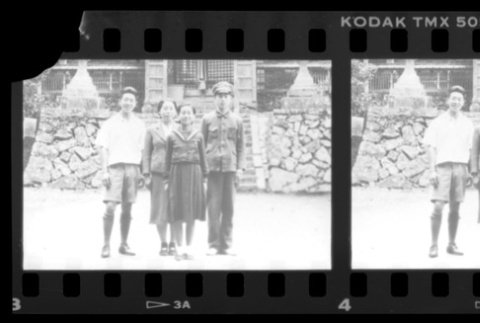
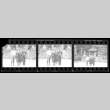
Negative strip (ddr-densho-356-31)
Negative strip of three images of Richard Tsukada's trip to Japan c. 1939. Print copy of the third negative visible at ddr-densho-356-22. Negatives are of Richard Tsukada (left), Hana Tsukada (Uyeda) (second from left) with Richard's cousins posed together outside a shine.

Collection
Tadao "Tod" Fujihira Collection (ddr-densho-518)
The Tadao "Tod" Fujihira Collection consists primarily of a photograph album from the Fujihira family's time incarcerated at Minidoka concentration camp. Tod collected numerous photographs of family and friends inside Minidoka as well as on excursions to nearby Idaho locations and as the family departed camp for resettlement. Additionally, there are two photographs from Tod's travels …
![Letter from Megumi Sasaki to Mr. S. Okine, January 22, 1948 [in Japanese] (ddr-csujad-5-244)](https://ddr.densho.org/media/cache/ac/82/ac823b05d1d661bdfbf1ad9e755c8b6e.jpg)
doc
Letter from Megumi Sasaki to Mr. S. Okine, January 22, 1948 [in Japanese] (ddr-csujad-5-244)
A letter from Megumi Sasaki in Hiroshima, Japan to Seiichi and Tomeyo Okine. Megumi introduces himself as though he has never met them nor been in contact with them before. He is a son of Matsuyo Sasaki and a brother of Minoru Sasaki. He explains that he was drafted into the Japanese military in 1944 and …
![Letter from Fusako Sasaki to Mr. S. Okine, June 15, 1948 [in Japanese] (ddr-csujad-5-293)](https://ddr.densho.org/media/cache/96/85/96856fcf58900825d1fc2aab59acd8bb.jpg)
doc
Letter from Fusako Sasaki to Mr. S. Okine, June 15, 1948 [in Japanese] (ddr-csujad-5-293)
A letter from Fusako Sasaki in Hiroshima, Japan to Seiichi and Tomeyo Okine. She writes about the package of gifts from the Okines and appreciates their help. The package arrived on May 29, 1948 and included cloth, clothes, a sweater, sugar, soap bars, candies, tobacco, and medicines which are scarce in post-war Japan. She laments about …