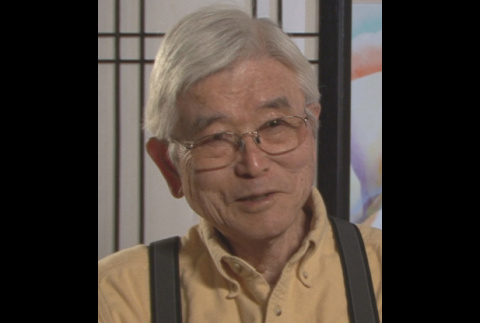
Feeling "betrayed" by the Japanese American Citizens League
This interview was conducted by filmmaker Frank Abe for his 2000 documentary, Conscience and the Constitution, about the World War II resisters of conscience at the Heart Mountain incarceration camp. As a result, the interviews in this collection are typically not life histories, instead primarily focusing on …
Discussion of strategies upon going on trial for draft resistance
This interview was conducted by filmmaker Frank Abe for his 2000 documentary, Conscience and the Constitution, about the World War II resisters of conscience at the Heart Mountain incarceration camp. As a result, the interviews in this collection are typically not life histories, instead primarily …
Memories of meeting Minoru Yasui to discuss decision to resist the draft
This interview was conducted by filmmaker Frank Abe for his 2000 documentary, Conscience and the Constitution, about the World War II resisters of conscience at the Heart Mountain incarceration camp. As a result, the interviews in this collection are typically not life histories, …
The decision to resist the draft: "Somebody had to say somethin'"
This interview was conducted by filmmaker Frank Abe for his 2000 documentary, Conscience and the Constitution, about the World War II resisters of conscience at the Heart Mountain incarceration camp. As a result, the interviews in this collection are typically not life histories, instead …
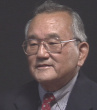
Nisei male. April 23, 1923, in Sierra Madre, California. Was pursuing a degree in art at Pasadena Junior College at the time of mass removal. While incarcerated at Heart Mountain, Wyoming, continued his artistic pursuits, drawing sketches and designing posters, etc. for various camp projects. Resisted the draft at age 21, and was indicted in 1944 …
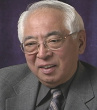
Nisei male. Born December 27, 1932, in Seattle, Washington. Grew up in Seattle, and was in the third grade during mass removal to the Puyallup Assembly Center, Washington. Moved with family to Minidoka concentration camp, Idaho, before returning to Seattle to attend middle and high school. Found a lifelong job at Osborn & Ulland, a retail …
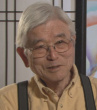
Nisei male. Born June 30, 1925, in Rosemead, California. Grew up in the Rosemead area. During World War II, removed to the Tulare Assembly Center, California, and the Gila River concentration camp, Arizona. Left camp and lived in Des Moines, Iowa, for a time before being drafted into the military. Served in Europe with the 442nd …
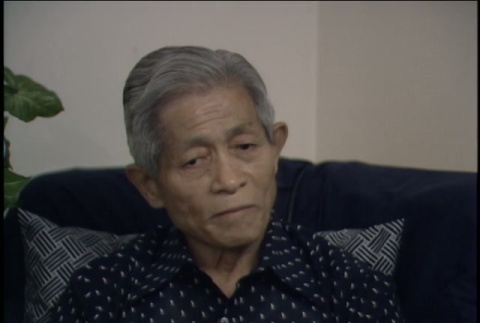
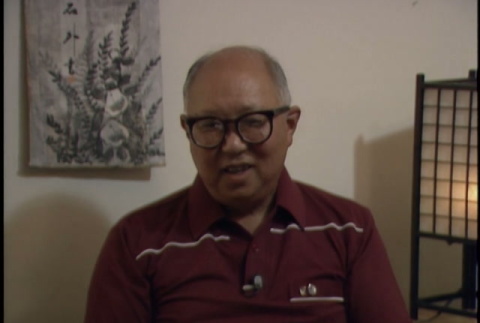
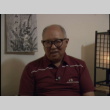
Matsumura discusses his time teaching at the 4th Army Military Intelligence School in San Francisco, his experience with John Aiso, his trouble with white officers, and being denied the rank he was promised. Interview starts at 3:20. Loni Ding can be heard asking questions behind the camera. Original title: II LA #32, 7-24-85, J. Matsumura Interview …
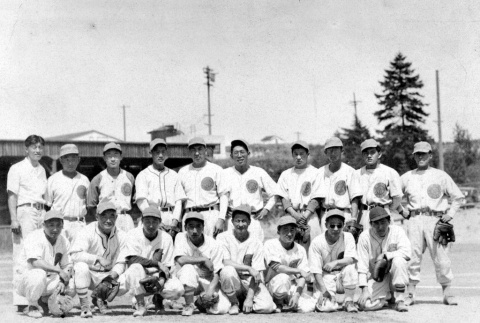
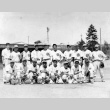
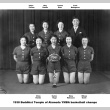
Front (left to right): Akira "Poison" Kato, Matsu Sakagami, Yosh Fujiwara, Jim Yamaguchi, George Funai, Joe Kesamaru, George Mamiya, and George "Joker" Shimizu. Back: Shiro Yamaguchi, Ted Matsushita, Roy Fujiwara, Hiromu "Heater" Hiyamoto, Ed "Duffy" Kiyohara, Taiji Takayoshi, Su Kashiwagi, Sam Sakai, Edwin "Edo" Sasaki, and Hiro Nishimura.
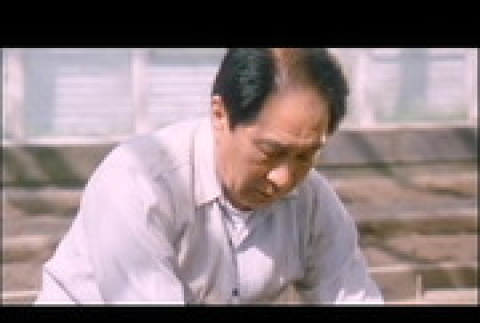
Short narrative film about Japanese Americans struggling to run a flower nursery set in Northern California in 1949. Based on a short story by Toshio Mori , filmmaker Ken Kokka made the film as a film student at UCLA. As the story begins, Mas, a middle-aged Nisei man who had lost his nursery as a result …
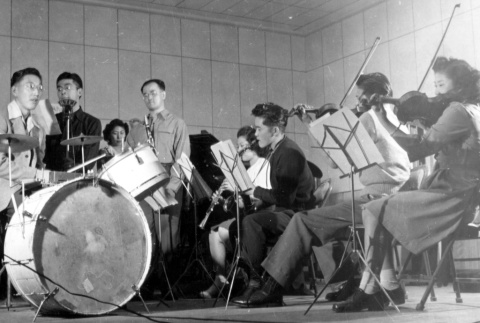
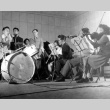
Left to right: Joe Owaki (drums), Hiro Nishimoto (MC), Dorrie Abe (piano), Ted Shimano (orchestra conductor), Amy Iguchi (clarinet), Yosh Ogata (saxophone), George Kaku (violin), and Sally Makishima (violin). The residents of the Minidoka concentration camp formed numerous musical ensembles to pass the time. Orchestras, bands, and choirs frequently staged performances for entertainment.
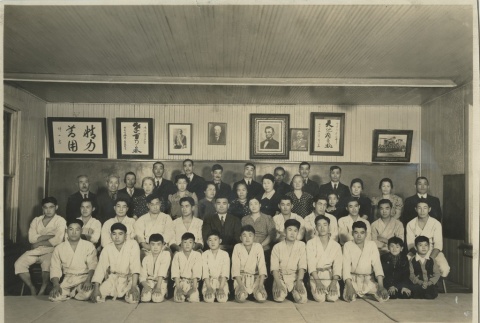
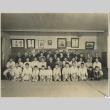
Green Lake Dojo was established in 1932. Classes, such as this one, were held twice a week at the Community Hall in North Seattle. The mass removal of Japanese Americans from Seattle forced Green Lake Dojo to close in 1942. Fourth row (L to R): Mr. Nakawatase, Mr. Tanagi, Mr. Kumasaka, Mr. Uchida, Mr. Hiyama, Mr. …
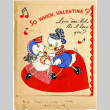
A Valentine's Day card from Yosh Naohara, who is Yoshie Dorothy Naohara, at the Jerome camp in Arkansas to Mitzi Masukawa Naohara at the Poston camp in Arizona. An item from: Mitzi Naohara scrapbook (csudh_nao_0400), page 34. See this object in the California State Universities Japanese American Digitization project site: nao_03_35_001
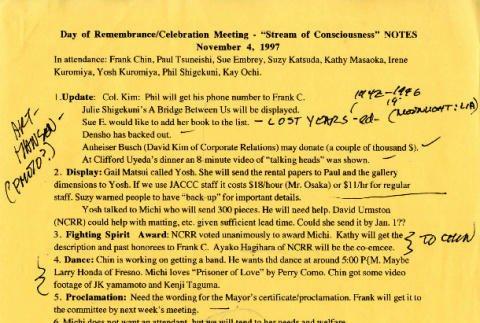
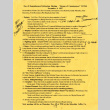
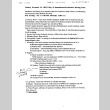
Notes from a meeting on November 4, 1997 to plan a tribute to Michi Weglyn on February 21, 1998. In attendance were: Frank Chin, Paul Tsuneishi, Sue Embrey, Suzy Katsuda, Kathy Masaoka, Irene Kuromiya, Yosh Kuromiya, Phil Shigekuni, Kay Ochi. See this object in the California State Universities Japanese American Digitization project site: chi_74_03_002
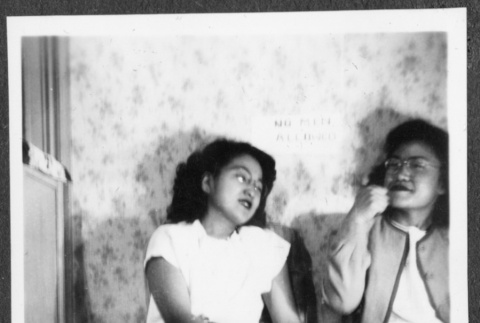
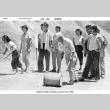
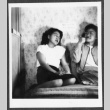
Photograph of Laverne Yamada (left) and Jean Kohatsu (right) sitting together. A sign between their heads reads "NO MEN ALLOWED." Written below the image on the album page "Neighbor - / Laverne Yamada / The sign didn't scare them / for life/ There's Kaoru & Yosh now" in white pencil. Written on the top of the …
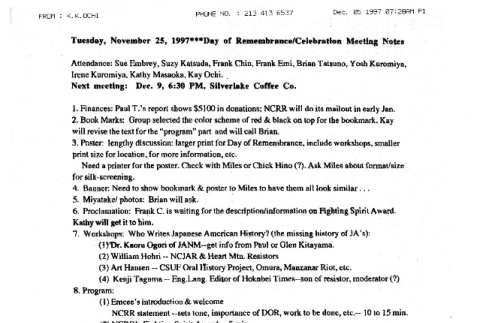
Notes from a meeting at Silverlake Coffee Co. on November 25, 1997 to plan a tribute to Michi Weglyn on February 21, 1998. In attendance were: Sue Embrey, Suzy Katsuda, Frank Chin, Frank Emi, Brian Tatsuno, Yosh Kuromiya, Irene Kuromiya, Kathy Masaoka, Kay Ochi. See this object in the California State Universities Japanese American Digitization project …
Akune discusses a combat jump he performed on Corregidor Island, his time with the 503rd Infantry Regiment, receiving a parachutist badge, and returning from the war. Video starts at 0:30, interview ends at 17:31. Loni Ding can be heard asking questions behind the camera. Rest of tape is footage of Harry and Ken Akune, George Kanegai, …
An annotated photocopy of a photograph of Michi Weglyn, her husband Walter, and other Japanese American activists. The other people that appear in the photo are: Babe Karasawa, Akira Matsumoto, Art Emi, Dave Kawamoto, Toshiko Kawamoto, Clifford Uyeda, Yosh Kuromiya, Irene Kuromiya, Tak Hoshizaki, Frank Emi, Bob Suzuki, Mits Koshiyama, James Omura, Mary Karasawa, and Harry …
Caption in album: "In August, 1948, the house on 2nd & [illegible] streets, Sacramento, had a joyful reunion. Fred and Joan Yamamoto arrived from St. Louis, Mo., for a short trip; Stan and Elaine drove from Minneapolis, Minn., and last but not least, Bill came from Cleveland via [illegible]. The occasion? A wedding! 1) 3 okole …




![[Photograph of Michi and Walter Weglyn with Japanese American Activists] (ddr-csujad-24-21)](https://ddr.densho.org/media/cache/f7/f6/f7f68cfc85b8b8003fbd122c1adb03c6.jpg)


![[Photograph of Michi and Walter Weglyn with Japanese American Activists] (ddr-csujad-24-21)](https://ddr.densho.org/media/cache/fe/e5/fee5429abe49c11fe96e2ede51cabe0b.jpg)