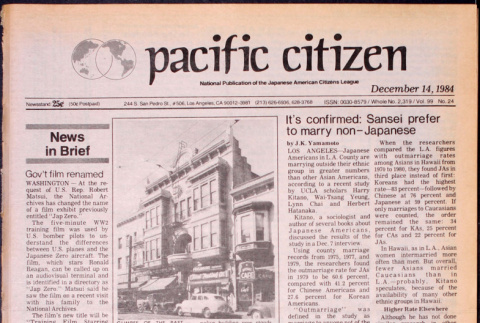
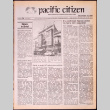
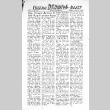
Selected article titles: "It's confirmed: Sansei prefer to marry non-Japanese" (p. 1), "Little Tokyo time capsule to be buried" (p. 2), "Direct redress committee to fete Yasui" (p. 3), "Preserving Prewar Images of Seattle Issei" (p. 5), "Future of Little Tokyo" (p. 7).
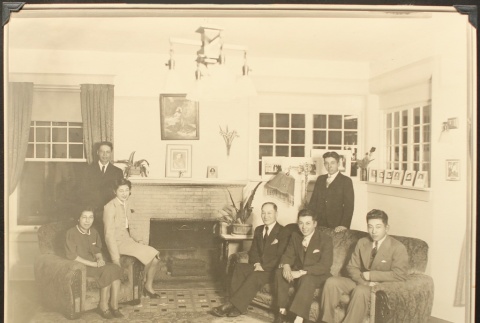
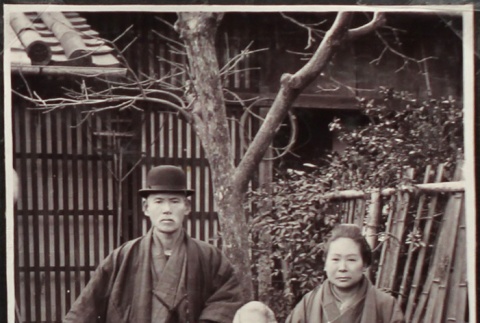
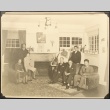
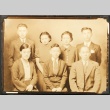
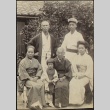
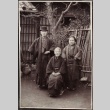
Caption by Homer Yasui: "The Katsusaburo and Michiko Tamura family portrait, taken in their home located jear the old Emory (?) sawmill east of Odell, [Oregon]. Seated, [left to right]: Michiko (mother), Alice, unidentified Issei man, George & Oscar. Standing, [left to right]: Katsusaburo (father) & Harry."
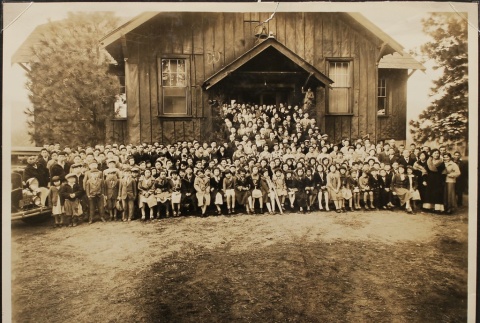
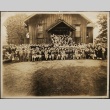
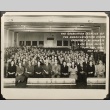
Caption by Homer Yasui: "A large photo of a great many if not the majority, of the Japanese who lived in Hood River [Oregon] valley. This picture was taken in front of the Hood River Japanese Community Hall, which was built in 1926-27."
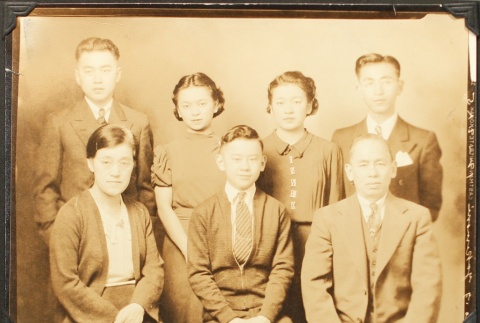
Caption by Homer Yasui: "Portrait of a Nikkei family. This was the 'George' (Y)Eitaro and Hama (Sato) Yamaki family, first of Oak Grove, then of Pine Grove, Oregon. Front, [left to right]: Hama, Shigenobu, Eitaro. Back, [left to right]: William, Eiko, Mitsuko, Hideo Sato."
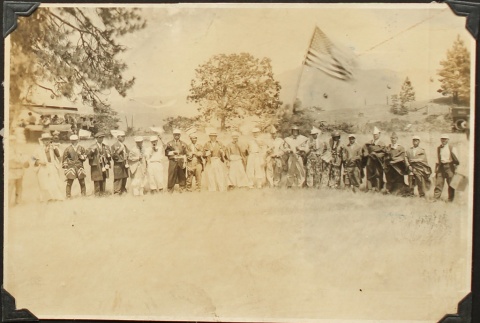
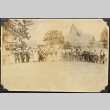
Caption by Homer Yasui: "A group of Hood River Issei in quasi-feudal Japanese costumes. I think that this picture was taken at our Mosier farm because of the hills in the background I suspect that this was another undokai [field day/sports day]."
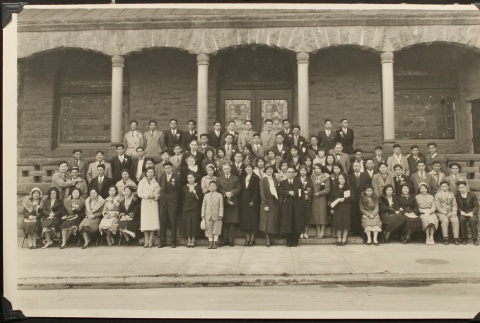
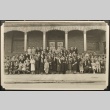
Caption by Homer Yasui: "I think that this gathering took place in front of what was then called the Centenary Wilbur Methodist Church, in Portland I suspect that this was a YPCC--Young People's Christian Conference--because many of the Nisei are wearing identification badges."
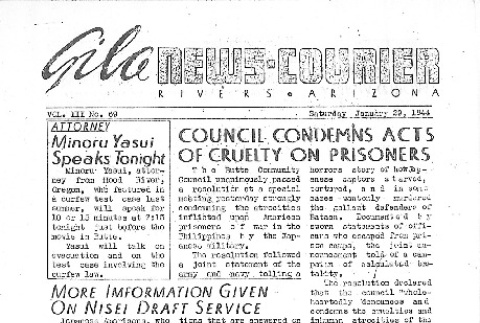
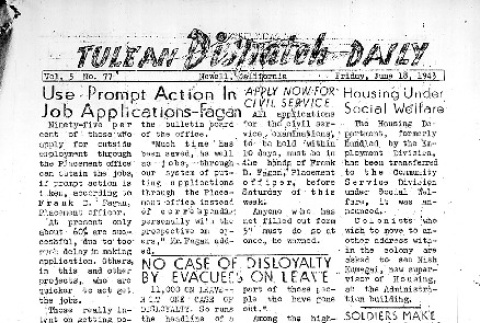
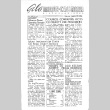
Selected article titles: "Use Prompt Action in Job Applications -- Fagan" (p. 1), "Yasui Can't Enter Centers" (p. 1), "No Case of Disloyalty by Evacuees on Leave" (p. 1), "Project Agricultural Program Set. First Crop in July" (p. 2), "Labor Shortage in Minidoka" (p. 2).
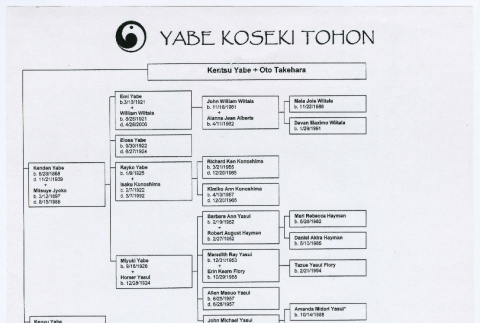
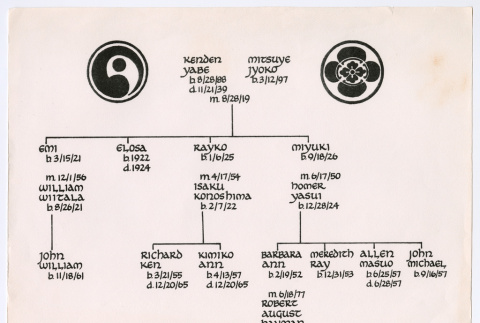
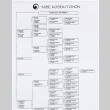
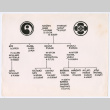
A genealogy document of births, deaths, and marriages in the Yabe family between 1888-1977. The record begins with the marriage of Kenden Yabe and Mitsuye Jyoko.
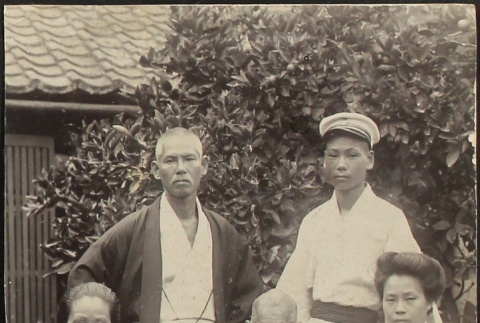
Caption by Homer Yasui: "Part of the Miyake family in Japan, before [Shidzuyo] left to start teaching school. Pictured are Grandma Hisa Fujii Miyake, Grandpa Ichiro Miyake, Great Grandma Tsuno Sato Miyake, Uncle Saburo and Mom [Shidzuyo]. There's a little girl in this picture, but she's unidentified."
Caption by Homer Yasui: "Japanese photograph of Ichiro Miyake ([Shidzuyo Yasui's] father) who was born on August 28, 1865; [Shidzuyo's] mother, Hisa Fujii Miyake, who was born on March 3, 1865, and Ichiro's mother, whose maiden name was Tsuna Sato, who was born on March 3, 1838."
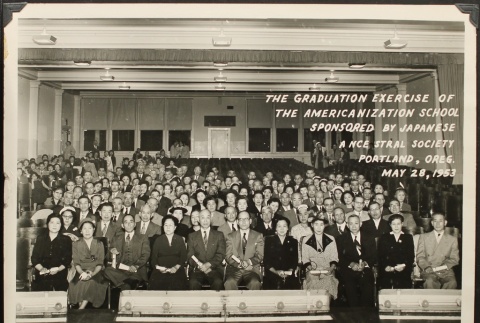
Front of photograph: "The graduation exercise of the Americanization School sponsored by Japanese Ancestral Society Portland, Oreg. May 28, 1953." Caption by Homer Yasui: "Group portrait of the Issei in the Portland area who graduated from the Americanization school, in preparation for taking their citizenship examinations."
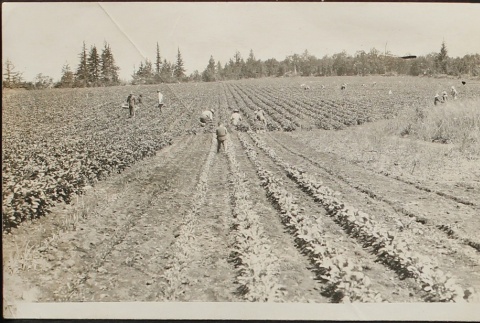
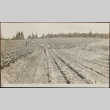
Caption by Homer Yasui: "This is a very large acreage of strawberries on our Willow Flat farm At one time or another, almost all of the land on the 'home 60' (sixty acres) had been planted in strawberries, but of course not at the same time."
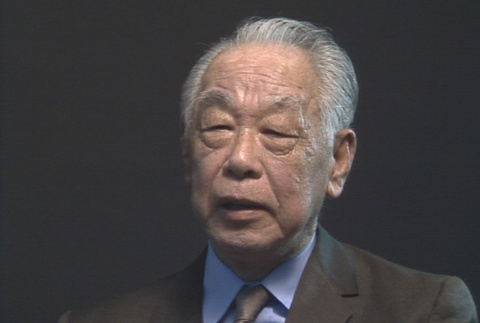
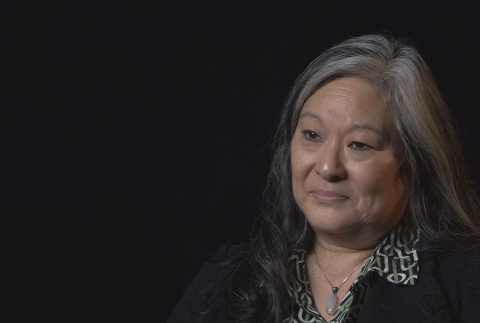
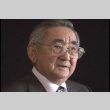
Meeting with Minoru Yasui and telling him about resistance decision
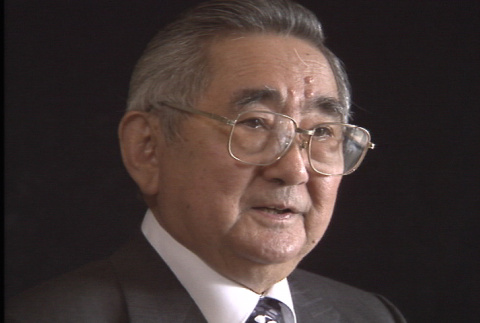
This interview was conducted by filmmaker Frank Abe for his 2000 documentary, Conscience and the Constitution, about the World War II resisters of conscience at the Heart Mountain incarceration camp. As a result, the interviews in this collection are typically not life histories, instead primarily …
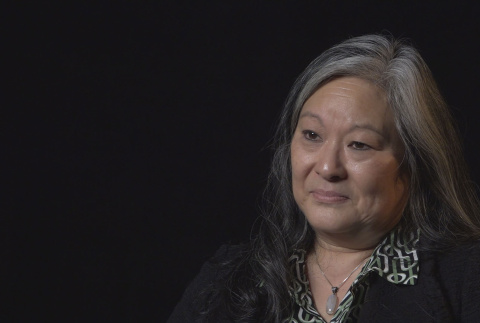
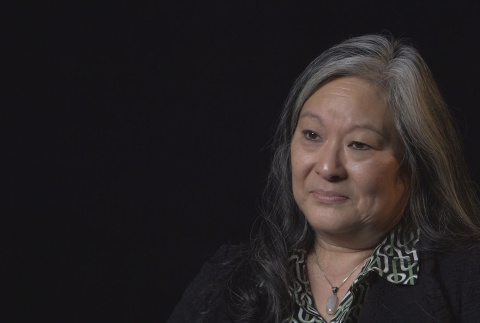
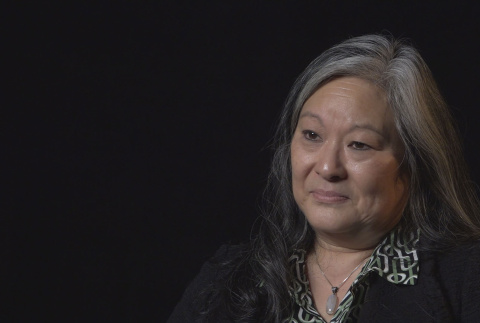
Memories of Minidoka concentration camp, Idaho, and meeting Minoru Yasui
This interview was conducted by filmmaker Frank Abe for his 2000 documentary, Conscience and the Constitution, about the World War II resisters of conscience at the Heart Mountain incarceration camp. As a result, the interviews in this collection are typically not life histories, instead primarily …
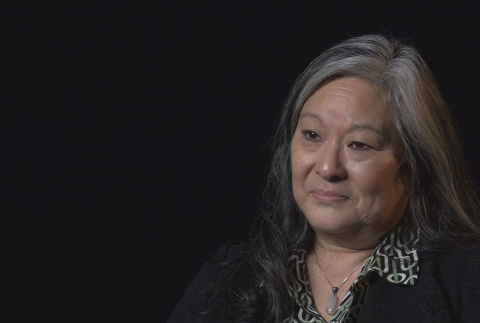
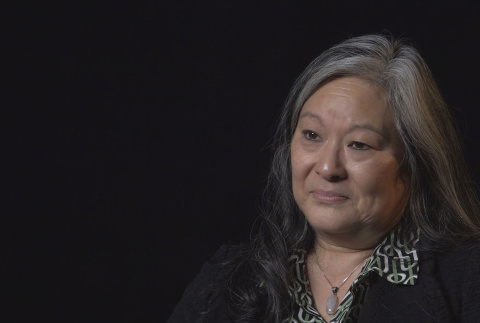
Suspecting Minoru Yasui of being a government informant
This interview was conducted by filmmaker Frank Abe for his 2000 documentary, Conscience and the Constitution, about the World War II resisters of conscience at the Heart Mountain incarceration camp. As a result, the interviews in this collection are typically not life histories, instead primarily focusing on …