
59 items
59 items
img
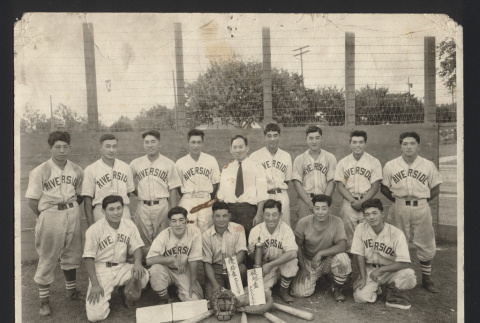
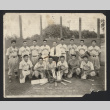
Sacramento Rural League Champion, Northern California Class B Champion 1941 (ddr-csujad-55-2575)
Riverside baseball team, 1941. L to R: Front row -- David Kawaya, Shig ?, Sam Masahara, Takehashi Tanaka, ? Yamada, Frank Yamada. Second row -- Shig?, Mits Yamada, Bill ? Kay Masumoto, Mr. Mishigima, Jack Ono, ?, Jimmy Kashiwada, Tad Takeuchi. See this object in the California State Universities Japanese American Digitization project site: sac_jaac_2739
img
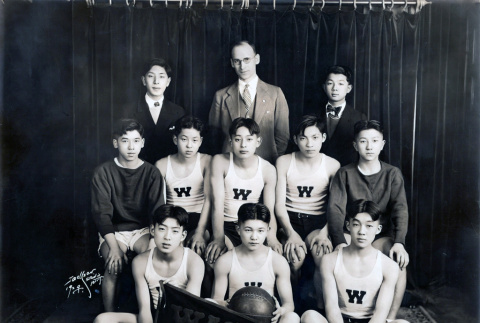
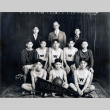
1929 Waseda Cougars basketball team (ddr-densho-474-197)
Front row left to right: Henry Ichiro Kiga, David Takayuki Yamada, Arthur Hajime Sasaki. Second Row left to right: Unknown, William Yoshiya Mimbu, George Makoto Yanagimachi, Shugo Hashiguchi, unknown. Third row left to right: Iwao Ohara, Coach name unknown, Yoshio Naota
vh
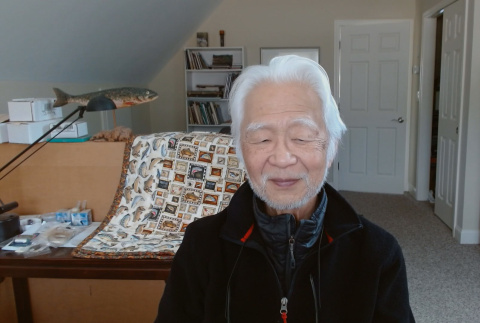
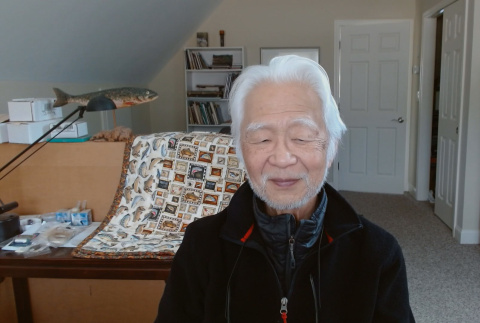
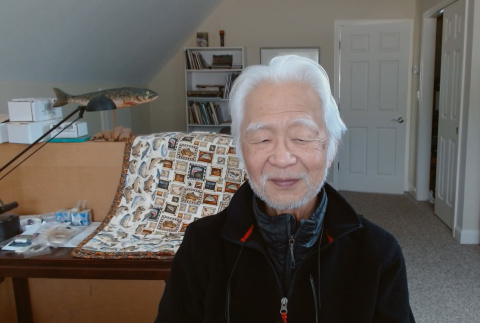
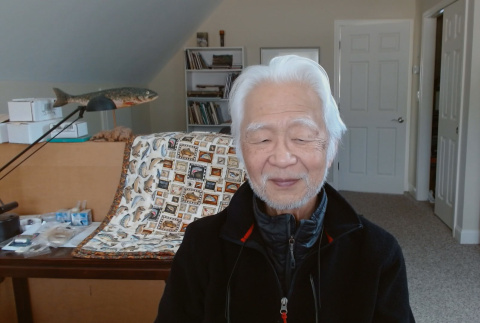
David Sakura Interview II (ddr-densho-1000-513)
Sansei male. Born March 28, 1936, in Seattle, Washington. Grew up in Eatonville, Washington, where father worked for a lumber company. During World War II, removed with family to the Puyallup Assembly Center, Washington, and the Minidoka concentration camp, Idaho. Father served in the U.S. Army during the war. After leaving camp, lived in public housing …
vh
David Sakura Interview I (ddr-densho-1000-498)
Sansei male. Born March 28, 1936, in Seattle, Washington. Grew up in Eatonville, Washington, where father worked for a lumber company. During World War II, removed with family to the Puyallup Assembly Center, Washington, and the Minidoka concentration camp, Idaho. Father served in the U.S. Army during the war. After leaving camp, lived in public housing …
vh
David Sakura Interview II Segment 15 (ddr-densho-1000-513-15)
Reflections, talking to kids about experiences
vh
David Sakura Interview II Segment 6 (ddr-densho-1000-513-6)
Being part of an organized Japanese American community group for the first time
vh
David Sakura Interview II Segment 5 (ddr-densho-1000-513-5)
Helping to start JANE, Japanese Americans of New England
vh
David Sakura Interview II Segment 10 (ddr-densho-1000-513-10)
Memories of hearing about the Commission hearings
vh
David Sakura Interview II Segment 11 (ddr-densho-1000-513-11)
Beginning to speak about the Japanese American experience to various groups
vh
David Sakura Interview II Segment 12 (ddr-densho-1000-513-12)
Thoughts on the reparations payments during the redress movement
vh
David Sakura Interview II Segment 2 (ddr-densho-1000-513-2)
Graduating high school and applying for college
vh
David Sakura Interview II Segment 4 (ddr-densho-1000-513-4)
Starting a family and moving to Boston
vh
David Sakura Interview II Segment 1 (ddr-densho-1000-513-1)
Memories of growing up in a Japanese village, a town sponsored by a lumber mill
vh
David Sakura Interview II Segment 7 (ddr-densho-1000-513-7)
Involvement with the reestablishment of the New England JACL chapter
vh
David Sakura Interview II Segment 3 (ddr-densho-1000-513-3)
Attending an all-white, evangelical Christian school
vh
David Sakura Interview II Segment 9 (ddr-densho-1000-513-9)
JACL's involvement with the redress movement's Commission on Wartime Relocation and Internment of Civilians hearings
vh
David Sakura Interview II Segment 8 (ddr-densho-1000-513-8)
Growing the New England chapter of the JACL, becoming their spokesperson
vh
David Sakura Interview II Segment 14 (ddr-densho-1000-513-14)
Attending the Minidoka pilgrimage: "it was really an act of healing"
vh
David Sakura Interview II Segment 13 (ddr-densho-1000-513-13)
The establishment of Minidoka as a National Historic Site
vh
David Sakura Interview I Segment 10 (ddr-densho-1000-498-10)
Remembering the train ride and arrival at Minidoka
vh
David Sakura Interview I Segment 3 (ddr-densho-1000-498-3)
Father's growing up in the South Park neighborhood of Seattle, Washington
vh
David Sakura Interview I Segment 5 (ddr-densho-1000-498-5)
Early memories of growing up in a Japanese American mill town community
vh
David Sakura Interview I Segment 17 (ddr-densho-1000-498-17)
Moving to public housing in Milwaukee, Wisconsin