
3285 items






3285 items
vh
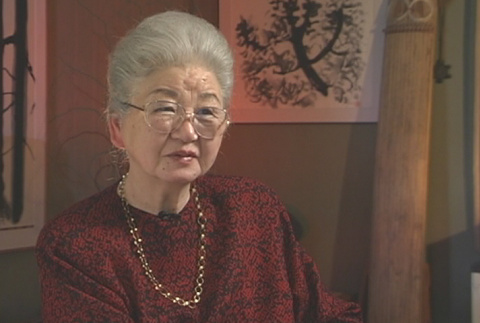
Ayame Tsutakawa Interview I (ddr-densho-1000-94)
Kibei female. Born May 23, 1924, in the Hollywood area of Los Angeles, California. Sent to Japan to live with a relative when thirteen months old. Returned to United States and mother when twelve years old. Incarcerated at Sacramento Assembly Center and Tule Lake concentration camp, both in California. Resettled in Sacramento, California. Married George Tsutakawa, …
vh
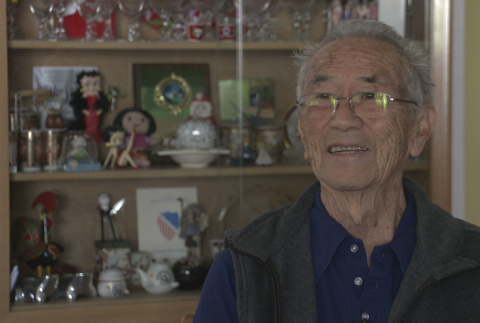
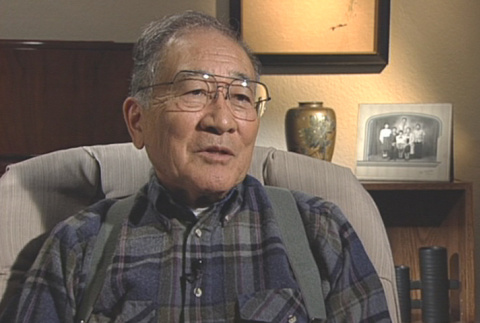
Noboru Kamibayashi Interview (ddr-densho-1000-477)
Nisei male. Born June 23, 1930, in Fairfax, Washington. Grew up in Venice, California, where parents had a produce farm. During World War II, removed to the Manzanar concentration camp, California. Parents signed "no-no" on the so-called "loyalty questionnaire" and decided to return with the family to Japan to live. After several years in Japan, came …
img
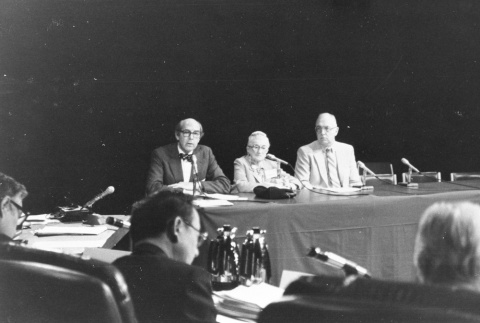
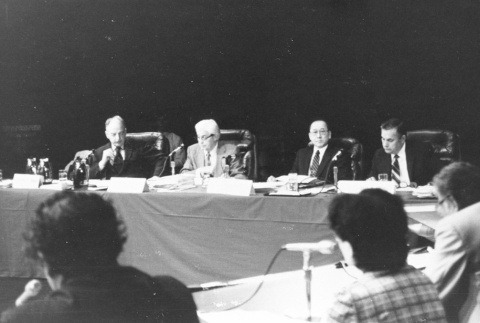
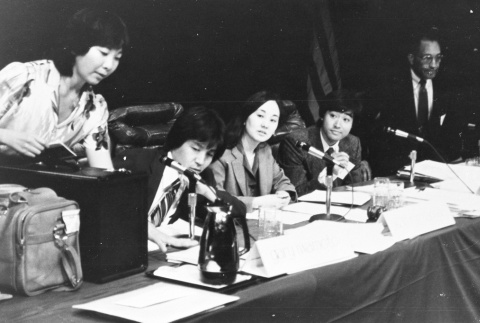
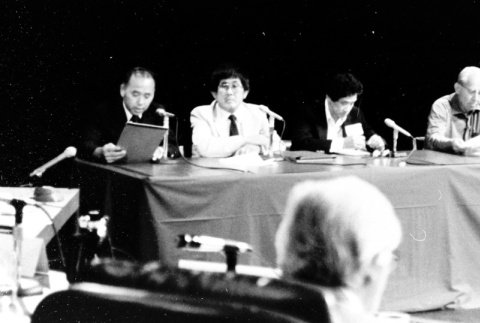
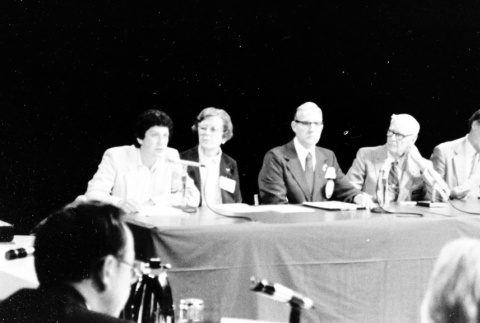
Redress hearings (ddr-densho-37-373)
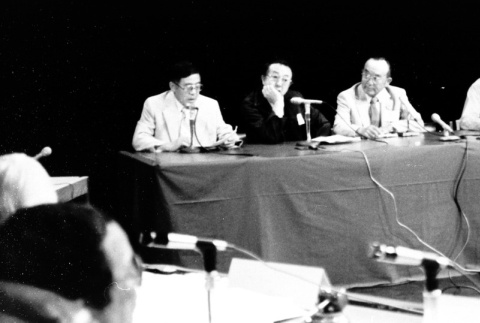
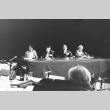
The Commission on Wartime Relocation and Internment of Civilians (CWRIC) was created by an act of Congress on July 30, 1980. The committee was formed mainly to investigate matters surrounding the World War II incarceration of Japanese Americans and to recommend remedies. The CWRIC had no power to correct grievances. The hearings were conducted in twenty …
img
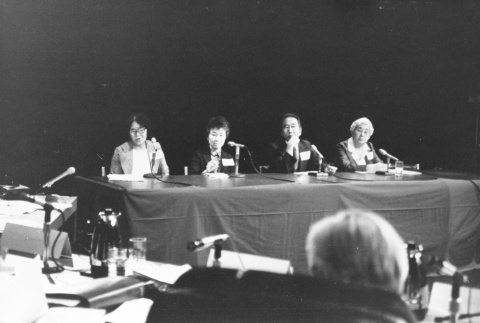
Redress hearings (ddr-densho-37-371)
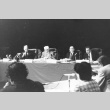
The Commission on Wartime Relocation and Internment of Civilians (CWRIC) was created by an act of Congress on July 30, 1980. The committee was formed mainly to investigate matters surrounding the World War II incarceration of Japanese Americans and to recommend remedies. The CWRIC had no power to correct grievances. The hearings were conducted in twenty …
img
Redress hearings (ddr-densho-37-372)
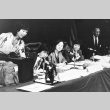
The Commission on Wartime Relocation and Internment of Civilians (CWRIC) was created by an act of Congress on July 30, 1980. The committee was formed mainly to investigate matters surrounding the World War II incarceration of Japanese Americans and to recommend remedies. The CWRIC had no power to correct grievances. The hearings were conducted in twenty …
img
Redress hearings (ddr-densho-37-370)
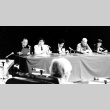
The Commission on Wartime Relocation and Internment of Civilians (CWRIC) was created by an act of Congress on July 30, 1980. The committee was formed mainly to investigate matters surrounding the World War II incarceration of Japanese Americans and to recommend remedies. The CWRIC had no power to correct grievances. The hearings were conducted in twenty …
img
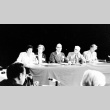
Redress hearings (ddr-densho-37-334)
The Commission on Wartime Relocation and Internment of Civilians (CWRIC) was created by an act of Congress on July 30, 1980. The committee was formed mainly to investigate matters surrounding the World War II internment of Japanese Americans and to recommend remedies. The CWRIC had no power to correct grievances. The hearings were conducted in twenty …
img
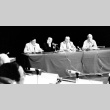
Redress hearings (ddr-densho-37-335)
The Commission on Wartime Relocation and Internment of Civilians (CWRIC) was created by an act of Congress on July 30, 1980. The committee was formed mainly to investigate matters surrounding the World War II internment of Japanese Americans and to recommend remedies. The CWRIC had no power to correct grievances. The hearings were conducted in twenty …
img
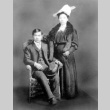
Redress hearings (ddr-densho-37-333)
The Commission on Wartime Relocation and Internment of Civilians (CWRIC) was created by an act of Congress on July 30, 1980. The committee was formed mainly to investigate matters surrounding the World War II internment of Japanese Americans and to recommend remedies. The CWRIC had no power to correct grievances. The hearings were conducted in twenty …
Collection
Yamada Collection (ddr-densho-25)
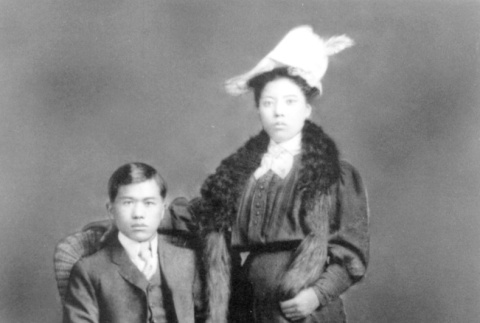
The Yamada collection, early 1900s-1950s and 1990s, focuses on the Iseri family, who resided in the White River Valley area of Washington State before World War II and in Weiser, Idaho, after the war. The photographs depict agricultural life and community activities such as sports, mochitsuki, and religious ceremonies. This collection also includes mass removal and …

Collection
Mizu Sugimura Collection (ddr-densho-384)
The Mizu Sugimura Collection consists of photographs documenting the first Day of Remembrance which took place in Seattle, Washington on November 25, 1978. Mizu Sugmiura and Yasushi Satomi recorded their participation by taking these photographs. The images show the beginning of the event where participants gathered at the site of the former Sick's Stadium. From there …

doc
News clippings regarding the incarceration of Japanese Americans, F.C. 29, March, 1944 (ddr-csujad-55-763)
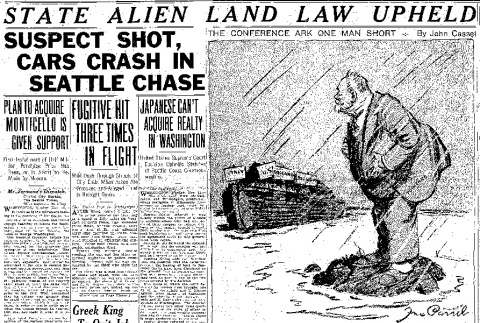
Collection of newspaper clippings covering Japanese Americans during World War II. Topics include incarceration camps, Japanese American soldiers, race, prejudice, work, and other commentary. See this object in the California State Universities Japanese American Digitization project site: sac_jaac_0765

Collection
Sawa Collection (ddr-densho-3)
The Sawa collection, early 1900s-1930s, contains images from Days, Washington. This collection documents the work and leisure activities of the Nakashima family, who owned a dairy farm.
vh
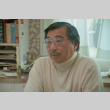
Gordon Hirabayashi Interview (ddr-densho-1012-2)
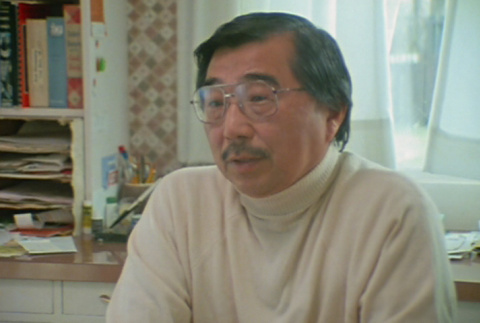
Nisei male. Born April 23, 1918, in Seattle, Washington. Spent most of his childhood in Thomas, Washington, where his parents were part of a Christian farming co-op. Attended the University of Washington where he was active in the Young Men's Christian Association (YMCA), the conscientious objector movement, and became a Quaker. At the outbreak of World …


doc
Japanese passport for Suejiro Kosai showing stamps for entry at Seattle, Washington on May 29, 1908, February 3, 1915, March 7, 1932, February 18, 1936 (ddr-densho-349-45)
Original Japanese document and English and French translations
Collection
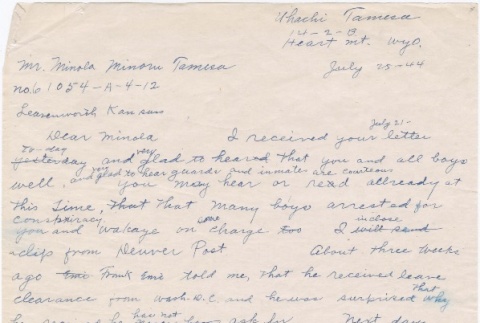
Min & Uhachi Tamesa Collection (ddr-densho-333)
The Min & Uhachi Tamesa Collection consists of correspondence, photographs, documents, and ephemera related to the lives of Uhachi Tamesa and his son Min Tamesa. Much of the collection documents Min's life as a draft resister, his imprisonment at Leavenworth Penitentiary, and Uhachi's support of his son during that period. Also, found in the collection are …

Collection
Takagishi Family Collection (ddr-densho-351)
The Takagishi Family Collection, circa 1920-1930s, includes photographs of an Atlas Cafe sponsored picnic, a parade in downtown Seattle, Washington, portraits of individuals, and several letters in Japanese.

Collection
J. Egashira Collection (ddr-densho-46)
The J. Egashira collection, early 1900s-1930s, contains images from Days, Washington. This collection documents the work and leisure activities of the Nakashima family, who owned a dairy farm.

img
Stuart S. Murray and two men looking at samurai swords (ddr-njpa-2-216)
Caption on reverse: "HISTORIC SWORD: A Japanese samurai sword which was given to the Rev. Samuel Chenery Damon by Manjiro Nakahama about a century ago was presented to Rear Adm. S. S. Murray, commandant of the 14th naval district, at a brief ceremony yesterday afternoon at the Honolulu Academy of Arts by Samuel R. Damon, great …
vh
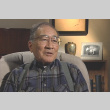
Harvey Watanabe Interview (ddr-densho-1000-102)
Nisei male. Born February 7, 1919, in Exeter, California. Spent prewar childhood in Visalia, California. Drafted prior to World War II. Served in an activated National Guard unit at Fort Lewis, Washington. When World War II broke out, he and all the other Nisei servicemen at Fort Lewis were sent inland. About twenty, Harvey included, went …
vh
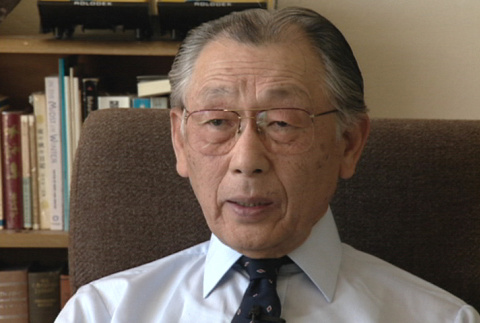
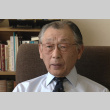
Clifford Uyeda Interview (ddr-densho-122-19)
Nisei male. Born January 14, 1917, in Olympia, Washington. Raised in Washington before attending the University of Wisconsin, where he graduated in 1940. Earned medical degree from Tulane University School of Medicine in New Orleans, and completed his residency at Harvard Medical School in 1949. Served in the U.S. Air Force during the Korean War and …
Collection
S. Ohashi Collection (ddr-densho-30)
The Ohashi collection is comprised of photographs of the Japanese language school in Seattle, Washington, when it was used as a hostel for Japanese Americans immediately after World War II.
Collection
Tsuji Collection (ddr-densho-31)
The Tsuji collection consists of two photographs of the Japanese language school in Seattle, Washington, when it was used as a hostel for Japanese Americans immediately after World War II.