This collection consists of interviews conducted by the Bainbridge Island Japanese American Community (BIJAC). BIJAC's mission is to share with the wider community the history and culture of Japanese Americans, and to promote the safeguarding of civil and constitutional rights for all. Japanese Americans living on Bainbridge Island were the first of more than 120,000 forced …
Nisei male. Born April 27, 1927, in Wapato, Washington. Family farmed in Yakima Valley, Washington, before the war. Incarcerated at the Portland Assembly Center, Oregon, and Heart Mountain concentration camp, Wyoming. Served briefly in the Military Intelligence Service (MIS). Resettled in Wapato, Washington.
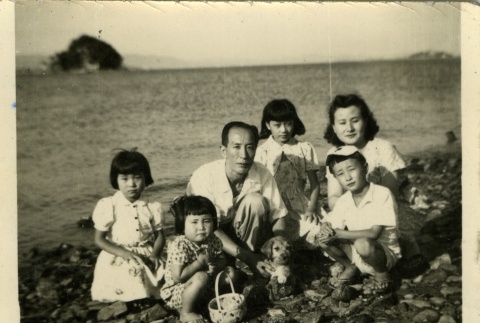
The Uyeda Groves collection, 1900s-1950s, features photographs of the Uyeda family, who resided in Hiroshima, Japan, Rock Springs, Wyoming and Seattle, Washington. The collection also includes photographs of Minidoka concentration camp and Seattle's postwar Issei community. The collection donor, Fumiko Uyeda Groves, was interviewed by Densho in 1998.
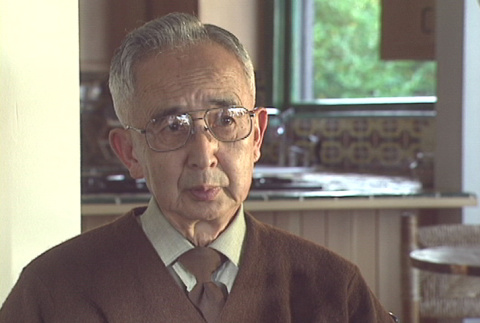
Nisei male. Born April 28, 1919, in Seattle, Washington. Spent prewar years in Seattle's Central area. Incarcerated at the Puyallup Assembly Center, Washington, and Minidoka concentration camp, Idaho. Resisted draft orders and was imprisoned at McNeil Island Penitentiary, Washington. Resettled in Seattle area after release.
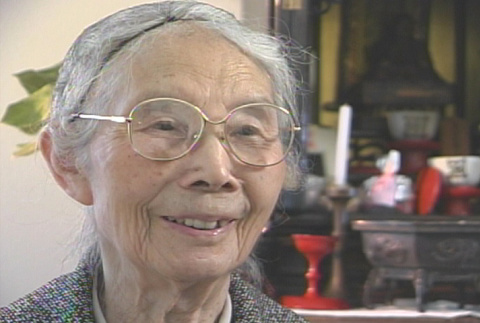
Nisei female. Born March 14, 1916, in Seattle, Washington. Grew up in Seattle and Ellensburg, Washington, before going to Japan to teach just prior to the onset of World War II. Returned to Seattle in 1941, and was removed with family to Puyallup Assembly Center, Washington, and Minidoka concentration camp, Idaho. After the war, resettled in …
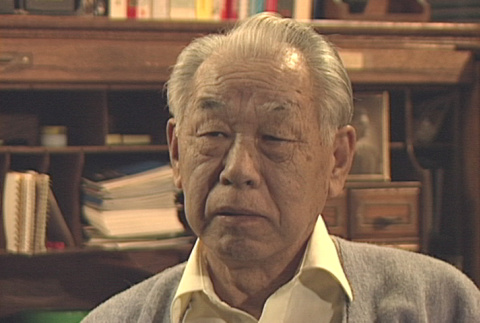
Nisei male. Born September 23, 1925, in Seattle, Washington. Spent prewar childhood in Seattle's Nihonmachi. Incarcerated at Puyallup Assembly Center, Washington, and Minidoka concentration camp, Idaho. Refused to participate in the draft and was imprisoned at McNeil Island Penitentiary, Washington, for draft resistance. Resettled in Seattle.
Nisei female. Born August 23, 1913, in Seattle, Washington. Incarcerated at the Puyallup Assembly Center, Washington, and Minidoka concentration camp, Idaho. Resettled in Seattle, Washington. Coproprietor of Higo Variety Store in Seattle's International District with sister, Masako; the family-owned Japanese American business has been in operation since 1923.
Nisei female. Born October 22, 1919, in Seattle, Washington. Incarcerated at the Puyallup Assembly Center, Washington, and Minidoka concentration camp, Idaho. Resettled in Seattle, Washington. Coproprietor of Higo Variety Store in Seattle's International District with sister Ayako; the family-owned Japanese American business has been in operation since 1923.
Nisei male. Born October 17, 1923, in Seattle, Washington. Grew up in Seattle, Washington, before being incarcerated in the Puyallup Assembly Center, Washington, and the Minidoka concentration camp, Idaho. Volunteered in the 442nd Regimental Combat team out of camp, and eventually returned to Seattle after World War II.
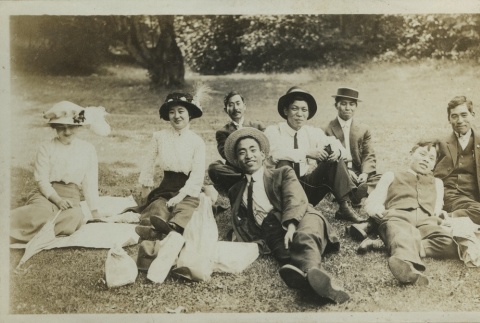
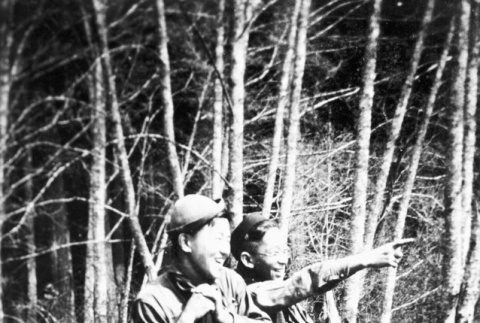
The Tamura Collection focuses on the prewar recreational activities of a group of Issei. The photographs feature gatherings in Seattle's Nihonmachi (Japantown), outings to parks and beaches, hiking on Mt. Rainier and Mt. Hood, and trips to Selleck, Washington. Also included is one photograph of Tule Lake concentration camp, Idaho.
The Mitsuoka collection, 1917-1940s, includes photographs of oyster farming in Washington State, canneries in Alaska, Japanese American Boy Scout troops on outings, and leisure activities such as skiing. Daily life at Minidoka concentration camp, Idaho, is also well-documented in photographs of cooking, doing laundry, and participating in sports.
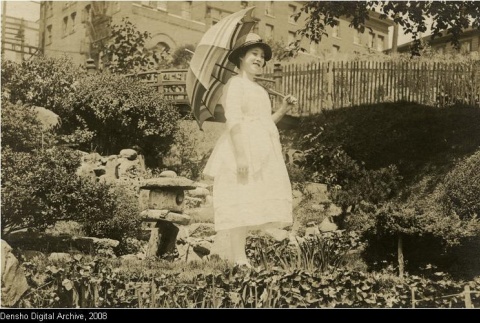
This collection consists of photographs and documents from the Mayeno family, relatives of the owners of the Maneki Restaurant in Seattle, Washington. The collection contains photographs of the restaurant's Japanese garden prior to World War II, as well as materials from the internment camps in Santa Fe and Lordsburg, New Mexico.
Supporting family upon return to Seattle, Washington (Japanese language)
This interview was conducted in Japanese and was translated so as to convey Mrs. Terao's way of speaking as closely as possible. For example, there are instances in which she makes some grammatical errors. These mistakes are conveyed through similar grammatical errors in English in order to …
Attending the University of Washington prewar, deciding to major in banking and finance
This interview was conducted by sisters Emiko and Chizuko Omori for their 1999 documentary, Rabbit in the Moon, about the Japanese American resisters of conscience in the World War II incarceration camps. As a result, the interviews in this collection are typically …
Childhood in Seattle, Washington: losing mother at an early age, playing sports
This interview was conducted by filmmaker Frank Abe for his 2000 documentary, Conscience and the Constitution, about the World War II resisters of conscience at the Heart Mountain incarceration camp. As a result, the interviews in this collection are typically not life histories, …
Selected article titles: "Speed Movement Out of Centers. 2571 Out on Indefinite Permits" (p. 1), "California Group to Aid Nisei" (p. 1), "California Board is Reminded of Nisei Rights by Washington" (p. 1), "Deny Sabotage by Enemies" (p. 1), "Hospital Issues Warning on Rabbit Fever Season" (p. 2), "Editorials: Evacuees and Labor Relations" (p. 4), "2 …
Photocopy of a declassified typed letter from H.L. Stafford, Project Director of the Minidoka War Relocation Project, to Edward J. Ennis, Director, Enemy Alien Control Unit. Mr. Stafford writes about his interaction with Mrs. Koyama and her efforts to have her husband paroled. He is forwarding to Washington, D.C., a copy of her testimony. The letter …
Selected article titles: "Lane-Hillings Claims Bill Passes House Judiciary Committee" (p. 1), "Sen. Kuchel Denounces Writer of Letter to Magazine on Senate Floor" (p. 1), "'Lincoln Yamamoto' letter reviving smear against Nisei seen as 'most damaging' to JACL legislative efforts in Washington" (p. 1), "Nisei grower ships dried persimmon crop from Placer County orchard" (p. 2), …
Text on front: "New US Battleship North Carolina Is Commissioned. NEW YORK, Apr. 9 (INS)--The world's mightiest battleship, the USS North Carolina, was commissioned at the Brooklyn navy yard today in colorful ceremonies headed by Secretary of the Navy Frank Knox. This was the first commissioning of a battleship in 18 years. The 35,000-tonner was built …
A group photograph of the attendees of Yukio Nakatani's funeral held at a Buddhist temple. The photograph is taken on August 23, 1937 by "Aiko," a photo studio in Seattle, Washington. Funeral flowers are offered by: Yamaguchi Prefecture Association, Holiness Church, Kamejiro Yuasa, Yoshihito Yuasa, Shigezaburo Fukuhara, Fumikichi Okazaki, Sadao Nakatani, Cannery Workers, and others. See …
A page from an album containing Japanese family photographs. Five photographs are pasted on the page. All photographs appear to be taken in Washington in the early 1900s. Include a house; mountains; a stream locomotive of Great Northern Railroad; and children and woman siting on railroad ties. Also include a portrait of Japanese woman in kimono. …
A page from an album containing Japanese family photographs. Five photographs are pasted on the page. The photographs appear to have been taken in Washington in the early 1900s. Include a portrait of a Japanese woman and child dressed in kimono; and a photograph of Japanese female child in kimono standing in front of a house. …
A page from an album containing Japanese family photographs. Four photographs are pasted on the page. The photographs appear to be taken in Washington in the early 1900s. Include a photograph of Japanese women in western dress and Japanese men in Japanese Imperial Navy uniforms at a picnic. Also include photographs of houses. See this object …